

2 weeks 1 day ago
History, if viewed as a repository for more than anecdote or chronology, could produce a decisive transformation in the image of science by which we are now possessed.

1 week 2 days ago
Growth is slow but collapse is rapid.
▼
Source
source
Ugo Bardi (2017) . "The Seneca Effect: Why growth is slow but collapse is rapid". ISSN 1612-3018. DOI:10.1007/978-3-319-57207-9.
2 months 6 days ago
I use the word nursing for want of a better. It has been limited to signify little more than the administration of medicines and the application of poultices. It ought to signify the proper use of fresh air, light, warmth, cleanliness, quiet, and the proper selection and administration of diet - all at the least expense of vital power to the patient.
▼
Source
source
Notes on Nursing
3 months 3 weeks ago
A public can only arrive at enlightenment slowly. Through revolution, the abandonment of personal despotism may be engendered and the end of profit-seeking and domineering oppression may occur, but never a true reform of the state of mind. Instead, new prejudices, just like the old ones, will serve as the guiding reins of the great, unthinking mass. All that is required for this enlightenment is freedom; and particularly the least harmful of all that may be called freedom, namely, the freedom for man to make public use of his reason in all matters. But I hear people clamor on all sides: Don't argue! The officer says: Don't argue, drill! The tax collector: Don't argue, pay! The pastor: Don't argue, believe!

3 months 3 weeks ago
I mistrust illuminations: what we take for a discovery is very often only a familiar thought that we have not recognized.
▼
Source
source
p. 439
3 months 3 weeks ago
Criminals together. We're in hell, my little friend, and there's never any mistake there. People are not damned for nothing. Act 1, sc. 5 Variant translation: Among murderers. We are in hell, my dear, there is never a mistake and people are not damned for nothing.

4 months 3 weeks ago
Writing is an addiction more powerful than alcohol, than nicotine, than crack. I could not conceive of not writing.
4 months 3 days ago
Truth will sooner come out from error than from confusion.
▼
Source
source
Aphorism 20

3 months 1 day ago
It is manifest that every soul has a certain continuity with the soul of the Universe, so that it must be understood to exist and to be included not only there where it liveth and feeleth, but it is also by its essence and substance diffused throughout immensity. The power of each soul is itself somehow present afar in the Universe. It is not mixed, yet is there in some presence.

3 months 3 weeks ago
Lead, follow, or get out of the way.
▼
Source
source
George S. Patton: "Lead me, follow me, or get out of my way", as quoted in Pocket Patriot: Quotes from American Heroes (2005) edited by Kelly Nickell, p. 157
2 weeks 2 days ago
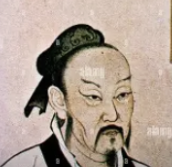
Benevolence is the tranquil habitation of man, and righteousness is his straight path.
▼
Source
source
Justice and Truth, no. 100
3 months 3 weeks ago
A man who is so exceedingly civil that for the sake of quietude and a peaceable name will silently see the community imposed upon, or their rights invaded, may, in his principles, be a good man, but cannot be stiled a useful one, neither does he come up to the full mark of his duty; for silence becomes a kind of crime when it operates as a cover or an encouragement to the guilty.
▼
Source
source
"To the People of America", Pennsylvania Packet, January 23, 1779

2 months 2 weeks ago
Crime in full glory consolidates authority by the sacred fear it inspires.

2 weeks 1 day ago
In books lies the soul of the whole Past Time; the articulate audible voice of the Past, when the body and material substance of it has altogether vanished like a dream.
4 months 2 days ago
Omnipotence and foreknowledge of God, I repeat, utterly destroy the doctrine of 'free-will' ... doubtless it gives the greatest possible offense to common sense or natural reason, that God, Who is proclaimed as being full of mercy and goodness, and so on, should of His own mere will abandon, harden and damn men, as though He delighted in the sins and great eternal torments of such poor wretches. It seems an iniquitous, cruel, intolerable thought to think of God; and it is this that has been such a stumbling block to so many great men down through the ages. And who would not stumble at it? I have stumbled at it myself more than once, down to the deepest pit of despair, so that I wished I had never been made a man.
▼
Source
source
(That was before I knew how health-giving that despair was, and how close to grace p. 217)
2 months 2 weeks ago
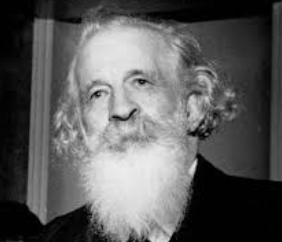
The words of the world want to make sentences.
▼
Source
source
Ch. 5, sect. 4
2 weeks 1 day ago
Love is ever the beginning of Knowledge as fire is of light.
▼
Source
source
Essays, Death of Goethe.

3 months 3 weeks ago
A purely disembodied human emotion is a nonentity.
▼
Source
source
Ch. 25

3 months 3 weeks ago
I find it wholesome to be alone the greater part of the time. To be in company, even with the best, is soon wearisome and dissipating. I love to be alone. I never found the companion that was so companionable as solitude. We are for the most part more lonely when we go abroad among men than when we stay in our chambers. A man thinking or working is always alone, let him be where he will... The really diligent student... is as solitary as a dervish in the desert. The farmer can work alone in the field or the woods all day, hoeing or chopping, and not feel lonesome.
2 months 3 weeks ago
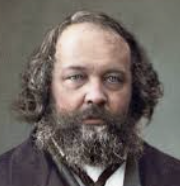
To revolt is a natural tendency of life. Even a worm turns against the foot that crushes it. In general, the vitality and relative dignity of an animal can be measured by the intensity of its instinct to revolt.
▼
Source
source
"On the International Workingmen's Association and Karl Marx"
1 month 2 weeks ago
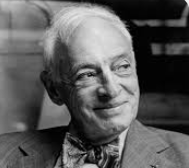
A good American makes propaganda for whatever existence has forced him to become.
▼
Source
source
"Cousins," from Him With His Foot in His Mouth and Other Stories (1984), p. 263

2 months 1 week ago
In refusing to face evil, Sinclair has gained nothing and lost a great deal; the Buddhist scripture expenses it: those who refuse to discriminate might as well be dead.
▼
Source
source
Chapter Three, The Romantic Outsider

3 months 2 weeks ago
Making money is not without its value, but nothing is baser than to make it by wrong-doing.

1 month 1 day ago
Like other human freedoms, the freedoms embodied in market institutions are justified inasmuch as they meet human needs. Insofar as they fail to do this they can reasonably be altered. This is true not only of the rights that are involved in market institutions. It is true of all human rights.
▼
Source
source
'Modus Vivendi' (p.36)
1 month 3 weeks ago
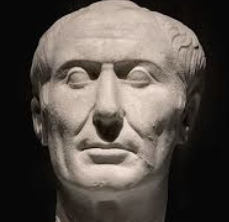
Even a single hair casts its shadow.
▼
Source
source
Maxim 228
2 weeks 3 days ago
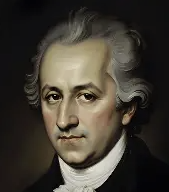
Investigate what is, and not what pleases.
▼
Source
source
Der Versuch als Vermittler von Objekt und Subjekt (The Attempt as Mediator of Object and Subject)

1 month 3 days ago
Humans are prone to status quo bias. So let's do a thought-experiment. Imagine we stumble across an advanced civilisation that has abolished predation, disease, famine, and all the horrors of primitive Darwinian life. The descendants of archaic lifeforms flourish unmolested in their wildlife parks - free living, but not "wild". Should we urge scrapping their regime of compassionate stewardship of the living world - and a return to asphyxiation, disembowelling and being eaten alive? Or is a happy biosphere best conserved intact? Reply to "Should humans wipe out all carnivorous animals so the succeeding generations of herbivores can live in peace?"
▼
Source
source
, Quora, 16 Jun. 2018
2 months 3 weeks ago
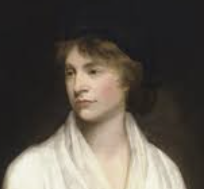
If women be educated for dependence; that is, to act according to the will of another fallible being, and submit, right or wrong, to power, where are we to stop?
▼
Source
source
Ch. 3
2 months 6 days ago
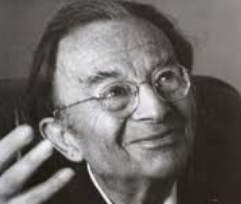
Temperament refers to the mode of reaction and is constitutional and not changeable; character is essentially formed by a person's experiences, especially of those in early life, and changeable, to some extent, by insights and new kinds of experiences. If a person has a choleric temperament, for instance, his mode of reaction is "quick and strong." But what he is quick or strong about depends on his kind of relatedness, his character. If he is a productive, just, loving person he will react quickly and strongly when he loves, when he is enraged by injustice, and when he is impressed by a new idea. If he is a destructive or sadistic character, he will be quick and strong in his destructiveness or in his cruelty. The confusion between temperament and character has had serious consequences for ethical theory. Preferences with regard to differences in temperament are mere matters of subjective taste. But differences in character are ethically of the most fundamental importance.
▼
Source
source
Ch. 3
5 days ago
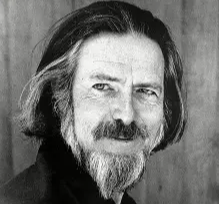
Every individual is a unique manifestation of the Whole, as every branch is a particular outreaching of the tree. To manifest individuality, every branch must have a sensitive connection with the tree, just as our independently moving and differentiated fingers must have a sensitive connection with the whole body. The point, which can hardly be repeated too often, is that differentiation is not separation. The head and the feet are different, but not separate, and though man is not connected to the universe by exactly the same physical relation as branch to tree or feet to head, he is nonetheless connected-and by physical relations of fascinating complexity. The death of the individual is not disconnection but simply withdrawal. The corpse is like a footprint or an echo-the dissolving trace of something which the Self has ceased to do.
▼
Source
source
p. 60

1 month 3 weeks ago
The TV camera has no shutter. It does not deal with aspects or facets of objects in high resolution. It is a means of direct pick-up by the electrical groping over surfaces.
▼
Source
source
Arts in society, Volume 3, 1964, p. 242

2 months 1 week ago
My own long struggle to find my bearings, the disillusionments and disappointments I had experienced, had made me less dogmatic in my demands on people than I had been. They had helped me to understand the hard and lonely life of the rebel who had fought for an unpopular cause. Whatever bitterness I had felt against my old teacher had given way to deep sympathy long before his death. (about Johann Most)
3 months 3 weeks ago
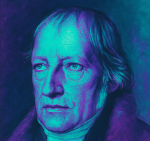
History, is a conscious, self-mediating process - Spirit emptied out into Time; but this externalization, this kenosis, is equally an externalization of itself; the negative is the negative of itself. ... Thus absorbed in itself, it is sunk in the night of its self-consciousness; but in that night its vanished outer existence is perserved, and this transformed existence - the former one, but now reborn of the Spirit's knowledge - is the new existence, a new world and a new shape of Spirit.

1 month 3 weeks ago
One reason an egalitarian approach to the value of life is important is that it draws from ideals of radical democracy at the same time that it enters into ethical considerations about how best to practice nonviolence. The institutional life of violence will not be brought down by a prohibition, but only by a counter-institutional ethos and practice.
▼
Source
source
p. 61
2 months 4 weeks ago
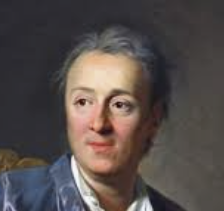
How old the world is! I walk between two eternities... What is my fleeting existence in comparison with that decaying rock, that valley digging its channel ever deeper, that forest that is tottering and those great masses above my head about to fall? I see the marble of tombs crumbling into dust; and yet I don't want to die!
▼
Source
source
Salon of 1767 (1798), Oeuvres esthétiques

2 months 3 weeks ago
The universal basis of co-operation is the proportioning of benefits received to services rendered.
▼
Source
source
Ch. 8, The Sociological View

3 months 3 weeks ago
Manufacture was all the time sheltered by protective duties in the hoe market, by monopolies in the colonial market, and broad as much as possible by differential duties.
▼
Source
source
ibid, pp. 183
1 month 3 days ago
When Bernard Marx tells the Savage he will try to secure permission for him and his mother to visit the Other Place, John is initially pleased and excited. Echoing Miranda in The Tempest, he exclaims: "O brave new world that has such people in it." Heavy irony. Like innocent Miranda, he is eager to embrace a way of life he neither knows nor understands. And of course he comes unstuck. Yet if we swallow such fancy literary conceits, then ultimately the joke is on us. It is only funny in the sense there are "jokes" about Auschwitz. For it is Huxley who neither knows nor understands the glory of what lies ahead. A utopian society in which we are sublimely happy will be far better than we can presently imagine, not worse. And it is we, trapped in the emotional squalor of late-Darwinian antiquity, who neither know nor understand the lives of the god-like super-beings we are destined to become. "Brave New World? A Defence of Paradise-Engineering", BLTC Research, 1998
1 week 3 days ago
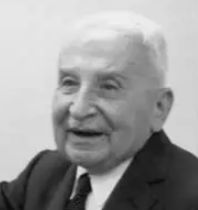
If one takes pleasure in calling the gold standard a "barbarous relic," one cannot object to the application of the same term to every historically determined institution. Then the fact that the British speak English - and not Danish, German, or French - is a barbarous relic too, and every Briton who opposes the substitution of Esperanto for English is no less dogmatic and orthodox than those who do not wax rapturous about the plans for a managed currency.
▼
Source
source
The Gold Standard - LvMI, excerpt from chapter 17 of Human Action

3 months 4 weeks ago
The interest of the dealers, however, in any particular branch of trade or manufactures, is always in some respects different from, and even opposite to, that of the public. To widen the market and to narrow the competition, is always the interest of the dealers.
▼
Source
source
Chapter XI, Part III, Conclusion of the Chapter, p. 292.

3 months 3 weeks ago
"Their own strength has betrayed them. They have [...] pulled down Deep Heaven on their heads."
▼
Source
source
Ch. 13 : They Have Pulled Down Deep Heaven on Their Heads
2 months 2 days ago
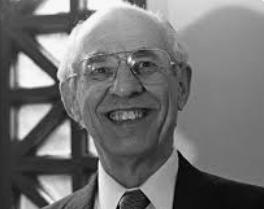
I think part of the appeal of mathematical logic is that the formulas look mysterious - you write backward Es!
▼
Source
source
Putnam as quoted in: Julian Baggini, Jeremy Stangroom (2005) What Philosophers Think. p. 233
3 months 3 weeks ago
The real nature of the present revealed itself: it was what exists, all that was not present did not exist.
3 months 3 weeks ago
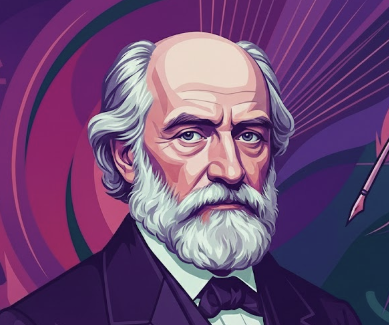
The truth can wait, for she lives a long life.
▼
Source
source
Willen in der Natur (On the Will in Nature), 1836;
4 months 3 weeks ago
There are degrees of justice, Elijah. When the lesser is incompatible with the greater, the lesser must give way.
2 months 2 weeks ago
To read is to let someone else work for you - the most delicate form of exploitation.
1 month 3 weeks ago
He is a despicable sage whose wisdom does not profit himself.
▼
Source
source
Maxim 629
1 month 1 day ago
In ancient Europe, Stoics asserted that a slave could be freer than a master who suffers from self-division. In China, Daoists imagined a type of sage who responded to the flow of events without weighing alternatives. Disciples of monotheistic faiths have believed something similar: freedom, they say, is obeying God's will. What those who follow these traditions want most is not any kind of freedom of choice. Instead, what they long for is freedom from choice.
▼
Source
source
The Faith of Puppets: The Freedom of the Marionette (p. 6-7)
3 months 3 weeks ago
Did you not read our articles about the June revolution, and was not the essence of the June revolution the essence of our paper? Why then your hypocritical phrases, your attempt to find an impossible pretext? We have no compassion and we ask no compassion from you. When our turn comes, we shall not make excuses for the terror. But the royal terrorists, the terrorists by the grace of God and the law, are in practice brutal, disdainful, and mean, in theory cowardly, secretive, and deceitful, and in both respects disreputable.
▼
Source
source
The final issue of Neue Rheinische Zeitung (18 May 1849)''Marx-Engels Gesamt-Ausgabe, Vol. VI, p. 503

3 months 2 weeks ago
From whence are these "rights of individuals" derived, and why should we care? Unless we presume the existence of some greater power that determines what is good, isn't it arbitrary to posit that human survival is more important than private property rights, an equally artificially construed concept? Isn't it arbitrary to assume that some sort of equality is preferable to a system where, say, the poor are assumed to have bad karma? If these 'rights of individuals' are derived only from shared humanity, then do 'individuals' (a thoroughly meaningless term, by the way), begin to lose them when they act inhumanely? And isn't it totally arbitrary to grant rights to humans rather than other creatures anyway?
▼
Source
source
Lecture in New Haven, On Constructed Rights
CivilSimian.com created by AxiomaticPanic, CivilSimian, Kalokagathia