


3 months 3 weeks ago
For what comes is Judgment: happy are those whom it finds labouring in their vocations, whether they were merely going out to feed the pigs or laying good plans to deliver humanity a hundred years hence from some great evil. The curtain has indeed now fallen. Those pigs will never in fact be fed, the great campaign against White Slavery or Governmental Tyranny will never in fact proceed to victory. No matter; you were at your post when the Inspection came.

2 months 4 weeks ago
The severe Schools shall never laugh me out of the Philosophy of Hermes, that this visible world is but a picture of the invisible.
▼
Source
source
Section 12

4 months 3 weeks ago
Now, in the solemn silence before God with the lilies and the birds, where accordingly there is nobody at all present, where accordingly there is no other intercourse for thee but with God-there indeed the rule holds good: either hold to Him/or despise Him. There is no excuse, for no one else is present, in any case no one is present in such a wise that thou canst hold to him without despising God; for precisely there in the silence it is clear how close God is to thee.
3 months 3 weeks ago
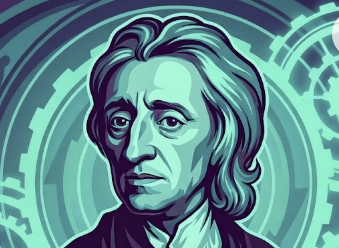
Let me give two cautions. 1) The one is, that you keep them to the practice of what you would have grow into a habit with them, by kind words, and gentle admonitions, rather as minding them of what they forget, than by harsh rebukes and chiding, as if they were wilfully guilty. 2) Another thing you are to take care of, is, not to endeavour to settle too many habits at once, lest by variety you confound them, and so perfect none. When constant custom has made any one thing easy and natural to 'em, and they practice it without reflection, you may then go on to another.
▼
Source
source
Sec. 66

2 months 5 days ago
The history of the Romanovs is an Elizabethan tragedy that lasts for three centuries. Its keynote is cruelty, a barbaric, pointless kind of cruelty that has always been common in the East, but that came to Europe only recently, in the time of Hitler.
▼
Source
source
pp. 61-62
1 month 2 weeks ago
There's something that remains barbarous in educated people, and lately I've more and more had the feeling that we are nonwondering primitives. And why is it that we no longer marvel at these technological miracles? They've become the external facts of every life. We've all been to the university, we've had introductory courses in everything, and therefore we have persuaded ourselves that if we had the time to apply ourselves to these scientific marvels, we would understand them. But of course that's an illusion. It couldn't happen. Even among people who have had careers in science. They know no more about how it all works than we do. So we are in the position of savage men who, however, have been educated into believing that they are capable of understanding everything. Not that we actually do understand, but that we have the capacity.
▼
Source
source
"A Half Life" (1990), pp. 302-303

3 months 3 weeks ago
As regards the objection that possibles are independent of the decrees of God I grant it of actual decrees (although the Cartesians do not at all agree to this), but I maintain that the possible individual concepts involve certain possible free decrees; for example, if this world was only possible, the individual concept of a particular body in this world would involve certain movements as possible, it would also involve the laws of motion, which are the free decrees of God; but these, also, only as possibilities. Because, as there are an infinity of possible worlds, there are also an infinity of laws, certain ones appropriate to one; others, to another, and each possible individual of any world involves in its concept the laws of its world.
▼
Source
source
(May, 1686) as quoted in George R. Montgomery, Tr., "Correspondence between Leibniz and Arnauld," Leibniz: Discourse on metaphysics; correspondence with Arnauld, and Monadology (1916) VIII, p. 108
3 months 3 weeks ago
Friendship is unnecessary, like philosophy, like art, like the universe itself (for God did not need to create). It has no survival value; rather it is one of those things which give value to survival.

3 months 3 weeks ago
The evil that has resulted from the error of the schools in teaching natural philosophy as an accomplishment only has been that of generating in the pupils a species of atheism. Instead of looking through the works of creation to the Creator Himself, they stop short and employ the knowledge they acquire to create doubts of His existence. They labor with studied ingenuity to ascribe everything they behold to innate properties of matter and jump over all the rest by saying that matter is eternal.
▼
Source
source
A Discourse, &c. &c.

1 month 2 weeks ago
What began as a "Romantic reaction" towards organic wholeness may or may not have hastened the discovery of electro-magnetic waves. But certainly the electro-magnetic discoveries have recreated the simultaneous "field" in all human affairs so that the human family now exists under conditions of a "global village." We live in a single constricted space resonant with tribal drums. So that concern with the "primitive" today is as banal as nineteenth-century concern with "progress," and as irrelevant to our problems. The new electronic interdependence recreates the world in the image of a global village.
▼
Source
source
(p. 36)

4 months 2 weeks ago
Nothing can discourage the appetite for divinity in the heart of man.

1 month 3 weeks ago
If the immutable character of sex is contested, perhaps this construct called 'sex' is as culturally constructed as gender; indeed, perhaps it was always already gender, with the consequence that the distinction between sex and gender turns out to be no distinction at all.
▼
Source
source
Gender Trouble: Feminism and the Subversion of Identity
2 months 2 weeks ago
Marx explains the alienation of labor as exemplified in, first, the relation of the worker to the product of his labor and, second, the relation of the worker to his own activity. P. 276
3 months 3 weeks ago
Without the aid of trained emotions the intellect is powerless against the animal organism. I had sooner play cards against a man who was quite skeptical about ethics, but bred to believe that 'a gentleman does not cheat,' than against an irreproachable moral philosopher who had been brought up among sharpers. In battle it is not syllogisms that will keep the reluctant nerves and muscles to their post in the third hour of the bombardment.

3 months 3 weeks ago
'Our kingdom go' is the necessary and unavoidable corollary of 'Thy kingdom come.' For the more there is of self, the less there is of God.
▼
Source
source
Chapter VI - Mortification, Non-Attachment, Right Livelihood

1 week ago
We give voice to our trivial cares, but suffer enormities in silence.
▼
Source
source
line 607; (Phaedra)

3 months 3 weeks ago
There are many things of which a wise man might wish to be ignorant.
▼
Source
source
Demonology

3 months 3 weeks ago
In the United States of North America, every independent movement of the workers was paralysed so long as slavery disfigured a part of the Republic. Labour cannot emancipate itself in the white skin where in the black it is branded.
▼
Source
source
Vol. I, Ch. 10, Section 7, pg. 329.
Just now
No, the enjoyment of an idle life doesn't cost any money. The capacity for true enjoyment of idleness is lost in the moneyed class and can be found only among people who have a supreme contempt for wealth. It must come from an inner richness of the soul in a man who loves the simple ways of life and who is somewhat impatient with the business of making money.
▼
Source
source
p. 155

2 months 1 week ago
By committing a crime, a man places himself, of his own accord, outside the chain of eternal obligations which bind every human being to every other one. Punishment alone can weld him back again; fully so, if accompanied by consent on his part; otherwise only partially so. Just as the only way of showing respect for somebody suffering from hunger is to give him something to eat, so the only way of showing respect for somebody who has placed himself outside the law is to reinstate him inside the law by subjecting him to the punishment ordained by law.The need for punishment is not satisfied where, as is generally the case, the penal code is merely a method of exercising pressure through fear.
▼
Source
source
p. 103

1 week 6 days ago
Again, and again, we say, the great, the creative and enduring is ever a secret to itself; only the small, the barren and transient is otherwise.
▼
Source
source
Characteristics.
2 months 5 days ago
Man should possess an infinite appetite for life. It should be self-evident to him, all the time, that life is superb, glorious, endlessly rich, infinitely desirable. At present, because he is in a midway position between the brute and the truly human, he is always getting bored, depressed, weary of life. He has become so top-heavy with civilisation that he cannot contact the springs of pure vitality. Control of the prefrontal cortex will change all of this. He will cease to cast nostalgic glances towards the womb, for he will realise that death is no escape. Man is a creature of life and the daylight; his destiny lies in total objectivity.
▼
Source
source
pp. 317-318
1 month 2 weeks ago
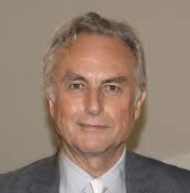
Just because science so far has failed to explain something, such as consciousness, to say it follows that the facile, pathetic explanations which religion has produced somehow by default must win the argument is really quite ridiculous.
▼
Source
source
Steve Paulson, "The flying spaghetti monster" Salon.com
3 months 3 weeks ago
Titles of property, for instance railway shares, may change hands every day, and their owner may make a profit by their sale even in foreign countries, so that titles to property are exportable, although the railway itself is not.
▼
Source
source
Vol. II, Ch. X, p. 215.

4 months 2 weeks ago
Of all the cultural aspects of humanity, the only one which is not broken up into national or regional splinters is science. Different nations have different languages, they may have different religions, may have different dietaries, may have different holidays, different ways of thinking, but here's only one science.
▼
Source
source
Interview by Richard Heffner on The Open Mind (19 June 1988); video (25:31)
2 months 2 weeks ago
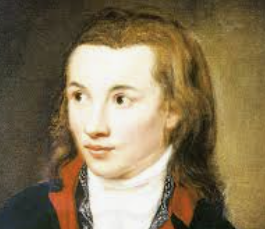
The normal present connects the past and the future through limitation. Contiguity results, crystallization by means of solidification. There also exists, however, a spiritual present that identifies past and future through dissolution, and this mixture is the element, the atmosphere of the poet.
▼
Source
source
Fragment No. 109

2 months 2 weeks ago
I am the door: by me if any man enter in, he shall be saved, and shall go in and out, and find pasture. The thief cometh not, but for to steal, and to kill, and to destroy: I am come that they might have life, and that they might have it more abundantly. I am the good shepherd: the good shepherd giveth his life for the sheep.
▼
Source
source
10:9-11
1 month 2 weeks ago
Radical changes of identity, happening suddenly and in very brief intervals of time, have proved more deadly and destructive of human values than wars fought with hardware weapons.
▼
Source
source
p. 97

3 months 3 weeks ago
I am no longer sure of anything. If I satiate my desires, I sin but I deliver myself from them; if I refuse to satisfy them, they infect the whole soul.
▼
Source
source
Act 10, sc. 2

3 months 3 weeks ago
If a man is offered a fact which goes against his instincts, he will scrutinize it closely, and unless the evidence is overwhelming, he will refuse to believe it. If, on the other hand, he is offered something which affords a reason for acting in accordance with his instincts, he will accept it even on the slenderest evidence. The origin of myths is explained in this way.
▼
Source
source
Ch. VI: International relations, p. 97
3 months 3 weeks ago
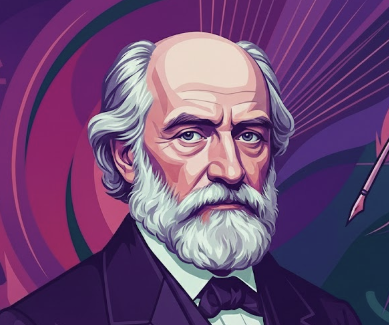
No difference of rank, position, or birth, is so great as the gulf that separates the countless millions who use their head only in the service of their belly, in other words, look upon it as an instrument of the will, and those very few and rare persons who have the courage to say: No! my head is too good for that; it shall be active only in its own service; it shall try to comprehend the wondrous and varied spectacle of this world and then reproduce it in some form, whether as art or as literature, that may answer to my character as an individual.
▼
Source
source
On Genius, Parerga and Paralipomena, Chapter III

2 months 6 days ago
The more Lil' Kim distorted her natural beauty to become a cartoonlike caricature of whiteness, the larger her success.
1 month 1 week ago
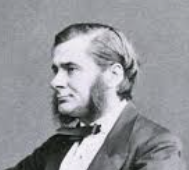
A great chapter of the history of the world is written in the chalk. Few passages in the history of man can be supported by such an overwhelming mass of direct and indirect evidence as that which testifies to the truth of the fragment of the history of the globe, which I hope to enable you to read, with your own eyes, tonight. Let me add, that few chapters of human history have a more profound significance for ourselves. I weigh my words well when I assert, that the man who should know the true history of the bit of chalk which every carpenter carries about in his breeches-pocket, though ignorant of all other history, is likely, if he will think his knowledge out to its ultimate results, to have a truer, and therefore a better, conception of this wonderful universe, and of man's relation to it, than the most learned student who is deep-read in the records of humanity and ignorant of those of Nature.
4 months 3 weeks ago
Concepts, like individuals, have their histories, and are just as incapable of withstanding the ravages of time as are individuals.

2 months 5 days ago
Every daring attempt to make a great change in existing conditions, every lofty vision of new possibilities for the human race, has been labelled Utopian.
▼
Source
source
"Socialism: Caught in the Political Trap", a lecture (c. 1912), published in Red Emma Speaks, Part 1 (1972) edited by Alix Kates Shulman

3 months 3 weeks ago
The wisest man preaches no doctrines; he has no scheme; he sees no rafter, not even a cobweb, against the heavens. It is clear sky. If I ever see more clearly at one time than at another, the medium through which I see is clearer.

3 months 1 week ago
Those who have a well-ordered character lead also a well-ordered life.
3 months 3 weeks ago
I was seeing what Adam had seen on the morning of his creation - the miracle, moment by moment, of naked existence.
▼
Source
source
Pages 160-61
4 months 3 weeks ago
A white spot is on the horizon. There it is. A terrible storm is brewing. But no one sees the white spot or has any inkling of what it might mean. But no (this would not be the most terrible situation either), no, there is one person who sees it and knows what it means-but he is a passenger. He has no authority on the ship, can take no action. ... The fact that in Christendom there is visible on the horizon a white speck which means that a storm is threatening-this I knew; but, alas, I was an am only a passenger.
3 months 2 weeks ago
To live, by definition, is not something one learns. Not from oneself, it is not learned from life, taught by life. Only from the other and by death. In any case from the other at the edge of life. At the internal border or the external border, it is a heterodidactics between life and death.
▼
Source
source
Exordium

2 months 1 week ago
Consciousness (conscientia) is participated knowledge, is co-feeling, and co-feeling is com-passion. Love personalizes all that it loves. Only by personalizing it can we fall in love with an idea. And when love is so great and so vital, so strong and so overflowing, that it loves everything, then it personalizes everything and discovers that the total All, that the Universe, is also a person possessing a Consciousness, a Consciousness which in its turn suffers, pities, and loves, and therefore is consciousness. And this Consciousness of the Universe, which a love, personalizing all that it loves, discovers, is what we call God.
4 months 2 weeks ago
A sub-clerk in the post office is the equal of a conqueror if consciousness is common to them. All experiences are indifferent in this regard. There are some that do either a service or a disservice to man. They do him a service if he is conscious. Otherwise, that has no importance: a man's failures imply judgment, not of circumstances, but of himself.

3 months 3 weeks ago
Every sensible man, every honorable man, must hold the Christian sect in horror.
▼
Source
source
Examen important de milord Bolingbroke (1736): Conclusion
2 months 1 week ago
Pragmatism, in trying to turn experimental physics into a prototype of all science and to model all spheres of intellectual life after the techniques of the laboratory, is the counterpart of modern industrialism, for which the factory is the prototype of human existence, and which models all branches of culture after production on the conveyor belt.
▼
Source
source
p. 50.
3 months 3 weeks ago
To pray to God is to flatter oneself that with words one can alter nature.
▼
Source
source
Notebooks, c.1735-c.1750

4 months ago
The plague of man is boasting of his knowledge.
▼
Source
source
Ch. 12 (tr. ?)
3 months 3 weeks ago
You must be afraid, my son. That is how one becomes an honest citizen.
▼
Source
source
Mother to her young son, Act 1
3 months 3 weeks ago
You can hardly convince a man of an error in a lifetime, but must content yourself with the reflection that the progress of science is slow. If he is not convinced, his grandchildren may be.
3 months 3 weeks ago
Spinoza says that if a stone which has been projected through the air, had consciousness, it would believe that it was moving of its own free will. I add this only, that the stone would be right. The impulse given it is for the stone what the motive is for me, and what in the case of the stone appears as cohesion, gravitation, rigidity, is in its inner nature the same as that which I recognise in myself as will, and what the stone also, if knowledge were given to it, would recognise as will.

3 months 3 weeks ago
In ease of body and peace of mind, all the different ranks of life are nearly upon a level, and the beggar, who suns himself by the side of the highway, possesses that security which kings are fighting for.
▼
Source
source
Chap. I.
CivilSimian.com created by AxiomaticPanic, CivilSimian, Kalokagathia