


2 months 3 weeks ago
The best definition of man is: a being that goes on two legs and is ungrateful.
▼
Source
source
Part 1, Chapter 8 (tr. David Magarshack, 1950) The best definition of man is: a biped, ungrateful.
2 months 3 weeks ago
Irony is the form of paradox. Paradox is what is good and great at the same time.
▼
Source
source
Aphorism 48, as translated in Dialogue on Poetry and Literary Aphorisms (1968), p. 151
2 months 1 week ago
Stars and blossoming fruit-trees: utter permanence and extreme fragility give an equal sense of eternity.
▼
Source
source
p. 277

3 months 1 week ago
Seek after the good, and with much toil shall ye find it; the evil turns up of itself without your seeking it.

3 months 3 weeks ago
"If a nation expects to be ignorant and free," said Jefferson, "it expects what never was and never will be."
▼
Source
source
Chapter 4 (p. 34)
3 months 2 weeks ago
Social and economic inequalities, for example inequalities of wealth and authority, are just only if they result in compensating benefits for everyone, and in particular for the least advantaged members of society.
▼
Source
source
p. 14.

2 weeks 4 days ago
The learning of the gentleman enters through his ears, fastens to his heart, spreads through his four limbs, and manifests itself in his actions. ... The learning of the petty person enters through his ears and passes out his mouth. From mouth to ears is only four inches-how could it be enough to improve a whole body much larger than that?
▼
Source
source
Readings in Classical Chinese Philosophy (2001), p. 259


2 weeks 2 days ago
Never has any one been less a priest than Jesus, never a greater enemy of forms, which stifle religion under the pretext of protecting it. By this we are all his disciples and his successors; by this he has laid the eternal foundation-stone of true religion; and if religion is essential to humanity, he has by this deserved the Divine rank the world has accorded him.
▼
Source
source
Ch. 5.
1 month 4 days ago
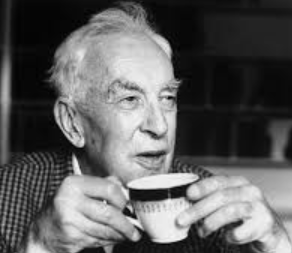
The human race's prospects of survival were considerably better when we were defenceless against tigers than they are today when we have become defenceless against ourselves.
▼
Source
source
"Man and Hunger: The Perspectives of History", Speech to the World Food Congress (4 June 1963)

3 months 3 weeks ago
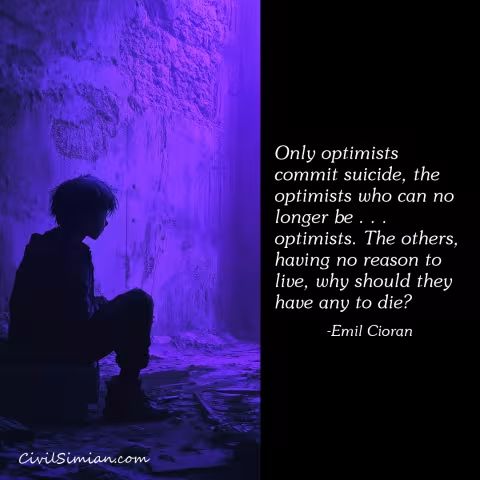
One who believes, as I do, that the free intellect is the chief engine of human progress, cannot but be fundamentally opposed to Bolshevism, as much as to the Church of Rome.
▼
Source
source
Part I, Ch. 9: International Policy

3 months 4 weeks ago
How many valiant men we have seen to survive their own reputation!
▼
Source
source
Ch. 16

3 months 3 weeks ago
Is a democracy, such as we know it, the last improvement possible in government? Is it not possible to take a step further towards recognizing and organizing the rights of man? There will never be a really free and enlightened State until the State comes to recognize the individual as a higher and independent power, from which all its own power and authority are derived, and treats him accordingly. I please myself with imagining a State at least which can afford to be just to all men, and to treat the individual with respect as a neighbor; which even would not think it inconsistent with its own repose if a few were to live aloof from it, not meddling with it, nor embraced by it, who fulfilled all the duties of neighbors and fellow-men. A State which bore this kind of fruit, and suffered it to drop off as fast as it ripened, would prepare the way for a still more perfect and glorious State, which also I have imagined, but not yet anywhere seen.
▼
Source
source
Final lines
3 months 1 week ago
'Tis a grievous thing to be subject to an inferior.
3 months 1 week ago
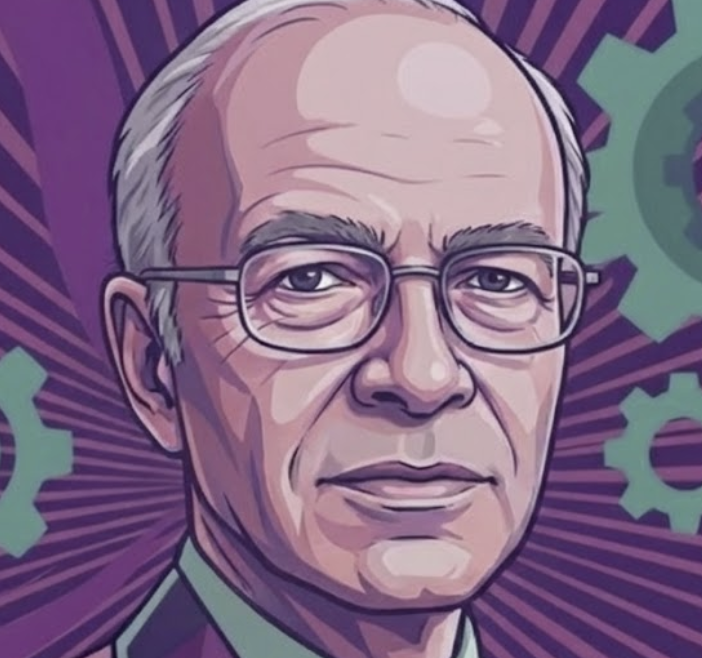
Those who claim to care about the wellbeing of human beings and the preservation of our environment should become vegetarians for that reason alone. They would thereby increase the amount of grain available to feed people elsewhere, reduce pollution, save water and energy, and cease contributing to the clearing of forests; moreover, since a vegetarian diet is cheaper than one based on meat dishes, they would have more money available to devote to famine relief, population control, or whatever social or political cause they thought most urgent. ... when nonvegetarians say that "human problems come first" I cannot help wondering what exactly it is that they are doing for human beings that compels them to continue to support the wasteful, ruthless exploitation of farm animals.
▼
Source
source
Ch. 6: Speciesism Today

3 months 3 weeks ago
We boil at different degrees.
▼
Source
source
Eloquence
3 months 3 weeks ago
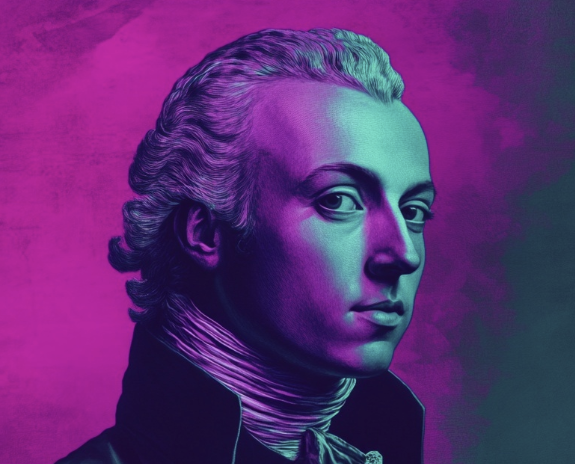
...an intellectual concept abstracts from everything sensuous, it is not abstracted from sensuous things, and perhaps would be more correctly called abstracting than abstract. Intellectual concepts it is more cautious, therefore, to call pure ideas, and concepts given only empirically, abstract ideas.
1 month 1 week ago
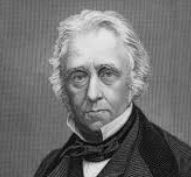
What a singular destiny has been that of this remarkable man! To be regarded in his own age as a classic, and in ours as a companion! To receive from his contemporaries that full homage which men of genius have in general received only from posterity! To be more intimately known to posterity than other men are known to their contemporaries!
▼
Source
source
'Samuel Johnson', The Edinburgh Review (September 1831), quoted in T. B. Macaulay, Critical and Historical Essays Contributed to The Edinburgh Review, Vol. I (1843), p. 407

3 months 2 weeks ago
A teacher who can show good, or indeed astounding results while he is teaching, is still not on that account a good teacher, for it may be that, while his pupils are under his immediate influence, he raises them to a level which is not natural to them, without developing their own capacities for work at this level, so that they immediately decline again once the teacher leaves the schoolroom.
▼
Source
source
p. 43e

3 months 3 weeks ago
The origin of our passions, the root and spring of all the rest, the only one which is born with man, which never leaves him as long as he lives, is self-love; this passion is primitive, instinctive, it precedes all the rest, which are in a sense only modifications of it. In this sense, if you like, they are all natural. But most of these modifications are the result of external influences, without which they would never occur, and such modifications, far from being advantageous to us, are harmful. They change the original purpose and work against its end; then it is that man finds himself outside nature and at strife with himself.

3 months 2 weeks ago
He [the child] does not despise real woods because he has read of enchanted woods: the reading makes all real woods a little enchanted.
▼
Source
source
"On Three Ways of Writing for Children", 1952
2 months 2 weeks ago
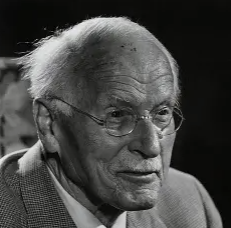
Whereas logic and objectivity are usually the predominant features of a man's outer attitude, or are at least regarded as ideals, in the case of a woman it is feeling. But in the soul it is the other way round: inwardly it is the man who feels, and the woman who reflects. Hence a man's greater liability to total despair, while a woman can always find comfort and hope; accordingly a man is more likely to put an end to himself than a woman. However much a victim of social circumstances a woman may be, as a prostitute for instance, a man is no less a victim of impulses from the unconscious, taking the form of alcoholism and other vices.
▼
Source
source
Psychological Types (1921). CW 6. P.805
Just now
To ascend to the origin of things and speculate on the creation, is not the business of the natural philosopher. An humbler field is sufficient for him in the endeavor to discover, as far as our faculties will permit; what are these primary qualities impressed on matter, and to discover the spirit of the laws of nature
3 months 3 weeks ago
O tenderly the haughty day Fills his blue urn with fire; One morn is in the mighty heaven, And one in our desire.
▼
Source
source
Ode, st. 1

6 days ago
Let us now enquire whether anger be in accordance with nature, and whether it be useful and worth entertaining in some measure.
2 weeks ago
One of the most striking signs of the decay of art is the intermixing of different genres.
▼
Source
source
Propylaea (1798) Introduction

3 months 4 weeks ago
The Law continues to exist and to function. But it no longer exists for me.
▼
Source
source
Chapter 2, Verse 19
3 months 4 weeks ago
Reason is the greatest enemy that faith has: it never comes to the aid of spiritual things, but--more frequently than not--struggles against the divine Word, treating with contempt all that emanates from God.
▼
Source
source
353
2 weeks 1 day ago
It is often said that experiments should be made without preconceived ideas. That is impossible. Not only would it make every experiment fruitless, but even if we wished to do so, it could not be done. Every man has his own conception of the world, and this he cannot so easily lay aside. We must, for example, use language, and our language is necessarily steeped in preconceived ideas.
▼
Source
source
Ch. IX: Hypotheses in Physics, Tr. George Bruce Halsted

2 months 2 weeks ago
The lover who kills himself for a girl has an experience which is more complete and much more profound than the hero who overturns the world.

1 week 5 days ago
In every man's writings, the character of the writer must lie recorded.
▼
Source
source
Goethe (1828).

4 months 2 weeks ago
The contradiction is this: man rejects the world as it is, without accepting the necessity of escaping it. In fact, men cling to the world and by far the majority do not want to abandon it.
1 month 1 week ago
At last I have attained true glory. As I walked through Fleet Street the day before yesterday, I saw a copy of Hume at a bookseller's window with the following label: "Only 2l. 2s. Hume's History of England in eight volumes, highly valuable as an introduction to Macaulay." I laughed so convulsively that the other people who were staring at the books took me for a poor demented gentleman.
▼
Source
source
Alas for poor David! Journal entry (8 March 1849), quoted in George Otto Trevelyan, The Life and Letters of Lord Macaulay, Volume II (1876), p. 253
2 months 1 week ago
Often it is only after immense intellectual effort, which may have continued over centuries, that humanity at last succeeds in achieving knowledge of a concept in its pure form, by stripping off the irrelevant accretions which veil it from the eye of the mind.
▼
Source
source
Translation J. L. Austin (Oxford, 1950) as quoted by Stephen Toulmin, Human Understanding: The Collective Use and Evolution of Concepts (1972) Vol. 1, p. 56.

4 months 1 week ago
Of our desires some are natural and necessary, others are natural but not necessary; and others are neither natural nor necessary, but are due to groundless opinion.
3 months 2 weeks ago
The best way to drive out the devil, if he will not yield to texts of Scripture, is to jeer and flout him, for he cannot bear scorn.
▼
Source
source
Martin Luther, quoted at the beginning of The Screwtape Letters
2 weeks 1 day ago
Astronomers... define duration in the following way: time... so defined that Newton's law and that of vis viva [or of the conservation of energy] may be verified. Newton's law is an experimental truth... only approximate... We still have only a definition by approximation.
2 months 1 week ago
The function of objective thinking is to reduce all phenomena which bear witness to the union of subject and world, putting in their place the clear idea of the object as in itself and of the subject as pure consciousness. It therefore severs the links which unite the thing and the embodied subject, leaving only sensible qualities to make up our world (to the exclusion of the modes of appearance which we have described), and preferably visual qualities, because these give the impression of being autonomous, and because they are less directly linked to our body and present us with an object rather than introducing us into an atmosphere. But in reality all things are concretions of a setting, and any explicit perception of a thing survives in virtue of a previous communication with a certain atmosphere.
▼
Source
source
p. 374

2 months 1 week ago
I have said these things to you so that by means of me you may have peace. In the world you will have tribulation, but take courage! I have conquered the world.
▼
Source
source
16:33, NWT
1 month 3 weeks ago
Distinctive signs, full signs, never seduce us.
▼
Source
source
(p. 59)
2 weeks 3 days ago
Marriage and dependent children are a trap for the people! Morality carefully hides this distressing truth from us because it knows no remedy for the evil. But I , who bring a remedy must not dissimulate the woes from fathers, and I must not dissimulate from society its radical vice of pushing seven-eighths of all families into evil practices through poverty.

1 month 2 weeks ago
Any loss of identity prompts people to seek reassurance and rediscovery of themselves by testing, and even by violence. Today, the electric revolution, the wired planet, and the information environment involve everybody in everybody to the point of individual extinction.
▼
Source
source
Letter to Clare Westcott, November 26 1975. Letters of Marshall McLuhan, p. 514
1 month 1 week ago
To the Whigs of the seventeenth century we owe it that we have a House of Commons. To the Whigs of the nineteenth century we owe it that the House of Commons has been purified. The abolition of the slave trade, the abolition of colonial slavery, the extension of popular education, the mitigation of the rigour of the penal code, all, all were effected by that party; and of that party, I repeat, I am a member. I look with pride on all that the Whigs have done for the cause of human freedom and of human happiness. I see them now hard pressed, struggling with difficulties, but still fighting the good fight. At their head I see men who have inherited the spirit and the virtues, as well as the blood, of old champions and martyrs of freedom... While one shred of the old banner is flying, by that banner will I at least be found.
▼
Source
source
Speech in Edinburgh (29 May 1839), quoted in Speeches of the Right Honourable T. B. Macaulay, M.P. (1854), pp. 183-184
2 months 1 week ago
To imagine that Caesar aspired to do something in the way Alexander did it - and this is what almost all historians have believed - is definitely to give up trying to understand him. Caesar is very nearly the opposite of Alexander. ...[I]t is not merely a universal kingdom that Caesar has in view. His purpose is a deeper one. He wants a Roman empire which does not live on Rome, but on the periphery, on the provinces, and this implies the complete supersession of the City-State. It implies a State in which the most diverse peoples collaborate, in regard to which all feel solidarity.
▼
Source
source
Chapter XIV: Who Rules The World?

4 months 1 week ago
As the soul is the life of the body, so God is the life of the soul. As therefore the body perishes when the soul leaves it, so the soul dies when God departs from it.
▼
Source
source
p. 277
1 month ago
... our descendants may recognize that we are the sociopathic emotional primitives in the grip of an affective psychosis. Jealousy, envy, resentment, ridicule, hate, anger, disgust, spite, contempt, schadenfreude and a whole gamut of nameless but mean-spirited states we undergo each day are a toxic legacy of our Darwinian past. More commonly, perhaps, our genetic make-up ensures we simply feel indifference to the plight of all but a handful of significant others in our lives. Right now, for instance, one knows dimly at some level that there is frightful and preventable suffering in the world. Yet most of us feel no overpowering moral urgency to do anything about it.
▼
Source
source
"Utopian Pharmacology: Mental Health in the Third Millennium MDMA and Beyond", BLTC Research, last updated 2020
4 months 2 weeks ago
When the imagination sleeps, words are emptied of their meaning: a deaf population absent-mindedly registers the condemnation of a man. ... there is no other solution but to speak out and show the obscenity hidden under the verbal cloak.
CivilSimian.com created by AxiomaticPanic, CivilSimian, Kalokagathia