

4 months 3 days ago
Rules for Axioms. I. Not to omit any necessary principle without asking whether it is admittied, however clear and evident it may be. II. Not to demand, in axioms, any but things that are perfectly evident in themselves.

3 months 4 weeks ago
I find that the best goodness I have has some tincture of vice.
▼
Source
source
Ch. 20

2 months 2 weeks ago
One hardly saves a world without ruling it.
3 months 4 weeks ago
Man is certainly crazy. He could not make a mite, and he makes gods by the dozen.
▼
Source
source
Ch. 12

3 months 2 days ago
Be not hasty to speak; nor slow to hear!
2 months 2 weeks ago
The liberty of man consists solely in this: that he obeys natural laws because he has himself recognized them as such, and not because they have been externally imposed upon him by any extrinsic will whatever, divine or human, collective or individual.

3 months 3 weeks ago
I have been writing & speaking what were once called novelties, for twenty five or thirty years, & have not now one disciple. Why? Not that what I said was not true; not that it has not found intelligent receivers but because it did not go from any wish in me to bring men to me, but to themselves. I delight in driving them from me. What could I do, if they came to me? - they would interrupt and encumber me. This is my boast that I have no school & no follower. I should account it a measure of the impurity of insight, if it did not create independence.
▼
Source
source
April 1859
3 months 3 weeks ago
What is there in 'Paradise Lost' to elevate and astonish like Herschel or Somerville?
▼
Source
source
Quoted in Robert D. Richardson, Jr., Emerson, the Mind On Fire (Univ. of Calif Press 1995), p. 124

2 months 3 weeks ago
Laws, like houses, lean on one another.
▼
Source
source
From the Tracts Relative to the Laws Against Popery in Ireland (c. 1766), not published during Burke's lifetime.
2 months 1 week ago
Is it always permissible to speak of the extension of a concept, of a class? And if not, how do we recognize the exceptional cases? Can we always infer from the extension of one concept's coinciding with that of a second, that every object which falls under the first concept also falls under the second?
▼
Source
source
Vol. 2, p. 127. Replying to Bertrand Russell's letter about Russell's Paradox; quoted in The Stanford Encyclopedia of Philosophy

1 month 2 weeks ago
In the upper, rich, more educated classes of European society doubt arose as to the truth of that understanding of life which was expressed by Church Christianity. When, after the Crusades and the maximum development of papal power and its abuses, people of the rich classes became acquainted with the wisdom of the classics and saw, on the one hand, the reasonable lucidity of the teachings of the ancient sages, and on the other hand, the incompatibility of the Church doctrine with the teaching of Christ, they found it impossible to continue to believe the Church teaching.
1 month 2 weeks ago
The man who holds the divine theory of life recognizes life not in his own individuality, and not in societies of individualities (in the family, the clan, the nation, the tribe, or the government), but in the eternal undying source of life-in God; and to fulfill the will of God he is ready to sacrifice his individual and family and social welfare. The motor power of his life is love. And his religion is the worship in deed and in truth of the principle of the whole-God.
▼
Source
source
Chapter IV, Christianity Misunderstood by Men of Science

4 months ago
There is nothing I congratulate myself on more heartily than on never having joined a sect.
▼
Source
source
As quoted in Thomas More and Erasmus (1965) by Ernest Edwin Reynolds, p. 248 [citation needed]
1 month 2 weeks ago
"What's this? Am I falling? My legs are giving way under me," he thought, and fell on his back. He opened his eyes, hoping to see how the struggle of the French soldiers with the artilleryman was ending, and eager to know whether the red-haired gunner artilleryman was killed or not, whether the cannons had been taken or saved. But he saw nothing of all that. Above him there was nothing but the sky - the lofty sky, not clear, but still immeasurably lofty, with gray clouds creeping quietly over it.
▼
Source
source
Bk. III, Ch. 16
3 months 3 weeks ago
The poet presents the imagination with images from life and human characters and situations, sets them all in motion and leaves it to the beholder to let these images take his thoughts as far as his mental powers will permit. This is why he is able to engage men of the most differing capabilities, indeed fools and sages together. The philosopher, on the other hand, presents not life itself but the finished thoughts which he has abstracted from it and then demands that the reader should think precisely as, and precisely as far as, he himself thinks. That is why his public is so small.
▼
Source
source
Vol. 2 "On Philosophy and the Intellect" as translated in Essays and Aphorisms (1970), as translated by R. J. Hollingdale
4 months 3 days ago
What is it, in your opinion, to be a great nobleman? It is to be master of several objects that men covet, and thus to be able to satisfy the wants and the desires of many. It is these wants and these desires that attract them towards you, and that make them submit to you: were it not for these, they would not even look at you; but they hope, by these services... to obtain from you some part of the good which they desire, and of which they see that you have the disposal.
3 months 3 weeks ago
For the prevision is allied Unto the thing so signified; Or say, the foresight that awaits Is the same Genius that creates.
▼
Source
source
Fate

4 months 2 weeks ago
A nihilist is not one who believes in nothing, but one who does not believe in what exists.
1 month 2 weeks ago
If one has no vanity in this life of ours, there is no sufficient reason for living.
▼
Source
source
Ch. 23. This is not, as it is often quoted, a stand-alone Tolstoy epigram, but part of the narration by the novella's jealousy-ridden protagonist Pozdnyshev.

2 months ago
Actual aristocracy cannot be abolished by any law: all the law can do is decree how it is to be imparted and who is to acquire it.
▼
Source
source
L 44

3 weeks 6 days ago
Terror is not now, if it ever was, something that comes to us from outside. It is a part of the society in which we live. Both liberals and neoconservatives believe terrorism can be dealt with by removing its causes. The truth is less reassuring. Al-Qaeda has mutated into a decentralised, often locally based type of apocalyptic terrorism and, in this new guise, seems to be acquiring a formidable momentum.
▼
Source
source
"Look out for the enemy within," The Observer

2 months 4 days ago
God functions like a stabilizer of time.

3 months 3 weeks ago
No nation was ever so virtuous as each believes itself, and none was ever so wicked as each believes the other.
▼
Source
source
Justice in War-Time (1916), p. 70
1 month 3 days ago
Civilization, as we know it, is a movement and not a condition, a voyage and not a harbour. No known civilization has, ever reached the goal of civilization yet. There has never been a communion of saints on earth. In the least uncivilized society at its least uncivilized moment, the vast majority of its members have remained very near indeed to the primitive human level. And no society has ever been secure of holding such ground as it has managed to gain in its spiritual advance. Ch. 8: Civilization on Trial Variants: Civilization is a movement and not a condition, a voyage and not a harbor.
▼
Source
source
As quoted in Reader's Digest (October 1958)

3 months 3 weeks ago
The weapon of criticism obviously cannot replace the criticism of weapons. Material force can only be overthrown by material force, but theory itself becomes a material force when it has gripped the masses. Theory is capable of gripping the masses when it demonstrates ad hominem, and it demonstrates ad hominem, when it becomes radical. To be radical is to grasp things by the root, but for man the root is man himself. The clear proof of the radicalism of German theory, and hence of its political energy, is that it proceeds from the decisive positive abolition of religion.
▼
Source
source
As quoted from David McLellan, Marx before Marxism, MacMillan, 1980, p. 150.
1 month 3 weeks ago
High school is closer to the core of the American experience than anything else I can think of.
▼
Source
source
Introduction to Our Time Is Now: Notes From the High School Underground, John Birmingham, ed.
3 months 3 weeks ago
I quite understand the principle of confining employment as far as possible to the British without regard for efficiency. I think, however, that the Ministry is not applying the principle sufficiently widely. I know many Englishmen who have married foreigners, and many English potential wives who are out of a job. Would not a year be long enough to train an English wife to replace the existing foreign one in such cases?
▼
Source
source
Enclosed reply to the Ministry of Labour, in defense of A. S. Neill (who declined to send it), 27 January, 1931

3 months 3 weeks ago
Although the whole of this life were said to be nothing but a dream and the physical world nothing but a phantasm, I should call this dream or phantasm real enough, if, using reason well, we were never deceived by it.
▼
Source
source
As quoted in The World of Mathematics (1956) by J. R. Newman, p. 1832

2 months 1 week ago
Our longing to save consciousness, to give personal and human finality to the Universe and to existence, is such that even in the midst of a supreme, an agonizing and lacerating sacrifice, we should still hear the voice that assured us that if our consciousness disappears, it is that the infinite and eternal Consciousness may be enriched thereby, that our souls may serve as a nutriment to the Universal soul.
2 months 2 weeks ago
What all other men are is of the greatest importance to me. However independent I may imagine myself to be, however far removed I may appear from mundane considerations by my social status, I am enslaved to the misery of the meanest member of society. The outcast is my daily menace. Whether I am Pope, Czar, Emperor, or even Prime Minister, I am always the creature of their circumstance, the conscious product of their ignorance, want and clamoring. They are in slavery, and I, the superior one, am enslaved in consequence.
▼
Source
source
Solidarity in Liberty: The Workers' Path to Freedom

3 months 2 weeks ago
I call this Divine humility because it is a poor thing to strike our colours to God when the ship is going down under us; a poor thing to come to Him as a last resort, to offer up "our own" when it is no longer worth keeping. If God were proud He would hardly have us on such terms: but He is not proud, He stoops to conquer, He will have us even though we have shown that we prefer everything else to Him, and come to Him because there is "nothing better" now to be had.

4 months 1 week ago
The silent treasuring up of knowledge; learning without satiety; and instructing others without being wearied: which one of these things belongs to me? To keep silently in mind what one has seen and heard, to study hard and never feel contented, to teach others tirelessly; have I done (all of) these things?
2 months 3 weeks ago
Think of something finite molded into the infinite, and you think of man.
▼
Source
source
"Selected Ideas (1799-1800)", Dialogue on Poetry and Literary Aphorisms, Ernst Behler and Roman Struc, trans. (1968) #98
3 months 3 weeks ago
It is better to be a human being dissatisfied than a pig satisfied; better to be Socrates dissatisfied than a fool satisfied. And if the fool, or the pig, are of a different opinion, it is because they only know their own side of the question. The other party to the comparison knows both sides.
▼
Source
source
Ch. 2
3 months 3 weeks ago
The very cannibalism of the counterrevolution will convince the nations that there is only one way in which the murderous death agonies of the old society and the bloody birth throes of the new society can be shortened, simplified and concentrated, and that way is revolutionary terror.
▼
Source
source
"The Victory of the Counter-Revolution in Vienna," Neue Rheinische Zeitung, 7 November 1848.

4 months ago
Let great authors have their due, as time, which is the author of authors, be not deprived of his due, which is, further and further to discover truth.
▼
Source
source
Book I, iv, 10
3 months 3 weeks ago
I once received a letter from an eminent logician, Mrs. Christine Ladd Franklin, saying that she was a solipsist, and was surprised that there were no others. Coming from a logician, this surprise surprised me.
▼
Source
source
Human Knowledge: Its Scope and Limits (1948), Part III, chapter II, "Solipsism", p. 196
4 months 2 weeks ago
Existence is illusory and it is eternal.

3 months 3 weeks ago
When the man governed by self-interest, the god of this world, does not renounce it but merely refines it by the use of reason and extends it beyond the constricting boundary of the present, he is represented (Luke XVI, 3-9) as one who, in his very person [as servant], defrauds his master [self- interest] and wins from him sacrifices in behalf of "duty."
▼
Source
source
Book IV, Part 1, Section 2, "The Christian religion as a natural religion"

2 months 6 days ago
The prestige which constitutes three-fourths of might is first of all made up of that superb indifference which the powerful have for the weak, an indifference so contagious that it is communicated even to those who are its object.
▼
Source
source
in The Simone Weil Reader, p. 168

1 month 2 weeks ago
I've always been careful never to predict anything that had not already happened.
▼
Source
source
Interview: Tom Wolfe, TVOntario, August 1970
2 months 2 weeks ago
"What is truth?" is a fundamental question. But what is it compared to "How to endure life?" And even this one pales beside the next: "How to endure oneself?" - That is the crucial question in which no one is in a position to give us an answer.
4 months ago
Cosmus, Duke of Florence, was wont to say of perfidious friends, that "We read that we ought to forgive our enemies; but we do not read that we ought to forgive our friends."
▼
Source
source
No. 206
3 months 3 weeks ago
Man's greatest concern is to know how he shall properly fill his place in the universe and correctly understand what he must be in order to be a man.
▼
Source
source
Part III : Selection on Education from Kant's other Writings, Ch. I Pedagogical Fragments, # 53
2 months 4 days ago
The inner music of things sounds only when you close your eyes.
3 months 3 weeks ago
The Communists disdain to conceal their views and aims. They openly declare that their ends can be attained only by the forcible overthrow of all existing social conditions. Let the ruling classes tremble at a Communistic revolution. The proletarians have nothing to lose but their chains. They have a world to win. WORKING MEN OF ALL COUNTRIES, UNITE!
▼
Source
source
Section 4, paragraph 11 (last paragraph) Variant translation: Workers of the world, unite!
1 month 2 weeks ago
I know that my unity with all people cannot be destroyed by national boundaries and government orders.
▼
Source
source
My Religion (1884)
3 months 3 weeks ago
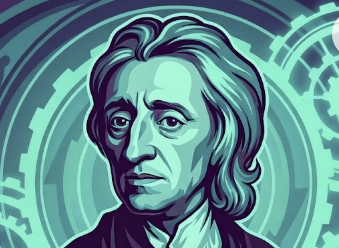
Those truly natural wants, which reason alone, without some other help, is not able to fence against, nor keep from disturbing us. The pains of sickness and hurts, hunger, thirst, and cold, want of sleep and rest or relaxation of the part weary'd with labour, are what all men feel and the best dispos'd minds cannot but be sensible of their uneasiness; and therefore ought, by fit applications, to seek their removal, though not with impatience, or over great haste, upon the first approaches of them, where delay does not threaten some irreparable harm. The pains that come from the necessities of nature, are monitors to us to beware of greater mischiefs, which they are the forerunner of; and therefore they must not be wholly neglected, and strain'd too far. But yet the more children can be inur'd to hardships of this kind, by a wise care to make them stronger in body and mind, the better it will be for them.
▼
Source
source
Sec. 107
2 weeks 1 day ago
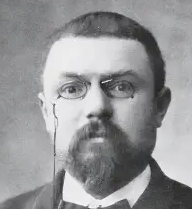
The principal aim of mathematical education is to develop certain faculties of the mind, and among these intuition is not the least precious. It is through it that the mathematical world remains in touch with the real world, and even if pure mathematics could do without it, we should still have to have recourse to it to fill up the gulf that separates the symbol from reality.
▼
Source
source
Part II. Ch. 2 : Mathematical Definitions and Education, p. 128
2 months 1 week ago
Progress usually comes from the barbarian, and there is nothing more stagnant than the philosophy of the philosophers and the theology of the theologians.
CivilSimian.com created by AxiomaticPanic, CivilSimian, Kalokagathia