


3 months 2 weeks ago
The Ideal Man of the eighteenth century was the Rationalist; of the seventeenth, the Christian Stoic; of the Renaissance, the Free Individual; of the Middle Ages, the Contemplative Saint. And what is our Ideal Man? On what grand and luminous mythological figure does contemporary humanity attempt to model itself? The question is embarrassing. Nobody knows. And, in spite of all the laudable efforts of the Institute for Intellectual Co-operation to fabricate an acceptable Ideal Man for the use of Ministers of Education, nobody, I suspect, will know until such time as a major poet appears upon the scene with the unmistakable revelation. Meanwhile, one must be content to go on piping up for reason and realism and a certain decency.
▼
Source
source
p. 5
Just now
From my youth onwards, I have felt sure that all thought which thinks itself out to an issue ends in mysticism. In the stillness of the African jungle I have been able to work out this thought and give it expression.
1 month 5 days ago
Within the last half century, the labours of such men as Von Baer, Rathke, Reichert, Bischof, and Remak, have almost completely unravelled... the successive stages of development which... are now as well known to the embryologist as are the steps of the metamorphosis of the silk-worm moth to the school boy.
▼
Source
source
Ch.2, p. 75

2 weeks 1 day ago
Multitude is a class concept. ... Class is determined by class struggle. There are, of course, in infinite number of ways that humans can be grouped into classes - hair color, blood type, and so forth - but the classes that matter are those defined by the lines of collective struggle. Race is just as much a political concept as economic class is in this regard. ... Class is a political concept, in short, in that a class is and can only be a collectivity that struggles in common.
▼
Source
source
104

3 months 3 weeks ago
The society adopts neither rites nor priesthood, and it will never lose sight of the resolution not to advance any thing as a society inconvenient to any sect or sects, in any time or country, and under any government. It will be seen that it is so much the more easy for the society to keep within this circle, because, that the dogmas of the Theophilanthropists are those upon which all the sects have agreed, that their moral is.that upon which there has never been the least dissent; and that the name they have taken expresses the double end of all the sects, that of leading to the adoration of God and love of man.
▼
Source
source
Introduction
3 months 2 weeks ago
The Philosophy of Nature takes up the material, prepared for it by physics out of experience, at the point to which physics has brought it, and again transforms it, without basing it ultimately on the authority of experience. Physics therefore must work into the hands of philosophy, so that the latter may translate into a true comprehension (Begriff) the abstract universal transmitted to it, showing how it issues from that comprehension as an intrinsically necessary whole.
1 month 1 week ago
A free society is a community of free beings, bound by the laws of sympathy and by the obligations of family love. It is not a society of people released from all moral constraint-for that is precisely the opposite of a society. Without moral constraint there can be no cooperation, no family commitment, no long-term prospects, no hope of economic, let alone social, order.
▼
Source
source
"The Limits of Liberty," The American Spectator
1 month 2 weeks ago
Sanity itself is a kind of convention.
▼
Source
source
The Hunter's Family

4 days ago
That man, I declare, is happy whom nothing makes less strong than he is; he keeps to the heights, leaning upon none but himself; for one who sustains himself by any prop may fall.


2 months 2 weeks ago
Corrupt influence, which is itself the perennial spring of all prodigality, and of all disorder; which loads us, more than millions of debt; which takes away vigor from our arms, wisdom from our councils, and every shadow of authority and credit from the most venerable parts of our constitution.
2 months 2 weeks ago
A modest man is steady, an humble man timid, and a vain one presumptuous.
▼
Source
source
Ch. 7
4 days ago
Did you ever hear my definition of marriage? It is, that it resembles a pair of shears, so joined that they can not be separated; often moving in opposite directions, yet always punishing anyone who comes between them.
▼
Source
source
Vol. I, ch. 11, p. 415; paraphrased variant: "Marriage resembles a pair of shears, so joined that they can not be separated; often moving in opposite directions, yet always punishing anyone who comes between them."

3 months 3 weeks ago
Like rowers, who advance backward.
▼
Source
source
Book III, Ch. 1. Of Profit and Honesty
3 months 2 weeks ago
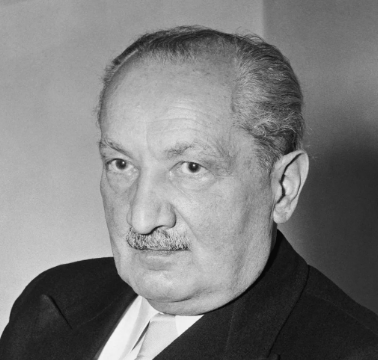
The small are always dependent on the great; they are "small" precisely because they think they are independent. The great thinker is one who can hear what is greatest in the work of other "greats" and who can transform it in an original manner.
▼
Source
source
p. 35

1 week 4 days ago
O reader, to what shifts is poor Society reduced, struggling to give still some account of herself, in epochs when Cash Payment has become the sole nexus of man to men!
▼
Source
source
Ch. 6, Laissez-Faire.
4 months 2 weeks ago
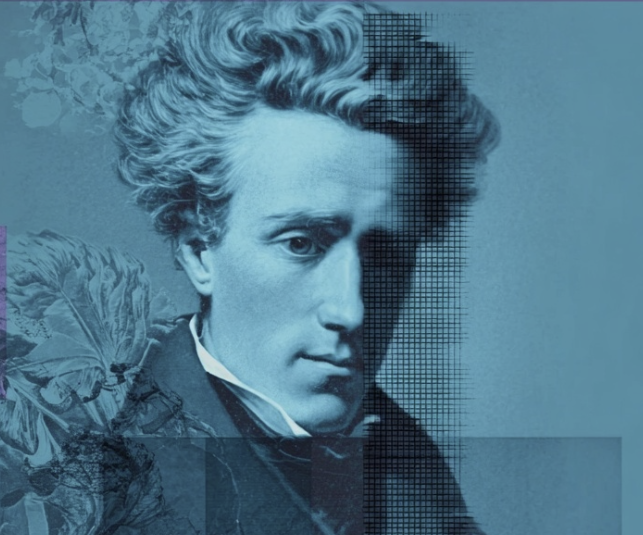
The Sophist demonstrates that everything is true and nothing is true.

1 month 2 weeks ago
Nobody can doubt that the entire range of applied science contributes to the very format of a newspaper. But the headline is a feature which began with the Napoleonic Wars. The headline is a primitive shout of rage, triumph, fear, or warning, and newspapers have thrived on wars ever since.
▼
Source
source
p. 7

3 months 3 weeks ago
And why should man, added he, pretend to an exemption from the lot of all other animals? The whole earth, believe me, PHILO, is cursed and polluted. A perpetual war is kindled amongst all living creatures. Necessity, hunger, want, stimulate the strong and courageous: Fear, anxiety, terror, agitate the weak and infirm. The first entrance into life gives anguish to the new-born infant and to its wretched parent: Weakness, impotence, distress, attend each stage of that life: and it is at last finished in agony and horror.
▼
Source
source
Demea to Philo, Part X
3 months 3 weeks ago
Few men have been admired by their own households.
▼
Source
source
Ch. 2

3 months 2 weeks ago
"Their own strength has betrayed them. They have [...] pulled down Deep Heaven on their heads."
▼
Source
source
Ch. 13 : They Have Pulled Down Deep Heaven on Their Heads
3 months 3 weeks ago
The laws of conscience, which we pretend to be derived from nature, proceed from custom.
▼
Source
source
Ch. 22. Of Custom, tr. Cotton, rev. W. Hazlitt, 1842
4 months 5 days ago
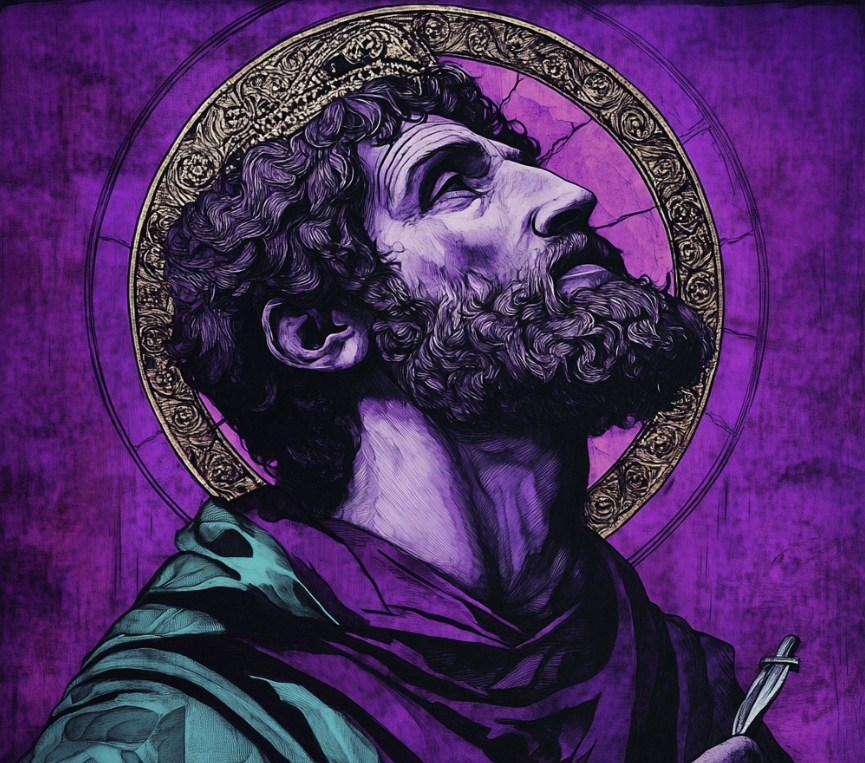
Venerate the martyrs, praise, love, proclaim, honor them. But worship the God of the martyrs.
▼
Source
source
273:9; translation from: The works of Saint Augustine, John E. Rotelle, New City Press, ISBN 1565480600 ISBN 9781565480605 p. 21
1 month 3 weeks ago
Science fiction is like other writing. It is just novels and short stories with machines.
3 months 3 weeks ago
A propensity to hope and joy is real riches: One to fear and sorrow, real poverty.
▼
Source
source
Part I, Essay 18: The Sceptic
3 months 2 weeks ago
The guillotine takes life almost without touching the body, just as prison deprives of liberty or a fine reduces wealth. It is intended to apply the law not so to a real body capable of feeling pain as to a juridical subject, the possessor, among other rights, of the right to exist it had to have the abstraction of the law itself.
▼
Source
source
pp. 13, Chapter One The Body of the Condemned

3 months 2 weeks ago
New truth is often uncomfortable, especially to the holders of power; nevertheless, amid the long record of cruelty and bigotry, it is the most important achievement of our intelligent but wayward species.
▼
Source
source
Religion and Science (1935), Ch. X: Conclusion
3 months 2 weeks ago
The idea that in order to get clear about the meaning of a general term one had to find the common element in all its applications has shackled philosophical investigation; for it has not only led to no result, but also made the philosopher dismiss as irrelevant the concrete cases, which alone could have helped him understand the usage of the general term.
▼
Source
source
p. 19
Just now
Truth has no special time of its own. Its hour is now - always, and indeed then most truly when it seems most unsuitable to actual circumstances. Care for distress at home and care for distress elsewhere do but help each other if, working together, they wake men in sufficient numbers from their thoughtlessness, and call into life a new spirit of humanity.
▼
Source
source
Ch. XI : Conclusion
5 days ago
No social co-operation under the division of labour is possible when some people or unions of people are granted the right to prevent by violence and the threat of violence other people from working. When enforced by violence, a strike in vital branches of production or a general strike are tantamount to a revolutionary destruction of society.

2 weeks ago
The idea of universal human dignity ultimately comes out of Christianity... the view that all human beings are equal in the sight of God because they have the capacity for moral choice. As Western thought developed in the 17th-18th centuries, this took on a secular form under thinkers like Jean-Jacques Rousseau or Immanuel Kant or Georg Hegel, who argued that human equality is... based on human autonomy.
▼
Source
source
11:12
2 months 1 day ago
That man and woman have an equality of duties and rights is accepted by woman even less than by man. Behind his destiny woman must annihilate herself, must be only his complement. A woman dedicates herself to the vocation of her husband; she fills up and performs the subordinate parts in it. But if she has any destiny, any vocation of her own, she must renounce it, in nine cases out of ten.
1 month 3 weeks ago
Indeed it may be only by risking the incoherence of identity that connection is possible.
▼
Source
source
Bodies That Matter: On the Discursive Limits of "Sex"

2 months 6 days ago
And yet Catholicism does not abandon ethics. No! No modern religion can leave ethics on one side. But our religion - although its doctors may protest against this - is fundamentally and for the most part a compromise between eschatology and ethics; it is eschatology pressed into the service of ethics. What else but this is that atrocity of the eternal pains of hell, which agrees so ill with the Pauline apocatastasis? Let us bear in mind these words which the Theologica Germanica, the manual of mysticism that Luther read, puts into the mouth of God: "If I must recompense your evil, I must recompense it with good, for I am and have no other." And Christ said: "Father, forgive them, for they know not what they do," and there is no man who perhaps knows what he does.
3 months 3 weeks ago
... no testimony is sufficient to establish a miracle, unless the testimony be of such a kind, that its falsehood would be more miraculous, than the fact, which it endeavors to establish.
▼
Source
source
Section 10 : Of Miracles Pt. 1
Just now
Physicists and philosophers stick stubbornly to the principles of a mechanistic interpretation of the world after physics has, in its factual structure, already outgrown the latter. They have the same excuse as the inhabitant of the mainland who for the first time travels on the open sea: he will desperately try to stay in sight of the vanishing coast line, as long as there is no other coast in sight, towards which he steers.
▼
Source
source
"Wissenschaft als symbolische Konstruktion des Menschen" Eranos-Jahrbuch (1948) GA IV, as quoted/translated by Erhard Scholz, "Philosophy as a Cultural Resource and Medium of Reflection for Hermann Weyl"
3 months 2 weeks ago
Don't say: "They must have something in common, or they would not be called 'games'" but look and see whether there is anything common to all. For if you look at them, you won't see something that is common to all, but similarities, affinities, and a whole series of them at that.
▼
Source
source
To repeat: don't think, but look! § 66
2 months 6 days ago
Morally, it is wrong to suppose the source of evil is outside oneself, that one is a vessel of holiness running over with virtue. Such a disposition is the best soil for a hateful and cruel fanaticism. It is as wrong to impute every wickedness to Jews, Freemasons, "intellectuals," as it is to blame all crimes on the bourgeoisie, the nobility, and the powers that were. No; the root of evil is in me as well, and I must take my share of the responsibility and the blame. That was true before the revolution and it is true still.
▼
Source
source
p. 128
1 month 3 weeks ago
1. Find a subject you care about.2. Do not ramble, though.3. Keep it simple.4. Have the guts to cut.5. Sound like yourself.6. Say what you mean to say.7. Pity the readers.
▼
Source
source
As quoted in Science Fictionisms (1995), compiled by William Rotsler

3 months 1 week ago
I would rather discover one cause than gain the kingdom of Persia.
▼
Source
source
Freeman (1948), p. 155

4 months 2 weeks ago
We all have a weakness for beauty.

3 months 1 day ago
It is better to suffer, than to do, wrong.
3 months 2 weeks ago
A physicist looks for causes; that does not necessarily imply that there are causes everywhere. A man may look for gold without assuming that there is gold everywhere; if he finds gold, well and good, if he doesn't he's had bad luck. The same is true when the physicists look for causes.
▼
Source
source
BBC Radio Debate on the Existence of God, Russell vs. Copleston, 1948
1 month 4 weeks ago
If we want a theory explaining how people play billiards, we do not want a theory of perfect billiard balls; we want a theory of what heuristics a human billiard player uses in order to plan and make a (often not quite accurate) shot. These heuristics and actions do not involve solving the differential equations of the billiard board; they involve rules of thumb and it is these practice guides to action we are trying to discover in order to explain the behavior.
▼
Source
source
An Empirically Based Microeconomics (1997), p. 173
3 months 2 weeks ago
I believe it might interest a philosopher, one who can think himself, to read my notes. For even if I have hit the mark only rarely, he would recognize what targets I had been ceaselessly aiming at.

2 months 3 weeks ago
Who knows whether the best of men be known, or whether there be not more remarkable persons forgot, than any that stand remembered in the known account of time? Without the favour of the everlasting register, the first man had been as unknown as the last, and Methuselah's long life had been his only chronicle.Oblivion is not to be hired. The greater part must be content to be as though they had not been, to be found in the register of God, not in the record of man. Twenty seven names make up the first story before the flood, and the recorded names ever since contain not one living century. The number of the dead long exceedeth all that shall live. The night of time far surpasseth the day, and who knows when was the Æquinox? Every hour adds unto that current arithmetick, which scarce stands one moment.
▼
Source
source
Chapter V
3 months 2 weeks ago
If there is equality, it is in His love, not in us.
4 weeks 1 day ago
We should always speak what would please the man of whom we expect a favour, like the hunter who sings sweetly when he desires to shoot a deer.

3 months 4 weeks ago
The things that we can see with our physical eyes are mere shadows of reality. If they appear ugly and ill formed, then what must be the ugliness of the soul in sin, deprived of all light? The soul, like the body, can undergo transformation in appearance. In sin it appears as completely ugly to the beholder. In virtue it shines resplendently before God.
4 months 2 weeks ago
Parmenides: If anyone, with his mind fixed on all these objections and others like them, denies the existence of ideas of things, and does not assume an idea under which each individual thing is classed, he will be quite at a loss, since he denies that the idea of each thing is always the same, and in this way he will utterly destroy the power of carrying on discussion... Then what will become of philosophy? To what can you turn, if these things are unknown?
CivilSimian.com created by AxiomaticPanic, CivilSimian, Kalokagathia