

3 months 2 weeks ago
Philosophy is by its nature something esoteric, neither made for the mob nor capable of being prepared for the mob.
▼
Source
source
Introduction to the Critical Journal of Philosophy, cited in W. Kaufmann, Hegel (1966), p. 56
2 months 2 days ago
Perhaps even more than constituted authority, it is social uniformity and sameness that harass the individual most. His very "uniqueness," "separateness" and "differentiation" make him an alien, not only in his native place, but even in his own home. Often more so than the foreign born who generally falls in with the established. In the true sense one's native land, with its back ground of tradition, early impressions, reminiscences and other things dear to one, is not enough to make sensitive human beings feel at home. A certain atmosphere of "belonging," the consciousness of being "at one" with the people and environment, is more essential to one's feeling of home. This holds good in relation to one's family, the smaller local circle, as well as the larger phase of the life and activities commonly called one's country. The individual whose vision encompasses the whole world often feels nowhere so hedged in and out of touch with his surroundings than in his native land.

3 months 4 weeks ago
The things that we can see with our physical eyes are mere shadows of reality. If they appear ugly and ill formed, then what must be the ugliness of the soul in sin, deprived of all light? The soul, like the body, can undergo transformation in appearance. In sin it appears as completely ugly to the beholder. In virtue it shines resplendently before God.
3 months 2 weeks ago
Try to exclude the possibility of suffering which the order of nature and the existence of free-wills involve, and you find that you have excluded life itself.
1 month 2 weeks ago
Some teachers of mankind - as Plato... the first Christians, the orthodox Muslims, and the Buddhists - have gone so far as to repudiate art. ...[They consider it] so highly dangerous in its power to infect people against their wills, that mankind will lose far less by banishing all art than by tolerating each and every art. ...such people were wrong in repudiating all art, for they denied that which cannot be denied - one of the indispensable means of communication, without which mankind could not exist. ...Now there is only fear, lest we should be deprived of any pleasures art can afford, so any type of art is patronized. And I think the last error is much grosser than the first and that its consequences are far more harmful.
3 months 1 week ago
And when the physician said, "Sir, you are an old man," "That happens," replied Pausanias, "because you never were my doctor."
▼
Source
source
Of Pausanias the Son of Phistoanax
3 months 3 weeks ago
Few are the women and maidens who would let themselves think that one could at the same time be joyous and modest. They are all bold and coarse in their speech, in their demeanor wild and lewd. That is now the fashion of being in good cheer. But it is specially evil that the young maiden folk are exceedingly bold of speech and bearing, and curse like troopers, to say nothing of their shameful words and scandalous coarse sayings, which one always hears and learns from another.
4 months 2 weeks ago
It is by the Imperial Capital that contemporaries (and posterity, too) judge an Empire, and its magnificence impresses them mightily and leads them to judge the Emperor a great man and hero, even though it may all be based on robbery, and though the provinces of the Empire may be sunk in misery.
2 months 2 weeks ago
We have not made the Revolution, the Revolution has made us.
▼
Source
source
Act II.
2 months 2 weeks ago
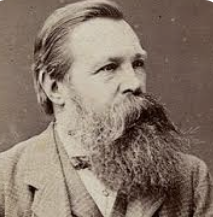
How do you think the transition from the present situation to community of Property is to be effected? The first, fundamental condition for the introduction of community of property is the political liberation of the proletariat through a democratic constitution.
▼
Source
source
Draft of a Communist Confession of Faith

2 months 2 weeks ago
It is provable both that the historical sequence was, in its main outlines, a necessary one; and that the causes which determined it apply to the child as to the race. ...as the mind of humanity placed in the midst of phenomena and striving to comprehend them has, after endless comparisons, speculations, experiments, and theories, reached its present knowledge of each subject by a specific route; it may rationally be inferred that the relationship between mind and phenomena is such as to prevent this knowledge from being reached by any other route; and that as each child's mind stands in this same relationship to phenomena, they can be accessible to it only through the same route. Hence in deciding upon the right method of education, an inquiry into the method of civilization will help to guide us.

4 months 2 weeks ago
To work and create "for nothing," to sculpture in clay, to know one's creation has no future, to see one's work destroyed in a day while being aware that fundamentally this has no more importance than building for centuries, this is the difficult wisdom that absurd thought sanctions. Performing these two tasks simultaneously, negating on the one hand and magnifying on the other, it the way open to the absurd creator. He must give the void its colors.
3 months 2 weeks ago
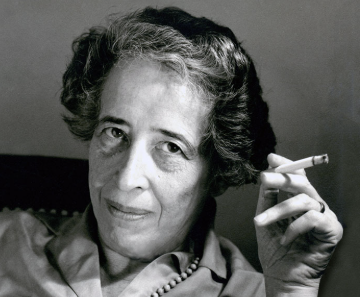
The sad truth of the matter is that most evil is done by people who never made up their minds to be or do either evil or good.
▼
Source
source
The Life of the Mind (1978), "Thinking"
1 week 4 days ago
The sense of mercy is found in all men; the sense of shame is found in all men; the sense of respect is found in all men; the sense of right and wrong is found in all men.
▼
Source
source
6A:6
5 days ago
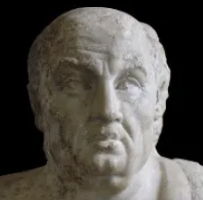
Press on, therefore, as you have begun; perhaps you will be led to perfection, or to a point which you alone understand is still short of perfection.
1 month 3 weeks ago
The Intentionality of the mind not only creates the possibility of meaning, but limits its forms.
▼
Source
source
P. 166.
3 months 2 weeks ago
Generally speaking there is no irreducible taste or inclination. They all represent a certain appropriative choice of being. It is up to existential psychoanalysis to compare and classify them. Ontology abandons us here; it has merely enabled us to determine the ultimate ends of human reality, its fundamental possibilities, and the value which haunts it.
1 month 2 weeks ago
A man's reach must exceed his grasp or what's a metaphor?
▼
Source
source
(p.7) A play on the lines in Robert Browning's poem "Andrea del Sarto":Ah, but a man's reach should exceed his grasp, Or what's a heaven for?
3 months 2 weeks ago
In capitalist society spare time is acquired for one class by converting the whole life-time of the masses into labour-time.
▼
Source
source
Vol. I, Ch. 17, Section IV, pg. 581.
3 months 3 weeks ago
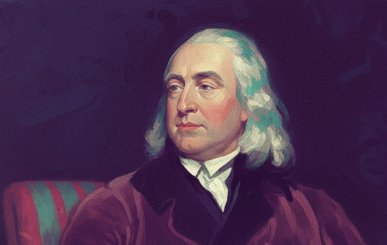
Create all the happiness you are able to create: remove all the misery you are able to remove. Every day will allow you to add something to the pleasure of others, or to diminish something of their pains. And for every grain of enjoyment you sow in the bosom of another, you shall find a harvest in your own bosom; while every sorrow which you pluck out from the thoughts and feelings of a fellow creature shall be replaced by beautiful peace and joy in the sanctuary of your soul.
▼
Source
source
Advice to a young girl, 22 June 1830

3 months 3 weeks ago
Children must be under authority, and are themselves aware that they must be, although they like to play a game of rebellion at times. The case of children is unique in the fact that those who have authority over them are sometimes fond of them. Where this is the case, the children do not resent the authority in general, even when they resist it on particular occasions. Education authorities, as opposed to teachers, have not this merit, and do in fact sacrifice the children to what they consider the good of the State by teaching them "patriotism," i.e., a willingness to kill and be killed for trivial reasons.
▼
Source
source
Ch. 13: Freedom in Society
3 months 2 weeks ago
This much is certain, the ERA OF REVOLUTION has now FAIRLY OPENED IN EUROPE once more. And the general state of affairs is good.
▼
Source
source
Letter to Friedrich Engels (13 February 1863), quoted in The Collected Works of Karl Marx and Friedrich Engels: Volume 41. Letters 1860-64 (2010), p. 453

3 months 1 week ago
I will now tell you who are assembled here the wise sayings of Mazda, the praises of Ahura and the hymns of the Good Spirit, the sublime truth which I see rising out of these flames. You shall therefore harken to the Soul of Nature. Contemplate the beams of fire with a most pious mind. Every one, both men and women, ought to-day to choose his creed. Ye offspring of renowned ancestors, awake to agree with us. So preached Zoroaster, the proph of the Parsis, in one of his earliest sermons nearly 3,500 years ago.
▼
Source
source
p. 15 (Introduction), S. A. Kapadia
5 days ago
You have the courage to tell the masses what no politician told them: you are inferior and all the improvements in your conditions which you simply take for granted you owe to the effort of men who are better than you. If this be arrogance, as some of your critics observed, it is still the truth that had to said in the age of the Welfare State.
▼
Source
source
Mises' letter to Ayn Rand praising Atlas Shrugged,(23 January 1958), quoted in Mises: The Last Knight of Liberalism (2007).
3 months 2 weeks ago
Every Christian is to become a little Christ. The whole purpose of becoming a Christian is simply nothing else.
▼
Source
source
Book IV, Chapter 4, "Good Infection"
1 month 2 weeks ago
Art is not, as the metaphysicians say, the manifestation of some mysterious Idea of beauty or God; it is not, as the aesthetical physiologists say, [play or] a game in which one releases surplus energy, ...not the production of pleasing objects, and is above all, not pleasure itself, but it is the means of union among mankind, joining them in the same feelings, and necessary for the life and progress toward the good of the individual and of humanity.

3 months 3 weeks ago
Life is bristling with thorns, and I know no other remedy than to cultivate one's garden.
▼
Source
source
Letter to Pierre-Joseph Luneau de Boisjermain (21 October 1769), from Oeuvres Complètes de Voltaire: Correspondance [Garnier frères, Paris, 1882], vol. XIV, letter # 7692 (p. 478)
2 months 2 days ago
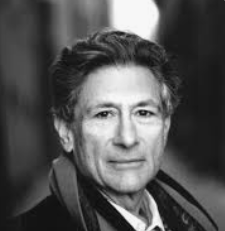
It isn't at all a matter of being optimistic, but rather of continuing to have faith in the ongoing and literally unending process of emancipation and enlightenment that, in my opinion, frames and gives direction to the intellectual vocation.
▼
Source
source
Preface to 25th anniversary edition of Orientalism (1994), p. xv

3 months 2 weeks ago
I remind young people everywhere I go, one of the worst things the older generation did was to tell them for twenty-five years "Be successful, be successful, be successful" as opposed to "Be great, be great, be great". There's a qualitative difference.
▼
Source
source
Speech in San Francisco: Democracy Matters
1 month 2 weeks ago
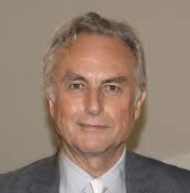
You don't have to be a scientist - you don't have to play the Bunsen burner - in order to understand enough science to overtake your imagined need and fill that fancied gap. Science needs to be released from the lab into the culture.

2 months 2 weeks ago
If truth were not boring, science would have done away with God long ago. But God as well as the saints is a means to escape the dull banality of truth.
1 week 5 days ago
The true, prescriptive artist strives after artistic truth; the lawless artist, following blind instinct, after an appearance of naturalness. The one leads to the highest peaks of art, the other to its lowest depths.
▼
Source
source
Propylaea (1798) Introduction

4 months 1 week ago
The journey of a thousand miles begins with a single step.
4 weeks 1 day ago
Nothing is too terrible to be true if it is consistent with the laws of nature.
▼
Source
source
The Pinprick Argument, BLTC Research, 2005
2 months 2 weeks ago
We live in the false as long as we have not suffered. But when we begin to suffer, we enter the truth only to regret the false.

3 months 3 weeks ago
Fear is in almost all cases a wretched instrument of government, and ought in particular never to be employed against any order of men who have the smallest pretensions to independency.
▼
Source
source
Chapter I, Part III, p. 862.
3 months 2 weeks ago
Money is itself a product of circulation.
▼
Source
source
Notebook VI, The Chapter on Capital, p. 579.
4 months 2 weeks ago
A tragedy, then, is the imitation of an action that is serious and also, as having magnitude, complete in itself; in language ... not in a narrative form; with incidents arousing pity and fear, wherewith to accomplish its catharsis of such emotions.
3 months 2 weeks ago
Landlords... grow richer, as it were in their sleep, without working, risking, or economizing.
▼
Source
source
Book V, Chapter 1, Section 5

4 months 2 weeks ago
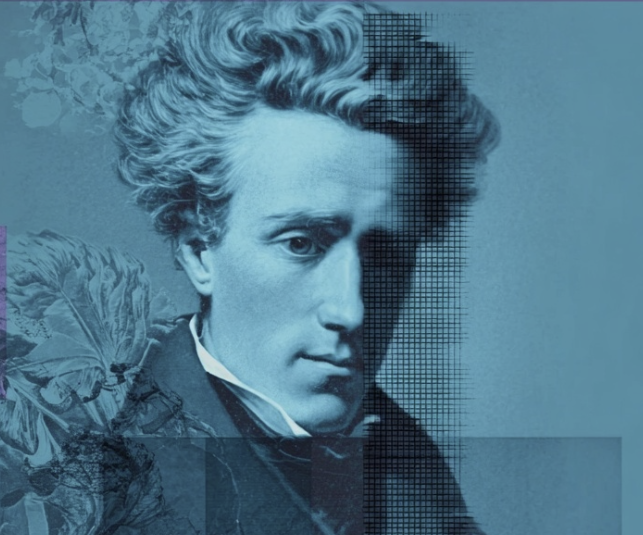
When God chooses to let himself be born in lowliness, when he who holds all possibilities in his hand takes upon himself the form of a lowly servant, when he goes about defenseless and lets people do with him what they will, he surely must know well enough what he is doing and why he wills it; but for all that it is he who has people in his power and not they who have power over him-so history ought not play Mr. Malapert by this wanting to make manifest who he was.
2 months 3 days ago
These left me in no doubt that something was trying to communicate with us, but that direct communication would be counterproductive. It seemed to be an important part of the scheme to create a sense of mystery.
▼
Source
source
p. 352
2 months 1 week ago
Torn in this way from its normal connection with contemplation, with being within one's self, pure action permits and produces only a chain of stupidities which we might better call "stupidity unchained." So we see today that an absurd attitude justifies the appearance of an opposing attitude no more reasonable; at least, reasonable enough, and so on indefinitely. Such is the extreme to which political affairs in the West have come!
▼
Source
source
p. 34
4 months 4 days ago
Everything has two handles, the one by which it may be carried, the other by which it cannot. If your brother acts unjustly, don't lay hold on the action by the handle of his injustice, for by that it cannot be carried; but by the opposite, that he is your brother, that he was brought up with you; and thus you will lay hold on it, as it is to be carried.
▼
Source
source
(43).
5 days ago
In the pedagogical as in certain other spheres freedom is not allowed to erupt, the power of the opposition is not allowed to put a word in edgewise: they want submissiveness. Only a formal and material training is being aimed at and only scholars come out of the menageries of the humanists, only "useful citizens" out of those of the realists, both of whom are indeed nothing but subservient people. Our good background of recalcitrancy [sic] gets strongly suppressed and with it the development of knowledge to free will. The result of school is then philistinism.
▼
Source
source
p. 23
2 months 1 week ago
Rohde became more and more firmly bound to the bourgeois world, its institutions and accepted opinions. ... The contrast between the two natures makes Rohde and Nietzsche exemplary representatives of two distinctive worlds. In their youth they both live in the realm of boundless possibilities and feel an affinity through the exuberance of their noble aspirations. Subsequently they go in opposite directions. Nietzsche remains young, leaving concrete reality as his task assumes existential import. Rohde grows old, bourgeois, stable, and skeptical. Hence courage is a fundamental trait in Nietzsche, plaintive self-irony in Rohde. ... Rohde retained the interests but not the attitudes of his youth; he looked to the world of the Greeks for the object of his contemplation rather than the norm of obligation.
▼
Source
source
pp. 61-62

2 months 1 week ago
So watch yourselves. If your brother sins, rebuke him, and if he repents, forgive him. If he sins against you seven times in a day, and seven times comes back to you and says, 'I repent,' forgive him.
▼
Source
source
(Luke 17:3-4) (NIV)
2 months 3 days ago
The Outsider cannot accept life as it is, who cannot consider his own existence or anyone else's necessary. He sees 'too deep and too much'. It is still a question of self-expression.
▼
Source
source
Chapter Four The Attempt to Gain Control
2 months 2 days ago
The natural impulse of the primitive man to strike back, to avenge a wrong, is out of date. Instead, the civilized man, stripped of courage and daring, has delegated to an organized machinery the duty of avenging his wrongs, in the foolish belief that the State is justified in doing what he no longer has the manhood or consistency to do.
CivilSimian.com created by AxiomaticPanic, CivilSimian, Kalokagathia