

1 month 2 weeks ago
To be overwise is to ossify; and the scruple-monger ends by standing stockstill.
▼
Source
source
314

3 months 2 weeks ago
Kierkegaard writes: If Christianity were so easy and cozy, why should God in his Scriptures have set Heaven and Earth in motion and threatened eternal punishments? - Question: But then in that case why is this Scriptures so unclear?
▼
Source
source
p. 31e

3 months 3 weeks ago
I have here only made a nosegay of culled flowers, and have brought nothing of my own but the thread that ties them together.
▼
Source
source
Book III, Ch. 12. Of Physiognomy
1 day ago
The divergent scales of values scream in discordance, they dazzle and daze us, and in order that it might not be painful we steer clear of all other values, as though from insanity, as though from illusion, and we confidently judge the whole world according to our own home values. Which is why we take for the greater, more painful and less bearable disaster not that which is in fact greater, more painful and less bearable, but that which lies closest to us. Everything which is further away, which does not threaten this very day to invade our threshold - with all its groans, its stifled cries, its destroyed lives, even if it involves millions of victims - this we consider on the whole to be perfectly bearable and of tolerable proportions.

2 months 2 weeks ago
...what I look to with seriousness is the Phalanx of Party which exists in the body of the dissenters, who are, at the very least, nine tenths of them entirely devoted, some with greater some with less zeal, to the principles of the French Revolution.
▼
Source
source
Letter to the Home Secretary, Henry Dundas (30 September 1791), quoted in Alfred Cobban and Robert A. Smith (eds.), The Correspondence of Edmund Burke, Volume VI: July 1789-December 1791 (1967), p. 419

2 months 2 weeks ago
You know I am not born to tread in the beaten track - the peculiar bent of my nature pushes me on.
▼
Source
source
Letter to Everina Wollstonecraft

3 months 2 weeks ago
To see ourselves as others see us is a most salutary gift. Hardly less important is the capacity to see others as they see themselves.

5 days ago
It is the quality of a great soul to scorn great things and to prefer that which is ordinary rather than that which is too great.

4 months 2 weeks ago
476 ... is usually taken as the date of the "fall of the Roman Empire." The date, however, is a false one. No one at this period of time considered that the Roman Empire had "fallen." Indeed, it still existed and was the most powerful realm in Europe. Its capital was at Constantinople and the Emperor was Zeno. It is only because we ourselves are culturally descended from the Roman west, that we tend to ignore the continued existence of the Roman Empire in the east.

3 months 2 weeks ago
We are always getting ready to live, but never living.
▼
Source
source
April 12, 1834

4 months 1 week ago
The superior man honors his virtuous nature, and maintains constant inquiry and study, seeking to carry it out to its breadth and greatness, so as to omit none of the more exquisite and minute points which it embraces, and to raise it to its greatest height and brilliancy, so as to pursue the course of the Mean. He cherishes his old knowledge, and is continually acquiring new. He exerts an honest, generous earnestness, in the esteem and practice of all propriety. Thus, when occupying a high situation he is not proud, and in a low situation he is not insubordinate. When the kingdom is well governed, he is sure by his words to rise; and when it is ill governed, he is sure by his silence to command forbearance to himself.
2 months 1 week ago
This is the pure form of servitude: to exist as an instrument.
▼
Source
source
p. 33

3 months 4 weeks ago
Women . . . have . . . small and narrow chests, and broad hips, to the end they should remain at home, sit still, keep house, and bear and bring up children. . . . A woman is, or at least should be, a friendly, courteous, and a merry companion in life . . . the honor and ornament of the house, and inclined to tenderness, for thereunto are they chiefly created, to bear children, and to be the pleasure, joy and solace of their husbands.
▼
Source
source
-- Table Talk, quoted in Luther On "Woman"
3 months 3 weeks ago
The world is but a perpetual see-saw.

3 months 2 weeks ago
Only the skilled can judge the skilfulness, but that is not the same as judging the value of the result.
▼
Source
source
A Preface to Paradise Lost (1942), Chapter 2: "Is Criticism Possible?"
3 months 2 weeks ago
The relation of feeling toward art and its bringing-forth can be one of production or one of reception and enjoyment.
▼
Source
source
p. 78

1 month 2 weeks ago
Science is meaningless because it gives no answer to our question, the only question important for us: 'what shall we do and how shall we live.
▼
Source
source
Quoted by Max Weber in his lecture "Science as a Vocation"; in Lynda Walsh (2013)

1 month 3 weeks ago
You need to know enough of the natural sciences so that you are not a stranger in the world.

2 months 3 days ago
The real importance of Swedenborg lies in the doctrines he taught, which are the reverse of the gloom and hell-fire of other breakaway sects. He rejects the notion that Jesus died on the cross to atone for the sin of Adam, declaring that God is neither vindictive nor petty-minded, and that since he is God, he doesn't need atonement. It is remarkable that this common-sense view had never struck earlier theologians. God is Divine Goodness, and Jesus is Divine Wisdom, and Goodness has to be approached through Wisdom. Whatever one thinks about the extraordinary claims of its founder, it must be acknowledged that there is something very beautiful and healthy about the Swedenborgian religion. Its founder may have not been a great occultist, but he was a great man.
▼
Source
source
p. 280
3 months 3 weeks ago
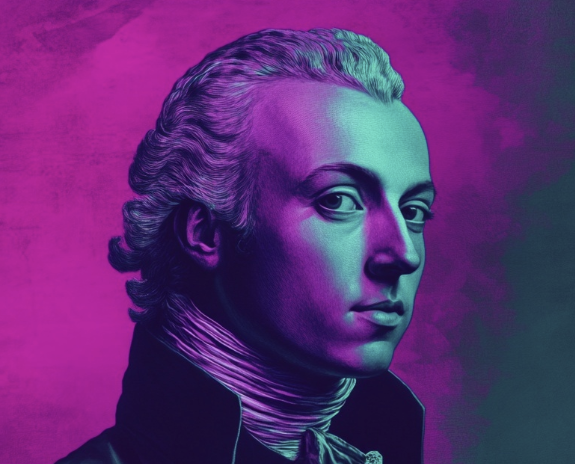
A metaphysics of morals is therefore indispensably necessary, not merely because of a motive to speculation - for investigating the source of the practical basic principles that lie a priori in our reason - but also because morals themselves remain subject to all sorts of corruption as long as we are without that clue and supreme norm by which to appraise them correctly...
3 months 2 weeks ago
Friendship is unnecessary, like philosophy, like art, like the universe itself (for God did not need to create). It has no survival value; rather it is one of those things which give value to survival.

4 months 2 weeks ago
You have already grasped that Sisyphus is the absurd hero. He is, as much through his passions as through his torture. His scorn of the gods, his hatred of death, and his passion for life won him that unspeakable penalty in which the whole being is exerted toward accomplishing nothing. This is the price that must be paid for the passions of this earth. Nothing is told us about Sisyphus in the underworld. Myths are made for the imagination to breathe life into them.

2 months 1 week ago
And Jesus answered and said unto her, Martha, Martha, thou art careful and troubled about many things, but one thing is needful: and Mary hath chosen that good part, which shall not be taken away from her.
▼
Source
source
10:41-42 (King James Version| KJV)

2 months 6 days ago
Humility consists of knowing that in this world the whole soul, not only what we term the ego in its totality, but also the supernatural part of the soul, which is God present in it, is subject to time and to the vicissitudes of change. There must be absolutely acceptance of the possibility that everything material in us should be destroyed. But we must simultaneously accept and repudiate the possibility that the supernatural part of the soul should disappear.
▼
Source
source
"Concerning the Our Father" in Waiting on God (1972), Routledge & Kegan Paul edition, p. 153
2 months 2 days ago
Optimism is an alienated form of faith, pessimism an alienated form of despair. If one truly responds to man and his future, ie, concernedly and "responsibly." one can respond only by faith or by despair. Rational faith as well as rational despair are based on the most thorough, critical knowledge of all the factors that are relevant for the survival of man.
▼
Source
source
p. 483

1 week 4 days ago
The inventive genius of great England will not forever sit patient with mere wheels and pinions, bobbins, straps and billy-rollers whirring in the head of it. The inventive genius of England is not a Beaver's, or a Spinner's or Spider's genius: it is a Man's genius, I hope, with a God over him!
2 months 1 week ago
Every thinker puts some portion of an apparently stable world in peril and no one can wholly predict what will emerge in its place.
▼
Source
source
Ch. VI: Nature, Mind and the Subject

3 months 2 weeks ago
This dysfunction of power was related to a central excess: what might be called the monarchical 'super-power', which identified the right to punish with the personal power of the sovereign.
▼
Source
source
Chapter Two, pp.80

3 months 3 weeks ago
Children must be under authority, and are themselves aware that they must be, although they like to play a game of rebellion at times. The case of children is unique in the fact that those who have authority over them are sometimes fond of them. Where this is the case, the children do not resent the authority in general, even when they resist it on particular occasions. Education authorities, as opposed to teachers, have not this merit, and do in fact sacrifice the children to what they consider the good of the State by teaching them "patriotism," i.e., a willingness to kill and be killed for trivial reasons.
▼
Source
source
Ch. 13: Freedom in Society
3 months 2 weeks ago
That what we seek we shall find; what we flee from flees from us.
▼
Source
source
Fate
2 months 6 days ago
We should desire neither the immortality nor the death of any human being, whoever he may be, with whom we have to do.
▼
Source
source
p. 260

2 months 2 weeks ago
One hardly saves a world without ruling it.
3 months 2 weeks ago
Is not marriage an open question, when it is alleged, from the beginning of the world, that such as are in the institution wish to get out, and such as are out wish to get in?
▼
Source
source
Montaigne; or, The Skeptic

4 months 2 weeks ago
The characters of self-restrained officials are exceedingly careful and just and conservative, but they lack keenness and a certain quick and active boldness. The courageous natures, on the other hand, are deficient in justice and caution in comparison with the former, but excel in boldness of action; and unless both these qualities are present it is impossible for a state to be entirely prosperous in public and private matters.
3 months 2 weeks ago
For what are they all in their high conceit, When man in the bush with God may meet?
▼
Source
source
Good-bye, st. 4
3 months 2 weeks ago
Even atheists rebel and express, like Hardy and Housman, their rage against God although (or because) He does not, on their view, exist...
1 month 3 weeks ago
The great event of this period, the great trauma, is this decline of strong referentials, these death pangs of the real and of the rational that open onto an age of simulation. Whereas so many generations, and particularly the last, lived in the march of history, in the euphoric or catastrophic expectation of a revolution-today one has the impression that history has retreated, leaving behind it an indifferent nebula, traversed by currents, but emptied of references. It is into this void that the phantasms of a past history recede, the panoply of events, ideologies, retro fashions-no longer so much because people believe in them or still place some hope in them, but simply to resurrect the period when at least there was history, at least there was violence (albeit fascist), when at least life and death were at stake.
▼
Source
source
"History: A Retro Scenario," pp. 43-44

3 months 3 weeks ago
In our reasonings concerning matter of fact, there are all imaginable degrees of assurance, from the highest certainty to the lowest species of moral evidence. A wise man, therefore, proportions his belief to the evidence.
▼
Source
source
Section X: Of Miracles; Part I. 87
3 months 3 weeks ago
Government by majorities can be made less oppressive by devolution, by placing the decision of questions primarily affecting only a section of the community in the hands of that section, rather than of a Central Chamber. In this way, men are no longer forced to submit to decisions made in a hurry by people mostly ignorant of the matter in hand and not personally interested.
▼
Source
source
Ch VIII: The World As It Could Be Made
3 months 1 week ago
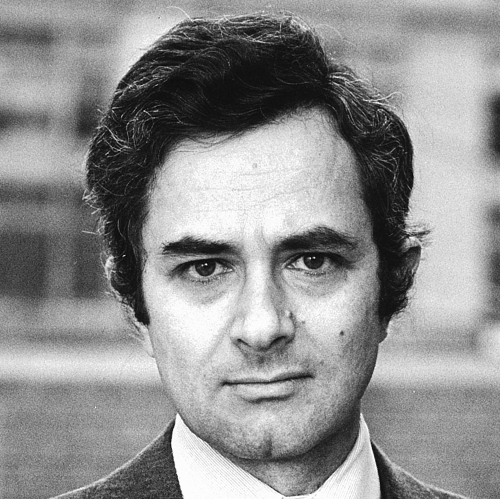
In speaking of the move from subjective to objective characterization, I wish to remain noncommittal about the existence of an endpoint, the completely objective intrinsic nature of the thing, which one might or might not be able to reach. It may be more accurate to think of objectivity as a direction in which the understanding can travel. And in understanding a phenomenon like lightning, it is legitimate to go as far away as one can from a strictly human viewpoint.But in the case of experience, on the other hand, the connexion with a particular point of view seems much closer. It is difficult to understand what could be meant by the objective character of an experience, apart from the particular point of view from which its subject apprehends it. After all, what would be left of what it was like to be a bat if one removed the viewpoint of the bat?
▼
Source
source
p. 173.

1 month 2 weeks ago
What began as a "Romantic reaction" towards organic wholeness may or may not have hastened the discovery of electro-magnetic waves. But certainly the electro-magnetic discoveries have recreated the simultaneous "field" in all human affairs so that the human family now exists under conditions of a "global village." We live in a single constricted space resonant with tribal drums. So that concern with the "primitive" today is as banal as nineteenth-century concern with "progress," and as irrelevant to our problems. The new electronic interdependence recreates the world in the image of a global village.
▼
Source
source
(p. 36)
2 months 1 week ago
Have no fear, little flock, for your Father has approved of giving you the Kingdom.
▼
Source
source
12:32
Just now
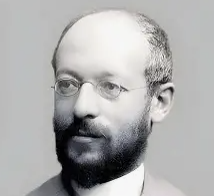
The most profound reason... why the metropolis conduces to the urge for the most individual personal existence... appears to me to be the following: the development of modern culture is characterized by the preponderance of what one may call the "objective spirit" over the "subjective spirit."
▼
Source
source
p. 421 as cited in: Kenneth Allan (2009) Explorations in Classical Sociological Theory: Seeing the Social World. p. 212

2 months 1 week ago
And yet there is nothing so badly imagined: nature seems to have provided, that the follies of men should be transient, but they by writing books render them permanent. A fool ought to content himself with having wearied those who lived with him: but he is for tormenting future generations; he is desirous that his folly should triumph over oblivion, which he ought to have enjoyed as well as his grave; he is desirous that posterity should be informed that he lived, and that it should be known for ever that he was a fool. Commonly paraphrased as "An author is a fool who, not content with having bored those who have lived with him, insists on boring future generations".
▼
Source
source
No. 66. (Rica writing to * * *)
2 months 2 weeks ago
It may be confidently asserted that no man chooses evil because it is evil; he only mistakes it for happiness, the good he seeks. And the desire of rectifying these mistakes, is the noble ambition of an enlightened understanding, the impulse of feelings that Philosophy invigorates.
▼
Source
source
A Vindication of the Rights of Men
2 months 1 week ago
Suffer little children, and forbid them not, to come unto me: for of such is the kingdom of heaven. Verily I say unto you, Whosoever shall not receive the kingdom of God as a little child shall in no wise enter therein.
▼
Source
source
18:16-17 (KJV) Variant translation: Let the little children come to me, and do not hinder them, for the kingdom of God belongs to such as these. I tell you the truth, anyone who will not receive the kingdom of God like a little child will never enter it.
3 months 3 weeks ago
I once received a letter from an eminent logician, Mrs. Christine Ladd Franklin, saying that she was a solipsist, and was surprised that there were no others. Coming from a logician, this surprise surprised me.
▼
Source
source
Human Knowledge: Its Scope and Limits (1948), Part III, chapter II, "Solipsism", p. 196
4 months 2 weeks ago
Goodbye, friend Elijiah, and remember that, although people apply the phrase to Aurora, it is, from this point on, Earth itself that is the true World of the Dawn.



CivilSimian.com created by AxiomaticPanic, CivilSimian, Kalokagathia