


2 months 2 weeks ago
A fool with a heart and no sense is just as unhappy as a fool with sense and no heart.
▼
Source
source
Part 1, Chapter 7
2 months 2 weeks ago
A more or less superficial layer of the unconscious is undoubtedly personal. I call it the "personal unconscious". But this personal layer rests upon a deeper layer, which does not derive from personal experience and is not a personal acquisition but is inborn. This deeper layer I call the "collective unconscious". I have chosen the term "collective" because this part of the unconscious is not individual but universal; in contrast to the personal psyche, it has contents and modes of behaviour that are more or less the same everywhere and in all individuals.
▼
Source
source
p. 3-4

3 months 3 weeks ago
But the best demonstration by far is experience, if it go not beyond the actual experiment.
▼
Source
source
Aphorism 70
2 months 1 week ago
The realer religion is, so much the more it means its own overcoming. It wills to cease to be the special domain "Religion" and wills to become life. It is concerned in the end not with specific religious acts, but with redemption from all that is specific.
▼
Source
source
p. 34

2 months 3 days ago
At the bottom of the heart of every human being, from earliest infancy until the tomb, there is something that goes on indomitably expecting, in the teeth of all experience of crimes committed, suffered, and witnessed, that good and not evil will be done to him. It is this above all that is sacred in every human being.The good is the only source of the sacred. There is nothing sacred except the good and what pertains to it.
▼
Source
source
p. 51

3 months 2 weeks ago
Fascism is not defined by the number of its victims, but by the way it kills them.
▼
Source
source
On the Execution of Julius and Ethel Rosenberg, Libération
4 months 2 days ago
Reason is not measured by size or height, but by principle.
▼
Source
source
Book I, ch. 12, 26.

2 months 3 weeks ago
There is surely a Physiognomy, which those experienced and Master Mendicants observe... For there are mystically in our faces certain Characters that carry in them the motto of our Souls, wherein he that cannot read A.B.C. may read our natures.
▼
Source
source
Section 2

1 month 2 weeks ago
The vocation of every man and woman is to serve other people.
▼
Source
source
What Is To Be Done? (1886) Chap. XL

4 months 1 week ago
Among the appliances to transform the people, sound and appearances are but trivial influences.

3 months 2 weeks ago
Matter is indeed infinitely and incredibly refined. To anyone who has ever looked on the face of a dead child or parent the mere fact that matter could have taken for a time that precious form, ought to make matter sacred ever after. It makes no difference what the principle of life may be, material or immaterial, matter at any rate co-operates, lends itself to all life's purposes. That beloved incarnation was among matter's possibilities.
▼
Source
source
Lecture III, Some Metaphysical Problems Pragmatically Considered

3 months 1 week ago
The aspects of things that are most important for us are hidden because of their simplicity and familiarity. (One is unable to notice something - because it is always before one's eyes.) The real foundations of his enquiry do not strike a man at all. Unless that fact has at some time struck him. - And this means: we fail to be struck by what, once seen, is most striking and most powerful.
▼
Source
source
§ 129

1 month 1 week ago
I'm delighted to hear someone make the claim that there is moral progress because it can be such a incendiary thing to say, and its something that I say and deeply believe in.

4 months 6 days ago
Philosophers do not claim that God does not know particulars; they rather claim that He does not know them the way humans do. God knows particulars as their Creator whereas humans know them as a privileged creations of God might know them.
3 months 2 weeks ago
Instead of noble men, let us have noble villages of men. If it is necessary, omit one bridge over the river, round a little there and throw one arch at least over the darker gulf of ignorance which surrounds us.
▼
Source
source
Editorial, Andhra Granthalayam, vol. 1, no. 2 (1939) p. 6
4 months 1 week ago
I do not open up the truth to one who is not eager to get knowledge, nor help out any one who is not anxious to explain himself. When I have presented one corner of a subject to any one, and he cannot from it learn the other three, I do not repeat my lesson.

3 months 2 weeks ago
I see that sensible men and conscientious men all over the world were of one religion.
▼
Source
source
The Preacher

2 months 3 weeks ago
They (the emperors) frequently abused their power arbitrarily to deprive their subjects of property or of life: their tyranny was extremely onerous to the few, but it did not reach the greater number; .. But it would seem that if despotism were to be established amongst the democratic nations of our days it might assume a different character; it would be more extensive and more mild, it would degrade men without tormenting them.
▼
Source
source
Book Four, Chapter VI.
3 months 2 weeks ago
Men love to wonder, and that is the seed of our science.
▼
Source
source
Works and Days;

3 months 2 weeks ago
It is likely that America will be more important during the next century or two, but after that it may well be the turn of China.
▼
Source
source
Letter to Rachel Gleason Brooks, May 5, 1930
1 month 2 weeks ago
The more is given the less the people will work for themselves, and the less they work the more their poverty will increase.
▼
Source
source
Help for the Starving, Pt. III

2 months 4 days ago
To know something is to make this something that I know myself; but to avail myself of it, to dominate it, it has to remain distinct from myself.

2 months 1 day ago
Eros and depression are opposites.
3 months 5 days ago
Themistocles being asked whether he would rather be Achilles or Homer, said, "Which would you rather be,-a conqueror in the Olympic games, or the crier that proclaims who are conquerors?"
▼
Source
source
48 Themistocles

1 month 3 weeks ago
One cannot demand of a scholar that he show himself a scholar everywhere in society, but the whole tenor of his behavior must none the less betray the thinker, he must always be instructive, his way of judging a thing must even in the smallest matters be such that people can see what it will amount to when, quietly and self-collected, he puts this power to scholarly use.
▼
Source
source
J 85
2 months 1 week ago
People think they have taken quite an extraordinarily bold step forward when they have rid themselves of belief in hereditary monarchy and swear by the democratic republic. In reality, however, the state is nothing but a machine for the oppression of one class by another, and indeed in the democratic republic no less than in the monarchy.
▼
Source
source
Introduction to 1891 edition of Karl Marx's, The Civil War in France
3 months 2 weeks ago
The mass of men lead lives of quiet desperation. What is called resignation is confirmed desperation.
▼
Source
source
p. 10

2 months 2 weeks ago
Everything is nothing, including the consciousness of nothing.

4 months 2 weeks ago
Straightforward preaching spoils the effectiveness of a story. If you can't resist the impulse to improve your fellow human beings, do it subtly.


3 months 1 week ago
Whoever cultivates the golden mean avoids both the poverty of a hovel and the envy of a palace.
▼
Source
source
Book II, ode x, line 5
1 month 1 day ago
Principles of Earth Democracy, #10: Earth Democracy connects people in circles of care, cooperation, and compassion instead of dividing them through competition and conflict, fear and hatred. In the face of a world of greed, inequality, and overconsumption, Earth Democracy globalizes compassion, justice, and sustainability.
▼
Source
source
(p. 11)
2 months 2 weeks ago
His power to adore is responsible for all his crimes: a man who loves a god unduly forces other men to love his god, eager to exterminate them if they refuse.
2 months 1 week ago
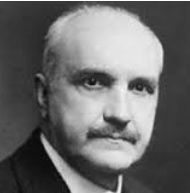
Skepticism is the chastity of the intellect, and it is shameful to surrender it too soon or to the first comer: there is nobility in preserving it coolly and proudly through long youth, until at last, in the ripeness of instinct and discretion, it can be safely exchanged for fidelity and happiness.
▼
Source
source
The Works of George Santayana p. 65
1 month 2 weeks ago
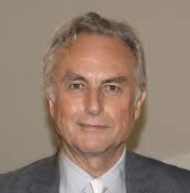
Contrary to earlier prejudices, there is nothing inherently progressive about evolution.
▼
Source
source
Chapter 7 "Constructive Evolution" (p. 178)
3 weeks 6 days ago
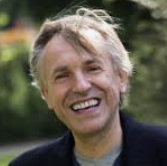
More controversially, technology can accelerate the transition from harming to helping free-living sentient beings: mankind's fitfully expanding "circle of compassion". The civilising process needn't be species-specific but instead extend to free-living dwellers in tomorrow's wildlife parks. Every cubic metre of the biosphere will soon be computationally accessible to surveillance, micro-management and control. Fertility regulation via immunocontraception can replace Darwinian ecosystems governed by starvation and predation. Any species of obligate carnivore we choose to preserve can be genetically and behaviourally tweaked into harmlessness. Asphyxiation, disembowelling, and agonies of being eaten alive can pass into the dustbin of history.
▼
Source
source
High-tech Jainism, The World Transformed, Jul. 2014
1 week ago
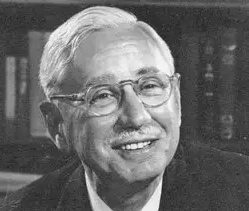
It is a mistake to think that the past is dead. Nothing that has ever happened is quite without influence at this moment. The present is merely the past rolled up and concentrated in this second of time. You, too, are your past; often your face is your autobiography; you are what you are because of what you have been; because of your heredity stretching back into forgotten generations; because of every element of environment that has affected you, every man or woman that has met you, every book that you have read, every experience that you have had; all these are accumulated in your memory, your body, your character, your soul. So with a city, a country, and a race; it is its past, and cannot be understood without it.
▼
Source
source
As quoted in "The Gentle Philosopher" (2006) by John Little at the Will Durant Foundation

3 months 2 weeks ago
None of the things they learn, should ever be made a burthen to them, or impos's on them as a task. Whatever is so proposed, presently becomes irksome; the mind takes an aversion to it, though before it were a thing of delight or indifferency. Let a child but be ordered to whip his top at a certain time every day, whether he has or has not a mind to it; let this be but requir'd of him as a duty, wherein he must spend so many hours morning and afternoon, and see whether he will not soon be weary of any play at this rate. Is it not so with grown men?
▼
Source
source
Sec. 73
3 months 5 days ago
Be ruled by time, the wisest counsellor of all.
▼
Source
source
Pericles (Tr. Dryden and Clough)
1 month 2 weeks ago
One feature of our own society that seems decidedly anomalous is the matter of sexual advertisement. As we have seen, it is strongly to be expected on evolutionary grounds that, where the sexes differ, it should be the males that advertise and the females that are drab. Modern western man is undoubtedly exceptional in this respect. It is of course true that some men dress flamboyantly and some women dress drably but, on average, there can be no doubt that in our society the equivalent of the peacock's tail is exhibited by the female, not by the male. Women paint their faces and glue on false eyelashes. Apart from special cases, like actors, men do not. Ch. 9. Battle of the Sexes
4 months 2 weeks ago
Victories over ingrained patterns of thought are not won in a day or a year.
2 months 1 week ago
Lassalle. It would be a pity about the fellow because of his great ability, but these goings-on are really too bad. He was always a man one had to keep a devilish sharp eye on and as a real Jew from the Slav border was always to exploit anyone for his own private ends on party pretexts. And then his urge to push his way into polite society, de parvenir, if only for appearance's sake, to disguise the greasy Breslau Jew with all kinds of pomade and paint was always repulsive.
▼
Source
source
Letter to Karl Marx (7 March 1856), quoted in The Collected Works of Karl Marx and Friedrich Engels: Volume 40. Letters 1856-59 (2010), p. 27
3 weeks 3 days ago
The whole world is in some ways better than it's ever been in the past. And, indeed, I think for many people the meaning of their lives really depends on that belief. If you strip out that belief in progress, if you start thinking of the world in the way in which the ancient pre-Christian Europeans did, or the Buddhists and the Hindus or the Taoists of China do, many people think that's a kind of despair. I don't know how many times I've been told "If I thought that, John, I wouldn't get up in the morning" and "If I agreed with you, John, that history had no pattern of that kind, I wouldn't get up in the morning." I said, "Well, stay in bed a bit longer, you might find a better reason for getting up."
▼
Source
source
Quoted in John Gray at the Writers' Festival, part 1," The Philosopher's Zone, a discussion with Alan Saunders on ABC Radio National

4 months 2 weeks ago
We get into the habit of living before acquiring the habit of thinking.
1 month 2 weeks ago
It seems to me obvious that infants and many animals that do not in any ordinary sense have a language or perform speech acts nonetheless have Intentional states. Only someone in the grip of a philosophical theory would deny that small babies can literally be said to want milk and that dogs want to be let out or believe that their master is at the door.
▼
Source
source
P. 5.
2 months 1 day ago
Catastrophic fatality abruptly switches over into salvation.
3 weeks ago
Some anarchists have claimed not merely that we would be better off without a state, but that any state necessarily violates people's moral rights and hence is intrinsically immoral. Our starting point then, though nonpolitical, is by intention far from nonmoral. Moral philosophy sets the background for, and boundaries of, political philosophy. What persons may and may not do to one another limits what they may do through the apparatus of a state, or do to establish such an apparatus.
▼
Source
source
Ch. 1 : Why State of Nature Theory?; Political Philosophy, p. 6
4 months 2 weeks ago
The life of money-making is one undertaken under compulsion, and wealth is evidently not the good we are seeking; for it is merely useful and for the sake of something else.

2 months 2 days ago
The fact of the religious vision, and its history of persistent expansion, is our one ground for optimism. Apart from it, human life is a flash of occasional enjoyments lighting up a mass of pain and misery, a bagatelle of transient experience.
▼
Source
source
Ch. 12: "Religion and Science", p. 268

3 months 3 weeks ago
I know God only as he became human, so shall I have him in no other way.
▼
Source
source
Das Marburger religionsgesprach 1529: Versuch einer Rekonstruction (Leipzig, 1929), p. 27; also LW 38, 3-90
CivilSimian.com created by AxiomaticPanic, CivilSimian, Kalokagathia