


2 months 1 week ago
Though we may prefer ourselves to the universe, we nonetheless loathe ourselves much more than we suspect. If the wise man is so rare a phenomenon, it is because he seems unshaken by the aversion which, like all beings, he must feel for himself.

2 months 1 week ago
The stupider one is, the closer one is to reality. The stupider one is, the clearer one is. Stupidity is brief and artless, while intelligence wriggles and hides itself. Intelligence is a knave, but stupidity is honest and straightforward.
1 month 3 weeks ago
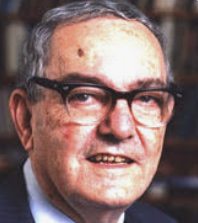
The fact that goals may be dependent for their force on other more distant ends leads to the arrangement of these goals in a hierarchy - each level to be considered as an end relative to the levels below it and as a mean to the levels above it.
▼
Source
source
p. 62.
3 months 1 week ago
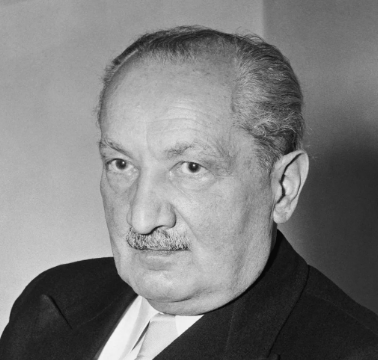
Those in the crossing must in the end know what is mistaken by all urging for intelligibility: that every thinking of being, all philosophy, can never be confirmed by "facts," ie, by beings. Making itself intelligible is suicide for philosophy. Those who idolize "facts" never notice that their idols only shine in a borrowed light. They are also meant not to notice this; for thereupon they would have to be at a loss and therefore useless. But idolizers and idols are used wherever gods are in flight and so announce their nearness.
▼
Source
source
Contributions to Philosophy (From Enowning) [Beitrage Zur Philosophie (Vom Ereignis)], notes of 1936-1938, as translated by Parvis Emad and Kenneth Maly

1 month 3 weeks ago
Without narration, life is purely additive.

3 months 1 week ago
The product of mental labor - science - always stands far below its value, because the labor-time necessary to reproduce it has no relation at all to the labor-time required for its original production.
▼
Source
source
Addenda, "Relative and Absolute Surplus Value" in Economic Manuscripts, 1861-63

3 months 2 weeks ago
When we hear news, we should always wait for the sacrament of confirmation.
▼
Source
source
Letter to Charles-Augustin Ferriol, comte d'Argental, 28 August 1760]]

3 months 2 weeks ago
The concept of space is not abstracted from external sensations.

4 months 1 week ago
For some identify happiness with virtue, some with practical wisdom, others with a kind of philosophic wisdom, others with these, or one of these, accompanied by pleasure or not without pleasure; while others include also external prosperity. Now ... it is not probable that these should be entirely mistaken, but rather that they should be right in at least some one respect or even in most respects.

1 month 3 weeks ago
Instead of wishing to see more doctors made by women joining what there are, I wish to see as few doctors, either male or female, as possible. For, mark you, the women have made no improvement - they have only tried to be men and they have only succeeded in being third-rate men.
▼
Source
source
Letter to John Stuart Mill (12 September 1860), published in Florence Nightingale on Society and Politics, Philosophy, Science, Education (2003) edited by Lynn McDonald
3 weeks ago
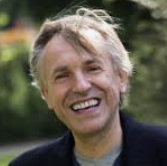
More controversially, technology can accelerate the transition from harming to helping free-living sentient beings: mankind's fitfully expanding "circle of compassion". The civilising process needn't be species-specific but instead extend to free-living dwellers in tomorrow's wildlife parks. Every cubic metre of the biosphere will soon be computationally accessible to surveillance, micro-management and control. Fertility regulation via immunocontraception can replace Darwinian ecosystems governed by starvation and predation. Any species of obligate carnivore we choose to preserve can be genetically and behaviourally tweaked into harmlessness. Asphyxiation, disembowelling, and agonies of being eaten alive can pass into the dustbin of history.
▼
Source
source
High-tech Jainism, The World Transformed, Jul. 2014
3 months 3 days ago
September 11, 2001, was just another day for most of the world's desperately poor people, so presumably close to 30,000 children under five died from these causes on that day-about ten times the number of victims of the terrorist attacks. The publication of these figures did not lead to an avalanche of money for UNICEF or other aid agencies helping to reduce infant mortality. In the year 2000 Americans made private donations for foreign aid of all kinds totaling about $4 per person in extreme poverty, or roughly $20 per family. New Yorkers who were living in lower Manhattan on September 11, 2001, whether wealthy or not, were able to receive an average of $5,300 per family. The distance between these amounts encapsulates the way in which, for many people, the circle of concern for others stops at the boundaries of their own country-if it extends even that far.
▼
Source
source
Chapter 5: One Community (p. 176)

3 days ago
These things, which we state lightly enough here, are yet of deep import, and indicate a mighty change in our whole manner of existence. For the same habit regulates not our modes of action alone, but our modes of thought and feeling. Men are grown mechanical in head and in heart, as well as in hand. They have lost faith in individual endeavour, and in natural force, of any kind. Not for internal perfection, but for external combinations and arrangements, for institutions, constitutions, for Mechanism of one sort or other, do they hope and struggle. Their whole efforts, attachments, opinions, turn on mechanism, and are of a mechanical character.

2 months 1 week ago
It depends only on the weakness of our organs and of our self-excitement (Selbstberuhrung), that we do not see ourselves in a Fairy-world. All Fabulous Tales (Mahrchen) are merely dreams of that home world, which is everywhere and nowhere. The higher powers in us, which one day as Genies, shall fulfil our will, are, for the present, Muses, which refresh us on our toilsome course with sweet remembrances.

1 month 3 weeks ago
Our habitual experience is a complex of failure and success in the enterprise of interpretation. If we desire a record of uninterpreted experience, we must ask a stone to record its autobiography.
▼
Source
source
Pt. I, ch. 1, sec. 6.

2 months 1 week ago
The difference between a pessimistic and an optimistic mind is of such controlling importance in regard to every intellectual function, and especially for the conduct of life, that it is out of the question to admit that both are normal, and the great majority of mankind are naturally optimistic.
▼
Source
source
V
1 month 4 weeks ago
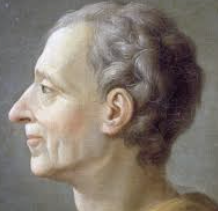
And yet there is nothing so badly imagined: nature seems to have provided, that the follies of men should be transient, but they by writing books render them permanent. A fool ought to content himself with having wearied those who lived with him: but he is for tormenting future generations; he is desirous that his folly should triumph over oblivion, which he ought to have enjoyed as well as his grave; he is desirous that posterity should be informed that he lived, and that it should be known for ever that he was a fool. Commonly paraphrased as "An author is a fool who, not content with having bored those who have lived with him, insists on boring future generations".
▼
Source
source
No. 66. (Rica writing to * * *)
3 weeks ago
Getting rid of predation isn't a matter of moralising. A python who kills a small human child isn't morally blameworthy. Nor is a lion who hunts and kills a terrified zebra. In both cases, the victim suffers horribly. But the predator lacks the empathetic and mind-reading skills needed to understand the implications of what s/he is doing. Some humans still display a similar deficit. From the perspective of the victim, the moral status or (lack of) guilty intent of a human or nonhuman predator is irrelevant. Either way, to stand by and watch the snake asphyxiate a child would be almost as morally abhorrent as to kill the child yourself. So why turn this principle on its head with beings of comparable sentience to human infants and toddlers? With power comes complicity.
▼
Source
source
"The Radical Plan to Phase out Earth's Predatory Species", io9, 30 Jul. 2014
1 month 5 days ago
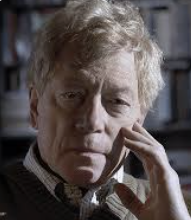
When truth cannot make itself known in words, it will make itself known in deeds.
▼
Source
source
Should he have spoken?, The New Criterion (September 2006), p. 22; also in The Roger Scruton Reader (2009) edited by Mark Dooley

1 month 1 week ago
Avarice is as destitute of what it has, as what it has not.
▼
Source
source
Maxim 927

3 months 1 week ago
It's only by thinking even more crazily than philosophers do that you can solve their problems.
▼
Source
source
p. 75e

2 months 1 week ago
If there be an order in which the human race has mastered its various kinds of knowledge, there will arise in every child an aptitude to acquire these kinds of knowledge in the same order. So that even were the order intrinsically indifferent, it would facilitate education to lead the individual mind through the steps traversed by the general mind. But the order is not intrinsically indifferent; and hence the fundamental reason why education should be a repetition of civilization in little.

2 months 1 week ago
It is the function of a judge not to make but to declare the law, according to the golden mete-wand of the law and not by the crooked cord of discretion.
▼
Source
source
Preface to Brissot's Address

3 months 3 weeks ago
Above all, every relation must be considered as suspicious, which depends in any degree upon religion, as the prodigies of Livy: And no less so, everything that is to be found in the writers of natural magic or alchemy, or such authors, who seem, all of them, to have an unconquerable appetite for falsehood and fable.
▼
Source
source
Aphorism 29

3 months 1 week ago
It seems to me that the current political task in a society like ours is to criticize the working of institutions that are apparently the most neutral and independent, to criticize these institutions and attack them in such a way that the political violence that exercises itself obscurely through them becomes manifest, so that one can fight against them.
▼
Source
source
Debate with Noam Chomsky, École Supérieure de Technologie à Eindhoven, November 1971

2 weeks 5 days ago
Instead of enabling humans to improve their lot, science degrades the natural environment in which humans must live. Instead of enabling death to be overcome, it produces ever more powerful technologies of mass destruction. None of this is the fault of science; what it shows is that science is not sorcery. The growth of knowledge enlarges what humans can do. It cannot reprieve them from being what they are.
▼
Source
source
Sweet Morality (p. 235)
2 months 1 week ago
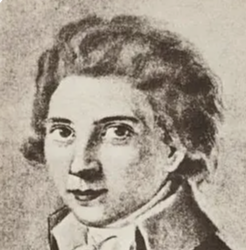
To live classically and to realize antiquity practically within oneself is the summit and goal of philology.
▼
Source
source
Philosophical Fragments, P. Firchow, trans. (1991) § 147

3 months 2 weeks ago
Wealth is like sea-water; the more we drink, the thirstier we become.
▼
Source
source
E. Payne, trans. (1974) Vol. 1, p. 347
3 months 2 weeks ago
I am very fond of truth, but not at all of martyrdom.
▼
Source
source
Letter to Jean le Rond d'Alembert, 8 February 1776
1 month 2 weeks ago
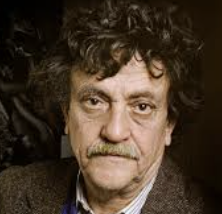
High school is closer to the core of the American experience than anything else I can think of.
▼
Source
source
Introduction to Our Time Is Now: Notes From the High School Underground, John Birmingham, ed.
1 week 1 day ago
Nowhere is there more constancy and more unanimity than among the French to subordinate that sex which they pretend to honor so highly.
▼
Source
source
The Theory of Social Organization

4 months 2 weeks ago
The objective of all human arrangements is through distracting one's thoughts to cease to be aware of life.
3 months 1 week ago
Poetry is the universal art of the spirit which has become free in itself and which is not tied down for its realization to external sensuous material; instead, it launches out exclusively in the inner space and the inner time of ideas and feelings.
▼
Source
source
As quoted in the Introduction to Aesthetics (1842), translated by T. M. Knox, (1979), p. 89
2 months 1 week ago
No nation keeps its word. A nation is a big, blind worm, following what? Fate perhaps. A nation has no honour, it has no word to keep. ... Hitler is himself the nation. That incidentally is why Hitler always has to talk so loud, even in private conversation - because he is speaking with 78 million voices.
▼
Source
source
During an interview with H. R. Knickerbocker (1939), quoted in A Life of Jung (2002) by Ronald Hayman, p. 360
1 month 1 week ago
It is only the ignorant who despise education.
▼
Source
source
Maxim 571

3 months 2 weeks ago
Thus there is nothing waste, nothing dead in the universe; no chaos, no confusions, save in appearence. We might compare this to the appearence of a pond in the distance, where we can see the confused movement and swarming of the fish, without distinguishing the fish themselves.Thus we are that each living body has a dominante entelechy, which in case of an animal is the soul, but the members of this living body are full of other living things, plants and animals, of which each has in turn ita dominant entelechy or soul.
▼
Source
source
Monadology (69-70).
2 months 1 week ago
The mind understands something only insofar as it absorbs it like a seed into itself, nurtures it, and lets it grow into blossom and fruit. Therefore scatter holy seeds into the soil of the spirit.
▼
Source
source
"Ideas," Lucinde and the Fragments, P. Firchow, trans. (1991), § 5
3 months 1 week ago
To obey a rule, to make a report, to give an order, to play a game of chess, are customs.
▼
Source
source
(uses, institutions) § 199
4 months ago
Study carefully, the character of the one you recommend, lest their misconduct bring you shame.
▼
Source
source
from Horace, Epistles I.xviii.76
3 months 2 weeks ago
A man's body and the needs of his body are now everywhere treated with a tender indulgence. Is the thinking mind then, to be the only thing that is never to obtain the slightest measure of consideration or protection, to say nothing of respect?
▼
Source
source
"On Noise"

3 months 1 week ago
No one gets angry at a mathematician or a physicist whom he or she doesn't understand at all, or at someone who speaks a foreign language, but rather at someone who tampers with your own language, with this 'relation,' precisely, which is yours.
▼
Source
source
Derrida Jacques, Elisabeth Weber (1995), Points...: Interviews, 1974-1994. p. 115

1 month 4 weeks ago
Glorious is the risk! - καλος γαρ ο κινδυνος, glorious is the risk that we are able to run of our souls never dying ... Faced with this risk, I am presented with arguments designed to eliminate it, arguments demonstrating the absurdity of the belief in the immortality of the soul; but these arguments fail to make any impression on me, for they are reasons and nothing more than reasons, and it is not with reasons that the heart is appeased. I do not want to die - no; I neither want to die nor do I want to want to die; I want to live for ever and ever and ever. I want this "I" to live - this poor "I" that I am and that I feel myself to be here and now, and therefore the problem of the duration of my soul, of my own soul, tortures me.

4 months 1 week ago
The opposite of an idealist is too often a man without love.

3 months 1 week ago
It seems to me certain that more people are killed out of righteous stupidity than out of wickedness.
▼
Source
source
p. 368
2 months 1 week ago
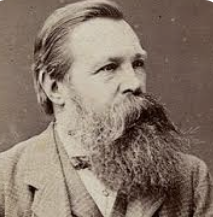
Community of women is a condition which belongs entirely to bourgeois society and which today finds its complete expression in prostitution. But prostitution is based on private property and falls with it. Thus, communist society, instead of introducing community of women, in fact abolishes it.

3 months 1 week ago
The original scriptures of most religions are poetical and unsystematic. Theology, which generally takes the form of a reasoned commentary on the parables and aphorisms of the scriptures, tends to make its appearance at a later stage of religious history. The Bhagavad-Gita occupies an intermediate position between scripture and theology; for it combines the poetical qualities of the first with the clear-cut methodicalness of the second... one of the clearest and most comprehensive summaries of the Perennial Philosophy ever to have been made. Hence its enduring value, not only for Indians, but for all mankind.

3 months 1 week ago
Most people would sooner die than think; in fact, they do so.

3 months 1 week ago
Romeo wants Juliet as the filings want the magnet; and if no obstacles intervene he moves towards her by as straight a line as they. But Romeo and Juliet, if a wall be built between them, do not remain idiotically pressing their faces against its opposite sides like the magnet and the filings with the card. Romeo soon finds a circuitous way, by scaling the wall or otherwise, of touching Juliet's lips directly. With the filings the path is fixed; whether it reaches the end depends on accidents. With the lover it is the end which is fixed, the path may be modified indefinitely.
▼
Source
source
Ch. 1 : The Scope of Psychology

3 months 1 week ago
I call upon you, young men, to obey your heart, and be the nobility of this land. In every age of the world, there has been a leading nation, one of a more generous sentiment, whose eminent citizens were willing to stand for the interests of general justice and humanity, at the risk of being called, by the men of the moment, chimerical and fantastic. Which should be that nation but these States? Which should lead that movement, if not New England? Who should lead the leaders, but the Young American?
3 months 1 week ago
Real life is, to most men, a long second-best, a perpetual compromise between the ideal and the possible; but the world of pure reason knows no compromise, no practical limitations, no barrier to the creative activity embodying in splendid edifices the passionate aspiration after the perfect from which all great work springs. Remote from human passions, remote even from the pitiful facts of nature, the generations have gradually created an ordered cosmos, where pure thought can dwell as in its natural home, and where one, at least, of our nobler impulses can escape from the dreary exile of the actual world.
CivilSimian.com created by AxiomaticPanic, CivilSimian, Kalokagathia