
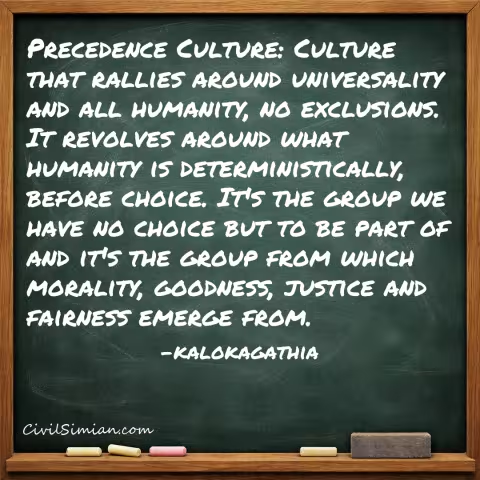
Being>identity. Existence>essence.



I have nothing but contempt for you idiotic chosen ones who have the heart to rejoice when there are the damned in Hell and the poor on earth; as for me, I am on the side of men and I will not leave it.

If we take a survey of ages and of countries, we shall find the women, almost - without exception - at all times and in all places, adored and oppressed. Man, who has never neglected an opportunity of exerting his power, in paying homage to their beauty, has always availed himself of their weakness He has been at once their tyrant and their slave.
Ideally a just constitution would be a just procedure arranged to insure a just outcome.
Heaven knows what seeming nonsense may not to-morrow be demonstrated truth.
Probability fractions arise from our knowledge and from our ignorance.
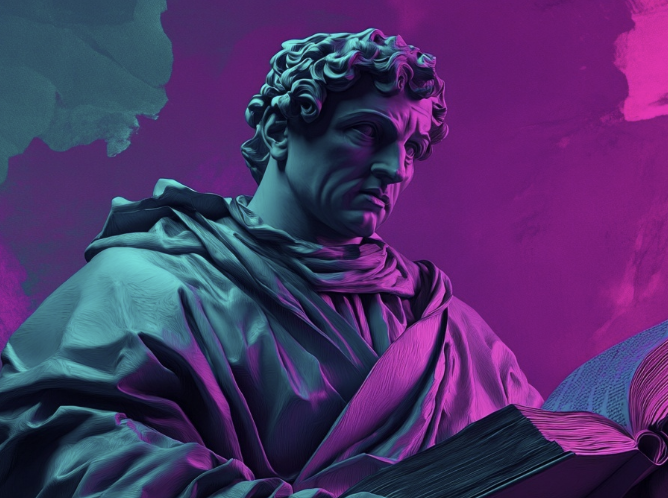
But the exceedingly foul deed of Onan, the basest of wretches, follows. Onan must have been a malicious and incorrigible scoundrel. This is a most disgraceful sin. It is far more atrocious than incest and adultery. We call it unchastity, yes a Sodomitic sin. For Onan goes in to her; that is, he lies with her and copulates, and when it comes to the point of insemination, spills the semen, lest the woman conceive. Surely at such a time the order of nature established by God in procreation should be followed. Accordingly, it was a most disgraceful crime to produce semen and excite the woman, and to frustrate her at that very moment.

Philosophy complains that Custom has hoodwinked us, from the first; that we do everything by Custom, even Believe by it; that our very Axioms, let us boast of Free-thinking as we may, are oftenest simply such Beliefs as we have never heard questioned. Nay, what is Philosophy throughout but a continual battle against Custom; an ever-renewed effort to transcend the sphere of blind Custom, and so become Transcendental?
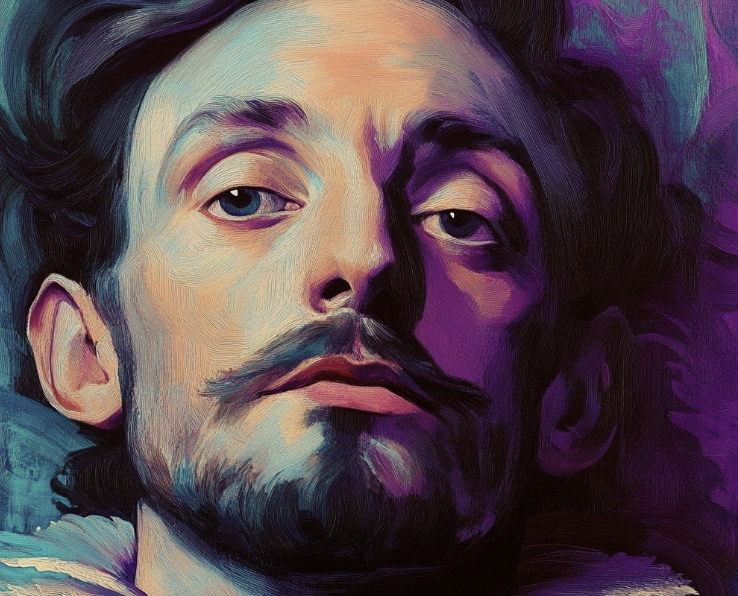
Who then to frail mortality shall trust But limns the water, or but writes in dust.
Power acquired by violence is only a usurpation, and lasts only as long as the force of him who commands prevails over that of those who obey.
In all ranges of experience, externality of means defines the mechanical.

Certainly it is correct to say: Conscience is the voice of God.
The seat of faith, however, is not consciousness but spontaneous religious experience, which brings the individual's faith into immediate relation with God. Here we must ask: Have I any religious experience and immediate relation to God, and hence that certainty which will keep me, as an individual, from dissolving in the crowd?
There is the love of knowing without the love of learning; the beclouding here leads to dissipation of mind.

Today we experience, in reverse, what pre-literate man faced with the advent of writing.

Accustom him to every thing, that he may not be a Sir Paris, a carpet-knight, but a sinewy, hardy, and vigorous young man.

The happiness which belongs to man, is that state in which he enjoys as many of the good things, and suffers as few of the evils incident to human nature as possible; passing his days in a smooth course of permanent tranquility. A wise man, though deprived of sight or hearing, may experience happiness in the enjoyment of the good things which yet remain; and when suffering torture, or laboring under some painful disease, can mitigate the anguish by patience, and can enjoy, in his afflictions, the consciousness of his own constancy.
Our bodies are perishable, wealth is not at all permanent and death is always nearby. Therefore we must immediately engage in acts of merit.
Civilization exists by geological consent, subject to change without notice.

It is impossible to imagine a more dramatic and horrifying combination of scientific triumph with political and moral failure than has been shown to the world in the destruction of Hiroshima. From the scientific point of view, the atomic bomb embodies the results of a combination of genius and patience as remarkable as any in the history of mankind.
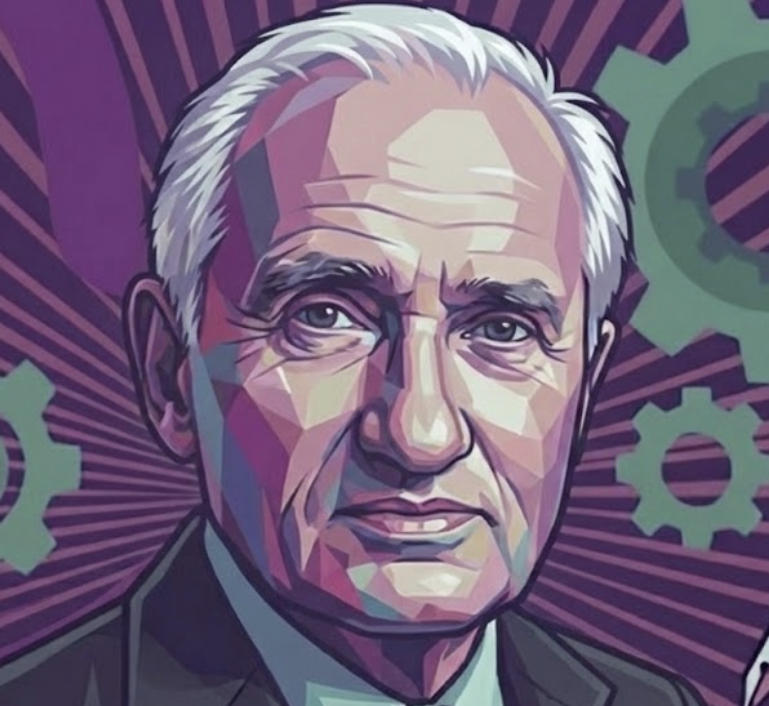
If we compare the third-person attitude of someone who simply says how things stand (this is the attitude of the scientist, for example) with the performative attitude of someone who tries to understand what is said to him (this is the attitude of the interpreter, for example), the implications ... become clear. ... First, interpreters relinquish superiority that observers have by virtue of their privileged position, in that they themselves are drawn, at least potentially, into negotiations about the meaning and validity of utterances. By taking part in communicative action, they accept in principle the same status as those whose utterances they are trying to understand. ... It is impossible to decide a priori who is to learn from whom.

I wish to suggest that a man may be very industrious, and yet not spend his time well. There is no more fatal blunderer than he who consumes the greater part of his life getting his living. All great enterprises are self-supporting. The poet, for instance, must sustain his body by his poetry, as a steam planing-mill feeds its boilers with the shavings it makes. You must get your living by loving.
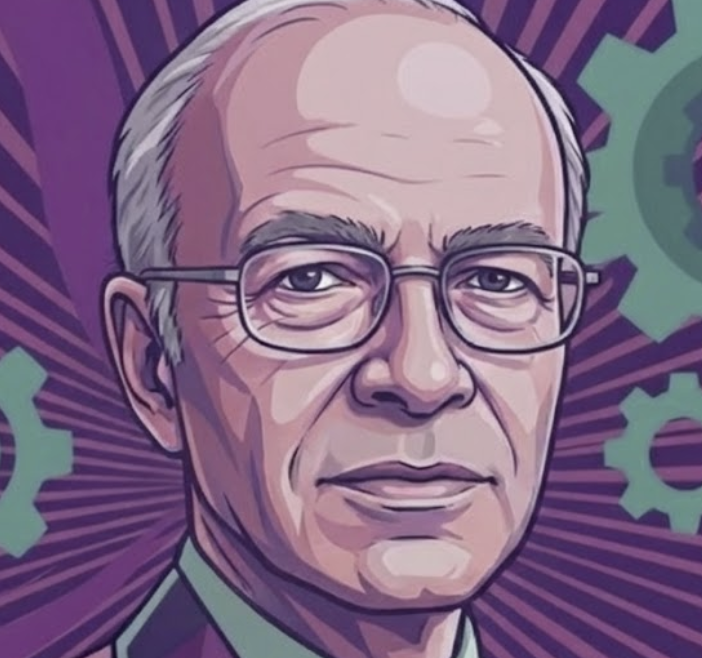
At one level, this movement on behalf of oppressed farm animals is emotional...Yet the movement is also the product of a deep intellectual ferment pioneered by the Princeton scholar Peter Singer...This idea popularized by Professor Singer - that we have ethical obligations that transcend our species - is one whose time appears to have come...What we're seeing now is an interesting moral moment: a grass-roots effort by members of one species to promote the welfare of others...animal rights are now firmly on the mainstream ethical agenda.
Hype is the awkward and desperate attempt to convince journalists that what you've made is worth the misery of having to review it.
Merely to come into the world the heir of a fortune is not to be born, but to be still-born, rather. To be supported by the charity of friends, or a government-pension, - provided you continue to breathe, - by whatever fine synonymes you describe these relations, is to go into the almshouse.

The march, as ever, is toward the future, and he who marches is getting there, even though he march walking backwards. And who knows if that is not the better way!...
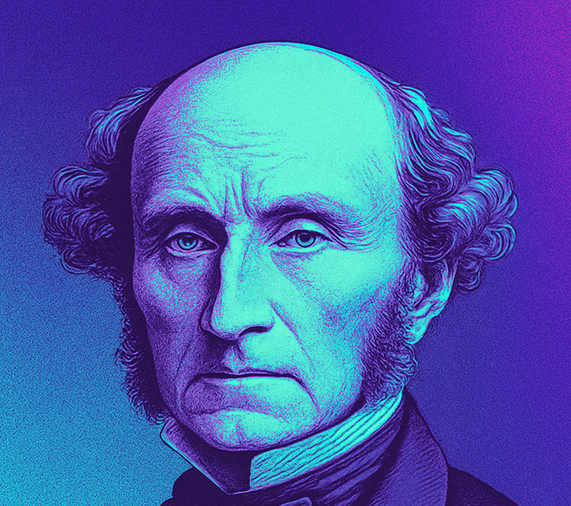
We are told that a utilitarian will be apt to make his own particular case an exception to moral rules, and, when under temptation, will see a utility in the breach of a rule, greater than he will see in its observance. But is utility the only creed which is able to furnish us with excuses for evil doing, and means of cheating our own conscience? They are afforded in abundance by all doctrines which recognise as a fact in morals the existence of conflicting considerations; which all doctrines do, that have been believed by sane persons. It is not the fault of any creed, but of the complicated nature of human affairs, that rules of conduct cannot be so framed as to require no exceptions, and that hardly any kind of action can safely be laid down as either always obligatory or always condemnable.
Omnipresence has become an ordinary human dimension.

Art is the symbol of the two noblest human efforts: to construct and to refrain from destruction.
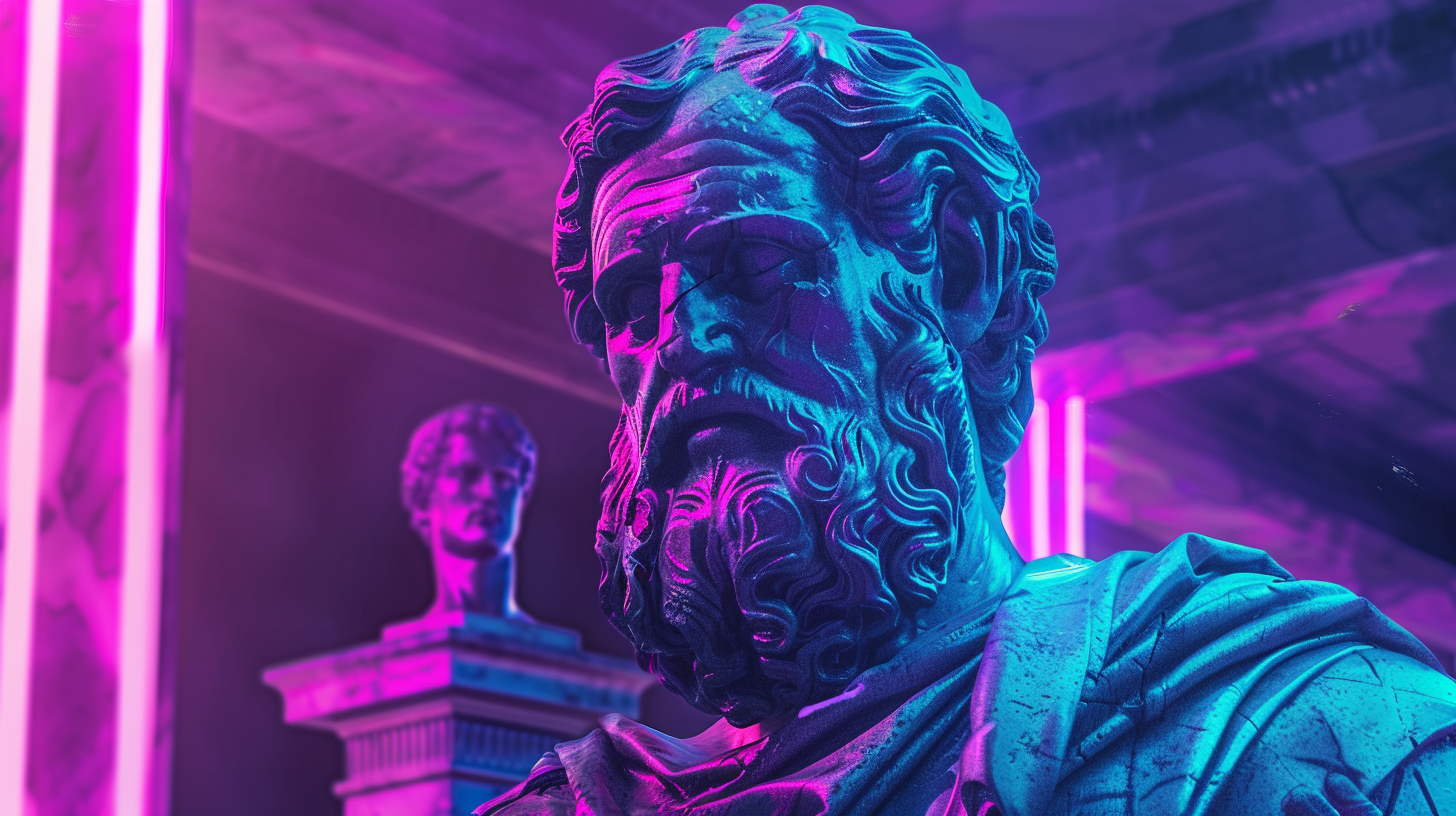
Zeus, the god of gods, who rules according to law, and is able to see into such things, perceiving that an honourable race was in a woeful plight, and wanting to inflict punishment on them, that they might be chastened and improve, collected all the gods into their most holy habitation, which, being placed in the centre of the world, beholds all created things.
Sex-appeal is the keynote of our whole civilization.

In place of the bourgeois society, with its classes and class antagonisms, shall we have an association, in which the free development of each is the condition for the free development of all.
Human life, by its very nature, has to be dedicated to something, an enterprise glorious or humble, a destiny illustrious or trivial. We are faced with a condition, strange but inexorable, involved in our very existence.

The moment a sovereign removes the idea of security and protection from his subjects, and declares that he is everything and they nothing, when he declares that no contract he makes with them can or ought to bind him, he then declares war upon them: he is no longer sovereign; they are no longer subjects.

Brutes are merely brutal; men and women are capable of being devils and lunatics. They are no less capable of being fully human-even, occasionally, of being a bit more than fully human, of being saints, heroes and geniuses.

Human infirmity in moderating and checking the emotions I name bondage: for, when a man is a prey to his emotions, he is not his own master, but lies at the mercy of fortune: so much so, that he is often compelled, while seeing that which is better for him, to follow that which is worse.
Karl Marx was born at Trier on 5 May 1818, the child of Jewish parents with a long rabbinical tradition on both sides. His grandfathers were rabbis; his father, a well-to-do lawyer, changed his first name from Herschel to Heinrich and adopted Protestantism, which in Prussia was a necessary condition of professional and cultural emancipation.
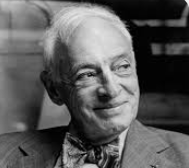
I am an American, Chicago born - Chicago, that somber city - and go at things as I have taught myself, free-style, and will make the record in my own way: first to knock, first admitted; sometimes an innocent knock, sometimes a not so innocent.
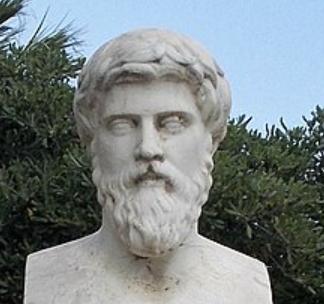
To one that promised to give him hardy cocks that would die fighting, "Prithee," said Cleomenes, "give me cocks that will kill fighting."
I find that the best virtue I have has in it some tincture of vice.
There are Plebes in all classes.

Consider the most famous pure dystopian tale of modern times, 1984, by George Orwell (1903-1950), published in 1948 (the same year in which Walden Two was published). I consider it an abominably poor book. It made a big hit (in my opinion) only because it rode the tidal wave of cold war sentiment in the United States.
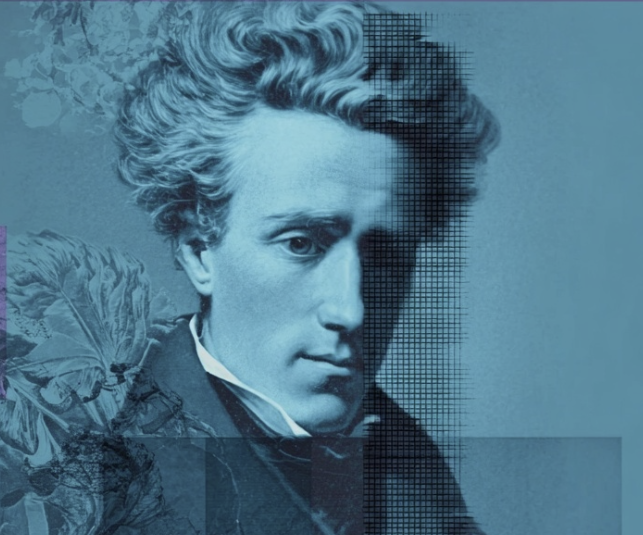
She has forgotten speech and language and the restlessness of thoughts, has forgotten what is even greater restlessness, this self, has forgotten herself-she, the lost woman, who is now lost in her Savior, who, lost in him, rests at his feet-like a picture. He speaks about her; he says: Her many sins are forgiven her, because she loved much. Although she is present, it is almost as if she were absent; it is almost as if he changed her into a picture, a parable.
Faith ever says, "If Thou wilt," not "If Thou canst."
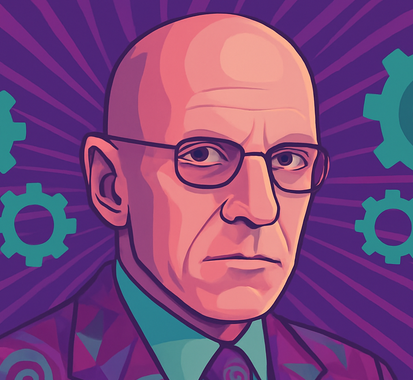
In... "The Education of Children"... Plutarch gives an anecdote of Theocritus, a sophist, as an example of athuroglossos... he is... "a giant in impudence"... strong not because of his reason, or his rhetorical ability... or his ability to pronounce the truth, but only because he is arrogant. ...His fourth trait is... "putting his confidence in bluster." He is confident in thorubos... the noise made by a strong voice, by a scream, a clamor, or uproar. ...The final characteristic ...his confidence in ..."ignorant outspokenness..." ... it lacks mathesis ...-learning or wisdom.

Anxiety - or the fanaticism of the worst.
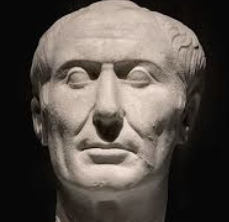
No tears are shed, when an enemy dies.

The possibility of democracy on a global scale is emerging today for the very first time.
Profound skepticism is favorable to conventions, because it doubts that the criticism of conventions is any truer than they are.
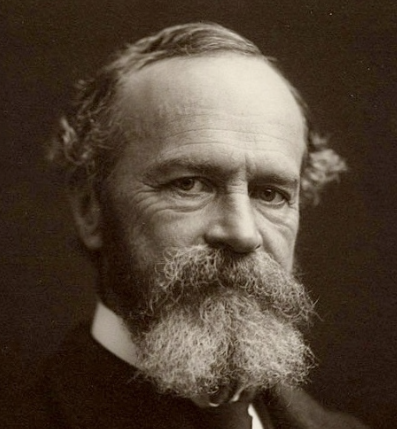
I saw a moving sight the other morning before breakfast in a little hotel where I slept in the dusty fields. The young man of the house shot a little wolf called coyote in the early morning. The little heroic animal lay on the ground, with his big furry ears, and his clean white teeth, and his little cheerful body, but his little brave life was gone. It made me think how brave all living things are. Here little coyote was, without any clothes or house or books or anything, with nothing to pay his way with, and risking his life so cheerfully - and losing it - just to see if he could pick up a meal near the hotel. He was doing his coyote-business like a hero, and you must do your boy-business, and I my man-business bravely, too, or else we won't be worth as much as a little coyote.
CivilSimian.com created by AxiomaticPanic, CivilSimian, Kalokagathia