


4 months 1 week ago
Here I stand; I can do no otherwise. God help me. Amen!
▼
Source
source
As reported in Dictionary of Burning Words of Brilliant Writers (1895) by Josiah Hotchkiss Gilbert, p. 186; and in Bartlett's Familiar Quotations, 10th ed.
2 months 3 weeks ago
The general fellowship of our human situation has been rendered even more dubious than before, inasmuch as, though the old ties of caste have been loosened, a new restriction of the individual to some prescribed status in society is manifest. Less than ever, perhaps, is it possible for a man to transcend the limitations imposed by his social origins.
3 months 3 weeks ago
In everything well known something worthy of thought still lurks.
▼
Source
source
p. xxxix

2 months 1 week ago
The greatest events occur without intention playing any part in them; chance makes good mistakes and undoes the most carefully planned undertaking. The world's greatest events are not produced, they happen.
▼
Source
source
K 68

3 months 6 days ago
Were the happiness of the next world as closely apprehended as the felicities of this, it were a martyrdom to live.
▼
Source
source
Chapter IV
2 months 1 week ago
Even if we consider not words by themselves but rules deciding what words may appropriately be produced in certain contexts - even if we consider, in computer jargon, programs for using words - unless those programs themselves refer to something extra-linguistic there is still no determinate reference that those words possess. This will be a crucial step in the process of reaching the conclusion that the Brain-in-a-Vat Worlders cannot refer to anything external at all (and hence cannot say that they are Brain-in-a-Vat Worlders).
▼
Source
source
Chap. 1 : Brains in a vat
3 months 2 weeks ago
He is not poor who has enough of things to use. If it is well with your belly, chest and feet, the wealth of kings can give you nothing more.
▼
Source
source
Book I, epistle xii, line 4

3 months 1 week ago
Better be mute, than dispute with the Ignorant.

1 month 4 weeks ago
Does the interiorization of media such as letters alter the ratio among our senses and change mental processes?
▼
Source
source
(p. 28)
2 months 2 weeks ago
Spirit is never an object; nor a spiritual reality an objective one. In the so-called objective world there's no such nature, thing, or objective reality as spirit. Hence it is easy to deny the reality of spirit. God is spirit because he is not object, because he is subject.
▼
Source
source
p. 10

3 months 2 weeks ago
Being nimble and light-footed, his father encouraged him to run in the Olympic race. "Yes," said he, "if there were any kings there to run with me."
▼
Source
source
41 Alexander
2 weeks 2 days ago
"Freedom" awakens your rage against everything that is not you; "egoism" calls you to joy over yourselves, to self-enjoyment.
▼
Source
source
Dover 2005, p. 163
1 week 1 day ago
I like to think of criticism as the highest intellectual effort that mankind is capable of, and above all, I like to think of self-criticism as the most difficult attainment of an educated man.
▼
Source
source
"The Function of Criticism at the Present Time", in The China Critic, Vol. III, no. 4 (23 January 1930), p. 81
1 week 3 days ago
This letter, if judged by the novelty and profundity of ideas it contains, is perhaps the most substantial piece of writing in the whole literature of mankind.
▼
Source
source
Symmetry (1952), quote on p. 138; referring to a letter by Évariste Galois to Auguste Chevalier from May 29, 1832, two days before Galois' death, containing a testamentary summary of Galois' discoveries
Just now
Never spend your money before you have it.

4 months 2 weeks ago
Violence and injury enclose in their net all that do such things, and generally return upon him who began.
▼
Source
source
Book V, lines 1152-1153 (tr. Rouse)
4 months 1 week ago
We must remove the Decalogue out of sight and heart.
▼
Source
source
Wilhelm Martin Leberecht De Wette, 4, 188. As cited by Jonathan Ramachandran (January 1, 2019), Lake of Fire - Hope for the Wicked One Day? - Essays in First Christianity, 5 Loaf 2 Fish Publications, p. 1264.
4 months 1 week ago
Mother love is stronger than the filth and scabbiness on a child, and so the love of God toward us is stronger than the dirt that clings to us.
▼
Source
source
94
8 months 6 days ago
It is also crucial to bear in mind the interconnection between the Decalogue... and its modern obverse, the celebrated 'human Rights'. As the experience of our post-political liberal-permissive society amply demonstrates, human Rights are ultimately, at their core, simply Rights to violate the Ten Commandments. 'The right to privacy' — the right to adultery, in secret, where no one sees me or has the right to probe my life. 'The right to pursue happiness and to possess private property' -- the right to steal (to exploit others). 'Freedom of the press and of the expression of opinion' -- the right to lie. 'The right of free citizens to possess weapons' -- the right to kill. And, ultimately, 'freedom of religious belief' — the right to worship false gods.
1 day ago
May he be cursed on earth who gives his trust to virtue,that bankrupt crone who takes our life's pure gold and givesbut bad receipts for payment in the lower world.Ah, passers-by that stroll, travelers that come and go,all that I had, I placed on virtue, and lost the game!
▼
Source
source
Book IX, line 402

2 months 3 weeks ago
Old age, after all, is merely the punishment for having lived.


4 months ago
In regard to propaganda the early advocates of universal literacy and a free press envisaged only two possibilities: the propaganda might be true, or it might be false. They did not foresee what in fact has happened, above all in our Western capitalist democracies-the development of a vast mass communications industry, concerned in the main neither with the true nor the false, but with the unreal, the more or less totally irrelevant. In a word, they failed to take into account man's almost infinite appetite for distraction.
▼
Source
source
Chapter 4 (pp. 35-36)
2 months 1 week ago
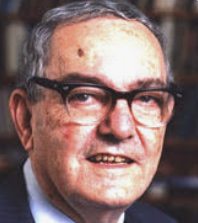
If we accept values as given and consistent, if we postulate an objective description of the world as it really is, and if we assume that the decision maker's computational powers are unlimited, then two important consequences follow. First, we do not need to distinguish between the real world and the decision maker's perception of it: he or she perceives the world as it really is. Second, we can predict the choices that will be made by a rational decision maker entirely from our knowledge of the real world and without a knowledge of the decision maker's perceptions or modes of calculation. (We do, of course, have to know his or her utility function.)
2 months 2 weeks ago
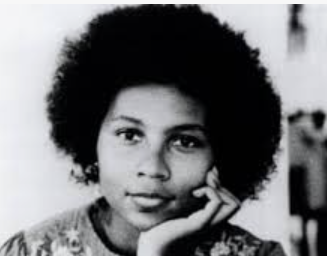
Another response to racism has been the establishment of unlearning racism workshops, which are often led by white women. These workshops are important, yet they tend to focus primarily on cathartic individual psychological personal prejudice without stressing the need for corresponding change in political commitment and action. A woman who attends an unlearning racism workshop and learns to acknowledge that she is racist is no less a threat than one who does not. Acknowledgment of racism is significant when it leads to transformation.
1 month 2 weeks ago
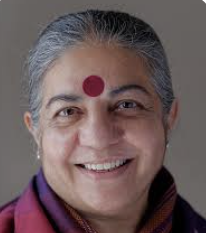
Just like Chief Seattle talked about being in the web of life, in India we talk about vasudhaiva kutumbkam, which means the earth family. Indian cosmology has never separated the human from the non-human-we are a continuum.
1 month 1 week ago
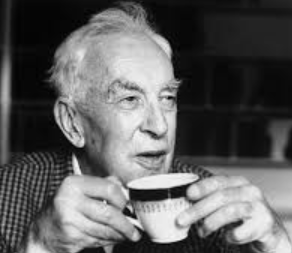
The extinction of race consciousness as between Muslims is one of the outstanding achievements of Islam, and in the contemporary world there is, as it happens, a crying need for the propagation of this Islamic virtue.
▼
Source
source
Ch. 10: Islam, the West, and the Future
1 month 2 weeks ago
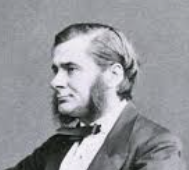
Even purely intellectual progress brings about its revenges. Problems settled in a rough and ready way by rude men, absorbed in action, demand renewed attention and show themselves to be still unread riddles when men have time to think. The beneficent demon, doubt, whose name is Legion and who dwells amongst the tombs of old faiths, enters into mankind and thenceforth refuses to be cast out. Sacred customs, venerable dooms of ancestral wisdom, hallowed by tradition and professing to hold good for all time, are put to the question. Cultured reflection asks for their credentials; judges them by its own standards; finally, gathers those of which it approves into ethical systems, in which the reasoning is rarely much more than a decent pretext for the adoption of foregone conclusions.
1 month 3 weeks ago
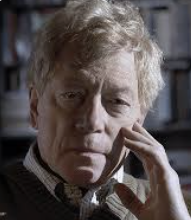
Europe owes its greatness to the fact that the primary loyalties of the European people have been detached from religion and re-attached to the land. Those who believe that the division of Europe into nations has been the primary cause of European wars should remember the devastating wars of religion that national loyalties finally brought to an end. And they should study our art and literature for its inner meaning. In almost every case, they will discover, it is an art and literature not of war but of peace, an invocation of home and the routines of home, of gentleness, everydayness and enduring settlement.
3 months 3 weeks ago
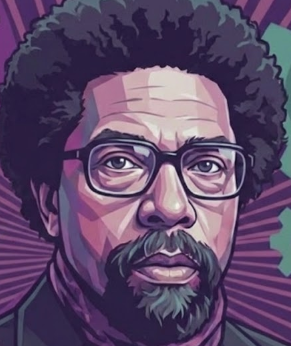
We're at such a low point in the American empire. Its spiritual decay and its immoral decadence are so profound that we have to begin on the foundational level of a spiritual awakening and a moral reckoning. Organized greed. Institutionalized hatred. Routinized indifference to the lives of poor and working people of all colors. We've got to get beyond an analysis of the predatory capitalist processes that have saturated every nook and cranny of the culture. We've got to get beyond the ways in which the political system has been colonized by corporate wealth and by monied elite. We've got to get beyond that sense of impotence of the citizenry. These are all the signs of an empire in decline. The only thing that we have to add is military overreach, and we see that as well. Speaking to Chris Hedges about his decision to run for president in 2024.
▼
Source
source
Chris Hedges: Dr. Cornel West Announces He Is Running for President. Scheerpost. June 5, 2023
3 weeks ago
Scientists work from models acquired through education and through subsequent exposure to the literature often without quite knowing or needing to know what characteristics have given these models the status of community paradigms.
▼
Source
source
p. 46
1 month 4 weeks ago
When we invent a new technology, we become cannibals. We eat ourselves alive since these technologies are merely extensions of ourselves. The new environment shaped by electric technology is a cannibalistic one that eats people. To survive one must study the habits of cannibals.
▼
Source
source
(p. 261)

4 months 1 week ago
Nothing is so firmly believed as what we least know.
▼
Source
source
Ch. 31. Of Divine Ordinances, tr. Cotton, rev. W. Hazlitt, 1842
2 months 2 days ago
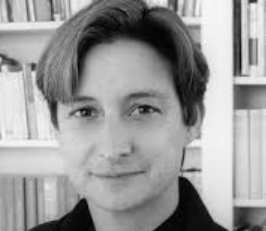
The move from a structuralist account in which capital is understood to structure social relations in relatively homologous ways to a view of hegemony in which power relations are subject to repetition, convergence, and rearticulation brought the question of temporality into the thinking of structure, and marked a shift from a form of Althusserian theory that takes structural totalities as theoretical objects to one in which the insights into the contingent possibility of structure inaugurate a renewed conception of hegemony as bound up with the contingent sites and strategies of the rearticulation of power.
▼
Source
source
"Further Reflections on the Conversations of Our Time" (1997), which received first place in the Philosophy and Literature Bad Writing Contest

4 months 1 day ago
New truth is often uncomfortable, especially to the holders of power; nevertheless, amid the long record of cruelty and bigotry, it is the most important achievement of our intelligent but wayward species.
▼
Source
source
Religion and Science (1935), Ch. X: Conclusion
5 months 1 day ago
The infinite... happens to subsist in a way contrary to what is asserted by others: for the infinite is not that beyond which there is nothing, but it is that of which there is always something beyond. ...But that pertaining to which there is nothing beyond is perfect and whole. ...that of which nothing is absent pertaining to the parts ...the whole is that pertaining to which there is nothing beyond. But that pertaining to which something external is absent, that is not all ...But nothing is perfect which has not an end; and the end is a bound. On this account... Parmenides spoke better than Melissus: for the latter says that the infinite is a whole; but the former, that the whole is finite, and equally balanced from the middle: for to conjoin the infinite with the universe and the whole, is not to connect line with line.
4 months 2 days ago
The softer you find your child is, the more you are to seek occasions, at fit times, thus to harden him. The great art in this is, to begin with what is but very little painful, and to proceed by insensible degrees, when you are playing, and in good humour with him, and speaking well of him: and when you have once got him to think himself made amends for his suffering by the praise is given him for his courage; when he can take pride in giving such marks of his manliness, and can prefer the reputation of being brave and stout, to the avoiding a little pain, or the shrinking under it; you need nor despair in time and by the assistance of his growing reason, to master his timorousness, and mend the weakness of his constitution.
▼
Source
source
Sec. 115
4 months 1 day ago
There's a Bible on that shelf there. But I keep it next to Voltaire - poison and antidote.
▼
Source
source
In Kenneth Harris Talking To: Bertrand Russell, 1971
1 week 4 days ago
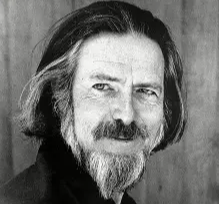
To be free from convention is not to spurn it but not to be deceived by it. It is to be able to use it as an instrument instead of being used by it.
▼
Source
source
p. 11
2 months 3 weeks ago
Writing is like getting married. One should never commit oneself until one is amazed at one's luck.
▼
Source
source
The Black Prince (1973); 2003, p. 10.
2 months 3 weeks ago
At the parting of ways in the life-order, where the question is between the new creation or decay, that man will be decisive for new creation who is able on his own initiative to seize the helm and steer a course of his own choosing - even if that course be opposed to the will of the masses. Should the emergence of such persons become impossible a lamentable shipwreck will be inevitable.

4 months ago
The value of a principle is the number of things it will explain; and there is no good theory of disease which does not at once suggest a cure.
▼
Source
source
p. 212
2 months 1 week ago
Doubt must be no more than vigilance, otherwise it can become dangerous.
▼
Source
source
F 53
1 month 2 weeks ago
Hence it may be concluded that the happiest state of society is that in which supreme power resides in the whole body of a well-informed people. This is an imaginary, perhaps an unattainable, state of things. Yet, in some measure, we may approximate to it; and he alone deserves the name of a great statesman, whose principle it is to extend the power of the people in proportion to the extent of their knowledge, and to give them every facility for obtaining such a degree of knowledge as may render it safe to trust them with absolute power. In the mean time, it is dangerous to praise or condemn constitutions in the abstract; since, from the despotism of St. Petersburg to the democracy of Washington, there is scarcely a form of government which might not, at least in some hypothetical case, be the best possible.
▼
Source
source
pp. 161-162
2 months 2 weeks ago
There is only one thing that can form a bond between men, and that is gratitude...we cannot give someone else greater power over us than we have ourselves.
▼
Source
source
No. 104. (Usbek writing to Ibben)
2 months 3 weeks ago
Some would deny any legitimate use of the word God because it has been misused so much. Certainly it is the most burdened of all human words. Precisely for that reason it is the most imperishable and unavoidable. And how much weight has all erroneous talk about God's nature and works (although there never has been nor can be any such talk that is not erroneous) compared with the one truth that all men who have addressed God really meant him? For whoever pronounces the word God and really means Thou, addresses, no matter what his delusion, the true Thou of his life that cannot be restricted by any other and to whom he stands in a relationship that includes all others.
2 weeks 2 days ago
If the church had deadly sins, the state has capital crimes; if the one had heretics, the other has traitors; the one ecclesiastical penalties, the other criminal penalties; the one inquisitorial processes, the other fiscal; in short, there sins, here crimes, there inquisition and here - inquisition. Will the sanctity of the state not fall like the church's? The awe of its laws, the reverence for its highness, the humility of its 'subjects', will this remain? Will the 'saint's' face not be stripped of its adornment?
▼
Source
source
Cambridge 1995, p. 211, 212
2 months 2 days ago
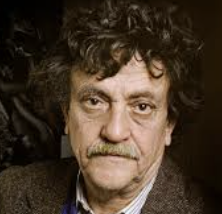
What television does is rent us friends and relatives who are quite satisfactory. The child watching TV loves these people, you know -- they're in color, and they're talking to the child. Why wouldn't a child relate to these people? And you know, if you can't sleep at 3 o'clock in the morning, you can turn on a switch, and there are your friends and relatives, and they obviously like you. And they're charming. Who wouldn't want Peter Jennings for a relative? This is quite something, to rent artificial friends and relatives right inside the house.
▼
Source
source
Interviewed by Frank Houston, "The Salon Interview: Kurt Vonnegut", Salon

2 months 1 week ago
I believe government, organized authority, or the State is necessary only to maintain or protect property and monopoly. It has proven efficient in that function only. As a promoter of individual liberty, human well-being and social harmony, which alone constitute real order, government stands condemned by all the great men of the world...I believe - indeed, I know - that whatever is fine and beautiful in the human expresses and asserts itself in spite of government, and not because of it.
4 months 1 week ago
The middle sort of historians (of which the most part are) spoil all; they will chew our meat for us.
▼
Source
source
Book II, Ch. 10. Of Books
CivilSimian.com created by AxiomaticPanic, CivilSimian, Kalokagathia