


4 months 4 days ago
Although the whole of this life were said to be nothing but a dream and the physical world nothing but a phantasm, I should call this dream or phantasm real enough, if, using reason well, we were never deceived by it.
▼
Source
source
As quoted in The World of Mathematics (1956) by J. R. Newman, p. 1832

4 months 4 weeks ago
It is no one's privilege to despise another. It is only a hard-won right after long experience.
1 week 4 days ago
And the simple step of a simple courageous man is not to partake in falsehood, not to support false actions! Let THAT enter the world, let it even reign in the world - but not with my help. But writers and artists can achieve more: they can CONQUER FALSEHOOD! In the struggle with falsehood art always did win and it always does win! Openly, irrefutably for everyone! Falsehood can hold out against much in this world, but not against art. And no sooner will falsehood be dispersed than the nakedness of violence will be revealed in all its ugliness - and violence, decrepit, will fall.

4 months 1 day ago
I find it wholesome to be alone the greater part of the time. To be in company, even with the best, is soon wearisome and dissipating. I love to be alone. I never found the companion that was so companionable as solitude. We are for the most part more lonely when we go abroad among men than when we stay in our chambers. A man thinking or working is always alone, let him be where he will... The really diligent student... is as solitary as a dervish in the desert. The farmer can work alone in the field or the woods all day, hoeing or chopping, and not feel lonesome.

Just now
With respect to modern languages, French, as I have before observed, is indispensible. Next to this the Spanish is most important to an American. Our connection with Spain is already important and will become daily more so. Besides this the antient part of American history is written chiefly in Spanish.

4 months 4 days ago
With regard to politics and the character of princes and great men, I think I am very moderate. My views of things are more conformable to Whig principles; my representation of persons to Tory prejudices. Nothing can so much prove that men commonly regard more persons than things, as to find that I am commonly numbered among the Tories.
▼
Source
source
E. C. Mossner, Life of David Hume (Clarendon Press, 2001), p. 311.
1 month 2 weeks ago
In an ideal University, as I conceive it, a man should be able to obtain instruction in all forms of knowledge, and discipline in the use of all the methods by which knowledge is obtained. In such a University, the force of living example should fire the student with a noble ambition to emulate the learning of learned men, and to follow in the footsteps of the explorers of new fields of knowledge. And the very air he breathes should be charged with that enthusiasm for truth, that fanaticism of veracity, which is a greater possession than much learning; a nobler gift than the power of increasing knowledge; by so much greater and nobler than these, as the moral nature of man is greater than the intellectual; for veracity is the heart of morality.
▼
Source
source
Universities, Actual and Ideal
4 months 4 weeks ago
The dullness of fact is the mother of fiction.
3 weeks 6 days ago
With exceptions so rare they are regarded as miracles of nature, successful democratic politicians are insecure and intimidated men. They advance politically only as they placate, appease, bribe, seduce, bamboozle, or otherwise manage to manipulate the demanding and threatening elements in their constituencies. The decisive consideration is not whether the proposition is good but whether it is popular-not whether it will work well and prove itself but whether the active talking constituents like it immediately. Politicians rationalize this servitude by saying that in a democracy public men are the servants of the people.
▼
Source
source
p. 27

2 months 2 weeks ago
Sensitiveness without impulse spells decadence, and impulse without sensitiveness spells brutality.
▼
Source
source
Ch. 13: "Requisites for Social Progress", p. 280
3 months 2 weeks ago
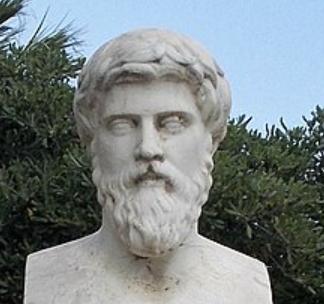
He preferred an honest man that wooed his daughter, before a rich man. "I would rather," said Themistocles, "have a man that wants money than money that wants a man."
▼
Source
source
49 Themistocles

4 months 2 weeks ago
Man has three ways of acting wisely. First, on meditation; that is the noblest. Secondly, on imitation; that is the easiest. Thirdly, on experience; that is the bitterest.
2 months 1 week ago
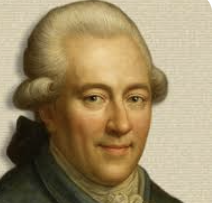
Do not commence your exercises in philosophy in those regions where an error can deliver you over to the executioner.
▼
Source
source
C 16
2 months 3 weeks ago
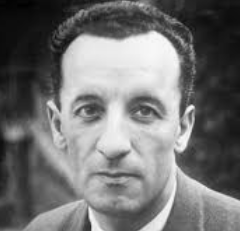
The philosopher will ask himself ... if the criticism we are now suggesting is not the philosophy which presses to the limit that criticism of false gods which Christianity has introduced into our history.
▼
Source
source
p. 47
2 months 1 week ago
Has not authority from time immemorial stamped every step of progress as treasonable?
Just now
The priests have so disfigured the simple religion of Jesus that no one who reads the sophistications they have engrafted on it, from the jargon of Plato, of Aristotle & other mystics, would conceive these could have been fathered on the sublime preacher of the sermon on the mount.
▼
Source
source
Letter to Benjamin Waterhouse (13 October 1815). Published in The Works of Thomas Jefferson in Twelve Volumes, Federal Edition, Paul Leicester Ford, ed., New York: G. P. Putnam's Sons, 1904, Vol. 11, p. 492
3 months 4 weeks ago
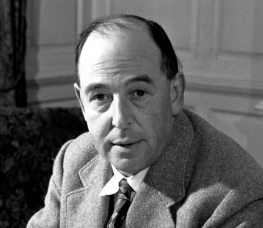
There is no spiritual sustenance in flat equality. It is a dim recognition of this fact which makes much of our political propaganda sound so thin. We are trying to be enraptured by something which is merely the negative condition of the good life. That is why the imagination of people is so easily captured by appeals to the craving for inequality, whether in a romantic form of films about loyal courtiers or in the brutal form of Nazi ideology. The tempter always works on some real weakness in our own system of values - offers food to some need which we have starved.

2 months 3 weeks ago
Having destroyed all my connections, burned my bridges, I should feel a certain freedom, and in fact I do. One so intense I am afraid to rejoice in it.
Just now
It is not by the consolidation or concentration, of powers, but by their distribution that good government is effected.
▼
Source
source
Memoirs, Correspondence and Private Papers of Thomas Jefferson (1829) edited by Thomas Jefferson Randolph, p. 70

4 months 2 weeks ago
Down in adoration falling,Lo! the sacred Host we hail;Lo! o'er ancient forms departing,Newer rites of grace prevail;Faith for all defects supplying,Where the feeble senses fail.
▼
Source
source
Pange, Lingua, stanza 5 (Tantum Ergo)
2 weeks 1 day ago
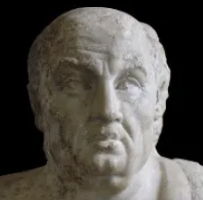
Just as we suffer from excess in all things, so we suffer from excess in literature; thus we learn our lessons, not for life, but for the lecture room.
▼
Source
source
Line 12 Alternate translation: Not for life, but for school do we learn. (translator unknown) Alternate translation: We are taught for the schoolroom, not for life. (translator unknown).

2 months 3 weeks ago
Institutionalized desublimation thus appears to be an aspect of the "conquest of transcendence" achieved by the one-dimensional society. Just as this society tends to reduce, and even absorb opposition (the qualitative difference!) in the realm of politics and higher culture, so it does in the instinctual sphere. The result is the atrophy of the mental organs for grasping the contradictions and the alternatives and, in the one remaining dimension of technological rationality, the Happy Consciousness comes to prevail.
▼
Source
source
p. 79
4 months 1 day ago
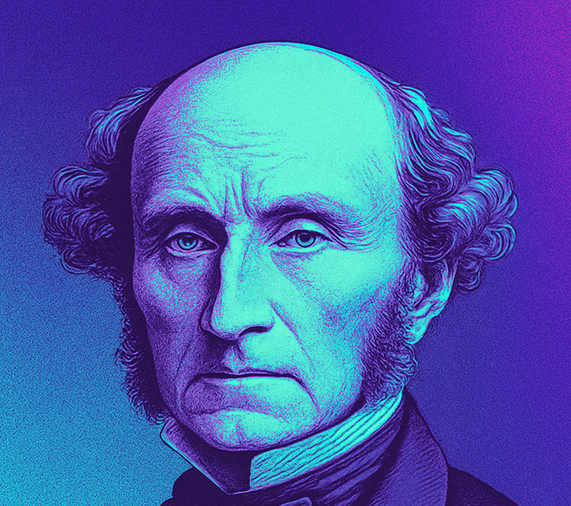
It might be plausibly maintained, that in almost every one of the leading controversies, past or present, in social philosophy, both sides were in the right in what they affirmed, though wrong in what they denied.
▼
Source
source
J. S. Mill, Dissertations and discussions: political, philosophical, and historical, Volume 2, H. Holt, 1864, p. 11.
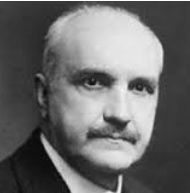
2 months 3 weeks ago
Our dignity is not in what we do, but in what we understand.
▼
Source
source
p. 50
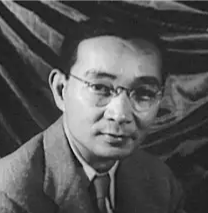
1 week 1 day ago
The three great American vices seem to be efficiency, punctuality, and the desire for achievement and success. They are the things that make the Americans so unhappy and so nervous.
▼
Source
source
p. 162
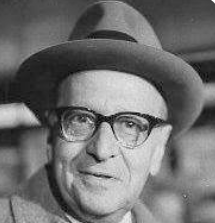
2 months 3 weeks ago
When an active individual of sound common sense perceives the sordid state of the world, desire to change it becomes the guiding principle by which he organizes given facts and shapes them into a theory. The methods and categories as well as the transformation of the theory can be understood only in connection with his taking of sides. This, in turn, discloses both his sound common sense and the character of the world. Right thinking depends as much on right willing as right willing on right thinking.
▼
Source
source
p. 162.
2 months 3 weeks ago
The more intense a spiritual leader's appetite for power, the more he is concerned to limit it to others.
3 months 2 weeks ago
A physician, after he had felt the pulse of Pausanias, and considered his constitution, saying, "He ails nothing," "It is because, sir," he replied, "I use none of your physic."
▼
Source
source
Of Pausanias the Son of Phistoanax
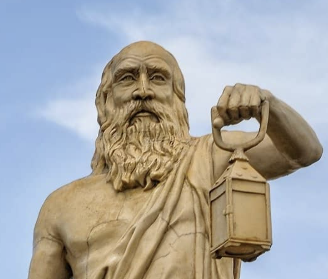
3 months 2 weeks ago
When the slave auctioneer asked in what he was proficient, he replied, "In ruling people."
▼
Source
source
Diogenes Laërtius, vi. 74
4 months 2 weeks ago
When we see men of worth, we should think of equaling them; when we see men of a contrary character, we should turn inwards and examine ourselves.

4 months 3 days ago
When the man governed by self-interest, the god of this world, does not renounce it but merely refines it by the use of reason and extends it beyond the constricting boundary of the present, he is represented (Luke XVI, 3-9) as one who, in his very person [as servant], defrauds his master [self- interest] and wins from him sacrifices in behalf of "duty."
▼
Source
source
Book IV, Part 1, Section 2, "The Christian religion as a natural religion"
3 months 3 weeks ago
From Richard McKeon and Robert Brumsbaugh I learned to view the history of philosophy as a series, not of alternative solutions to the same problems, but of quite different sets of problems. From Rudolph Carnap and Carl Hempel I learned how pseudo-problems could be revealed as such by restarting them in the formal mode of speech. From Charles Hartshorne and Paul Weiss I learned how they could be so revealed by being translated into Whiteheadian or Hegelian terms.
▼
Source
source
Preface

3 months 1 week ago
Placing your stick at the end of the shadow of the pyramid, you made by the sun's rays two triangles, and so proved that the pyramid [height] was to the stick [height] as the shadow of the pyramid to the shadow of the stick.
▼
Source
source
W. W. Rouse Ball, A Short Account of the History of Mathematics
2 months 1 week ago
People do not go into the company of their fellow-creatures for what would seem a very sufficient reason, namely, that they have something to say to them, or something that they want to hear from them; but in the vague hope that they may find something to say.
2 months 3 weeks ago
Were art to redeem man, it could do so only by saving him from the seriousness of life and restoring him to an unexpected boyishness. The symbol of art is seen again in the magic flute of the Great God Pan which makes the young goats frisk at the edge of the grove. All modern art begins to appear comprehensible and in a way great when it is interpreted as an attempt to instill youthfulness into an ancient world.
▼
Source
source
"Art a Thing of No Consequence"

1 month 3 weeks ago
The measure of a man is a man. Justice, morality, ethics, fairness, goodness all based on the preservation of life. You can do other things, but you'd be Good by coincidence.

4 months ago
Don't waste yourself in rejection, nor bark against the bad, but chant the beauty of the good.
▼
Source
source
Success
1 week 4 days ago
Let us not violate the RIGHT of the artist to express exclusively his own experiences and introspections, disregarding everything that happens in the world beyond. Let us not DEMAND of the artist, but - reproach, beg, urge and entice him - that we may be allowed to do. After all, only in part does he himself develop his talent; the greater part of it is blown into him at birth as a finished product, and the gift of talent imposes responsibility on his free will. Let us assume that the artist does not OWE anybody anything: nevertheless, it is painful to see how, by retiring into his self-made worlds or the spaces of his subjective whims, he CAN surrender the real world into the hands of men who are mercenary, if not worthless, if not insane.
3 weeks ago
History, if viewed as a repository for more than anecdote or chronology, could produce a decisive transformation in the image of science by which we are now possessed.

5 months 3 days ago
We have seen how it is originally language which works on the construction of concepts, a labor taken over in later ages by science. Just as the bee simultaneously constructs cells and fills them with honey, so science works unceasingly on this great columbarium of concepts, the graveyard of perceptions.

4 months ago
I suppose you imagined I was so insanely in love with you that I could commit any folly. When will you women understand that one isn't insanely in love? All one asks for is a quiet life, which you won't allow one to have. I don't know what the devil ever induced me to marry you. It was all a damned stupid, practical joke. And now you go about saying I'm a murderer. I won't stand it.
▼
Source
source
The Gioconda smile, in Mortal Coils, 1921
2 months 3 weeks ago
Power as is really divided, and as dangerously to all purposes, by sharing with another an Indirect Power, as a Direct one.
▼
Source
source
The Third Part, Chapter 42, p. 315

4 months 2 days ago
Go into the London Stock Exchange - a more respectable place than many a court - and you will see representatives from all nations gathered together for the utility of men. Here Jew, Mohammedan and Christian deal with each other as though they were all of the same faith, and only apply the word infidel to people who go bankrupt. Here the Presbyterian trusts the Anabaptist and the Anglican accepts a promise from the Quaker.
▼
Source
source
Letters on England, letter 6, "On the Presbyterians" as quoted in Trust and Tolerance, Richard H. Dees, Routledge, London and New York, (2004) p. 92, published first in English in 1733.
2 months 3 days ago
Materialism ends up denying the existence of any irreducible subjective qualitative states of sentience or awareness.
▼
Source
source
Consciousness and Language (2002) p. 47.
1 month 3 weeks ago
A happy man or woman is a better thing to find than a five-pound note. He or she is a radiating focus of goodwill; and their entrance into a room is as though another candle had been lighted. We need not care whether they could prove the forty-seventh proposition; they do a better thing than that, they practically demonstrate the great Theorem of the Liveableness of Life.
▼
Source
source
An Apology for Idlers.

4 months 1 week ago
Death is a friend of ours; and he that is not ready to entertain him is not at home.
▼
Source
source
An Essay on Death, published in The Remaines of the Right Honourable Francis Lord Verulam (1648), which may not have been written by Bacon
5 months 1 day ago
If, then, in the sphere of action there is some one end which we desire for its own sake, and for the sake of which we desire every thing else; and if we do not choose every thing for the sake of something else, for this would go on without limit, and our desire would be idle and futile, it is clear that this must be the supreme good, and the best thing of all.
3 months 1 day ago
The most obvious division of society is into rich and poor; and it is no less obvious, that the number of the former bear a great disproportion to those of the latter. The whole business of the poor is to administer to the idleness, folly, and luxury of the rich; and that of the rich, in return, is to find the best methods of confirming the slavery and increasing the burdens of the poor. In a state of nature, it is an invariable law, that a man's acquisitions are in proportion to his labours. In a state of artificial society, it is a law as constant and as invariable, that those who labour most enjoy the fewest things; and that those who labour not at all have the greatest number of enjoyments. A constitution of things this, strange and ridiculous beyond expression! We scarce believe a thing when we are told it, which we actually see before our eyes every day without being in the least surprised.
CivilSimian.com created by AxiomaticPanic, CivilSimian, Kalokagathia