


2 months 2 weeks ago
Not to be loved is a misfortune, but it is an insult to be loved no longer.
▼
Source
source
No. 3. (Zachi writing to Usbek)

4 months 4 weeks ago
Trantor could win even such a war, but perhaps not without paying a price that would make victory only a pleasanter name for defeat.

3 months 4 weeks ago
It is not murder which is forgiven but the killer, his person as it appears in circumstances and intentions. The trouble with the Nazi criminals was precisely that they renounced voluntarily all personal qualities, as if nobody were left to be either punished or forgiven. They protested time and again that they had never done anything out of their own initiative, that they had no intentions whatsoever, good or bad, and that they only obeyed orders.

2 weeks 1 day ago
"Although," said he [Cato], "all the world has fallen under one man's sway, although Caesar's legions guard the land, his fleets the sea, and Caesar's troops beset the city gates, yet Cato has a way of escape; with one single hand he will open a wide path to freedom. This sword, unstained and blameless even in civil war, shall at last do good and noble service: the freedom which it could not give to his country it shall give to Cato!
▼
Source
source
De Providentia (On Providence), 2.10; translation by John W. Basore

2 months 3 weeks ago
Resignation' is a keynote in Comte's writings, deriving directly from assent to invariable social laws. 'True resignation, that is, a disposition to endure necessary evils steadfastly and without any hope of compensation therefore, can result only from a profound feeling for the invariable laws that govern the variety of natural phenomena.
▼
Source
source
P. 345
4 months 1 day ago
Reading the morning newspaper is the realist's morning prayer. One orients one's attitude toward the world either by God or by what the world is. The former gives as much security as the latter, in that one knows how one stands.
▼
Source
source
Miscellaneous writings of G.W.F. Hegel, translation by Jon Bartley Stewart, Northwestern University Press, 2002, page 247.

3 months 1 day ago
The body of all true religion consists, to be sure, in obedience to the will of the Sovereign of the world, in a confidence in His declarations, and in imitation of His perfections.
1 month 3 weeks ago
A good conscience is eight parts of courage.
▼
Source
source
Catriona, ch. XI (1893).

Just now
Let those flatter who fear; it is not an American art. To give praise which is not due might be well from the venal, but would ill beseem those who are asserting the rights of human nature. They know, and will therefore say, that kings are the servants, not the proprietors of the people.

4 months 3 weeks ago
He marveled at the strange blindness by which men, though they are so alert to what changes in themselves, impose on their friends an image chosen for them once and for all. He was being judged by what he had been. Just as dogs don't change character, men are dogs to one another.

2 months 2 weeks ago
It is because of my wretchedness that I am "I." It is on account of the wretchedness of the universe that, in a sense, God is "I" (that is to say a person).
▼
Source
source
p. 83

2 months 3 weeks ago
The moment we believe we've understood everything grants us the look of a murderer.

4 months 4 days ago
The annual labour of every nation is the fund which originally supplies it with all the necessaries and conveniences of life which it annually consumes.
▼
Source
source
Introduction and Plan of the Work, p. 1.
2 months 3 weeks ago
Naturally, every age thinks that all ages before it were prejudiced, and today we think this more than ever and are just as wrong as all previous ages that thought so. How often have we not seen the truth condemned! It is sad but unfortunately true that man learns nothing from history.
▼
Source
source
p. 33

4 months 2 days ago
Reason, if consulted with, would advise, that their children's time should be spent in acquiring what might be useful to them when they come to be men, rather than to have their heads stuff'd with a deal of trash, a great part whereof they usually never do ('tis certain they never need to) think on again as long as they live: and so much of it as does stick by them they are only the worse for.
▼
Source
source
Sec. 94

4 months 2 weeks ago
Down in adoration falling,Lo! the sacred Host we hail;Lo! o'er ancient forms departing,Newer rites of grace prevail;Faith for all defects supplying,Where the feeble senses fail.
▼
Source
source
Pange, Lingua, stanza 5 (Tantum Ergo)
1 month 3 weeks ago
Take any aspect of the Western inheritance of which our ancestors were proud, and you will find university courses devoted to deconstructing it. Take any positive feature of our political and cultural inheritance, and you will find concerted efforts in both the media and the academy to place it in quotation marks, and make it look like an imposture or a deceit.
▼
Source
source
(p. 40)

4 months 2 weeks ago
When the soul has descended into generation (from its first divine condition) she partakes of evil, and is carried a great way into a state the opposite of her first purity and integrity, to be entirely merged in which, is nothing more than to fall into a dark mire. ...The soul dies as much as it is possible for the soul to die: and the death to her is, while baptized or immersed in the present body, to descend into matter, and be wholly subjected by it; and after departing thence to lie there til it shall arise and turn its face away from the abhorrent filth. This is what is meant by falling asleep in Hades, of those who have come there.
2 months 3 weeks ago
So long as man is protected by madness he functions and flourishes, but when he frees himself from the fruitful tyranny of fixed ideas, he is lost, ruined.

4 months 3 days ago
Out of the crooked timber of humanity, no straight thing was ever made.
▼
Source
source
Idea for a General History with a Cosmopolitan Purpose (1784), Proposition 6.

3 months ago
Equity knows no difference of sex. In its vocabulary the word man must be understood in a generic, and not in a specific sense.
▼
Source
source
Pt. II, Ch. 16 : The Rights of Women
2 months 3 weeks ago
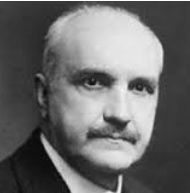
Never since the heroic days of Greece has the world had such a sweet, just, boyish master.
▼
Source
source
"The British Character"
4 months 4 weeks ago
The Bible and science agree in being unable to say anything certainly about what happened before the beginning. There is this difference. The Bible will never be able to tell us. It has reached its final form, and it simply doesn't say. Science, on the other hand, is still developing, and the time may come when it can answer questions that, at present, it cannot.

4 months ago
Who lives longer? the man who takes heroin for two years and dies, or a man who lives on roast beef, water and potatoes 'till 95? One passes his 24 months in eternity. All the years of the beefeater are lived only in time.
▼
Source
source
The Shortcut: 20 Stories To Get You From Here To There (2006) by Kevin A Fabiano, p. 179

3 months 3 weeks ago
It is true: Man is the microcosm: I am my world.
▼
Source
source
Journal entry (12 October 1916), p. 84e

4 months 1 week ago
Plato says, "'Tis to no purpose for a sober man to knock at the door of the Muses;" and Aristotle says "that no excellent soul is exempt from a mixture of folly."
▼
Source
source
Book II, Ch. 2. Of Drunkenness

4 months 1 day ago
Both in thought and in feeling, even though time be real, to realise the unimportance of time is the gate of wisdom.
▼
Source
source
p. 167

2 months 3 weeks ago
Blessed is the lion which becomes man when consumed by man; and cursed is the man whom the lion consumes, and the lion becomes man. (7) This saying has been interpreted by some as referring to such anger as consumes a man…(rather than is consumed by him, through his reason and love), 'til that man is the lion of Anger. Other more mystical interpretations might also be found or devised that have merit.
3 months ago
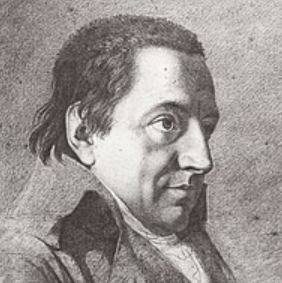
The End of the Life of Mankind on Earth is this,-that in this Life they may order all their relations with FREEDOM according to REASON.
▼
Source
source
p. 5

4 months 1 day ago
Men remain in their present low and primitive condition; but if they should feel the influence of the spring of springs arousing them, they would of necessity rise to a higher and more ethereal life.
▼
Source
source
p. 49
3 months 3 weeks ago
The idea that in order to get clear about the meaning of a general term one had to find the common element in all its applications has shackled philosophical investigation; for it has not only led to no result, but also made the philosopher dismiss as irrelevant the concrete cases, which alone could have helped him understand the usage of the general term.
▼
Source
source
p. 19

2 months 2 days ago
What television does is rent us friends and relatives who are quite satisfactory. The child watching TV loves these people, you know -- they're in color, and they're talking to the child. Why wouldn't a child relate to these people? And you know, if you can't sleep at 3 o'clock in the morning, you can turn on a switch, and there are your friends and relatives, and they obviously like you. And they're charming. Who wouldn't want Peter Jennings for a relative? This is quite something, to rent artificial friends and relatives right inside the house.
▼
Source
source
Interviewed by Frank Houston, "The Salon Interview: Kurt Vonnegut", Salon
2 months 3 weeks ago
Then are the children free. Notwithstanding, lest we should offend them, go thou to the sea, and cast an hook, and take up the fish that first cometh up; and when thou hast opened his mouth, thou shalt find a piece of money: that take, and give unto them for me and thee.
▼
Source
source
17:26-27 (KJV)

1 month 4 weeks ago
While people are engaged in creating a totally different world, they always form vivid images of the preceding world.
▼
Source
source
(p. 21)

2 months 4 weeks ago
Nothing, I am sure, calls forth the faculties so much as the being obliged to struggle with the world; and this is not a woman's province in a married state. Her sphere of action is not large, and if she is not taught to look into her own heart, how trivial are her occupations and pursuits! What little arts engross and narrow her mind!
▼
Source
source
Thoughts on the Education of Daughters (1787), "Matrimony", p. 100

3 months 1 week ago
There is geometry in the humming of the strings. There is music in the spacings of the spheres.
▼
Source
source
As quoted in the preface of the book entitled Music of the Spheres by Guy Murchie

3 weeks ago
The Philosopher of this age is not a Socrates, a Plato, a Hooker, or Taylor, who inculcates on men the necessity and infinite worth of moral goodness, the great truth that our happiness depends on the mind which is within us, and not on the circumstances which are without us; but a Smith, a De Lolme, a Bentham, who chiefly inculcates the reverse of this,-that our happiness depends entirely on external circumstances; nay, that the strength and dignity of the mind within us is itself the creature and consequence of these. Were the laws, the government, in good order, all were well with us; the rest would care for itself! Dissentients from this opinion, expressed or implied, are now rarely to be met with; widely and angrily as men differ in its application, the principle is admitted by all.

5 months 1 day ago
Every human being is tried this way in the active service of expectancy. Now comes the fulfillment and relieves him, but soon he is again placed on reconnaissance for expectancy; then he is again relieved, but as long as there is any future for him, he has not yet finished his service. And while human life goes on this way in very diverse expectancy, expecting very different things according to different times and occasions and in different frames of mind, all life is again one nightwatch of expectancy.
Just now
I wish it were possible to obtain a single amendment to our Constitution. I would be willing to depend on that alone for the reduction of the administration of our government to the genuine principles of its Constitution; I mean an additional article, taking from the federal government the power of borrowing.
▼
Source
source
Letter to John Taylor (26 November 1798), shortened in The Money Masters to "I wish it were possible to obtain a single amendment to our Constitution ... taking from the federal government their power of borrowing".

2 months 3 days ago
The Intentionality of the mind not only creates the possibility of meaning, but limits its forms.
▼
Source
source
P. 166.

3 months 2 weeks ago
My enemy is not the man who wrongs me, but the man who means to wrong me.

3 months 5 days ago
The whole life of an American is passed like a game of chance, a revolutionary crisis, or a battle.
▼
Source
source
Chapter XVIII.
4 months 4 weeks ago
Of all the books I have ever worked on, I think Asimov's Guide to Shakespeare gave me the most pleasure, day in, day out. For months and months I lived and thought Shakespeare, and I don't see how there can be any greater pleasure in the world, any pleasure, that is, that one can indulge in for as much as ten hours without pause, day after day indefinitely.
3 months 1 day ago
People must be governed in a manner agreeable to their temper and disposition; and men of free character and spirit must be ruled with, at least, some condescension to this spirit and this character.
▼
Source
source
Observations on a Late Publication on the Present State of the Nation (1769), page 76.

2 months 1 week ago
The Americans have always been more open to my ideas. In fact, I could earn a living in America just by lecturing. One of my brightest audiences, incidentally, were the prisoners in a Philadelphia gaol - brighter than my students at university.
▼
Source
source
Interview with Paul Newman in Abraxas Unbound #7
3 months 4 weeks ago
The phenomenon of the will [in Epictetus ] [...] a different mental ability whose chief characteristic is that it speaks an imperative even when it commands nothing but our ability to think. The goal is to annihilate reality insofar it concerns me.
▼
Source
source
Hannah Arendt Lecture on Thinking
2 months 1 week ago
I was aggressively nonpolitical. I believed that people who make a fuss about politics do so because their heads are too empty to think about more important things. So I felt nothing but impatient contempt for Osborne's Jimmy Porter and the rest of the heroes of social protest.
▼
Source
source
p. 2

4 months 4 days ago
In all ages of the world, priests have been enemies to liberty; and it is certain, that this steady conduct of theirs must have been founded on fixed reasons of interest and ambition. Liberty of thinking, and of expressing our thoughts, is always fatal to priestly power, and to those pious frauds, on which it is commonly founded; and, by an infallible connexion, which prevails among all kinds of liberty, this privilege can never be enjoyed, at least has never yet been enjoyed, but in a free government.
▼
Source
source
Part I, Essay 9: Of The Parties of Great Britain

2 months 1 week ago
The child shows its individual tendencies in its plays, in its questions, in its association with people and things. But it has to struggle with everlasting external interference in its world of thought and emotion. It must not express itself in harmony with its nature, with its growing personality. It must become a thing, an object. Its questions are met with narrow, conventional, ridiculous replies, mostly based on falsehoods; and, when, with large, wondering, innocent eyes, it wishes to behold the wonders of the world, those about it quickly lock the windows and doors, and keep the delicate human plant in a hothouse atmosphere, where it can neither breathe nor grow freely.

4 months 2 weeks ago
Luxurious food and drinks, in no way protect you from harm. Wealth beyond what is natural, is no more use than an overflowing container. Real value is not generated by theaters, and baths, perfumes or ointments, but by philosophy.
CivilSimian.com created by AxiomaticPanic, CivilSimian, Kalokagathia