
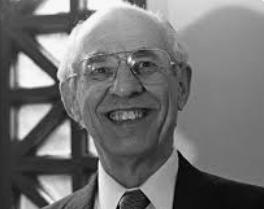
Hilary Putnam — The Philosopher Who Refused to Stand Still (1926–2016)
Hilary Putnam was philosophy’s great internal critic — a thinker who repeatedly dismantled his own positions whenever they hardened into dogma. Trained in logic and analytic rigor, Putnam nonetheless rejected the idea that philosophy could be reduced to formal systems, scientific naturalism, or linguistic analysis alone. His work spans philosophy of mind, language, science, mathematics, and ethics, unified by a restless conviction: clarity matters, but reality will not fit into any single framework.
From Logic and Mathematics to Philosophy
Born in Chicago and educated at the University of Pennsylvania, Harvard, and UCLA, Putnam studied under figures such as Rudolf Carnap and Hans Reichenbach. He entered philosophy through logic and the philosophy of mathematics, contributing early work to model theory and the foundations of computation.
This technical background gave Putnam immense authority within analytic philosophy, but it never confined him. He treated formal tools as instruments, not idols. Philosophy, he believed, must remain responsive to how language, science, and human practices actually function.
“The history of philosophy is full of people who were certain and wrong.”
Meaning Ain’t in the Head
Putnam’s most famous slogan — “Meaning ain’t in the head” — reshaped philosophy of language. Against the idea that meanings are purely mental representations, he argued that meaning depends on the interaction between speakers, communities, and the external world.
His famous Twin Earth thought experiment showed that two individuals could be internally identical yet mean different things by the same word, depending on their environment. Language, therefore, is not private — it is socially and causally embedded.
“Meanings just ain’t in the head.”
The Brain in a Vat and the Limits of Skepticism
Putnam also attacked radical skepticism using semantic arguments. In his famous brain in a vat scenario, he argued that if we really were brains permanently disconnected from the world, our words could not refer to brains, vats, or reality as we imagine them.
The skeptical hypothesis undermines its own intelligibility. We can doubt many things, but we cannot coherently doubt our connection to a shared world without losing the very meaning of our doubts.
“Skepticism about the external world is a problem only if meaning is ignored.”
Realism, Anti-Realism, and Changing One’s Mind
Few philosophers changed their views as openly as Putnam. He began as a scientific realist, defending the idea that science aims at true descriptions of an independent reality.
Later, he rejected what he called metaphysical realism, arguing that the idea of a single, complete, God’s-eye description of the world is incoherent. Truth, he claimed, depends on conceptual schemes — but this did not make it arbitrary or subjective.
Still later, he criticized even his own “internal realism,” insisting that philosophy must resist neat labels. What mattered was intellectual honesty, not consistency at all costs.
“Philosophy advances not by consensus, but by self-criticism.”
Ethics Without Foundations
In his later work, Putnam turned increasingly toward ethics. He rejected the sharp fact–value divide, arguing that values are woven into rational inquiry itself.
Ethical reasoning, like scientific reasoning, involves judgment, criticism, and fallibility — not mechanical deduction from axioms. Moral objectivity does not require absolute foundations, only responsible engagement with reasons.
This move brought Putnam closer to pragmatism, especially the thought of William James and John Dewey.
Philosophy as Responsibility
Putnam rejected the image of philosophy as technical puzzle-solving alone. Philosophical clarity carries ethical weight. How we describe reality shapes how we treat one another.
He remained politically engaged, critically reflecting on science, technology, and democracy, while resisting both relativism and authoritarian certainty.
Legacy — A Model of Intellectual Integrity
Hilary Putnam’s legacy is not a single doctrine but a style of thinking: rigorous, humane, and self-correcting. He showed that changing one’s mind is not weakness, but philosophical virtue.
In an age of entrenched positions, Putnam stands as an example of how philosophy can remain alive — by refusing to freeze into certainty, and by taking both truth and human practice seriously.
“Reason is not a mere tool; it is a way of being responsible.”
CivilSimian.com created by AxiomaticPanic, CivilSimian, Kalokagathia