
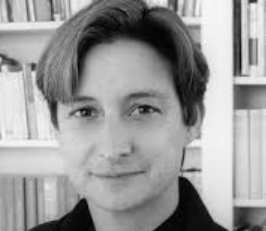
Judith Butler — The Philosopher of Gender, Power, and Performed Identity (1956– )
Judith Butler is the philosopher who destabilized identity. Against the assumption that gender, selfhood, and even the body rest on natural or fixed foundations, Butler argued that who we are is produced through repeated social acts, norms, and power relations. Their work reoriented feminist theory, queer theory, and political philosophy, forcing philosophy to confront how deeply power shapes the most intimate aspects of life.
Philosophy Against Certainty
Born in Cleveland, Ohio, Butler studied philosophy at Yale, where they were influenced by continental traditions often marginalized in Anglo-American philosophy: Hegelian dialectics, phenomenology, psychoanalysis, and post-structuralism.
Thinkers such as Hegel, Foucault, Freud, Lacan, and Derrida shaped Butler’s intellectual orientation. From the start, Butler resisted philosophical systems that promised stable foundations — whether grounded in nature, reason, or identity. Philosophy, they believed, must attend to instability, vulnerability, and historical contingency.
“There is no gender identity behind the expressions of gender.”
Gender Performativity — Identity as Repetition
Butler’s most influential idea is gender performativity, first articulated in Gender Trouble (1990). Gender, Butler argued, is not something one is, but something one does — repeatedly, ritualistically, and under social constraint.
Gestures, speech, clothing, posture, desire — these acts do not express a preexisting gender. They produce the illusion of a stable identity through repetition. What appears natural is in fact the sediment of social norms enforced over time.
This claim did not deny material bodies. Instead, it challenged the assumption that biology transparently dictates meaning. Even bodies are interpreted, regulated, and disciplined through cultural frameworks.
“Identity is performatively constituted by the very expressions that are said to be its results.”
Power, Norms, and the Production of the Subject
Drawing heavily on Michel Foucault, Butler argued that power does not merely repress. It produces. Social norms do not simply constrain subjects — they bring subjects into being.
To be recognized as a person is already to submit to norms governing intelligibility. Those who fail to conform risk marginalization, invisibility, or violence.
Yet power is never total. Because norms must be repeated to function, they are always vulnerable to disruption. Performativity contains within it the possibility of resistance.
“The subject is not determined by the rules through which it is generated.”
Ethics of Vulnerability and Precarious Life
After the turn of the twenty-first century, Butler’s work increasingly focused on ethics and politics. In books such as Precarious Life and Frames of War, they examined how lives are differentially valued — whose suffering counts, whose deaths are mournable, and whose existence is publicly recognized.
Butler emphasized precarity — the shared vulnerability of embodied beings dependent on social and political conditions. This vulnerability is not a weakness to overcome, but a basis for ethical responsibility.
Ethics, for Butler, begins not with autonomy or mastery, but with exposure to others.
“Loss and vulnerability seem to follow from our being socially constituted bodies.”
Politics Without Foundations
Butler has consistently rejected identity politics that treats categories like “woman,” “nation,” or “people” as fixed and unified. Political coalitions, they argued, must remain open, provisional, and self-critical.
They defended nonviolent resistance, criticized state violence, and challenged nationalist and exclusionary frameworks — positions that made Butler a controversial public figure. Their political philosophy insists that justice cannot be built on rigid definitions of who counts as human.
Style, Difficulty, and Misunderstanding
Butler’s writing style is famously demanding. They have argued that difficulty is sometimes necessary to resist simplistic thinking and inherited assumptions.
Critics accuse Butler of obscurity; defenders reply that clarity can sometimes mask violence when it forces complex realities into rigid conceptual boxes.
For Butler, philosophy must risk discomfort if it hopes to expose how power operates.
Legacy — Undoing the Natural
Judith Butler transformed how philosophy, feminism, and political theory understand identity. Their work reshaped debates about gender, sexuality, embodiment, and recognition across disciplines.
Butler’s enduring contribution is not a new doctrine, but a method of critique — one that asks how identities are made, who they exclude, and how they might be remade.
In Butler’s philosophy, freedom does not lie in discovering who we really are, but in loosening the norms that decide in advance who we are allowed to be.
“The task is not to figure out who we are, but to refuse who we are told to be.”
CivilSimian.com created by AxiomaticPanic, CivilSimian, Kalokagathia