


3 months 2 weeks ago
It is often asserted that discussion is only possible between people who have a common language and accept common basic assumptions. I think that this is a mistake. All that is needed is a readiness to learn from one's partner in the discussion, which includes a genuine wish to understand what he intends to say. If this readiness is there, the discussion will be the more fruitful the more the partner's backgrounds differ.
▼
Source
source
p. 352
1 month 3 weeks ago
Since my world picture approximates reality only crudely, I cannot aspire to optimize anything; at most, I can aim at satisficing. Searching for the best can only dissipate scarce cognitive resources; the best is the enemy of the good.
▼
Source
source
(p.361) p. 361; As cited in Ronald J. Baker (2010) Implementing Value Pricing: A Revolutionary Business Model for Professional Firms. p. 122.

3 months 2 weeks ago
In the United States of North America, every independent movement of the workers was paralysed so long as slavery disfigured a part of the Republic. Labour cannot emancipate itself in the white skin where in the black it is branded.
▼
Source
source
Vol. I, Ch. 10, Section 7, pg. 329.

1 week ago
We shall either learn to know a Hero, a true Governor and Captain, somewhat better, when we see him; or else go on to be forever governed by the Unheroic;-had we ballot-boxes clattering at every street-corner, there were no remedy in these.

2 months 2 weeks ago
It is said that desire is a product of the will, but the converse is in fact true: will is a product of desire.
▼
Source
source
"Will, Freedom"

1 day ago
1) Preserve Life
2) State of war (opportunism)
3) Relativism
4) Confusion
Civilization, goodness, justice, fairness all contained inside the first option. Under # 1 (Universal Humanism):
1) Survive.
2) Don't prevent another from surviving.
3) Help the less fortunate.
1 week ago
A gifted noble people; a people of wild strong feelings, and of iron restraint over these: the characteristic of noble-mindedness, of genius.

4 weeks 1 day ago
There is a strong affinity between the forces of empire and a politics of hate that justifies policies of domination and exclusion. So long as people's attention is focused on fear and hatred of foreigners or members of a particular religious group, such as Muslims, they are distracted from organizing to deal with the system of institutional domination and exploitation that is the real source of their insecurity.

3 months 2 weeks ago
Virtue is the death of conscience because it is the habit of Good, and yet the ethic of the honest man infinitely prefers virtue to the noblest agonies of conscience. Thus, being poses nonbeing and eliminates it. There is only being.
▼
Source
source
p. 402
3 months 2 weeks ago
Greater intelligence, wealth and opportunity, for example, allow a person to achieve ends he could not rationally contemplate otherwise.
▼
Source
source
Chapter II, Section 15, pg. 93

3 weeks 2 days ago
Much in the study of the paranormal was what we would now call pseudo-science. But the line between science and pseudo-science is smudged and shifting; where it lies seems clear only in retrospect. There is no pristine science untouched by the vagaries of faith.
▼
Source
source
Foreword: Two Attempts to Cheat Death (p. 5)

2 months 3 weeks ago
Pour recueillir les biens inestimables qu'assure la liberté de la presse, il faut savoir se soumettre aux maux inévitables qu'elle fait naître. Translation: In order to enjoy the inestimable benefits that the liberty of the press ensures, it is necessary to submit to the inevitable evils it creates.
▼
Source
source
Chapter XI.
1 week ago
We will not praise Mahomet's moral precepts as always of the superfinest sort; yet it can be said that there is always a tendency to good in them; that they are the true dictates of a heart aiming towards what is just and true.

4 months 2 weeks ago
There were many special laws affecting the several kings inscribed about the temples, but the most important was the following: They were not to take up arms against one another, and they were all to come to the rescue if any one in any of their cities attempted to overthrow the royal house; like their ancestors, they were to deliberate in common about war and other matters, giving the supremacy to the descendants of Atlas. And the king was not to have the power of life and death over any of his kinsmen unless he had the assent of the majority of the ten.

3 months 3 weeks ago
The reproduction of mankind is a great marvel and mystery. Had God consulted me in the matter, I should have advised him to continue the generation of the species by fashioning them of clay, in the way Adam was fashioned.
▼
Source
source
752
3 months 2 weeks ago
Talk of mysteries! - Think of our life in nature, - daily to be shown matter, to come in contact with it, - rocks, trees, wind on our cheeks! The solid earth! the actual world! the common sense! Contact! Contact! Who are we? where are we?
▼
Source
source
The Maine Woods (1848)

2 months 1 week ago
I have said these things to you so that by means of me you may have peace. In the world you will have tribulation, but take courage! I have conquered the world.
▼
Source
source
16:33, NWT
2 months 2 days ago
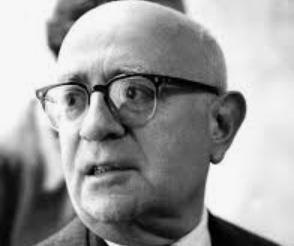
In both positivism and Heidegger-at least in his later work-speculation is the target of attack. In both cases the thought that autonomously raises itself above the facts through interpreting them and that cannot be reclaimed by them without leaving a surplus is condemned for being empty and vain concept-mongering.
▼
Source
source
p. 9

3 months 2 weeks ago
It seldom happens, however, that a great proprietor is a great improver.
▼
Source
source
Chapter IV, p. 420.
1 month 1 week ago
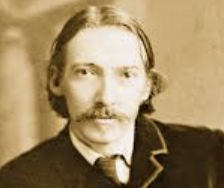
Man is a creature who lives not upon bread alone, but principally by catchwords; and the little rift between the sexes is astonishingly widened by simply teaching one set of catchwords to the girls and another to the boys.
▼
Source
source
Virginibus Puerisque, Ch. 2.

3 months 2 weeks ago
Mysticism is, in essence, little more than a certain intensity and depth of feeling in regard to what is believed about the universe.
▼
Source
source
Ch. 1: Mysticism and Logic
3 months 2 weeks ago
Similarly, individual acts of aristocratic generosity do not eliminate pauperism; they perpetuate it.
▼
Source
source
p. 219
2 months 1 week ago
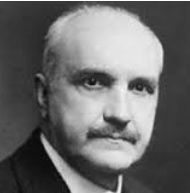
In proportion as a man's interests become humane and his efforts rational, he appropriates and expands a common life, which reappears in all individuals who reach the same impersonal level of ideas.
▼
Source
source
Ch. VIII: Ideal Society

4 months 1 week ago
"In the light, the earth remains our first and our last love. Our brothers are breathing under the same sky as we; justice is a living thing. Now is born that strange joy which helps one live and die, and which we shall never again postpone to a later time."

2 months 2 weeks ago
The death clock is ticking slowly in our breast, and each drop of blood measures its time, and our life is a lingering fever.
▼
Source
source
Act II.

3 months 2 weeks ago
A great myth is relevant as long as the predicament of humanity lasts; as long as humanity lasts. It will always work, on those who can receive it, the same catharsis.
▼
Source
source
"Haggard Rides Again", in Time and Tide, Vol. XLI, 9/3/1960

1 month 2 weeks ago
The bias of each medium of communication is far more distorting than the deliberate lie.
▼
Source
source
JQ. Journalism quarterly, Volume 50, Association for Education in Journalism, 1973, p. 145

3 months 6 days ago
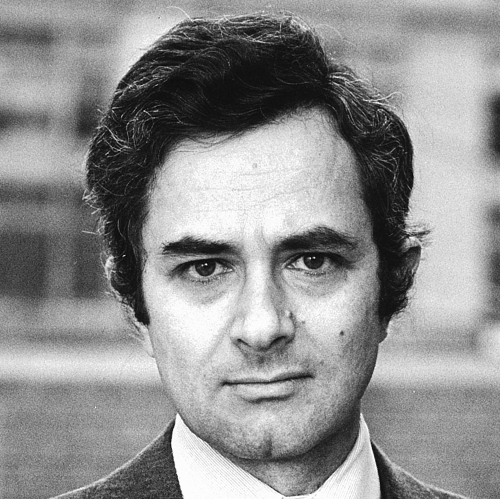
I believe that there is a necessary connection in both directions between the physical and the mental, but that it cannot be discovered a priori. Opinion is strongly divided on the credibility of some kind of functionalist reductionism, and I won't go through my reasons for being on the antireductionist side of that debate. Despite significant attempts by a number of philosophers to describe the functional manifestations of conscious mental states, I continue to believe that no purely functionalist characterization of a system entails - simply in virtue of our mental concepts - that the system is conscious.
▼
Source
source
"Conceiving the Impossible and the Mind-Body Problem," Royal Institute of Philosophy annual lecture, given in London on February 18, 1998, published in Philosophy vol. 73 no. 285, July 1998, pp 337-352, Cambridge University Press, p. 337.
2 months 1 week ago
The avant-garde and the beatniks share in the function of entertaining without endangering the good conscience of the men of good will.
▼
Source
source
p. 70
1 month 3 weeks ago
We often have need of a profound philosophy to restore to our feelings their original state of innocence, to find our way out of the rubble of things alien to us, to begin to feel for ourselves and to speak ourselves, and I might almost say to exist ourselves. Even if my philosophy does not extend to discovering anything new, it does nevertheless possess the courage to regard as questionable what has long been thought true.
▼
Source
source
B 49

1 month 1 week ago
Of course, there are those - Sandel, Walzer and Dworkin, for example - who propose "communitarian" ways of thinking, as a further move in the direction which a sophisticated liberalism requires. But none of them is prepared to accept the real price of community: which is sanctity, intolerance, exclusion, and a sense that life's meaning depends upon obedience, and also on vigilance against the enemy.
▼
Source
source
'In Defence of the Nation', The Philosopher on Dover Beach (1990), p. 310
1 month 3 weeks ago
All mathematical laws which we find in Nature are always suspect to me, in spite of their beauty. They give me no pleasure. They are merely auxiliaries. At close range it is all not true.
▼
Source
source
As quoted in Lichtenberg : A Doctrine of Scattered Occasions (1959) by Joseph Peter Stern, p. 84

3 months 3 weeks ago
They who have compared our lives to a dream were, perhaps, more in the right than they were aware of. When we dream, the soul lives, works, and exercises all its faculties, neither more nor less than when awake; but more largely and obscurely, yet not so much, neither, that the difference should be as great as betwixt night and the meridian brightness of the sun, but as betwixt night and shade; there she sleeps, here she slumbers; but, whether more or less, 'tis still dark, and Cimmerian darkness. We wake sleeping, and sleep waking.
▼
Source
source
tr. Cotton, rev. W. Carew Hazlitt, 1877
3 months 2 weeks ago
Life is a business that does not cover the costs.
▼
Source
source
Vol II "On the Vanity and Suffering of Life"
3 months 2 weeks ago
If there are different Notions of the science of Philosophy, it is the true Notion alone that puts us in a position to understand the writings of philosophers who have worked in the knowledge of it. For in thought, and particularly in speculative thought, comprehension means something quite different from understanding the grammatical sense of the words alone, and also from understanding them in the region of ordinary conception only. Hence we may possess a knowledge of the assertions, propositions, or of the opinions of philosophers; we may have occupied ourselves largely with the grounds of and deductions from these opinions, and the main point in all that we have done may be wanting - the comprehension of the propositions.
▼
Source
source
First divsion, Chapter I. - The Metaphysics of the Understanding…
2 months 2 days ago
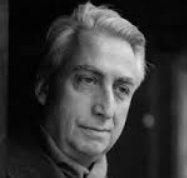
When I was a student I was assigned "Mythologies" and "A Lover's Discourse," by Roland Barthes, and felt at once that something momentous had happened to me, that I had met a writer who had changed my course in life somehow; and looking back now, I think he did.
▼
Source
source
Zadie Smith Interview
3 months 2 weeks ago
Whoever has used what means he is capable of, for the informing of himself, with a readiness to believe and obey what shall be taught and prescribed by Jesus, his Lord and King, is a true and faithful subject of Christ's kingdom; and cannot be thought to fail in any thing necessary to salvation.
▼
Source
source
§ 233

2 months 4 weeks ago
To use Virtue is perfect blessedness.

1 month 4 weeks ago
Corruption of politics has nothing to do with the morals, or the laxity of morals, of various political personalities. Its cause is altogether a material one. Politics is the reflex of the business and industrial world, the mottos of which are: "To take is more blessed than to give"; "buy cheap and sell dear"; "one soiled hand washes the other." There is no hope even that woman, with her right to vote, will ever purify politics.
3 months 2 weeks ago
With respect to a true culture and manhood, we are essentially provincial still, not metropolitan, - mere Jonathans. We are provincial, because we do not find at home our standards, - because we do not worship truth, but the reflection of truth, - because we are warped and narrowed by an exclusive devotion to trade and commerce and manufactures and agriculture and the like, which are but means, and not the end.
▼
Source
source
p. 493
3 months ago
So people should abstain from other animals just as they should from the human.
▼
Source
source
4, 9, 6
2 months 2 weeks ago
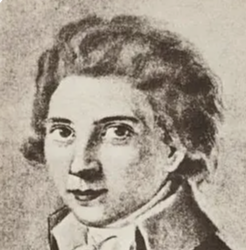
Moderation is the spirit of castrated narrow-mindedness.
▼
Source
source
"Selected Aphorisms from the Athenaeum (1798)", Dialogue on Poetry and Literary Aphorisms, Ernst Behler and Roman Struc, trans. (Pennsylvania University Press:1968) #64
2 months 4 weeks ago
Work at these things, practice them, these are the things you ought to desire; they are what will put you on the path of divine virtue - yes, by the one who entrusted our soul with the tetraktys, source of ever-flowing nature. Pray to the gods for success and get to work.
▼
Source
source
As quoted in Divine Harmony: The Life and Teachings of Pythagoras by John Strohmeier and Peter Westbrook.
3 months 2 weeks ago
Any man more right than his neighbors constitutes a majority of one.
1 month 1 week ago
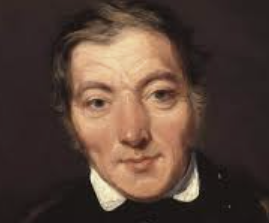
Man is the creature of circumstances.
▼
Source
source
"The Philanthropist"
3 months 2 weeks ago
I have nothing but contempt for you idiotic chosen ones who have the heart to rejoice when there are the damned in Hell and the poor on earth; as for me, I am on the side of men and I will not leave it.
▼
Source
source
Act 6, sc. 6

1 week 4 days ago
Liberalism has been very severely threatened in recent years. It's been threatened from a number of sources. So internationally you have two great powers, Russia and China, that are definitely not liberal polities, that have expansive ambitions... As Vladimir Putin said... in an iterview with the FT in 2019 "Liberalism is an obsolete doctrine." But the threat... also comes from other places. ...You have the rise of a populist nationalist right in many countries. This is Viktor Orbán in Hungary. This is Narendra Modi in India, Donald Trump in the United States, ...Marine Le Pen in France. All of them criticizing liberalism precisely for the tolerance that it permits and tries to deal with, in diverse and increasingly ethnically and racially diverse countries.
▼
Source
source
5:36 Ref: Vladimir Putin says liberalism has 'become obsolete' (June 27, 2019) Financial Times.
4 months 1 week ago
At my age one's got to be sincere. Lying's too much effort.
CivilSimian.com created by AxiomaticPanic, CivilSimian, Kalokagathia