


3 months 2 weeks ago
Indignation is a submission of our thoughts, but not of our desires.
3 weeks 3 days ago
What is an artist? A provincial who finds himself somewhere between a physical reality and a metaphysical one... It's this in-between that I'm calling a province, this frontier country between the tangible world and the intangible one - which is really the realm of the artist.
▼
Source
source
Every Time We Say Goodbye in Sight and Sound [London]

Just now
Do you desire another case? Take that of the younger Marcus Cato, with whom Fortune dealt in a more hostile and more persistent fashion. But he withstood her, on all occasions, and in his last moments, at the point of death, showed that a brave man can live in spite of Fortune, can die in spite of her. His whole life was passed either in civil warfare, or under a political regime which was soon to breed civil war.
4 months 5 days ago
The superior man, extensively studying all learning, and keeping himself under the restraint of the rules of propriety, may thus likewise not overstep what is right.

3 months 2 weeks ago
Next to the ridicule of denying an evident truth, is that of taking much pains to defend it; and no truth appears to me more evident, than that beasts are endow'd with thought and reason as well as men. The arguments are in this case so obvious, that they never escape the most stupid and ignorant.
▼
Source
source
Part 3, Section 16

3 weeks 1 day ago
In thinking of history in this [progressive & eschatological] way Islam shares common ground with Christianity and with the secular creeds of the modern West. It is misleading to represent Islam and 'the West' as forming civilisations that have nothing in common. Christianity and Islam are integral parts of western monotheism, and as such they share a view of history that marks them off from the rest of the world. Both are militant faiths that seek to convert all humankind. Other religions have been implicated in twentieth-century violence-the state cult of Shintō in Japan during the militarist period and Hindu nationalism in contemporary India, for example. But only Christianity and Islam have engendered movements that are committed to the systematic use of force to achieve universal goals.
▼
Source
source
Enlightenment and Terror in the Twentieth Century: Terror and the Western Tradition

2 months 2 weeks ago
Fathers and teachers, I ponder, "What is hell?" I maintain that it is the suffering of being unable to love.
▼
Source
source
Book VI, Chapter 3 (trans. Constance Garnett)

2 months 3 weeks ago
To keep our eyes open longer were but to set our Antipodes. The Huntsmen are up in America, and they are already past their first sleep in Persia. But who can be drowsy at that hour which freed us from everlasting sleep? or have slumbering thoughts at that time, when sleep itself must end, and as some conjecture all shall awake again?
▼
Source
source
Ch. 5

3 months 2 weeks ago
When one admits that nothing is certain one must, I think, also admit that some things are much more nearly certain than others. It is much more nearly certain that we are assembled here tonight than it is that this or that political party is in the right. Certainly there are degrees of certainty, and one should be very careful to emphasize that fact, because otherwise one is landed in an utter skepticism, and complete skepticism would, of course, be totally barren and completely useless.
▼
Source
source
"Skepticism"

2 months 1 week ago
This world was created from God's fear of solitude. In other words, us, the creatures, have no other meaning but to distract the Creator. Poor clowns of the absolute, we forget that we live dramas for the boredom of a spectator, whose claps have never reached the ears of a mortal.

3 months 1 week ago
From whence are these "rights of individuals" derived, and why should we care? Unless we presume the existence of some greater power that determines what is good, isn't it arbitrary to posit that human survival is more important than private property rights, an equally artificially construed concept? Isn't it arbitrary to assume that some sort of equality is preferable to a system where, say, the poor are assumed to have bad karma? If these 'rights of individuals' are derived only from shared humanity, then do 'individuals' (a thoroughly meaningless term, by the way), begin to lose them when they act inhumanely? And isn't it totally arbitrary to grant rights to humans rather than other creatures anyway?
▼
Source
source
Lecture in New Haven, On Constructed Rights
1 month 2 weeks ago
To challenge and to cope with this paradoxical state of things, we need a paradoxical way of thinking; since the world drifts into delirium, we must adopt a delirious point of view. We must no longer assume any principle of truth, of causality, or any discursive norm. Instead, we must grant both the poetic singularity of events and the radical uncertainty of events. It is not easy. We usually think that holding to the protocols of experimentation and verification is the most difficult thing. But in fact the most difficult thing is to renounce the truth and the possibility of verification, to remain as long as possible on the enigmatic, ambivalent, and reversible side of thought.
▼
Source
source
The Vital Illusion (2000) "The Murder of the Real". Wellek Library Lectures given May 1999 at the University of California, Irvine

1 month 3 weeks ago
Instead of wishing to see more doctors made by women joining what there are, I wish to see as few doctors, either male or female, as possible. For, mark you, the women have made no improvement - they have only tried to be men and they have only succeeded in being third-rate men.
▼
Source
source
Letter to John Stuart Mill (12 September 1860), published in Florence Nightingale on Society and Politics, Philosophy, Science, Education (2003) edited by Lynn McDonald

3 months 2 weeks ago
For the moment, the jazz is playing; there is no melody, just notes, a myriad of tiny tremors. The notes know no rest, an inflexible order gives birth to them then destroys them, without ever leaving them the chance to recuperate and exist for themselves.... I would like to hold them back, but I know that, if I succeeded in stopping one, there would only remain in my hand a corrupt and languishing sound. I must accept their death; I must even want that death: I know of few more bitter or intense impressions.
2 months 1 week ago
Without will, no conflict: no tragedy among the abulic. Yet the failure of will can be experienced more painfully than a tragic destiny.

3 months 2 weeks ago
The tool, as we have seen, is not exterminated by the machine.
▼
Source
source
Vol. I, Ch. 15, Section 2, pg. 422.

1 month 4 weeks ago
Thinking men and women the world over are beginning to realize that patriotism is too narrow and limited a conception to meet the necessities of our time.
1 day ago
It is truly not the merit of the school if we do not come out selfish. Each sort of corresponding pride and every wind of covetousness, eagerness for office, mechanical and servile officiousness, hypocrisy, etc., is bound as much with extensive knowledge as with elegant, classical education, and since this whole instruction exercises no influence of any sort on our ethical behavior, it thus frequently falls to the fate of being forgotten in the same measure as it is not used: one shakes off the dust of the school.
▼
Source
source
p. 22

2 months 1 week ago
Master, we saw one casting out devils in thy name, and he followeth not us: and we forbad him, because he followeth not us. But Jesus said, Forbid him not: for there is no man which shall do a miracle in my name, that can lightly speak evil of me. For he that is not against us is on our part.
▼
Source
source
Mark 9:38-40 (KJV)

3 months 2 weeks ago
The world is his, who has money to go over it.
▼
Source
source
Wealth
2 months 6 days ago
No one is guiltless...But no one is beyond the pale of human existence, provided he pays for his guilt.
2 months 1 week ago
The farther men get from God, the farther they advance into the knowledge of religions.
2 months 1 week ago
As we shall see later, the most important factor in the training of good mental habits consists in acquiring the attitude of suspended conclusion, and in mastering the various methods of searching for new materials to corroborate or to refute the first suggestions that occur. To maintain the state of doubt and to carry on systematic and protracted inquiry ― these are the essentials of thinking.
▼
Source
source
Chapter 1: "What Is Thought?"

3 months 3 weeks ago
Many have been deceived by outward appearances and have proceeded to write and teach about good works and how they justify without even mentioning faith. ... Wearying themselves with many works, they never come to righteousness.
▼
Source
source
p. 75
3 months 2 weeks ago
To him who looks upon the world rationally, the world in its turn presents a rational aspect. The relation is mutual.
4 weeks 1 day ago
Many conflicts within Third World countries are related to the practice of exploiting resources faster than nature can renew them or diverting them away from where people need them. Dams in every society have become major sources of conflict. As water scarcity grows, neighbors, families turn against each other.

2 months 1 week ago
Loren von Stein thus turned the dialectic into an ensemble of objective laws calling for social reform as the adequate solution of all contradictions and neutralized the critical elements of the dialectic.
▼
Source
source
P. 388
2 months 1 week ago
Refinement is a sign of a deficient vitality, in art, in love, and in everything.

1 month 1 week ago
Each of our senses makes its own space, but no sense can function in isolation. Only as sight relates the touch, or kinaesthesia, or sound, can the eye see.

3 months 2 weeks ago
We think it also necessary to express our astonishment that a government, desirous of being called free, should prefer connection with the most despotic and arbitrary powers in Europe.
▼
Source
source
Address and Declaration at a Select Meeting of the Friends of Universal Peace and Liberty (August 20, 1791) p. 5

4 months 1 week ago
An unpleasant nest of nasty, materialistic and aggressive people, careless of the rights of others, imperfectly democratic at home though quick to see the minor slaveries of others, and greedy without end.
1 month 1 week ago
A beautiful face is a silent commendation.
▼
Source
source
Maxim 283
1 day ago
The proof of a theory is in its reasoning, not in its sponsorship.
2 months 2 weeks ago
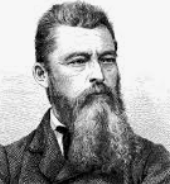
The first philosophers were astronomers. The heavens remind man ... that he is destined not merely to act, but also to contemplate.
▼
Source
source
Introduction, Z. Hanfi, trans., in The Fiery Brook (1972), pp. 101-102

4 months 1 week ago
Those who purge the soul believe that the soul can receive no benefit from any teachings offered to it until someone by cross-questioning reduces him who is cross-questioned to an attitude of modesty, by removing the opinions that obstruct the teachings, and thus purges him and makes him think that he knows only what he knows, and no more.
1 month 3 weeks ago
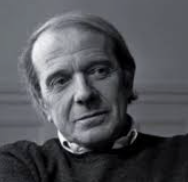
One of the principal motifs of Nietzsche's work is that Kant had not carried out a true critique because he was not able to pose the problem of critique in terms of values.
▼
Source
source
p. 1
2 months 6 days ago
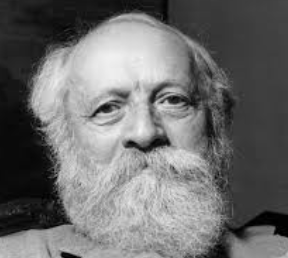
So long as a man's power, that is, his capacity to realize what he has in mind, is bound to the goal, to the work, to the calling, it is, considered in itself, neither good nor evil, it is only a suitable or unsuitable instrument. But as soon as this bond with the goal is broken off or loosened, and the man ceases to think of power as the capacity to do something, but thinks of it as a possession, that is, thinks of power in itself, then his power, being cut off and self-satisfied, is evil; it is power withdrawn from responsibility, power which betrays the spirit, power in itself.
▼
Source
source
p. 152

3 months 2 weeks ago
We need not suppose that when po+B40wer resides in an exclusive class, that class will knowingly and deliberately sacrifice the other classes to themselves: it suffices that, in the absence of its natural defenders, the interest of the excluded is always in danger of being overlooked: and, when looked at, is seen with very different eyes from those of the persons whom it directly concerns.
▼
Source
source
Ch. III: The Ideally Best Polity

3 months 2 weeks ago
I wrote the books I should have liked to read. That's always been my reason for writing. People won't write the books I want, so I have to do it for myself.
▼
Source
source
As quoted in C.S. Lewis (1963), by Roger Lancelyn Green, p. 9
3 months 2 weeks ago
A man might say, with enough truth to justify a joke: "Science is what we know, and philosophy is what we don't know." But it should be added that philosophical speculation as to what we do not yet know has shown itself a valuable preliminary to exact scientific knowledge.

3 months 2 weeks ago
But, suppose, besides, that the making of the new machinery affords employment to a greater number of mechanics, can that be called compensation to the carpet makers, thrown on the streets?
▼
Source
source
Vol. I, Ch. 15, Section 6, pg. 479.
2 months 1 week ago
To dream of an enterprise of demolition that would spare none of the traces of the original Big Bang.

3 months 2 weeks ago
I have no great faith in political arithmetic, and I mean not to warrant the exactness of either of these computations.
▼
Source
source
Chapter V, p. 577.
1 month 1 week ago
Headlines are icons, not literature.
▼
Source
source
(p. 5)
2 months 1 week ago
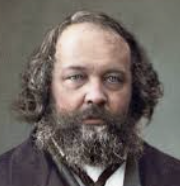
I hate Communism because it is the negation of liberty and because humanity is for me unthinkable without liberty. I am not a Communist, because Communism concentrates and swallows up in itself for the benefit of the State all the forces of society, because it inevitably leads to the concentration of property in the hands of the State, whereas I want the abolition of the State, the final eradication of the principle of authority and the patronage proper to the State, which under the pretext of moralizing and civilizing men has hitherto only enslaved, persecuted, exploited and corrupted them. I want to see society and collective or social property organized from below upwards, by way of free association, not from above downwards, by means of any kind of authority whatsoever.
▼
Source
source
As quoted in Michael Bakunin (1937) by E.H. Carr, p. 356

1 month 1 week ago
Prose is private drama; poetry is corporate drama.
▼
Source
source
(p. 275)
CivilSimian.com created by AxiomaticPanic, CivilSimian, Kalokagathia