

2 months 1 week ago
A more or less superficial layer of the unconscious is undoubtedly personal. I call it the "personal unconscious". But this personal layer rests upon a deeper layer, which does not derive from personal experience and is not a personal acquisition but is inborn. This deeper layer I call the "collective unconscious". I have chosen the term "collective" because this part of the unconscious is not individual but universal; in contrast to the personal psyche, it has contents and modes of behaviour that are more or less the same everywhere and in all individuals.
▼
Source
source
p. 3-4

2 months 6 days ago
Reverie is not a mind vacuum. It is rather the gift of an hour which knows the plenitude of the soul.
▼
Source
source
Ch. 2, sect. 3
2 months 1 week ago
Humanity may endure the loss of everything: all its possessions may be torn away without infringing its true dignity; - all but the possibility of improvement.
▼
Source
source
"The Vocation of the Scholar" (1794), as translated by William Smith, in The Popular Works of Johann Gottlieb Fichte (1889), Vol. I, Lecture IV, p. 188.
3 months 2 weeks ago
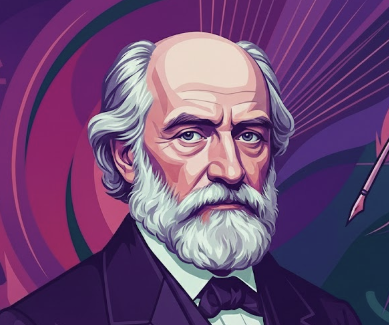
Thus, because Christian morals leave animals out of consideration ... therefore in philosophical morals they are of course at once outlawed; they are merely "things," simply means to ends of any sort; and so they are good for vivisection, for deer-stalking, bull-fights, horse-races, etc., and they may be whipped to death as they struggle along with heavy quarry carts. Shame on such a morality ... which fails to recognize the Eternal Reality immanent in everything that has life, and shining forth with inscrutable significance from all eyes that see the sun!
▼
Source
source
Part II, Ch. VI, pp. 94-95

4 months 3 days ago
All human laws are nourished by one divine law.
3 months 1 week ago
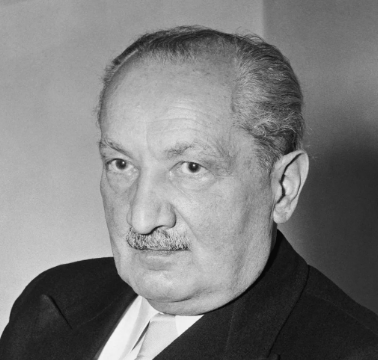
But in fact there is no circle at all in the formulation of our question. Beings can be determined in their being without the explicit concept of the meaning of being having to be already available. If this were not so there could not have been as yet any ontological knowledge. And probably no one would deny the factual existence of such knowledge. It is true that "being" is "presupposed" in all previous ontology, but not as an available concept-not as the sort of thing we are seeking.
▼
Source
source
Introduction: The Exposition of the Question of the Meaning of Being (Stambaugh translation)

3 months 2 weeks ago
So long as the product is sold, everything is taking its regular course from the standpoint of the capitalist producer.
▼
Source
source
Vol. II, Ch. II, p. 78.
1 month 4 weeks ago
Sensitiveness without impulse spells decadence, and impulse without sensitiveness spells brutality.
▼
Source
source
Ch. 13: "Requisites for Social Progress", p. 280

1 month 3 weeks ago
The real issue is not whether two and two make four or whether two and two make five, but whether life advances by men who love words or men who love living.
▼
Source
source
Chapter Nine, Breaking the Circuit

2 months 2 weeks ago
It is easy to see that, even in the freedom of early youth, an American girl never quite loses control of herself; she enjoys all permitted pleasures without losing her head about any of them, and her reason never lets the reins go, though it may often seem to let them flap.
▼
Source
source
Book Three, Chapter IX.
2 months 6 days ago
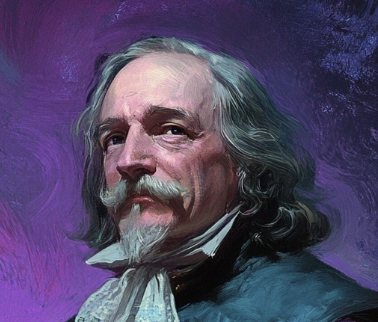
And in these foure things, Opinion of Ghosts, Ignorance of second causes, Devotion towards what men fear, and Taking of things Casuall for Prognostics, consisteth the Natural seed of Religion; which by reason of the different Fancies, Judgements, and Passions of severall men, hath grown up into ceremonies so different, that those which are used by one man, are for the most part ridiculous to another.
▼
Source
source
The First Part, Chapter 12, p. 54
1 month 4 weeks ago
We cannot think any true thought unless we want the true. Thinking is itself an aspect of practice.
▼
Source
source
p. 45
2 months 4 days ago
As one advances in life, one realises more and more that the majority of men - and of women - are incapable of any other effort than that strictly imposed on them as a reaction to external compulsion. And for that reason, the few individuals we have come across who are capable of a spontaneous and joyous effort stand out isolated, monumentalised, so to speak, in our experience. These are the select men, the nobles, the only ones who are active and not merely reactive, for whom life is a perpetual striving, an incessant course of training. Training = askesis. These are the ascetics.
▼
Source
source
Chap. VII: Noble Life And Common Life, Or Effort And Inertia

2 months 2 weeks ago
The most obvious division of society is into rich and poor; and it is no less obvious, that the number of the former bear a great disproportion to those of the latter. The whole business of the poor is to administer to the idleness, folly, and luxury of the rich; and that of the rich, in return, is to find the best methods of confirming the slavery and increasing the burdens of the poor. In a state of nature, it is an invariable law, that a man's acquisitions are in proportion to his labours. In a state of artificial society, it is a law as constant and as invariable, that those who labour most enjoy the fewest things; and that those who labour not at all have the greatest number of enjoyments. A constitution of things this, strange and ridiculous beyond expression! We scarce believe a thing when we are told it, which we actually see before our eyes every day without being in the least surprised.

1 month 1 week ago
The slaves of our times are not all those factory and workshop hands only who must sell themselves completely into the power of the factory and foundry-owners in order to exist, but nearly all the agricultural laborers are slaves, working, as they do, unceasingly to grow another's corn on another's field, and gathering it into another's barn; or tilling their own fields only in order to pay to bankers the interest on debts they cannot get rid of. And slaves also are all the innumerable footmen, cooks, porters, housemaids, coachmen, bathmen, waiters, etc., who all their life long perform duties most unnatural to a human being, and which they themselves dislike.
▼
Source
source
Chapter 8: Slavery Exists Among Us
2 months 6 days ago
I am a dreamer of words, of written words. I think I am reading; a word stops me. I leave the page. The syllables of the word begin to move around. Stressed accents begin to invert. The word abandons its meaning like an overload which is too heavy and prevents dreaming. Then words take on other meanings as if they had the right to be young. And the words wander away, looking in the nooks and crannies of vocabulary for new company, bad company.
▼
Source
source
Introduction, sect. 6

2 months ago
We men do nothing but lie and make ourselves important. Speech was invented for the purpose of magnifying all of our sensations and impressions - perhaps so that we could believe in them.
▼
Source
source
Niebla [Mist]

4 months 2 weeks ago
[B]ecause that which is finite is always bounded with reference to something... it is necessary that there should be no end... [N]umber also appears to be infinite, and mathematical magnitudes, and that which is beyond the heavens. And since that which is beyond is infinite, body also appears to be infinite, and it would seem that there are infinite worlds; for why is there rather void here than there? ...If also there is a vacuum, and an infinite place, it is necessary that there should be an infinite body: for in things which have a perpetual subsistence, capacity differs nothing from being. The speculation of the infinite is, however, attended with doubt: for many impossibilities happen both to those who do not admit that it has a subsistence, and to those who do. ...It is ...especially the province of a natural philosopher to consider if there be a sensible infinite magnitude.
1 month 1 week ago
I shall doubtless outlive some troublesome desires; but I am in no hurry about that; nor, when the time comes, shall I plume myself on the immunity just in the same way, I do not greatly pride myself on having outlived my belief in the fairy tales of Socialism. Old people have faults of their own; they tend to become cowardly, niggardly, and suspicious. Whether from the growth of experience or the decline of animal heat, I see that age leads to these and certain other faults; and it follows, of course, that while in one sense I hope I am journeying towards the truth, in another I am indubitably posting towards these forms and sources of error.
▼
Source
source
Crabbed Age and Youth.
1 month 4 weeks ago
Morally, it is wrong to suppose the source of evil is outside oneself, that one is a vessel of holiness running over with virtue. Such a disposition is the best soil for a hateful and cruel fanaticism. It is as wrong to impute every wickedness to Jews, Freemasons, "intellectuals," as it is to blame all crimes on the bourgeoisie, the nobility, and the powers that were. No; the root of evil is in me as well, and I must take my share of the responsibility and the blame. That was true before the revolution and it is true still.
▼
Source
source
p. 128

2 weeks 6 days ago
If you want to understand the beliefs that are shaping global politics, read the Book of Revelation.
▼
Source
source
Review: Sacred Causes by Michael Burleigh

3 months 1 week ago
We reduce things to mere Nature in order that we may 'conquer' them.

3 months 3 weeks ago
All the opinions of the world agree in this, that pleasure is our end.
▼
Source
source
Ch. 20. Of the Force of Imagination, tr. Cotton, rev. W. Carew Hazlitt, 1877

4 days ago
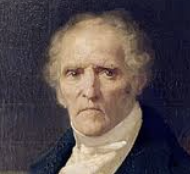
Every candid eye, I think, will read the Koran far otherwise than so. It is the confused ferment of a great rude human soul; rude, untutored, that cannot even read; but fervent, earnest, struggling vehemently to utter itself in words. With a kind of breathless intensity he strives to utter himself; the thoughts crowd on him pell-mell: for very multitude of things to say, he can get nothing said. The meaning that is in him shapes itself into no form of composition, is stated in no sequence, method, or coherence;-they are not shaped at all, these thoughts of his; flung out unshaped, as they struggle and tumble there, in their chaotic inarticulate state.
1 week 2 days ago
This miracle of social concord would result not from direct conciliation, which would be impossible, but from the development of new interests, and especially from the amazement with which the minds of men would be filled on being convinced of the radical falseness of the civilized social order by comparison with the associative or combined, and of the errors in which the social world has been so long plunged - misled by speculative philosophy, which upholds and extols this order with all its defects to the entire neglect of the study of association.
▼
Source
source
The Theory of Social Organization. Harmonian Man: Selected Writings of Charles Fourier, p. 5.

3 months 2 weeks ago
Divorce is probably of nearly the same age as marriage. I believe, however, that marriage is some weeks the more ancient.
▼
Source
source
"Divorce", 1771

3 months 3 days ago
Repentance for one's evil deeds is the safeguard of life.

3 months 1 week ago
A sect or party is an elegant incognito devised to save a man from the vexation of thinking.
▼
Source
source
June 20, 1831
3 months 2 weeks ago
Such then is the human condition, that to wish greatness for one's country is to wish harm to one's neighbors.
▼
Source
source
"Fatherland", 1764
1 month 4 weeks ago
What is morality in any given time or place? It is what the majority then and there happen to like, and immorality is what they dislike.
▼
Source
source
Ch. 22, August 30, 1941.
1 month 3 weeks ago
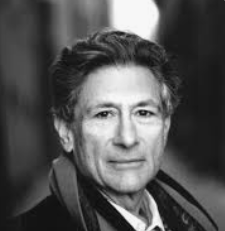
In the end, I am moved by causes and ideas that I can actually choose to support because they conform to values and principles that I believe in.
▼
Source
source
p. 88

1 month 4 weeks ago
Moreover, nothing is so rare as to see misfortune fairly portrayed; the tendency is either to treat the unfortunate person as though catastrophe were his natural vocation, or to ignore the effects of misfortune on the soul, to assume, that is, that the soul can suffer and remain unmarked by it, can fail, in fact, to be recast in misfortune's image.
▼
Source
source
p. 193
2 months 6 days ago
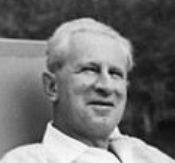
The way in which a society organizes the life of its members ... is one "project" of realization among others. But once the project has become operative in the basic institutions and relations, it tends to become exclusive and to determine the development of the society as a whole.
▼
Source
source
p. xlviii

2 months 1 week ago
How can you know if you are in the truth? The criterion is simple enough: if others make a vacuum around you, there is not a doubt in the world that you are closer to the essential than they are.
1 month 2 days ago
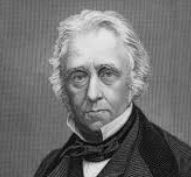
Those who compare the age in which their lot has fallen with a golden age which exists only in imagination, may talk of degeneracy and decay; but no man who is correctly informed as to the past, will be disposed to take a morose or desponding view of the present.
▼
Source
source
Vol. I, ch. 1

4 months 1 week ago
What I will be remembered for are the Foundation Trilogy and the Three Laws of Robotics. What I want to be remembered for is no one book, or no dozen books. Any single thing I have written can be paralleled or even surpassed by something someone else has done. However, my total corpus for quantity, quality and variety can be duplicated by no one else. That is what I want to be remembered for.
3 months 1 week ago
God may forgive sins, he said, but awkwardness has no forgiveness in heaven or earth.
▼
Source
source
Society and Solitude
1 month 1 week ago
Just because science can't in practice explain things like the love that motivates a poet to write a sonnet, that doesn't mean that religion can. It's a simple and logical fallacy to say, 'If science can't do something, therefore religion can'.
2 months 1 week ago
Sleep is for the inhabitants of Planets only. In another time, Man will sleep and wake continually at once. The greater part of our Body, of our Humanity itself, yet sleeps a deep sleep.

4 months 3 days ago
The man of perfect virtue is cautious and slow in his speech. When a man feels the difficulty of doing, can he be other than cautious and slow in speaking?
2 months 6 days ago
It is not society's fault that most men seem to miss their vocation. Most men have no vocation.
▼
Source
source
Ch. IV: The Aristocratic Ideal
2 months 1 week ago
The people should never be deceived, under any pretext or for any purpose. It would not only be criminal but detrimental to the revolutionary cause, for deception of any kind, by its very nature, is shortsighted, petty, narrow, always sewn with rotten threads, so that it inevitably tears and is exposed.
▼
Source
source
"Appendix A"

3 months 1 week ago
It seems to me certain that more people are killed out of righteous stupidity than out of wickedness.
▼
Source
source
p. 368

3 months 1 week ago
Philosophy may in no way interfere with the actual use of language; it can in the end only describe it.
▼
Source
source
§ 124

4 months 1 day ago
The perfection of the effect demonstrates the perfection of the cause, for a greater power brings about a more perfect effect. But God is the most perfect agent. Therefore, things created by Him obtain perfection from Him. So, to detract from the perfection of creatures is to detract from the perfection of divine power.
▼
Source
source
III, 69, 15
1 month 4 weeks ago
The miser deprives himself of his treasure because of his desire for it.
▼
Source
source
p. 260
2 months 6 days ago
Let a man once overcome his selfish terror at his own finitude, and his finitude is, in one sense, overcome.
3 months 1 week ago
Thought is the property of him who can entertain it, and of him who can adequately place it.
▼
Source
source
Shakespeare; or, The Poet

1 month 1 week ago
Invention is the mother of all necessities.
CivilSimian.com created by AxiomaticPanic, CivilSimian, Kalokagathia