


3 months 2 weeks ago
He who seeks equality between unequals seeks an absurdity.
▼
Source
source
Ch. 9, Of Aristocracy, Continuation
2 months 4 days ago
Rohde became more and more firmly bound to the bourgeois world, its institutions and accepted opinions. ... The contrast between the two natures makes Rohde and Nietzsche exemplary representatives of two distinctive worlds. In their youth they both live in the realm of boundless possibilities and feel an affinity through the exuberance of their noble aspirations. Subsequently they go in opposite directions. Nietzsche remains young, leaving concrete reality as his task assumes existential import. Rohde grows old, bourgeois, stable, and skeptical. Hence courage is a fundamental trait in Nietzsche, plaintive self-irony in Rohde. ... Rohde retained the interests but not the attitudes of his youth; he looked to the world of the Greeks for the object of his contemplation rather than the norm of obligation.
▼
Source
source
pp. 61-62

3 months 3 weeks ago
Covetousness is both the beginning and the end of the devil's alphabet- the first vice in corrupt nature that moves, and the last which dies.
1 month 3 weeks ago
What we have is a device for producing sentences in response to sentences. But none of these sentences is at all connected to the real world. If one coupled two of these machines and let them play the Imitation Game with each other, then they would go on 'fooling' each other forever, even if the rest of the world disappeared! There is no more reason to regard the machine's talk of apples as referring to real world apples than there is to regard the ant's 'drawing' as referring to Winston Churchill.
▼
Source
source
Chap. 1 : Brains in a vat

1 month 3 weeks ago
Religion, mysticism and magic all spring from the same basic 'feeling' about the universe: a sudden feeling of meaning, which human beings sometimes 'pick up' accidentally, as your radio might pick up some unknown station. Poets feel that we are cut off from meaning by a thick, lead wall, and that sometimes for no reason we can understand the wall seems to vanish and we are suddenly overwhelmed with a sense of the infinite interestingness of things.
▼
Source
source
p. 28

3 months 1 week ago
...this Jewish doctrine of the primacy of economic values has found the widest acceptance and been most whole-heartedly acted upon. From America it has begun to infect the rest of the world. We may be pardoned for wishing that the Jews had remained not forty, but four thousand years in their repulsive wilderness.
▼
Source
source
"One and Many," pp. 18
2 months 1 week ago
Modern man may assert that he can dispense with them, and he may bolster his opinion by insisting that there is no scientific evidence of their truth. But since we are dealing with invisible and unknowable things (for God is beyond human understanding, and there is no mean of proving immortality), why should we bother with evidence?
▼
Source
source
p. 75-76
2 months 1 week ago
It has never been in my power to study anything, - mathematics, ethics, metaphysics, gravitation, thermodynamics, optics, chemistry, comparative anatomy, astronomy, psychology, phonetics, economics, the history of science, whist, men and women, wine, metrology, except as a study of semeiotic.
▼
Source
source
Letter to Victoria

3 months 1 week ago
Burning in effigy. Kissing the picture of one's beloved... it aims at nothing at all; we just behave this way and then we feel satisfied.
▼
Source
source
Ch. 7 : Remarks on Frazer's Golden Bough, p. 123
2 months 1 week ago
The third argument, enclosing and defending the other two, consists in the development of those principles of logic according to which the humble argument is the first stage of a scientific inquiry into the origin of the three Universes, but of an inquiry which produces, not merely scientific belief, which is always provisional, but also a living, practical belief, logically justified in crossing the Rubicon with all the freightage of eternity.
▼
Source
source
V
3 months 3 weeks ago
Great abuses in the world are begotten, or, to speak more boldly, all the abuses of the world are begotten, by our being taught to be afraid of professing our ignorance, and that we are bound to accept all things we are not able to refute: we speak of all things by precepts and decisions. The style at Rome was that even that which a witness deposed to having seen with his own eyes, and what a judge determined with his most certain knowledge, was couched in this form of speaking: "it seems to me." They make me hate things that are likely, when they would impose them upon me as infallible.
▼
Source
source
Ch. 12, tr. Cotton, rev. W. Carew Hazlitt, 1877
2 months 5 days ago
Democracy means the belief that humanistic culture should prevail.
▼
Source
source
Democracy and Human Nature, Freedom and Culture
2 months 1 week ago
I have never seen a class so deeply demoralised, so incurably debased by selfishness, so corroded within, so incapable of progress, as the English bourgeoisie; and I mean by this, especially the bourgeoisie proper, particularly the Liberal, Corn Law repealing bourgeoisie. For it nothing exists in this world, except for the sake of money, itself not excluded. It knows no bliss save that of rapid gain, no pain save that of losing gold. In the presence of this avarice and lust of gain, it is not possible for a single human sentiment or opinion to remain untainted.
▼
Source
source
p. 275

1 month 1 week ago
The oppression of a majority by a minority, and the demoralization inevitably resulting from it, is a phenomenon that has always occupied me and has done so most particularly of late.
▼
Source
source
I

1 month 4 weeks ago
Humility consists of knowing that in this world the whole soul, not only what we term the ego in its totality, but also the supernatural part of the soul, which is God present in it, is subject to time and to the vicissitudes of change. There must be absolutely acceptance of the possibility that everything material in us should be destroyed. But we must simultaneously accept and repudiate the possibility that the supernatural part of the soul should disappear.
▼
Source
source
"Concerning the Our Father" in Waiting on God (1972), Routledge & Kegan Paul edition, p. 153
2 months 4 days ago
Reason is like an open secret that can become known to anyone at any time; it is the quiet space into which everyone can enter through his own thought.
▼
Source
source
As quoted in Philosophy for a Time of Crisis : An Interpretation, with Key Writings by Fifteen Great Modern Thinkers (1959) by Adrienne Koch, Ch. 18, "Karl Jaspers : A New Humanism"

1 month 4 weeks ago
The science of pure mathematics, in its modern developments, may claim to be the most original creation of the human spirit.
▼
Source
source
Ch. 2: "Mathematics as an Element in the History of Thought", p. 28

2 months 3 weeks ago
By the air which I breathe, and by the water which I drink, I will not endure to be blamed on account of this discourse.
▼
Source
source
As reported by Heraclides Ponticus (c. 360 BC), and Diogenes Laërtius, in Lives and Opinions of Eminent Philosophers, "Pythagoras", Sect. 6, in the translation of C. D. Yonge
1 month 6 days ago
The conservative response to modernity is to embrace it, but to embrace it critically, in full consciousness that human achievements are rare and precarious, that we have no God-given right to destroy our inheritance, but must always patiently submit to the voice of order, and set an example of orderly living.
▼
Source
source
"Eliot and Conservatism" (p. 208)
3 months 2 weeks ago
Man can, indeed, act contrarily to the decrees of God, as far as they have been written like laws in the minds of ourselves or the prophets, but against that eternal decree of God, which is written in universal nature, and has regard to the course of nature as a whole, he can do nothing.
▼
Source
source
Ch. 2, Of Natural Right

3 months 2 weeks ago
My desire for knowledge is intermittent; but my desire to bathe my head in atmospheres unknown to my feet is perennial and constant. The highest that we can attain to is not Knowledge, but Sympathy with Intelligence. I do not know that this higher knowledge amounts to anything more definite than a novel and grand surprise on a sudden revelation of the insufficiency of all that we called Knowledge before - a discovery that there are more things in heaven and earth than are dreamed of in our philosophy.

4 months 2 weeks ago
I see again what I thought I saw the first time, when I sent forth the little book that was compared to and in fact could best be compared to a humble little flower under the cover of the great forest.

2 months 1 week ago
One disgust, then another - to the point of losing the use of speech and even of the mind...The greatest exploit of my life is to be still alive.
1 month 1 week ago
A man, Mr. Scrymgeour, may fall into a thousand perplexities, but if his heart be upright and his intelligence unclouded, he will issue from them all without dishonour.
▼
Source
source
The Rajah's Diamond, Story of the House with the Green Blinds.
1 month 1 week ago
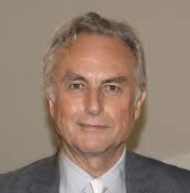
Such delusions of grandeur to think that a God with a hundred billion galaxies on his mind would give a tuppenny damn who you sleep with, or indeed whether you believe in him.
▼
Source
source
Richard Dawkins debates Rowan Williams
2 months 1 week ago
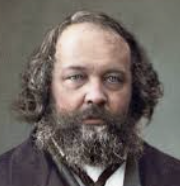
As one of our Swiss friends put it: "Now every German tailor living in Japan, China, or Moscow feels that he has the German navy and all of Germany's power behind him. This proud consciousness sends him into an insane rapture: the German has finally lived to see the day when he can say with pride, relying on his own state, like an Englishman or an American, 'I am a German.' True, when the Englishman or American says 'I am an Englishman,' or 'I am an American,' he is saying 'I am a free man.' The German, however, is saying 'I am a slave, but my emperor is stronger than all other princes, and the German soldier who is strangling me will strangle all of you.'"
2 months 1 week ago
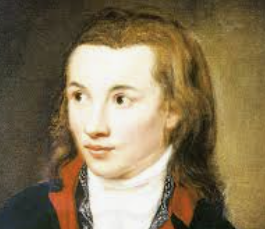
There are ideal series of events which run parallel with the real ones. They rarely coincide. Men and circumstances generally modify the ideal train of events, so that it seems imperfect, and its consequences are equally imperfect. Thus with the Reformation; instead of Protestantism came Lutheranism.
▼
Source
source
Epigraph, "The Mystery Of Marie Rogêt" (1842) by Edgar Allan Poe, adapted from Fragments from German Prose Writers (1841) by Sarah Austin
3 days ago
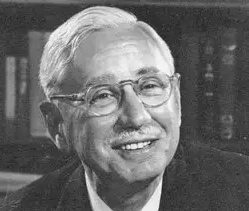
Human progress having reached a high level through respect for the liberty and dignity of men, it has become desirable to re-affirm these evident truths: That differences of race, color, and creed are natural, and that diverse groups, institutions, and ideas are stimulating factors in the development of man; That to promote harmony in diversity is a responsible task of religion and statesmanship; That since no individual can express the whole truth, it is essential to treat with understanding and good will those whose views differ from our own; That by the testimony of history intolerance is the door to violence, brutality and dictatorship; and That the realization of human interdependence and solidarity is the best guard of civilization.

4 months 1 week ago
There is less trouble and trauma involved in writing a new piece than in trying to salvage an unsatisfactory old one.

3 months 2 weeks ago
The opinions that are held with passion are always those for which no good ground exists; indeed the passion is the measure of the holder's lack of rational conviction.
▼
Source
source
Opinions in politics and religion are almost always held passionately. Introduction to 1961 edition of Sceptical Essays, 1961
3 months 2 weeks ago
I am sure, zeal or love for truth can never permit falsehood to be used in the defence of it.
▼
Source
source
187

4 days ago
The barrenest of all mortals is the sentimentalist.
▼
Source
source
Characteristics.

2 months 2 weeks ago
... people only count their misfortunes; their good luck they take no account of. But if they were to take everything into account, as they should, they'd find that they had their fair share of it.
▼
Source
source
Part 2, Chapter 6 (tr. ?)
1 month 3 weeks ago
The main importance of Francis Bacon's influence does not lie in any peculiar theory of inductive reasoning which he happened to express, but in the revolt against second-hand information of which he was a leader.
2 months 1 week ago
In the present state of society it appears necessary to go back to first principles in search of the most simple truths, and to dispute with some prevailing prejudice every inch of ground. To clear my way, I must be allowed to ask some plain questions, and the answers will probably appear as unequivocal as the axioms on which reasoning is built; though, when entangled with various motives of action, they are formally contradicted either by the words or conduct of men.
▼
Source
source
Ch. 1, opening

2 months 2 weeks ago
Égalité is an expression of envy. It means, in the real heart of every Republican, " No one shall be better off than I am;" and while this is preferred to good government, good government is impossible.
▼
Source
source
Conversation with Nassau William Senior, 22 May 1850 Nassau, p. 94
1 month 4 weeks ago
The capacity to give one's attention to a sufferer is a very rare and difficult thing; it is almost a miracle; it is a miracle. Nearly all those who think they have this capacity do not possess it. Warmth of heart, impulsiveness, pity are not enough.
3 months 1 week ago
Ideally a just constitution would be a just procedure arranged to insure a just outcome.
▼
Source
source
Chapter IV, Section 31, pg. 197

2 months 6 days ago
Saint-Simon, like Hegel, begins with the assertion that the social order engendered by the French Revolution proved that mankind has reached the adult state. In contrast to Hegel, however, he described this stage primarily in terms of its economy; the industrial process was the sole integrating factor in the new social order.
▼
Source
source
P. 330
2 months 3 weeks ago
To use Virtue is perfect blessedness.
4 months 1 week ago
Now any dogma, based primarily on faith and emotionalism, is a dangerous weapon to use on others, since it is almost impossible to guarantee that the weapon will never be turned on the user.
3 months 4 weeks ago
Although life is a matter of indifference, the use which you make of it is not a matter of indifference.
▼
Source
source
Book II, ch. 6, 1.

4 months 3 days ago
When a country is well governed, poverty and a mean condition are things to be ashamed of. When a country is ill governed, riches and honor are things to be ashamed of.

2 months 2 weeks ago
Men are qualified for civil liberty in exact proportion to their disposition to put moral chains upon their own appetites, - in proportion as their love to justice is above their rapacity, - in proportion as their soundness and sobriety of understanding is above their vanity and presumption, - in proportion as they are more disposed to listen to the counsels of the wise and good, in preference to the flattery of knaves. Society cannot exist, unless a controlling power upon will and appetite be placed somewhere; and the less of it there is within, the more there must be without. It is ordained in the eternal constitution of things, that men of intemperate minds cannot be free. Their passions forge their fetters.

2 months ago
True science teaches, above all, to doubt and be ignorant.

1 week 2 days ago
We have to construct the figure of a new David, the multitude as champion of asymmetrical combat, immaterial workers who became a new kind of combatants, cosmopolitan bricoleurs of resistance and cooperation.
▼
Source
source
50

2 months 6 days ago
He that is not on my side is against me, and he that does not gather with me scatters.
▼
Source
source
12:30, New World Translation

3 months 1 week ago
Whoso walketh in solitude, And inhabiteth the wood, Choosing light, wave, rock, and bird, Before the money-loving herd, Into that forester shall pass From these companions power and grace.
▼
Source
source
Wood-notes, no. II, st. 4
3 months 3 days ago
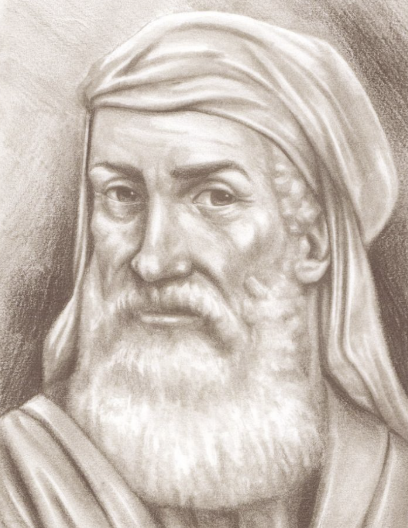
A law there is, an oracle of Doom, Of old enacted by the assembled gods, That if a Daemon-such as live for ages- Defile himself with foul and sinful murder, He must for seasons thrice ten thousand roam Far from the Blest; such is the path I tread, I too a wanderer and exile from heaven.
▼
Source
source
tr. Phillip H. De Lacy and Benedict Einarson. Cf. full quotation at Leonard p. 54-55 fr. 115, as paraphrased in Plutarch's Moralia
1 month 3 weeks ago
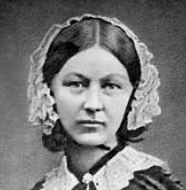
It is very well to say "be prudent, be careful, try to know each other." But how are you to know each other? Unless a woman had lost all pride, how is it possible for her, under the eyes of all her family, to indulge in long exclusive conversations with a man? "Such a thing" must not take place till after her "engagement." And how is she to make an engagement, if "such a thing" has not taken place?
CivilSimian.com created by AxiomaticPanic, CivilSimian, Kalokagathia