


4 months 2 weeks ago
Idleness is only fatal to the mediocre.
1 week 5 days ago
All the problems that disturb us today-the cutting down of forests and the erosion of the soil; the emancipation of woman and the limitation of the family; the conservatism of the established, and the experimentalism of the unplaced, in morals, music, and government; the corruptions of politics and the perversions of conduct; the conflict of religion and science, and the weakening of the supernatural supports of morality; the war of the classes, the nations, and the continents; the revolutions of the poor against the economically powerful rich, and of the rich against the politically powerful poor; the struggle between democracy and dictatorship, between individualism and communism, between the East and the West-all these agitated, as if for our instruction, the brilliant and turbulent life of ancient Hellas. There is nothing in Greek civilization that does not illuminate our own.
▼
Source
source
Preface, P.18

3 months 3 weeks ago
There is one very serious defect to my mind in Christ's moral character, and that is that He believed in hell. I do not myself feel that any person who is really profoundly humane can believe in everlasting punishment.
▼
Source
source
"The Moral Problem"
2 weeks 5 days ago
Ideals are imaginative understanding of that which is desirable in that which is possible.
▼
Source
source
Ch. XII: "The Business of the Great Society", §9, p. 259
4 months 1 week ago
It is not truth that makes man great, but man that makes truth great.
3 months 3 weeks ago
A habit of basing convictions upon evidence, and of giving to them only that degree of certainty which the evidence warrants, would, if it became general, cure most of the ills from which the world is suffering. But at present, in most countries, education aims at preventing the growth of such a habit, and men who refuse to profess belief in some system of unfounded dogmas are not considered suitable as teachers of the young.
▼
Source
source
preface xxiii-xxiv

2 months 2 weeks ago
Recognize what is in your sight, and that which is hidden from you will become plain to you. For there is nothing hidden which will not become manifest.
2 months 1 week ago
Myth is depoliticized speech.
▼
Source
source
p. 145

2 months 1 week ago
To believe in God is to yearn for His existence and, furthermore, it is to act as if He did exist.
1 month 2 weeks ago
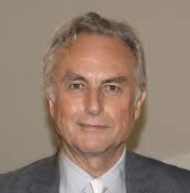
To explain the origin of the DNA/protein machine by invoking a supernatural Designer is to explain precisely nothing, for it leaves unexplained the origin of the Designer.
▼
Source
source
Chapter 6 "Origins and Miracles" (p. 141)

2 months 2 weeks ago
The concept of freedom, as the Philosophy of Right has shown, follows the pattern of free ownership. As a result, the history of the world that Hegel looks out upon exalts and enshrines the history of the middle-class, which based itself on this pattern. There is a stark truth in Hegel's strangely certain announcement that history has reached its end. But it announces the funeral of a class, not of history.
▼
Source
source
P. 227

3 months 3 weeks ago
The institution of religion exists only to keep mankind in order, and to make men merit the goodness of God by their virtue. Everything in a religion which does not tend towards this goal must be considered foreign or dangerous.
▼
Source
source
"The Ecclesiastical Ministry"

2 months 3 weeks ago
The debates of that great assembly are frequently vague and perplexed, seeming to be dragged rather than to march, to the intended goal. Something of this sort must, I think, always happen in public democratic assemblies.
▼
Source
source
Book One, Chapter XXI.
2 months 3 weeks ago
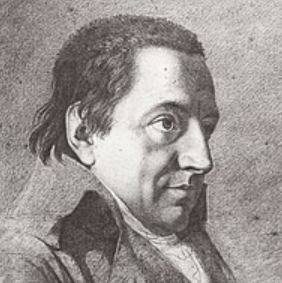
The Teutons believed that the only possible way to get rid of barbarism was to become Romans. The immigrants to what was formerly Roman soil became as Roman as they possibly could. But in their imagination the term "barbarous" soon acquired the secondary meaning of " common, plebeian, and loutish," and in this way "Roman," on the contrary, became synonymous with " distinguished."
▼
Source
source
Consequences of the Difference p. 81
2 months 3 weeks ago
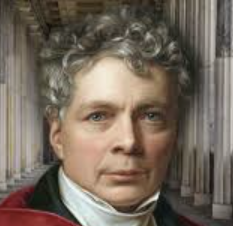
There was a time when religion was kept secret from popular belief within the mystery cults like a holy fire, sharing a common sanctuary with philosophy. The legends of antiquity name the earliest philosophers as the originators of these mystery cults, from which the most enlightened among the later philosophers, notably Plato, liked to educe their divine teachings. At that time philosophers still had the courage and the right to discuss the singly great themes, the only ones worthy of philosophizing and rising above common knowledge.
▼
Source
source
P. 7
2 months 4 days ago
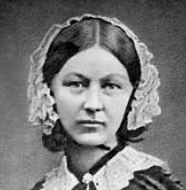
To have no food for our heads no food for our hearts, no food for our activity, is that nothing? If we have no food for the body, how do we cry out, how all the world hears of it, how all the newspapers talk of it, with a paragraph headed in great capital letters, DEATH FROM STARVATION! But suppose one were to put a paragraph in the Times, Death of Thought from Starvation, or Death of Moral Activity from Starvation, how people would stare, how they would laugh and wonder! One would think we had no heads nor hearts, by the total indifference of the public towards them. Our bodies are the only things of any consequence.

2 months 2 weeks ago
Of all that makes us suffer, nothing - so much as disappointment - gives us the sensation of at last touching Truth.

3 months 1 week ago
Now his principal doctrines were these. That atoms and the vacuum were the beginning of the universe; and that everything else existed only in opinion. (trans. Yonge 1853) The first principles of the universe are atoms and empty space; everything else is merely thought to exist.
▼
Source
source
(trans. by Robert Drew Hicks 1925) Often paraphrased as "Nothing exists except atoms and empty space; everything else is opinion."

2 months 3 weeks ago
Show me what thou truly lovest, what thou seekest and strivest for with thy whole heart when thou hopest to attain to true en joyment of thyself-and thou hast thereby shown me thy Life. What thou lovest, in that thou livest. This very Love is thy Life, the root, the seat, the central point of thy being. All other emotions within thee have life only in so far as they are governed by this one central emotion.
▼
Source
source
P. 3
3 months 3 weeks ago
I wish to propose for the reader's favourable consideration a doctrine which may, I fear, appear wildly paradoxical and subversive. The doctrine in question is this: that it is undesirable to believe a proposition when there is no ground whatever for supposing it true.
▼
Source
source
Ch. 1: The Value of Scepticism
2 months 2 weeks ago
It is an understatement to say that in this society injustices abound: in truth, it is itself the quintessence of injustice.

2 months 5 days ago
The problem is that sex is the most dangerous way of trying to achieve personal growth, because the life force has mixed it so liberally with a string sense of "magic", which, in the attempt at possession turns out to be an illusion. The attempt to possess a woman through an act of sex is as frustrating as trying to possess the scent of a rose by cooking and eating it.
▼
Source
source
p. 250
3 months 3 weeks ago
Freedom is the greatest of political goods. I do not say freedom is the greatest of all goods: the best things come from within-they are such things as creative art, and love, and thought. Such things can be helped or hindered by political conditions, but not actually produced by them; and freedom is, both in itself and in its relation to these other goods the best thing that political and economic conditions can secure.
▼
Source
source
Ch. V: Government and Law, p. 75
2 months 5 days ago
Nietzsche's great concept of Yea-saying gave him a notion of purpose that is seen as positive.
▼
Source
source
Nietzsche, in short, was a religious mystic. p. 275

4 months 1 week ago
Against the diseases of the mind, philosophy provides sufficient antidotes. The instruments which it employs for this purpose are the virtues; the root of which, whence all the rest proceed, is prudence. This virtue comprehends the whole art of living discreetly, justly, and honorably, and is, in fact, the same thing with wisdom. It instructs men to free their understandings from the clouds of prejudice; to exercise temperance and fortitude in the government of themselves: and to practice justice towards others. Although pleasure, or happiness, which is the end of living, be superior to virtue, which is only the means, it is every one's interest to practice all the virtues; for in a happy life, pleasure can never be separated from virtue.

3 months 3 weeks ago
You can take better care of your secret than another can.
▼
Source
source
1863

3 months 3 weeks ago
...in order to change poverty into wealth, one must start by displaying it.
▼
Source
source
p. 420
3 months 3 weeks ago
I do like clarity and exact thinking and I believe that very important to mankind because when you allow yourself to think inexactly your prejudices, your bias, your self interest comes in in ways you don't notice and you do bad things without knowing that you are doing them: self deception is very easy. So that I do think clear thinking immensely important.
▼
Source
source
Television interview ("On clarity and exact thinking" - available on youtube)
3 months 3 weeks ago
Men will not understand ... that when they fulfil their duties to men, they fulfil thereby God's commandments; that they are consequently always in the service of God, as long as their actions are moral, and that it is absolutely impossible to serve God otherwise.
▼
Source
source
As quoted in German Thought, From The Seven Years' War To Goethe's Death : Six Lectures (1880) by Karl Hillebrand, p. 207
4 months 2 weeks ago
The aim of art, the aim of a life can only be to increase the sum of freedom and responsibility to be found in every man and in the world. It cannot, under any circumstances, be to reduce or suppress that freedom, even temporarily.

2 months 1 week ago
If we want a love which will protect the soul from wounds we must love something other than God.
▼
Source
source
p. 62

3 months 3 weeks ago
The value which the workmen add to the materials, therefore, resolves itself in this case into two parts, of which the one pays their wages, the other the profits of the employer upon the whole stock of materials and wages which he advanced.
▼
Source
source
Chapter VI, p. 58.
2 months 1 week ago
The Ottoman Empire whose sick body was not supported by a mild and regular diet, but by a powerful treatment, which continually exhausted it.
▼
Source
source
No. 19. (Usbek writing to Rustan)
3 months 3 weeks ago
This sacrifice of common sense is the certain badge which distinguishes slavery from freedom; for when men yield up the privilege of thinking, the last shadow of liberty quits the horizon.
▼
Source
source
"Reflections on Titles", Pennsylvania Magazine

3 months 3 weeks ago
But what of the poor Ghosts who never get into the omnibus at all?' 'Everyone who wishes it does. Never fear. There are only two kinds of people in the end: those who say to God, "Thy will be done," and those to whom God says, in the end, "Thy will be done." All that are in Hell, choose it. Without that self-choice there could be no Hell. No soul that seriously and constantly desires joy will ever miss it. Those who seek find. To those who knock it is opened.
▼
Source
source
Ch. 9, p. 72; part of this has also been rendered in a variant form, and quoted as:
1 month 6 days ago
Being a planetary citizen does not need space travel. It means being conscious that we are part of the universe and of the earth. The most fundamental law is to recognise that we share the planet with other beings, and that we have a duty to care for our common home.
2 months 4 weeks ago
For no one's authority ought to rank so high as to set a value on his words and terms even though nothing clear and determinate lies behind them.
▼
Source
source
Paragraph 1
2 months 3 weeks ago
Science raises itself above all Ages and all Times, embracing and apprehending the ONE UNCHANGING TIME as the higher source of all Ages and Epochs, and grasping that vast idea in its free, unbounded comprehension.
▼
Source
source
p. 11
2 months 5 days ago
I have been taught that the land should belong to those who till the soil. With all of his deep-seated sympathies with the Arabs, our comrade cannot possibly deny that the Jews in Palestine have tilled the soil. Tens of thousands of them, young and deeply devout idealists, have flocked to Palestine, there to till the soil under the most trying pioneer conditions. They have reclaimed wastelands and have turned them into fertile fields and blooming gardens. Now I do not say that therefore Jews are entitled to more rights than the Arabs, but for an ardent socialist to say that the Jews have no business in Palestine seems to me rather a strange kind of socialism.
2 months 5 days ago
There is in Shaw, as in Gurdjieff and Nietzsche, a recognition of the immense effort of Will that is necessary to express even a little freedom, that places them beside Pascal and St. Augustine as religious thinkers. Their view is saved from pessimism only by its mystical recognition of the possibilities of pure Will, freed from the entanglements of automatism.
▼
Source
source
p. 292

3 months 3 weeks ago
The life of man is of no greater importance to the universe than that of an oyster.
▼
Source
source
On Suicide
3 months 3 weeks ago
No doubt, when modesty was made a virtue, it was a very advantageous thing for the fools, for everybody is expected to speak of himself as if he were one.
▼
Source
source
Vol. 1, Ch. 3, Section 2: Pride
2 months 2 weeks ago
Heroes abound at the dawn of civilizations, during pre-Homeric and Gothic epochs, when people, not having yet experienced spiritual torture, satisfy their thirst for renunciation through a derivative: heroism.
1 month 1 week ago
The ambassador of Russia and the grandees who accompanied him were so gorgeous that all London crowded to stare at them, and so filthy that nobody dared to touch them. They came to the court balls dropping pearls and vermin.
▼
Source
source
Vol. V, ch. 23
3 months 3 weeks ago
A scheme is unjust when the higher expectations, one or more of them, are excessive. If these expectations were decreased, the situation of the less favored would be improved.
▼
Source
source
Chapter II, Section 13, pg. 79
1 month 1 week ago
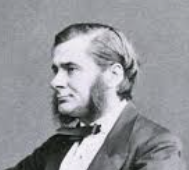
The antagonism between science and religion, about which we hear so much, appears to me to be purely factitious - fabricated, on the one hand, by short-sighted religious people who confound a certain branch of science, theology, with religion; and, on the other, by equally short-sighted scientific people who forget that science takes for its province only that which is susceptible of clear intellectual comprehension; and that, outside the boundaries of that province, they must be content with imagination, with hope, and with ignorance.
▼
Source
source
"The interpreters of Genesis and the interpreters of Nature"
CivilSimian.com created by AxiomaticPanic, CivilSimian, Kalokagathia