

3 months 3 weeks ago
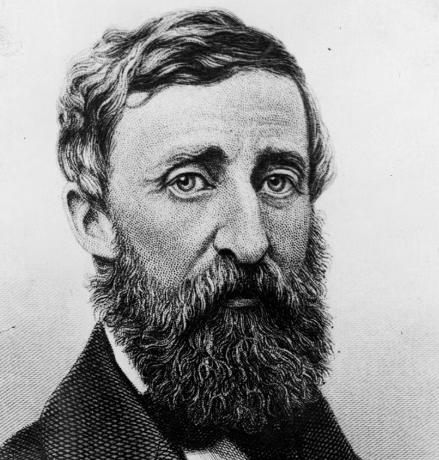
Any fool can make a ruleAnd every fool will mind it.
▼
Source
source
February 3, 1860
3 months 3 weeks ago
The present hour is always wealthiest when it is poorer than the future ones, as that is the pleasantest site which affords the pleasantest prospect.
▼
Source
source
Pearls of Thought (1881) p. 210
3 months 3 weeks ago
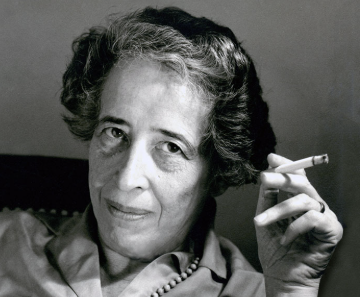
The cultural treasures of the past, believed to be dead, are being made to speak, in the course of which it turns out that they propose things altogether different than what had been thought.
▼
Source
source
"Martin Heidegger at Eighty," in Heidegger and Modern Philosophy: Critical Essays (1978) by Michael Murray, p. 294

4 months 2 weeks ago
A novel is never anything but a philosophy put into images. And in a good novel, the whole of the philosophy has passed into the images. But if once the philosophy overflows the characters and action, and therefore looks like a label stuck on the work, the plot loses its authenticity and the novel its life. Nevertheless, a work that is to last cannot dispense with profound ideas. And this secret fusion between experiences and ideas, between life and reflection on the meaning of life, is what makes the great novelist.
3 months 3 weeks ago
Life has a value only when it has something valuable as its object.

3 months 3 weeks ago
You don't have a soul. You are a soul. You have a body.
▼
Source
source
Commonly attributed to Mere Christianity, where it is not found. Earliest reference seems to be an unsourced attribution to George MacDonald in an 1892 issue of the Quaker periodical The British Friend.
2 months 2 weeks ago
The prophet is appointed to oppose the king, and even more: history.
▼
Source
source
BBC radio broadcast (1962), as quoted in The Great Thoughts (1984) by George Seldes

2 months 2 weeks ago
The Kingdom is like a wise fisherman who cast his net into the sea and drew it up from the sea full of small fish. Among them the wise fisherman found a fine large fish. He threw all the small fish back into the sea and chose the large fish without difficulty. Whoever has ears to hear, let him hear.
4 days ago
Until he extends the circle of his compassion to all living things, man will not himself find peace.
▼
Source
source
Variant translation: Until he extends his circle of compassion to include all living things, man will not himself find peace.
2 weeks ago
These three classes of problems-determination of significant fact, matching of facts with theory, and articulation of theory-exhaust, I think, the literature of normal science, both empirical and theoretical. They do not, of course, quite exhaust the entire literature of science. There are also extraordinary problems, and it may well be their resolution that makes the scientific enterprise as a whole so particularly worthwhile. But extraordinary problems are not to be had for the asking. They emerge only on special occasions prepared by the advance of normal research.
▼
Source
source
p. 34

3 months 3 weeks ago
Why did it occur to anyone to believe in only one God? And conversely why did it ever occur to anyone to believe in many gods? To both these questions we must return the same answer: Because that is how the human mind happens to work. For the human mind is both diverse and simple, simultaneously many and one. We have an immediate perception of our own diversity and of that of the outside world. And at the same time we have immediate perceptions of our own oneness.
▼
Source
source
"One and Many," p. 12
2 months 3 weeks ago
There is but One Principle that proceeds from God; and thus, in consequence of the unity of the Power, it is possible for each Individual to schematise his World of Sense in accordance with the law of that original harmony; - and every Individual, under the condition of being found on the way towards the recognition of the Imperative, must so schematise it. I might say: - Every Individual can and must, under the given condition, construct the True World of Sense, - for this indeed has beyond the universal and formal laws above deduced, no other Truth and Reality than this universal harmony.
3 months 3 weeks ago
Figure to yourself the mixture of surprise and delight which has this instant been poured into my mind by the sound of my name, as uttered by you, in the speech just read to me out of the Morning Herald... By one and the same man, not only Parliamentary Reform, but Law Reform advocated. Advocated? and by what man? By one who, in the vulgar sense of profit and loss, has nothing to gain by it... Yes, only from Ireland could such self-sacrifice come; nowhere else: least of all in England, cold, selfish, priest-ridden, lawyer-ridden, lord-ridden, squire-ridden, soldier-ridden England, could any approach to it be found.
▼
Source
source
Letter to Daniel O'Connell (15 July 1828) , quoted in The Works of Jeremy Bentham, Vol. X (1843), pp. 594-595
4 days ago
Space and time are commonly regarded as the forms of existence of the real world, matter as its substance. A definite portion of matter occupies a definite part of space at a definite moment of time. It is in the composite idea of motion that these three fundamental conceptions enter into intimate relationship.
▼
Source
source
Introduction

2 weeks 4 days ago
The Republican party has really gone off the rails and has become... in many ways a quasi-authoritarian party because many Republicans are not willing to accept the results of a... free and fair election. ...We've learned a lot from the... House committee that's studying the January 6th insurrection... What that committee has revealed was that this wasn't just a demonstration that spontaneously got out of hand. It was planned very deliberately by the White House as a way of pressuring former vice president Pence to overturn the election and keep Donald Trump in office, and right now a lot of state level Republican legislatures are trying to modify their rules for counting votes in the next election so that they would be in a better position to do what they tried to do in 2020, but didn't get away with... So this is probably the most severe threat to American democracy... since the Civil War... and I'm quite worried about that.
▼
Source
source
43:51:00

3 months 3 weeks ago
He thought human life a poor thing at best, after the freshness of youth and of unsatisfied curiosity had gone by. This was a topic on which he did not often speak, especially, it may be supposed, in the presence of young persons: but when he did, it was with an air of settled and profound conviction. He would sometimes say, that if life were made what it might be, by good government and good education, it would be worth having: but he never spoke with anything like enthusiasm even of that possibility.
▼
Source
source
(p. 48)

2 months 1 week ago
"God is just and punishes us; that is all we need to know; as far as we are concerned the rest is merely curiosity." Such was the conclusion of Lamennais (Essai, etc., partie, chap. vii.), an opinion shared by many others. Calvin also held the same view. But is there anyone content with this? Pure curiosity! - to call this load that well nigh crushes our heart pure curiosity!

3 months 3 weeks ago
Men tend to have the beliefs that suit their passions. Cruel men believe in a cruel God, and use their belief to excuse their cruelty. Only kindly men believe in a kindly God, and they would be kindly in any case.
▼
Source
source
In London Calling (1947), p. 18
2 months 4 weeks ago
There's a bit of testicle at the bottom of our most sublime feelings and our purest tenderness.
▼
Source
source
Letter to Étienne Noël Damilaville

3 months 3 weeks ago
Of all those expensive and uncertain projects, however, which bring bankruptcy upon the greater part of the people who engage in in them, there is none perhaps more perfectly ruinous than the search after new silver and gold mines. It is perhaps the most disadvantageous lottery in the world, or the one in which the gain of those who draw the prizes bears the least proportion to the loss of those who draw the blanks: for though the prizes are few and the blanks are many, the common price of a ticket is the whole fortune of a very rich man.
▼
Source
source
Chapter VII, Part First, p. 610.
3 weeks 6 days ago
From each as they choose, to each as they are chosen.
▼
Source
source
Ch. 7 : Distributive Justice, Section I, Patterning, p. 160

1 month 3 weeks ago
World War III is a guerrilla information war with no division between military and civilian participation.
▼
Source
source
(p.66)

2 months 1 week ago
Sexual activity is driven by the same aims and motives as reading poetry or listening to music: to escape the limitations imposed by the need for particularity in the consciousness.
▼
Source
source
p. 75
1 month 3 weeks ago
The nuclear bomb will turn warfare into the juggling of images.
▼
Source
source
(p. 360)

3 months 1 week ago
You can tell the man who rings true from the man who rings false, not by his deeds alone, but also by his desires.
2 months 2 weeks ago
Religion is to mysticism what popularization is to science. What the mystic finds waiting for him, then, is a humanity which has been prepared to listen to his message by other mystics invisible and present in the religion which is actually taught. Indeed his mysticism itself is imbued with this religion, for such was its starting point. His theology will generally conform to that of the theologians. His intelligence and his imagination will use the teachings of the theologians to express in words what he experiences, and in material images what he sees spiritually. And this he can do easily, since theology has tapped that very current whose source is the mystical. Thus his mysticism is served by religion, against the day when religion becomes enriched by his mysticism. This explains the primary mission which he feels to be entrusted to him, that of an intensifier of religious faith.
▼
Source
source
Chapter III : Dynamic Religion

4 months 3 days ago
But by far the greatest obstacle to the progress of science and to the undertaking of new tasks and provinces therein is found in this - that men despair and think things impossible.
▼
Source
source
Aphorism 92

2 months 3 weeks ago
Each citizen of a state promises, in the original compact, that he will promote, as far as lies in his power, all the conditions of the possibility of the state ; hence, also, the condition just mentioned. This he can best do by educating children who may grow up to realize various ends of reason. The state has the right to make this education of children a condition of the state-compact, and thus education becomes an external, legal obligation, which the parents owe to the state.
▼
Source
source
P. 459

3 months 3 weeks ago
People seem not to see that their opinion of the world is also a confession of character.
▼
Source
source
Worship

3 months 3 weeks ago
A writer who takes political, social or literary positions must act only with the means that are his. These means are the written words.
▼
Source
source
Refusing the Nobel Prize, New York Times

4 months 1 day ago
How many worthy men have we seen survive their own reputation!
▼
Source
source
Book II, Ch. 16. Of Glory
1 month 1 week ago
We share this planet, our home, with millions of species. Justice and sustainability both demand that we do not use more resources than we need. Restraint in resource use and living within nature's limits are preconditions for social justice. The commons are where justice and sustainability converge, where ecology and equity meet. The survival of pastures and forests as community property, or of a common good like a stable ecosystem, is only possible with social organizations with checks and controls on the use of resources built into their principles. The breakdown of a community, with the associated erosion of concepts of joint ownership and responsibility, can trigger the degradation of common resources.
▼
Source
source
(p.50)

2 months 6 days ago
The cravings of love and sex are met with absolute ignorance by the majority of parents, who consider it as something indecent and improper, something disgraceful, almost criminal, to be suppressed and fought like some terrible disease. The love and tender feelings in the young plant are turned into vulgarity and coarseness through the stupidity of those surrounding it, so that everything fine and beautiful is either crushed altogether or hidden in the innermost depths, as a great sin, that dares not face the light.
3 months 2 weeks ago
The fact that no one has come up with a really convincing reason for giving greater moral weight to members of our own species, simply because they are members of our species, strongly suggests that there is no such reason. Like racism and sexism, speciesism is wrong.
▼
Source
source
p. 343
2 months 1 day ago
To require that all of these must be reducible to a single version is to make the mistake of supposing that 'Which are the real objects?' is a question that makes sense independently of our choice of concepts.
▼
Source
source
Lecture I: Is There Still Anything to Say about Reality and Truth?
3 months 3 weeks ago
The people who are regarded as moral luminaries are those who forego ordinary pleasures themselves and find compensation in interfering with the pleasures of others.
▼
Source
source
Ch. 8: Eastern and Western Ideals of Happiness
2 months 1 week ago
But as I listened to him, I felt a touch of coldness inside of me, as if I had suddenly become aware of the eyes of some dangerous creature. It passed in a moment, but I found myself shuddering.
▼
Source
source
p. 29
2 months 1 week ago
But the capacity to enjoy is impossible without the capacity to suffer; and the faculty of enjoyment is one with that of pain. Whosoever does not suffer does not enjoy, just as whosoever is insensible to cold is insensible to heat.
1 month 1 week ago
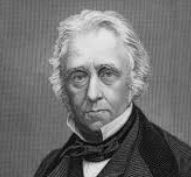
To sum up the whole, we should say that the aim of the Platonic philosophy was to exalt man into a god. The aim of the Baconian philosophy was to provide man with what he requires while he continues to be man. The aim of the Platonic philosophy was to raise us far above vulgar wants. The aim of the Baconian philosophy was to supply our vulgar wants. The former aim was noble; but the latter was attainable.
▼
Source
source
'Lord Bacon', The Edinburgh Review (July 1837), quoted in T. B. Macaulay, Critical and Historical Essays Contributed to The Edinburgh Review, Vol. II (1843), p. 395
4 months 6 days ago
One of the principal reasons that diverts those who are entering upon this knowledge so much from the true path which they should follow, is the fancy that they take at the outset that good things are inaccessible, giving them the name great, lofty, elevated, sublime. This destroys everything. I would call them low, common, familiar: these names suit it better; I hate such inflated expressions.
2 months 2 weeks ago
He that is without sin among you, let him first cast a stone at her.
▼
Source
source
8:7 (King James Version)
2 days ago
There is no correlation between material and spiritual misery. Only to the lowest and dullest levels of society can one preach the formula for all human happiness and wholeness as the well-named "animal ideal," a well-being that is little better than bovine. Hegel rightly wrote that the epochs of material well-being are blank pages in the history book, and Toynbee has shown that the challenge to mankind of environmentally and spiritually harsh and problematic conditions is often the incentive that awakens the creative energies of civilization. In some cases, it is not paradoxical to say that the man of good will should try to make life difficult for his neighbor! It is a commonplace that all the higher virtues attenuate and atrophy under easy conditions, when man is not forced to prove himself in some way; and in the final analysis it does not matter in such situations if a good number fall away and are lost through natural selection.
▼
Source
source
p. 29
2 months 2 weeks ago
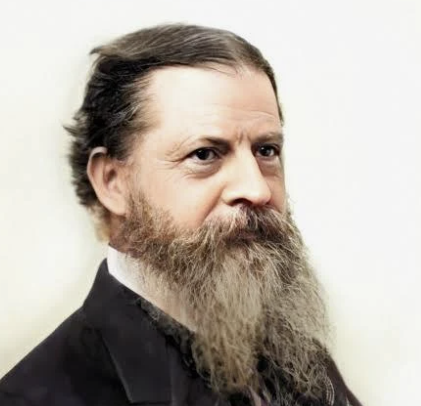
The entire universe is perfused with signs, if it is not composed exclusively of signs.
▼
Source
source
Quoted in Essays in Zoosemiotics (1990) by Thomas A. Sebeok
4 months 3 weeks ago
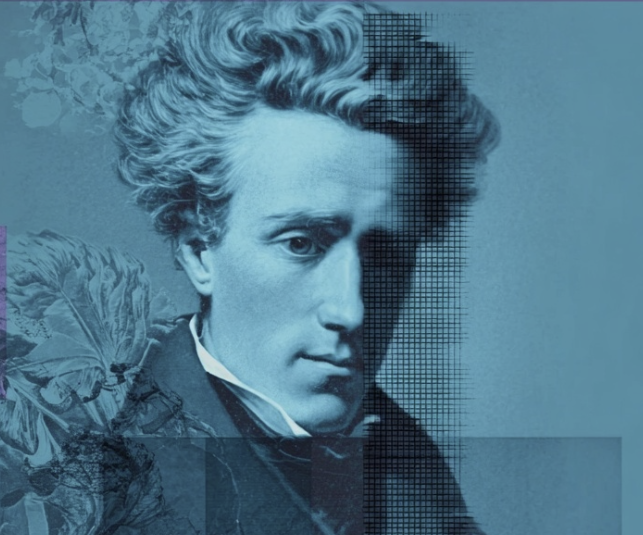
Job endured everything - until his friends came to comfort him, then he grew impatient.
2 months 1 week ago
Underlying even the so-called problem of knowledge there is simply this human feeling, just as underlying the inquiry into the "why," the cause, there is simply the search for the "wherefore," the end. All the rest is either to deceive oneself or to wish to deceive others; and to wish to deceive others in order to deceive oneself.

3 months 3 weeks ago
Genius, in truth, means little more than the faculty of perceiving in an unhabitual way.
▼
Source
source
Ch. 19
2 months 2 weeks ago
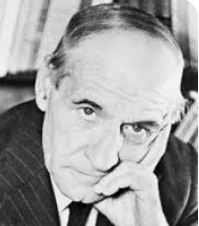
Similarly a work of art vanishes from sight for a beholder who seeks in it nothing but the moving fate of John and Mary or Tristan and Isolde and adjusts his vision to this. Tristan's sorrows are sorrows and can evoke compassion only in so far as they are taken as real. But an object of art is artistic only in so far as it is not real. In order to enjoy Titian's portrait of Charles the Fifth on horseback we must forget that this is Charles the Fifth in person and see instead a portrait - that is, an image, a fiction. The portrayed person and his portrait are two entirely different things; we are interested in either one or the other. In the first case we "live" with Charles the Fifth, in the second we look at an object of art.
▼
Source
source
"The Dehumanization of Art"
1 week 2 days ago
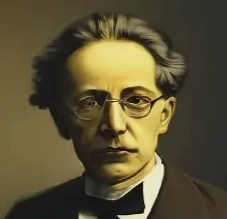
A word of honour, an oath, is one only for him whom I entitle to receive it; he who forces me to it obtains only a forced, a hostile word, the word of a foe, whom one has no right to trust; for the foe does not give us the right.
▼
Source
source
Cambridge 1995, p. 269
3 months 3 weeks ago
Do not be too moral. You may cheat yourself out of much life so. Aim above morality. Be not simply good; be good for something.
▼
Source
source
Pearls of Thought (1881) p. 177
CivilSimian.com created by AxiomaticPanic, CivilSimian, Kalokagathia