




3 months 1 week ago
The world is the totality of facts, not things.
▼
Source
source
(1.1) Original German: Die Welt ist die Gesamtheit der Tatsachen, nicht der Dinge

3 months 2 weeks ago
All that is solid melts into air, all that is holy is profaned, and man is at last compelled to face with sober senses, his real conditions of life, and his relations with his kind.
▼
Source
source
Section 1, paragraph 18, lines 12-14.
1 week ago
At forty, I had attained the unperturbed mind.
▼
Source
source
"Discipline and Character", no. 41

4 months 1 week ago
We can hope that the ways of peace will attract the Arabic nations, for their territory and opportunities are broad enough for immeasurable advance, if the energies vented in spleen, are turned instead to a modernisation of the technology, a restoration of the soil, and a renovation of the economic, social, and political structure of those great and venerable lands.

3 months 1 week ago
Ah! Do not judge the gods, young man, they have painful secrets.
▼
Source
source
Jupiter, Act 1

3 months 2 days ago
"Young men," said Cæsar, "hear an old man to whom old men hearkened when he was young."
▼
Source
source
Cæsar Augustus

1 week 2 days ago
Be afraid of the Chinese. I mean, the Chinese shoot down satellites in space; they hack into Google's computers; the Osama bin Laden people can't make their underwear blow up.
▼
Source
source
On The Colbert Report (2 May 2011), answering the question of who Americans should be scared of now that bin Laden is dead
1 month 2 weeks ago
[When Vonnegut tells his wife he's going out to buy an envelope] Oh, she says, well, you're not a poor man. You know, why don't you go online and buy a hundred envelopes and put them in the closet? And so I pretend not to hear her. And go out to get an envelope because I'm going to have a hell of a good time in the process of buying one envelope. I meet a lot of people. And, see some great looking babes. And a fire engine goes by. And I give them the thumbs up. And, and ask a woman what kind of dog that is. And, and I don't know. The moral of the story is, is we're here on Earth to fart around. And, of course, the computers will do us out of that. And, what the computer people don't realize, or they don't care, is we're dancing animals. You know, we love to move around. And, we're not supposed to dance at all anymore.
▼
Source
source
Interview by David Brancaccio, NOW (PBS)

3 months 2 weeks ago
Every tax, however, is to the person who pays it a badge, not of slavery but of liberty. It denotes that he is a subject to government, indeed, but that, as he has some property, he cannot himself be the property of a master.
▼
Source
source
Chapter II, Part II, p. 927.

2 months 1 week ago
Losing love is so rich a philosophical ordeal that it makes a hairdresser into a rival of Socrates.

2 months ago
Respectable scientists like de Broglie himself accept wave mechanics because it confers coherence and unity upon the experimental findings of contemporary science, and in spite of the astonishing changes it implies in connection with ideas of causality, time, and space, but it is because of these changes that it wins favor with the public. The great popular success of Einstein was the same thing. The public drinks in and swallows eagerly everything that tends to dispossess the intelligence in favor of some technique; it can hardly wait to abdicate from intelligence and reason and from everything that makes man responsible for his destiny.
▼
Source
source
"Wave Mechanics," p. 75

3 months 2 weeks ago
But genius looks forward: the eyes of men are set in his forehead, not in his hindhead: man hopes: genius creates.
▼
Source
source
par. 18

1 month 4 weeks ago
There certainly is self division. The man who watches a woman undressing has the red eyes of an ape; yet the man who sees two young lovers, really alone for the first time, who brings out all the pathos, the tenderness and uncertainty when he tells about it, is no brute; he is very much human. And the ape and the man exist in one body; and when the ape's desires are about to be fulfilled, he disappears and is succeeded by the man, who is disgusted with the ape's appetite.
▼
Source
source
Chapter one, The Country of the Blind
3 months 2 weeks ago
The horseman serves the horse, The neatherd serves the neat, The merchant serves the purse, The eater serves his meat; 'Tis the day of the chattel, Web to weave, and corn to grind; Things are in the saddle, And ride mankind.
▼
Source
source
Ode: Inscribed to W. H. Channing, st. 7
3 months 2 weeks ago
Only the great generalizations survive. The sharp words of the Declaration of Independence, lampooned then and since as 'glittering generalities,' have turned out blazing ubiquities that will burn forever and ever.
▼
Source
source
From a lecture on Books given in the Fraternity Course in Boston in 1864

3 weeks ago
The British state has defaulted on its core functions while attempting to remake society.
▼
Source
source
New Statesman, 9 October 2024

2 months 3 weeks ago
It is requisite to defend those who are unjustly accused of having acted injuriously, but to praise those who excel in a certain good.
▼
Source
source
Pythagorean Ethical Sentences From Stobæus

1 month 2 weeks ago
Science has adapted itself entirely to the wealthy classes and accordingly has set itself to heal those who can afford everything, and it prescribes the same methods for those who have nothing to spare.
4 months 2 weeks ago
Nature flies from the infinite, for the infinite is unending or imperfect, and Nature ever seeks an end.

3 months 2 weeks ago
When I come to my own beliefs, I find myself quite unable to discern any purpose in the universe, and still more unable to wish to discern one.
▼
Source
source
"Is There a God?", 1952
3 months 2 weeks ago
Opinion considers the opposition of what is true and false quite rigid, and, confronted with a philosophical system, it expects agreement or contradiction. And in an explanation of such a system, opinion still expects to find one or the other.
▼
Source
source
Preface, § 2
1 month 1 week ago
To teach virtue we must educate the emotions, and this means learning "what to feel" in the various circumstances that prompt them.
▼
Source
source
"Knowledge and Feeling" (p. 37)
3 months 2 weeks ago
The freest importation of salt provisions, in the same manner, could have as little effect upon the interest of the graziers of Great Britain as that of live cattle. Salt provisions are not only a very bulky commodity, but when compared with fresh meat, they are a commodity both of worse quality, and as they cost more labour and expence, of higher price. They could never, therefore, come into competition with the fresh meat, though they might with the salt provisions of the country.
▼
Source
source
Chapter II
2 months 1 week ago
I love talking to simple people, with common folk, if you like, and I still do it and still chat now as before with anyone, regardless of intellectual level. On the contrary, I like uneducated people much better and that is obviously my Rumanian heritage.
2 months 1 week ago
Before abstraction everything is one, but one like chaos; after abstraction everything is united again, but this union is a free binding of autonomous, self-determined beings. Out of a mob a society has developed, chaos has been transformed into a manifold world.
▼
Source
source
Fragment No. 95

1 month 2 weeks ago
When a man is taken in a mystical sense, his qualities are often signified by his actions, and by the circumstances of things about him. So a Ruler is signified by his riding on a beast; a Warrior and Conqueror, by his having a sword and bow; a potent man, by his gigantic stature; a Judge, by weights and measures... the affliction or persecution which a people suffers in laboring to bring forth a new kingdom, by the pain of a woman in labor to bring forth a man-child; the dissolution of a body politic or ecclesiastic, by the death of a man or beast; and the revival of a dissolved dominion, by the resurrection of the dead.
▼
Source
source
Vol. I, Ch. 2: Of the Prophetic Language

3 months 3 weeks ago
We may search long to find where God is, but we shall find Him in those who keep the words of Christ. For the Lord Christ saith, " If any man love me, he will keep my words; and we will make our abode with him."
▼
Source
source
p. 278

3 months 1 week ago
The history of mankind could... be described as a history of outbreaks of fashionable philosophical and religious maladies. These... have... one serious function... evoking criticism.
2 months ago
In order to be exercised, the intelligence requires to be free to express itself without control by any authority. There must therefore be a domain of pure intellectual research, separate but accessible to all, where no authority intervenes. The human soul has need of some solitude and privacy and also of some social life.The human soul has need of both personal property and collective property.

4 months 4 days ago
It is impossible for a man who secretly violates the terms of the agreement not to harm or be harmed to feel confident that he will remain undiscovered, even if he has already escaped ten thousand times; for until his death he is never sure that he will not be detected.
2 months 1 week ago
The mind that puts everything in question, reaches, after a thousand interrogations, an almost total inertia, a situation which the inert, in fact, knows from the start, by instinct. For what is inertia but a congenital perplexity?
3 months 3 weeks ago
That which is good for the enemy harms you, and that which is good for you harms the enemy.
▼
Source
source
Rule 1 from Machiavelli's Lord Fabrizio Colonna: libro settimo (Book 7) (Modern Italian uses nemico instead of nimico.)
Just now
What is not supposed to be my concern! First and foremost, the Good Cause, then God's cause, the cause of mankind, of truth, of freedom, of humanity, of justice; further, the cause of my people, my prince, my fatherland; finally, even the cause of Mind, and a thousand other causes. Only my cause is never to be my concern. "Shame on the egoist who thinks only of himself!"
▼
Source
source
Cambridge 1995, p. 5
2 months 5 days ago
It is as if thinking itself had been reduced to the level of industrial processes, subjected to a close schedule-in short, made part and parcel of production.
▼
Source
source
p. 21.
4 months 1 week ago
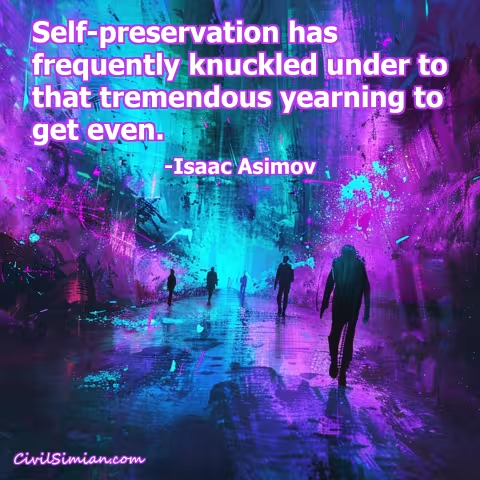
Men grew desperate and the border between bitter frustration and wild destruction is sometimes easily crossed.
2 months 2 weeks ago
God, I have said, is the fulfiller, or the reality, of the human desires for happiness, perfection, and immortality. From this it may be inferred that to deprive man of God is to tear the heart out of his breast. But I contest the premises from which religion and theology deduce the necessity and existence of God, or of immortality, which is the same thing. I maintain that desires which are fulfilled only in the imagination, or from which the existence of an imaginary being is deduced, are imaginary desires, and not the real desires of the human heart; I maintain that the limitations which the religious imagination annuls in the idea of God or immortality, are necessary determinations of the human essence, which cannot be dissociated from it, and therefore no limitations at all, except precisely in man's imagination.
▼
Source
source
Lecture XXX, Atheism alone a Positive View

1 month 1 week ago
All human accomplishment has the same origin, identically. Imagination is a force of nature. Is this not enough to make a person full of ecstasy? Imagination, imagination, imagination. It converts to actual. It sustains, it alters, it redeems!
▼
Source
source
Henderson the Rain King (1959) [Viking/Penguin, 1984, ISBN 0-140-07269-1], ch. XVIII, p. 271
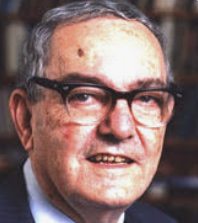
1 month 3 weeks ago
The empirical research of the last fifteen years on the structure of large organizations seems to confirm the hypothesis of Herbert Simon that human cognitive limits are a basic limiting factor in determining organization structures .
▼
Source
source
Jay R. Galbraith, "Organization design: An information processing view." Organizational Effectiveness Center and School 21 (1977). p. 21

3 months 2 weeks ago
Two Chinamen visiting Europe went to the theatre for the first time. One of them occupied himself with trying to understand the theatrical machinery, which he succeeded in doing. The other, despite his ignorance of the language, sought to unravel the meaning of the play. The former is like the astronomer, the latter the philosopher.
▼
Source
source
Vol. 2 "On Various Subjects" as translated in Essays and Aphorisms (1970), as translated by R. J. Hollingdale
3 months 1 week ago
To choose this or that is to affirm at the same time the value of what we choose, because we can never choose evil. We always choose the good, and nothing can be good for us without being good for all.
▼
Source
source
Existentialism and Human Emotions
3 weeks ago
In thinking of history in this [progressive & eschatological] way Islam shares common ground with Christianity and with the secular creeds of the modern West. It is misleading to represent Islam and 'the West' as forming civilisations that have nothing in common. Christianity and Islam are integral parts of western monotheism, and as such they share a view of history that marks them off from the rest of the world. Both are militant faiths that seek to convert all humankind. Other religions have been implicated in twentieth-century violence-the state cult of Shintō in Japan during the militarist period and Hindu nationalism in contemporary India, for example. But only Christianity and Islam have engendered movements that are committed to the systematic use of force to achieve universal goals.
▼
Source
source
Enlightenment and Terror in the Twentieth Century: Terror and the Western Tradition
3 months 2 weeks ago
Men of learning are those who have read the contents of books. Thinkers, geniuses, and those who have enlightened the world and furthered the race of men, are those who have made direct use of the book of the world.
▼
Source
source
"Thinking for Oneself"
3 months 2 weeks ago
Great men are they who see that spiritual is stronger than any material force, that thoughts rule the world. No hope so bright but is the beginning of its own fulfillment.
▼
Source
source
July 18, 1867, Progress of Culture Phi Beta Kappa Address

2 months 2 weeks ago
Americans combine to give fêtes, found seminaries, build churches, distribute books, and send missionaries to the antipodes. Hospitals, prisons, and schools take shape in that way. Finally, if they want to proclaim a truth or propagate some feeling by the encouragement of a great example, they form an association. In every case, at the head of any new undertaking, where in France you would find the government or in England some territorial magnate, in the United States you are sure to find an association. I have come across several types of association in America of which, I confess, I had not previously the slightest conception, and I have often admired the extreme skill they show in proposing a common object for the exertions of very many and in inducing them voluntarily to pursue it.
▼
Source
source
Book Two, Chapter V.
3 weeks 6 days ago
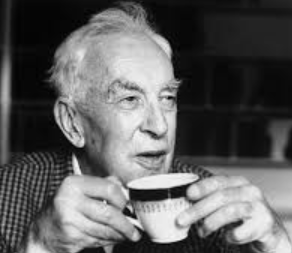
As human beings, we are endowed with this freedom of choice, and we cannot shuffle off our responsibility upon the shoulders of God or nature. We must shoulder it ourselves. It is up to us.
▼
Source
source
Ch. 3: Does History Repeat Itself?
2 months 1 week ago
From the cradle to the grave, each individual pays for the sin of not being God. That's why life is an uninterrupted religious crisis, superficial for believers, shattering for doubters.

2 months 2 weeks ago
If we command our wealth, we shall be rich and free; if our wealth commands us, we are poor indeed.
▼
Source
source
No. 1
CivilSimian.com created by AxiomaticPanic, CivilSimian, Kalokagathia