


4 months 3 weeks ago
Scientific theories can always be improved and are improved. That is one of the glories of science. It is the authoritarian view of the Universe that is frozen in stone and cannot be changed, so that once it is wrong, it is wrong forever.

1 month 3 weeks ago
As Narcissus fell in love with an outering (projection, extension) of himself, man seems invariably to fall in love with the newest gadget or gimmick that is merely an extension of his own body.

3 months 3 weeks ago
Our cause is never more in danger than when a human, no longer desiring, but still intending to do our Enemy's will, looks round upon a universe from which every trace of Him seems to have vanished, and asks why he has been forsaken, and still obeys.
▼
Source
source
Letter VIII

2 weeks ago
Every pitifulest whipster that walks within a skin has had his head filled with the notion that he is, shall be, or by all human and divine laws ought to be, 'happy.' His wishes, the pitifulest whipster's, are to be fulfilled for him; his days, the pitifulest whipster's, are to flow on in an ever-gentle current of enjoyment, impossible even for the gods. The prophets preach to us, Thou shalt be happy; thou shalt love pleasant things, and find them. The people clamor, Why have we not found pleasant things? ...God's Laws are become a Greatest Happiness Principle. There is no religion; there is no God; man has lost his soul.
▼
Source
source
Bk. III, ch. 4.
2 months 2 weeks ago
Most observers of the French Revolution, especially the clever and noble ones, have explained it as a life-threatening and contagious illness. They have remained standing with the symptoms and have interpreted these in manifold and contrary ways. Some have regarded it as a merely local ill. The most ingenious opponents have pressed for castration. They well noticed that this alleged illness is nothing other than the crisis of beginning puberty.
▼
Source
source
Fragment No. 105
3 months 1 week ago
The idealist tradition, including contemporary phenomenology, has of course admitted subjective points of view as basic and has gone to the opposite length of denying an irreducible objective reality. ... I find the idealist solution unacceptable ...: objective reality cannot be analyzed or shut out of existence any more than subjective reality can. Even if not everything is something from no point of view, some things are.The deep source of both idealism and its objectifying opposite is the same: a conviction that a single world cannot contain both irreducible points of view and irreducible objective reality - that one of them must be what there really is and the other somehow reducible or dependent on it. This is a very powerful idea. To deny it is in a sense to deny that there is a single world.
▼
Source
source
"Subjective and Objective" (1979), p. 212.
2 months 6 days ago
There is no such thing as data-driven thinking.

2 months 4 weeks ago
Who will not commend the wit of astrology? Venus, born out of the sea, hath her exaltation in Pisces.
▼
Source
source
Commonplace notebooks, Part I

3 months 3 weeks ago
Money often costs too much.
▼
Source
source
Wealth

3 months 3 weeks ago
Truth is a shining goddess, always veiled, always distant, never wholly approachable, but worthy of all the devotion of which the human spirit is capable.
▼
Source
source
Fact and Fiction (1961), Part II, Ch. 10: "University Education", p. 153

2 months 2 weeks ago
For a long time - always, in fact - I have known that life here on earth is not what I needed and that I wasn't able to deal with it; for this reason and for this reason alone, I have acquired a touch of spiritual pride, so that my existence seems to me the degradation and the erosion of a psalm.
2 months 2 weeks ago
Man is the higher Sense of our Planet; the star which connects it with the upper world; the eye which it turns towards Heaven.
2 months 2 weeks ago
The same, without such opinion, DESPAIRE.
▼
Source
source
The First Part, Chapter 6, p. 25
4 days ago
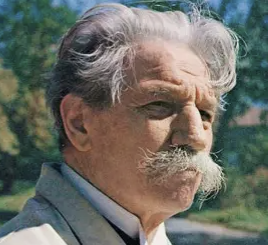
The great fault of all ethics hitherto has been that they believed themselves to have to deal only with the relations of man to man. In reality, however, the question is what is his attitude to the world and all life that comes within his reach. A man is ethical only when life, as such, is sacred to him, and that of plants and animals as that of his fellow men, and when he devotes himself helpfully to all life that is in need of help. Only the universal ethic of the feeling of responsibility in an ever-widening sphere for all that lives - only that ethic can be founded in thought. ... The ethic of Reverence for Life, therefore, comprehends within itself everything that can be described as love, devotion, and sympathy whether in suffering, joy, or effort.
▼
Source
source
Ch. 13, p. 188

2 months 3 weeks ago
Jacques said that his master said that everything good or evil we encounter here below was written on high.
▼
Source
source
Prologue

3 months 3 weeks ago
The presence of a thought is like the presence of a lover.

3 months 3 weeks ago
What we really need the poet's and orator's help to keep alive in us is not, then, the common and gregarious courage which Robert Shaw showed when he marched with you, men of the Seventh Regiment. It is that more lonely courage which he showed when he dropped his warm commission in the glorious Second to head your dubious fortunes, negroes of the Fifty-fourth. That lonely kind of courage (civic courage as we call it in times of peace) is the kind of valor to which the monuments of nations should most of all be reared.
▼
Source
source
Robert Gould Shaw: Oration upon the Unveiling of the Shaw Monument, 31 May 1897
2 months 3 weeks ago
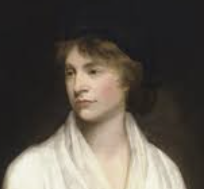
A modest man is steady, an humble man timid, and a vain one presumptuous.
▼
Source
source
Ch. 7
3 months 2 weeks ago
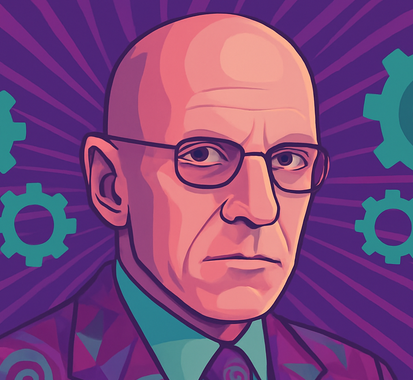
The disappearance of public executions marks therefore the decline of the spectacle; but it also marks a slackening of the hold on the body.
▼
Source
source
Chapter One, The Spectacle of the Scaffold



3 months 3 weeks ago
Avarice and injustice are always shortsighted, and they did not foresee how much this regulation must obstruct improvement, and thereby hurt in the long-run the real interest of the landlord.
▼
Source
source
Chapter II, p. 426-427.
3 months 3 weeks ago
When equality is treated not as a medicine or a safety-gadget, but as an ideal, we begin to breed that stunted and envious sort of mind which hates all superiority. That mind is the special disease of democracy, as cruelty and servility are the special diseases of privileged societies. It will kill us all if it grows unchecked. The man who cannot conceive a joyful and loyal obedience on the one hand, nor an unembarrassed and noble acceptance of that obedience on the other - the man who has never even wanted to kneel or to bow - is a prosaic barbarian. But it would be wicked folly to restore these old inequalities on the legal or external plane. Their proper place is elsewhere.

2 months 6 days ago
In most men, the conscious and the unconscious being hardly ever make contact; consequently the conscious aim is to make himself as comfortable as possible with as little effort as possible. But there are other men, whom we have been calling, for convenience, 'Outsiders', whose conscious and unconscious being keep in closer contact, and the conscious mind is forever aware of the urge to care about 'more abundant life', and care less about comfort and stability and the rest of the notions that are so dear to the bourgeois.
▼
Source
source
Chapter Nine, Breaking the Circuit

1 month ago
The true goal of the bourgeois life, in other words, is not self-enactment, but diversion. Most people need the organised distraction of work (if they can find it). Idleness - the life of the playboy who doesn't answer the phone - is simply too demanding. "
▼
Source
source
A difficult business," New Statesman
3 months 3 weeks ago
Of all tyrannies a tyranny sincerely exercised for the good of its victims may be the most oppressive. It may be better to live under robber barons than under omnipotent moral busybodies. The robber baron's cruelty may sometimes sleep, his cupidity may at some point be satiated; but those who torment us for our own good will torment us without end for they do so with the approval of their own conscience. They may be more likely to go to Heaven yet at the same time likelier to make a Hell of earth. This very kindness stings with intolerable insult. To be "cured" against one's will and cured of states which we may not regard as disease is to be put on a level of those who have not yet reached the age of reason or those who never will; to be classed with infants, imbeciles, and domestic animals.
▼
Source
source
"The Humanitarian Theory of Punishment" (1949), p. 292 Similar statements were included in "A Reply to Professor Haldane" (1946) (see above), published posthumously.
3 months 3 weeks ago
Thee might observe incidentally that if the state paid for child-bearing it might and ought to require a medical certificate that the parents were such as to give a reasonable result of a healthy child - this would afford a very good inducement to some sort of care for the race, and gradually as public opinion became educated by the law, it might react on the law and make that more stringent, until one got to some state of things in which there would be a little genuine care for the race, instead of the present haphazard higgledy-piggledy ways.
▼
Source
source
Letter to Alys Pearsall Smith (1894); published in The Selected Letters of Bertrand Russell, Volume 1: The Private Years (1884-1914)
3 months 3 weeks ago
The Religion that is afraid of science dishonours God and commits suicide. It acknowledges that it is not equal to the whole of truth, that it legislates, tyrannizes over a village of God's empires but is not the immutable universal law. Every influx of atheism, of skepticism is thus made useful as a mercury pill assaulting and removing a diseased religion and making way for truth.
▼
Source
source
March 4, 1831
2 months 2 weeks ago
But this priviledge, is allayed by another; and that is, by the priviledge of Absurdity; to which no living creature is subject, but man only.
▼
Source
source
The First Part, Chapter 5, p. 20
2 months 2 weeks ago
The remembrance of forbidden fruit is the earliest thing in the memory of each of us, as it is in that of mankind.
▼
Source
source
Chapter I: Moral Obligation
2 months 6 days ago
A child might be overawed by a great city, but a civil engineer knows that he might demolish it and rebuild it himself. Husserl's philosophy has the same aim: to show us that, although we may have been thrust into this world without a 'by your leave,' we are mistaken to assume that it exists independently of us. It is true that reality exists apart from us; but what we mistake for the world is actually a world constituted by us, selected from an infinitely complex reality.
▼
Source
source
p. 63

1 month 3 weeks ago
We are to admit no more causes of natural things than such as are both true and sufficient to explain their appearances.
▼
Source
source
"Rules of Reasoning in Philosophy" : Rule I
7 months 4 weeks ago
If we merely wait for the appropriate moment we will never live to see it, because this [appropriate moment] cannot arrive without the subjective conditions of the maturity of the revolutionary force being fulfilled - it can only arrive after a series of failed attempts.
1 week 6 days ago
Sir William Hunter, estimated that 40,000,000 of the people of India were seldom or never able to satisfy their hunger. In 1901, 272,000 died of plague introduced from abroad, in 1902, 500,000 died of plague; in 1903, 800,000; in 1904, 1,000,000. We can now understand why there are famines in India. Their cause, in plain terms, is not the absence of food, but the inability of the people to pay for it. It was hoped the railways would solve the problem...the fact that the worst famines have come since the building of the railways...behind all these, as the fundamental source of the terrible famines in India, lies such merciless exploitation, such unbalanced exploitation of goods, and such brutal collection of high taxes in the very midst of famine....
▼
Source
source
(source: The Case for India - By Will Durant Simon and Schuster, New York. 1930 p.50-53).

3 months 3 weeks ago
As to riots and tumults, let those answer for them, who, by willful misrepresentations, endeavor to excite and promote them; or who seek to stun the sense of the nation, and to lose the great cause of public good in the outrages of a misinformed mob. We take our ground on principles that require no such riotous aid. We have nothing to apprehend from the poor; for we are pleading their cause. And we fear not proud oppression, for we have truth on our side.
▼
Source
source
Address and Declaration at a Select Meeting of the Friends of Universal Peace and Liberty (August 20, 1791) p. 6

3 months 2 weeks ago
Freud's fanciful pseudo-explanations (precisely because they are brilliant) perform a disservice. (Now any ass has these pictures available to use in "explaining" symptoms of an illness).
▼
Source
source
p. 55e
2 months 2 weeks ago
There have always been poor and working classes; and the working class have mostly been poor. But there have not always been workers and poor people living under conditions as they are today.
2 weeks ago
Nothing that was worthy in the past departs; no truth or goodness realized by man ever dies, or can die.

3 months 2 weeks ago
Reaching and understanding is the process of bringing about an agreement on the presupposed basis of validity claims that are mutually recognized.
▼
Source
source
p. 23

2 months 1 week ago
The moment we choose to love we begin to move against domination, against oppression. The moment we choose to love we begin to move towards freedom, to act in ways that liberate ourselves and others.
4 months 1 week ago
I am not concerned that I have no place; I am concerned how I may fit myself for one. I am not concerned that I am not known; I seek to be worthy to be known.

2 months 1 week ago
Conduct, practice, is the proof of doctrine, theory. "If any man will do His will - the will of Him that sent me," said Jesus, "he shall know of the doctrine, whether it be of God or whether I speak of myself" (John vii. 17); and there is a well known saying of Pascal: "Begin by taking holy water and you will end by becoming a believer." And pursuing a similar train of thought, Johann Jakob Moser, the pietist, was of the opinion that no atheist or naturalist had the right to regard the Christian religion as void of truth so long as he had not put it to the proof by keeping its precepts and commandments.
▼
Source
source
(Ritschl, Geschichte des Pietismus, book viii., 43)
2 months 2 weeks ago
The notion that one will not survive a particular catastrophe is, in general terms, a comfort since it is equivalent to abolishing the catastrophe.
▼
Source
source
The Message to the Planet (1989) p. 532.

4 months 1 week ago
Charity, by which God and neighbor are loved, is the most perfect friendship.
▼
Source
source
Disputed Questions: On Charity, c. 1270

2 months 2 weeks ago
But everyone who hears these sayings of Mine, and does not do them, will be like a foolish man who built his house on the sand: and the rain descended, the floods came, and the winds blew and beat on that house; and it fell. And great was its fall.
▼
Source
source
Matthew 7:24-27 (NKJV) (Also Luke 6:47-49)

2 months 3 weeks ago
A diversity of opinion upon almost every principle of politics, had indeed drawn a strong line of separation between them and some others. However, they were desirous not to extend the misfortune by unnecessary bitterness; they wished to prevent a difference of opinion on the commonwealth from festering into rancorous and incurable hostility. Accordingly they endeavoured that all past controversies should be forgotten; and that enough for the day should be the evil thereof. There is however a limit at which forbearance ceases to be a virtue. Men may tolerate injuries, whilst they are only personal to themselves. But it is not the first of virtues to bear with moderation the indignities that are offered to our country.
▼
Source
source
Describing the Government's position at a previous time of deep division in British politics in fact over policy on America, Observations on a Late Publication on the Present State of the Nation (1769), page 2
2 days ago
But how many are the final causes of union, the most beautiful, which this deity contains within himself? The Sun, that is, Apollo, is "Leader of the Muses;" and inasmuch as he completes our life with good order, he produces in the world Æsculapius; for even before the world was, he had the latter by his side. But were one to discuss the numerous other qualities belonging to this god, he would never arrive to the end of them.

3 months 1 week ago
Disease of the home and of the life comes about in the same way as that of the body.
▼
Source
source
Freeman (1948), p. 170 Variant: Disease occurs in a household, or in a life, just as it does in a body.
2 months 3 weeks ago
The strides of humanity are slow, they can only be counted in centuries.
▼
Source
source
Act II.
CivilSimian.com created by AxiomaticPanic, CivilSimian, Kalokagathia