


2 months 3 weeks ago
To all this, someone is sure to object that life ought to subject itself to reason, to which we will reply that nobody ought to do what he is unable to do, and life cannot subject itself to reason. "Ought, therefore can," some Kantian will retort. To which we shall demur: "Cannot, therefore ought not." And life cannot submit itself to reason, because the end of life is living and not understanding.

1 day ago
The best revenge is not to be like your enemy.
▼
Source
source
VI, 6

2 months 3 weeks ago
Thou shalt do no murder, Thou shalt not commit adultery, Thou shalt not steal, Thou shalt not bear false witness, Honour thy father and thy mother: and, Thou shalt love thy neighbour as thyself.
▼
Source
source
19:18-19 (KJV)
3 months 2 days ago
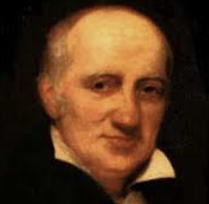
The reason a man lives under any particular government is partly a necessity; he cannot easily avoid living under some government, and it is often scarcely in his power to abandon the country in which he was born: it is also partly, a choice of evil; no man can be said, in this case, to enjoy that freedom which is essential to the forming a contract unless it could be shown that he had a power of instituting, somewhere, a government adapted to his own conceptions.
▼
Source
source
Book III, "Of Obedience"

2 days ago
Man has been trained in the same way as animals. He has become an author, as they became beasts of burden.

4 months 3 days ago
I disbelieve in specialization and... experts. ...[P]aying too much respect to the specialist ...[is] destroying the commonwealth of learning, the rationalist tradition, and science ...

4 months 3 days ago
This inner revolution is realistic because it maintains itself deliberately within the framework of existing institutions; the oppressed reckon with the real situation.
▼
Source
source
p. 66
2 months 3 weeks ago
And what is its moral proof? We may formulate it thus: Act so that in your own judgment and in the judgment of others you may merit eternity, act so that you may become irreplaceable, act so that you may not merit death. Or perhaps thus: Act as if you were to die tomorrow, but to die in order to survive and be eternalized. The end of morality is to give personal, human finality to the Universe; to discover the finality that belongs to it - if indeed it has any finality - and to discover it by acting.


2 months 1 week ago
The ascription of an unconscious intentional phenomenon to a system implies that the phenomenon is in principle accessible to consciousness. A statement of the author's "connection principle."
▼
Source
source
"Consciousness, Explanatory Inversion, and Cognitive Science," The Behavioral and Brain Sciences 13, 4 (December 1990): 585-696.

4 months 4 days ago
The Quaestor turned back the pages until he found himself among the Pensées. "We are not satisfied," he read, "with the life we have in ourselves and our own being; we want to live an imaginary life in other people's idea of us. Hence all our efforts are directed to seeming what we are not. We labor incessantly to preserve and embellish this imaginary being, and neglect that which is really ours." The Quaestor put down the book, ... and ruefully reflected that all his own troubles had arisen from this desire to seem what in fact he was not. To seem a man of action, when in fact he was a contemplative; to seem a politician, when nature had made him an introspective psychologist; to seem a wit, which God had intended him for a sage.
▼
Source
source
"Variations on a Philosopher" in Themes and Variations (1943), p. 2
5 months 5 days ago
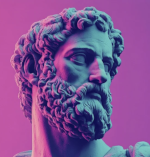
Thus every action must be due to one or other of seven causes: chance, nature, compulsion, habit, reasoning, anger, or appetite.

4 months 5 days ago
The only possible solution which will preserve Germany's honor and Germany's interest is, we repeat, a war with Russia.
▼
Source
source
Marx-Engels Gesamt-Ausgabe, Erste Abteilung, Volume 7, March to December 1848, p. 304.
3 months ago
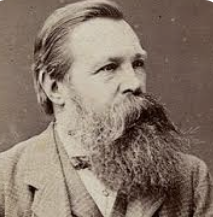
Communism is the doctrine of the conditions of the liberation of the proletariat.
2 months 2 days ago
Don't turn back when you are just at the goal.
▼
Source
source
Maxim 580
2 months 2 weeks ago
Spirit is never an object; nor a spiritual reality an objective one. In the so-called objective world there's no such nature, thing, or objective reality as spirit. Hence it is easy to deny the reality of spirit. God is spirit because he is not object, because he is subject.
▼
Source
source
p. 10

4 months 3 weeks ago
It is said in the Book of Poetry, "In silence is the offering presented, and the spirit approached to; there is not the slightest contention." Therefore the superior man does not use rewards, and the people are stimulated to virtue. He does not show anger, and the people are awed more than by hatchets and battle-axes.
1 month 1 week ago
Is not the minimal state, the framework for utopia, an inspiring vision? The minimal state treats us as inviolate individuals, who may not be used in certain ways by others as means or tools or instruments or resources; it treats us as persons having individual right with the dignity this constitutes. Treating us with respect by respecting our rights, it allows us, individually or with whom we please, to choose our life and to realize our ends and our conception of ourselves, insofar as we can, aided by the voluntary cooperation of other individuals possessing the same dignity. How dare any state or group of individuals do more. Or less.
▼
Source
source
Ch. 10 : A Framework for Utopia; Utopia and the Minimal State, p. 333
2 months 1 week ago
Never would the humanities or psychoanalysis have existed if it had been miraculously possible to reduce man to his "rational" behaviors.
▼
Source
source
"The Animals: Territory and Metamorphoses," p. 132

3 weeks 4 days ago
Be not the slave of Words.
▼
Source
source
Bk. I, ch. 8.
1 month 1 week ago
To understand how indirect communication is possible we must grasp what it is about ordinary communication that is being changed.
▼
Source
source
Chapter 6, Indirect Communication, p. 110

4 months 6 days ago
Use, do not abuse; as the wise man commands. I flee Epictetus and Petronius alike. Neither abstinence nor excess ever renders man happy.
▼
Source
source
"Cinquième discours: sur la nature de plaisir," Sept Discours en Vers sur l'Homme, 1738

4 months 1 week ago
Of all our infirmities, the most savage is to despise our being.
▼
Source
source
Book III, Ch. 13 Variant: Of all the infirmities we have, 'tis the most savage to despise our being. (Charles Cotton translation)
3 months 1 day ago
The deep critical thinker has become the misfit of the world. This is not a coincidence. To maintain order and control you must isolate the intellectual, the sage, the philosopher, the savant before their ideas awaken people.

4 days ago
If the present Congress errs in too much talking, how can it be otherwise in a body to which the people send 150 lawyers, whose trade it is to question everything, yield nothing, and to talk by the hour?
▼
Source
source
1782, reported in Henry Brougham, Baron Brougham and Vaux, Historical Sketches of Statesmen who Flourished in the Time of George III (1845), Vol. II, p. 62.

4 months 1 week ago
I want you to read the true system of the heart, drafted by a decent man and published under another name. I do not want you to be biased against good and useful books merely because a man unworthy of reading them has the audacity to call himself the Author.
▼
Source
source
First Dialogue; translated by Judith R. Bush, Christopher Kelly, Roger D. Masters

4 months 4 days ago
Characters and talents are complemental and suppletory. The world stands by balanced antagonisms. The more the peculiarities are pressed the better the result. The air would rot without lightning; and without the violence of direction that men have, without bigots, without men of the fixed idea, no excitement, no efficiency. The novelist should not make any character act absurdly, but only absurdly as seen by others. For it is so in life. Nonsense will not keep its unreason if you come into the humorist's point of view, but unhappily we find it is fast becoming sense, and we must flee again into the distance if we would laugh.
▼
Source
source
"The Natural History of Intellect", p. 45
2 months 3 weeks ago
To understand oneself is the classic form of consolation; to elude oneself is the romantic.
▼
Source
source
p. 51

4 days ago
When the possessions and households of citizens are no longer honored by the acts, as well as the principles, of their government, then the concentration camp ceases to be one of the possibilities of human nature and becomes one of its likelihoods.
▼
Source
source
The Landscaping of Hell : Strip-Mine Morality
4 months 5 days ago
Without being known too well, it [India] has existed for millennia in the imagination of the Europeans as a wonderland. Its fame, which it has always had with regard to its treasures, both its natural ones, and in particular, its wisdom, has lured men there.
▼
Source
source
Friedrich Hegel .source: Contesting the Master Narrative, Jeffrey Cox and Shelton Stromquist Quoted from Gewali, Salil (2013).
1 month 2 weeks ago
Compassion is the desire that moves the individual self to widen the scope of its self-concern to embrace the whole of the universal self.
▼
Source
source
The Toynbee-Ikeda Dialogue: Man Himself Must Choose
4 months 4 days ago
I don't think that there are any sinister persons deliberately trying to rob people of their freedom but I do think, first of all, that there are a number of impersonal forces which are pushing in the direction of less and less freedom. And I also thing there are a number of technological devices which anybody who wishes to use, can use, to accelerate this process of going away from freedom, of imposing control.

2 months 2 weeks ago
Delight at having understood a very abstract and obscure system leads most people to believe in the truth of what it demonstrates.
▼
Source
source
J 77

3 months 1 week ago
That neither our Thoughts, nor Passions, nor Ideas formed by the Imagination, exist without the Mind, is what every Body will allow. And it seems no less evident that the various Sensations or Ideas imprinted on the Sense... cannot exist otherwise than in a Mind perceiving them... For as to what is said of the absolute Existence of unthinking Things without any relation to their being perceived, that seems perfectly unintelligible. Their Esse is Percipi, nor is it possible they should have any Existence, out of the Minds or thinking Things which perceive them.
1 month 2 weeks ago
Civilizations die from suicide, not by murder.
▼
Source
source
In Mark Steyn, "It's the Demography, Stupid!", Opinion Journal, WSJ (2006).

2 months 2 weeks ago
The dominant, almost general, idea of revolution - particularly the Socialist idea - is that revolution is a violent change of social conditions through which one social class, the working class, becomes dominant over another class, the capitalist class. It is the conception of a purely physical change, and as such it involves only political scene shifting and institutional rearrangements. Bourgeois dictatorship is replaced by the "dictatorship of the proletariat" - or by that of its "advance guard," the Communist Party. Lenin takes the seat of the Romanovs, the Imperial Cabinet is rechristened Soviet of People's Commissars, Trotsky is appointed Minister of War, and a labourer becomes the Military Governor General of Moscow. That is, in essence, the Bolshevik conception of revolution, as translated into actual practice.
4 days ago
After World War II, we hoped the world might be united for the sake of peacemaking. Now the world is being "globalized" for the sake of trade and the so-called free market - for the sake, that is, of plundering the world for cheap labor, cheap energy, and cheap materials. How nations, let alone regions and communities, are to shape and protect themselves within this "global economy" is far from clear.

3 months 1 week ago
For the first time in sixty years, the priests, the old aristocracy and the people met in a common sentiment-a feeling of revenge, it is true, and not of affection; but even that is a great thing in politics, where a community of hatred is almost always the foundation of friendships.
4 months 1 week ago
Much more naturally than you do: because flight is a much more natural consequence of fear than of hate. He doesn't flee men because he hates them, but because he is afraid of them. He doesn't flee them in order to harm them, but to try o escape the harm they wish to do to him. They, on the contrary, don't seek him through friendship, but through hate. They seek him and he flees from them just as in the wilderness of Africa, where there are few men and many tigers, the men flee the tigers, the men flee the tigers, and the tigers seek the men.
▼
Source
source
Second Dialogue; translated by Judith R. Bush, Christopher Kelly, Roger D. Masters

4 months ago
It is one of the chief skills of the philosopher not to occupy himself with questions which do not concern him.
▼
Source
source
Journal entry

2 weeks 5 days ago
Virtue runs no risk of becoming contemptible by being exposed to view, and it is better to be despised for simplicity than to be tormented by continual hypocrisy.
1 day ago
Things have no hold on the soul. They have no access to it, cannot move or direct it. It is moved and directed by itself alone. It takes the things before it and interprets them as it sees fit.
▼
Source
source
(Hays translation) V, 19
2 months 2 weeks ago
Those who say that all historical accounts are ideological constructs (which is one version of the idea that there is really no historical truth) rely on some story which must itself claim historical truth. They show that supposedly "objective" historians have tendentiously told their stories from some particular perspective; they describe, for example, the biasses that have gone into constructing various histories of the United States. Such an account, as a particular piece of history, may very well be true, but truth is a virtue that is embarrassingly unhelpful to a critic who wants not just to unmask past historians of America but to tell us that at the end of the line there is no historical truth. It is remarkable how complacent some "deconstructive" histories are about the status of the history that they deploy themselves.
▼
Source
source
p. 2

2 months 4 days ago
Pure and complete sorrow is as impossible as pure and complete joy.
▼
Source
source
Bk. XV, ch. 1

3 months 5 days ago
France had endeavoured under the specious pretext of an enlarged benevolence, to sow the seeds of enmity among nations, and destroy all local attachments, calling them narrow and illiberal-thereby to dissever the people from their governors.
▼
Source
source
Speech in the House of Commons on the Traitorous Correspondence Bill (9 April 1793)

2 months 2 weeks ago
Ritual society is a society of rules. It is based not on virtues but on a passion for rules.

4 months 3 days ago
"We may ignore, but we can nowhere evade, the presence of God. The world is crowded with Him. He walks everywhere incognito."

5 months 1 week ago
Pardon me, my friends, I have ventured to paint my happiness on the wall.
2 weeks 1 day ago
We witness a strange inversion: on the one hand, the endeavor to turn the social contract into a less calculating and more feeling connection among its members; on the other hand, the endeavor to turn the erotic relationship into a contractual one.
▼
Source
source
p. 15.
CivilSimian.com created by AxiomaticPanic, CivilSimian, Kalokagathia