


3 months 3 weeks ago
I'm afraid of losing my obscurity. Genuineness only thrives in the dark. Like celery.
▼
Source
source
Those Barren Leaves, 1925

3 months 3 weeks ago
The horseman serves the horse, The neatherd serves the neat, The merchant serves the purse, The eater serves his meat; 'Tis the day of the chattel, Web to weave, and corn to grind; Things are in the saddle, And ride mankind.
▼
Source
source
Ode: Inscribed to W. H. Channing, st. 7

3 months 2 weeks ago
If a false thought is so much as expressed boldly and clearly, a great deal has already been gained.
▼
Source
source
p. 86e
2 days ago
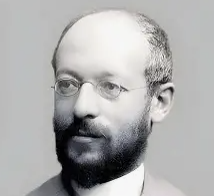
Cities are, first of all, seats of the highest economic division of labor. They produce thereby such extreme phenomena as in Paris the remunerative occupation of the quatorzième. They are persons who identify themselves by signs on their residences and who are ready at the dinner hour in correct attire, so that they can be quickly called upon if a dinner party should consist of thirteen persons. In the measure of its expansion, the city offers more and more the decisive conditions of the division of labor. It offers a circle which through its size can absorb a highly diverse variety of services.
▼
Source
source
p. 420
3 months 2 weeks ago
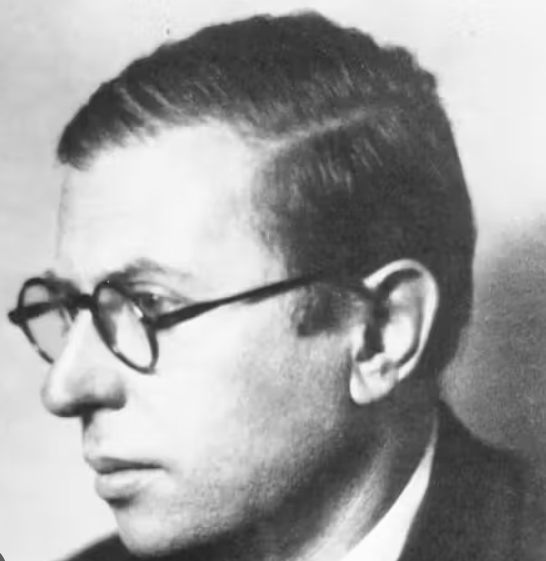
As for me, I am mean: that means that I need the suffering of others to exist. A flame. A flame in their hearts. When I am all alone, I am extinguished.
▼
Source
source
Inès, describing her path to Hell, Act 1, sc. 5
3 weeks 4 days ago
When I was 15 years old, or 16, I carried around on the streets of Brooklyn a paperback copy of Plato's Republic, front cover facing outward. I had read only some of it and understood less, but I was excited by it and knew it was something wonderful.
▼
Source
source
The Examined Life

2 months 2 weeks ago
Dead of night. No one, nothing but the society of the moments. Each pretends to keep us company, then escapes - desertion after desertion.

3 months 2 weeks ago
Bold ideas, unjustified anticipations, and speculative thought, are our only means for interpreting nature: our only organon, our only instrument, for grasping her. And we must hazard them to win our prize. Those among us who are unwilling to expose their ideas to the hazard of refutation do not take part in the scientific game.
▼
Source
source
Ch. 10 "Corroboration, or How a Theory Stands up to Tests", section 85: The Path of Science, p. 280.

3 months 3 weeks ago
There are various, nay, incredible faiths; why should we be alarmed at any of them? What man believes, God believes.
3 months 3 weeks ago
Some old poet's grand imagination is imposed on us as adamantine everlasting truth, and God's own word! Pythagoras says, truly enough, "A true assertion respecting God, is an assertion of God"; but we may well doubt if there is any example of this in literature.
2 months 2 weeks ago
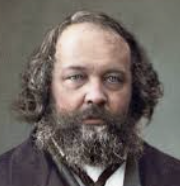
In order to touch the heart and gain the confidence, the assent, the adhesion, and the co-operation of the illiterate legions of the proletariat - and the vast majority of proletarians unfortunately still belong in this category - it is necessary to begin to speak to those workers not of the general sufferings of the international proletariat as a whole but of their particular, daily, altogether private misfortunes. It is necessary to speak to them of their own trade and the conditions of their work in the specific locality where they live; of the harsh conditions and long hours of their daily work, of the small pay, the meanness of their employer, the high cost of living, and how impossible it is for them properly to support and bring up a family.
▼
Source
source
Founding of the Workers' International

3 months 3 weeks ago
But he, with these burthens on him, planned, commenced, and completed, the History of India; and this in the course of about ten years, a shorter time than has been occupied (even by writers who had no other employment) in the production of almost any other historical work of equal bulk, and of anything approaching to the same amount of reading and research. And to this is to be added, that during the whole period, a considerable part of almost every day was employed in the instruction of his children: in the case of one of whom, myself, he exerted an amount of labour, care, and perseverance rarely, if ever, employed for a similar purpose, in endeavouring to give, according to his own conception, the highest order of intellectual education.
▼
Source
source
(p. 4)

2 months 2 weeks ago
For he must rule as king until God has put all enemies under his feet. And the last enemy, death, is to be brought to nothing.
▼
Source
source
Paul of Tarsus, 1 Corinthians 15: 25-26, NWT
3 months 3 weeks ago
People seem not to see that their opinion of the world is also a confession of character.
▼
Source
source
Worship
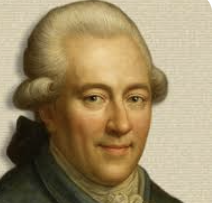
2 months 1 day ago
He was always smoothing and polishing himself, and in the end he became blunt before he was sharp.
▼
Source
source
L 70
2 months 1 day ago
Even truth needs to be clad in new garments if it is to appeal to a new age.
▼
Source
source
C 33
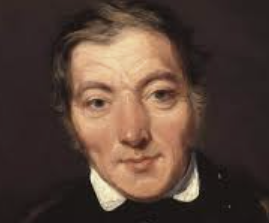
1 month 2 weeks ago
The lowest stage of humanity is experienced when the individual must labour for a small pittance of wages from others.
▼
Source
source
Paper Dedicated to the Governments of Great Britain, Austria, Russia, France, Prussia and the United States of America
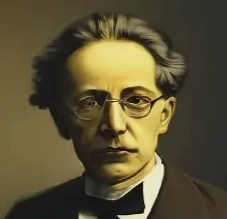
1 week ago
An appeal to men's self-sacrificing disposition and self-renouncing love ought at least to have lost its seductive plausibility when, after an activity of thousands of years, it has left nothing behind but the - misery of today. Why then still fruitlessly expect self-sacrifice to bring us better times? Why not rather hope for them from usurpation? Salvation comes no longer from the giver, the bestower, the loving one, but from the taker, the appropriator (usurper), the owner. Communism, and, consciously, egoism-reviling humanism, still count on love.
▼
Source
source
Cambridge 1995, p. 274

3 months 3 weeks ago
Ideas do not exist separately from language.
▼
Source
source
Notebook I, The Chapter on Money, p. 83.
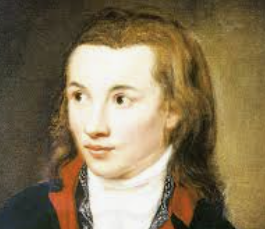
2 months 2 weeks ago
Man has ever expressed some symbolical Philosophy of his Being in his Works and Conduct; he announces himself and his Gospel of Nature; he is the Messiah of Nature.

3 months 3 weeks ago
Our merchants and master-manufacturers complain much of the bad effects of high wages in raising the price, and thereby lessening the sale of their goods both at home and abroad. They say nothing concerning the bad effects of high profits. They are silent with regard to the pernicious effects of their own gains. They complain only of those of other people.
▼
Source
source
Chapter IX, p. 117.
3 months 1 week ago
Our own experience provides the basic material for our imagination, whose range is therefore limited. It will not help to try to imagine that one has webbing on one's arms, which enables one to fly around at dusk and dawn catching insects in one's mouth; that one has very poor vision, and perceives the surrounding world by a system of reflected high-frequency sound signals; and that one spends the day hanging upside down by one's feet in an attic. Insofar as I can imagine this (which is not very far), it tells me only what it would be like for me to behave as a bat behaves. But that is not the question. I want to know what it is like for a bat to be a bat. Yet if I try to imagine this, I am restricted to the resources of my own mind, and those resources are inadequate to the task.
▼
Source
source
p. 169.
1 week 4 days ago
India was the motherland of our race, and Sanskrit the mother of Europe's languages: she was the mother of our philosophy; mother, through the Arabs, of much of our mathematics; mother, through the Buddha, of the ideals embodied in Christianity; mother, through the village community, of self-government and democracy. Mother India is in many ways the mother of us all.
1 month 2 weeks ago
My life was not useless; I gave important truths to the world, and it was only for want of understanding that they were disregarded. I have been ahead of my time.
▼
Source
source
Deathbed statement (November 1858), in response to a church minister who asked if he regretted wasting his life on fruitless projects; as quoted in Harold Hill : A People's History
2 months 6 days ago
It is the first step in sociological wisdom, to recognize that the major advances in civilization are processes which all but wreck the societies in which they occur:-like unto an arrow in the hand of a child. The art of free society consists first in the maintenance of the symbolic code; and secondly in fearlessness of revision, to secure that the code serves those purposes which satisfy an enlightened reason. Those societies which cannot combine reverence to their symbols with freedom of revision, must ultimately decay either from anarchy, or from the slow atrophy of a life stifled by useless shadows.
▼
Source
source
Symbolism: Its Meaning and Effect (1927), chapter 3, p. 88; final paragraph of the book.
3 months 3 weeks ago
Unjust laws exist: shall we be content to obey them, or shall we endeavor to amend them, and obey them until we have succeeded, or shall we transgress them at once?

2 months 1 week ago
A man, in so far as he is an individual, may be very sharply detached from others, a sort of spiritual crustacean, and yet be very poor in differentiating content. And further, it is true on the other hand that the more personality a man has and the greater his interior riches and the more he is a society within himself, the less brusquely he is divided from his fellows.

4 months 1 week ago
People travel to wonder at the height of mountains, at the huge waves of the sea, at the long courses of rivers, at the vast compass of the ocean, at the circular motion of the stars; and they pass by themselves without wondering.
▼
Source
source
Variant: Men go abroad to admire the heights of mountains, the mighty billows of the sea, the broad tides of rivers, the compass of the ocean, and the circuits of the stars, and pass themselves by. X

3 months 3 weeks ago
It is from the Bible that man has learned cruelty, rapine, and murder; for the belief of a cruel God makes a cruel man.
▼
Source
source
A Letter: Being an Answer to a Friend, on the publication of The Age of Reason" (12 May 1797), published in an 1852 edition of The Age of Reason, p. 205

6 days ago
It is not the man who has too little, but the man who craves more, that is poor.
▼
Source
source
Line 6.
3 months 2 weeks ago
The World and Life are one. Physiological life is of course not "Life". And neither is psychological life. Life is the world. Ethics does not treat of the world. Ethics must be a condition of the world, like logic. Ethics and Aesthetics are one.
▼
Source
source
Journal entry (24 July 1916), p. 77e

2 months 3 weeks ago
We must all obey the great law of change. It is the most powerful law of nature, and the means perhaps of its conservation.
▼
Source
source
Letter to Sir Hercules Langrishe
3 months 1 week ago
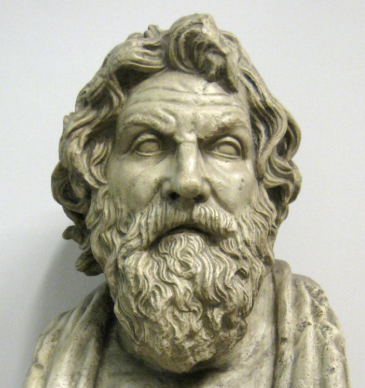
Antisthenes ... was asked on one occasion what learning was the most necessary, and he replied, "To unlearn one's bad habits."
▼
Source
source
§ 4

4 months 6 days ago
What once sprung from earth sinks back into the earth.
▼
Source
source
Book II, lines 999-1000 (tr. Bailey)
1 month 1 week ago
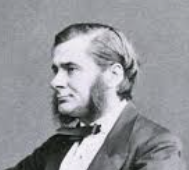
For myself I say deliberately, it is better to have a millstone tied round the neck and be thrown into the sea than to share the enterprises of those to whom the world has turned, and will turn, because they minister to its weaknesses and cover up the awful realities which it shudders to look at.
▼
Source
source
Aphorism #367, in Aphorisms and Reflections (1907) edited by Henrietta A. Huxley, his widow
2 months 3 weeks ago
In doing good, we are generally cold, and languid, and sluggish; and of all things afraid of being too much in the right. But the works of malice and injustice are quite in another style. They are finished with a bold, masterly hand; touched as they are with the spirit of those vehement passions that call forth all our energies, whenever we oppress and persecute.
▼
Source
source
Speech at Bristol Previous to the Election (6 September 1780), quoted in The Works of the Right Honourable Edmund Burke, Vol. II (1855), pp. 158-159

4 months 3 weeks ago
Take a book, the poorest one written, but read it with the passion that it is the only book you will read-ultimately you will read everything out of it, that is, as much as there was in yourself, and you could never get more out of reading, even if you read the best of books.
1 month 2 weeks ago
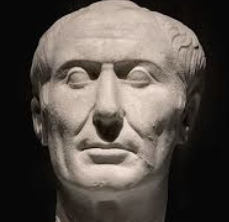
I have often regretted my speech, never my silence.
▼
Source
source
Maxim 1070
2 months 2 weeks ago
Compared to the refined culture of sclerotic forms and frames, which mask everything, the lyrical mode is utterly barbarian in its expression. Its value resides precisely in its savage quality: it is only blood, sincerity, and fire.

1 month 1 day ago
Universal Humanism:
1) Preserve Life (end)
Precludes those who think they get to decide who lives and who dies.
2) Avoid and limit suffering (means)
Precludes those who use absurd exceptions to turn their backs on functional rules.
3 months 3 weeks ago
Daughters of Time, the hypocritic Days, Muffled and dumb like barefoot dervishes, And marching single in an endless file, Bring diadems and fagots in their hands.
▼
Source
source
Days

3 months 3 weeks ago
To be without some of the things you want is an indispensable part of happiness.
2 months 3 days ago
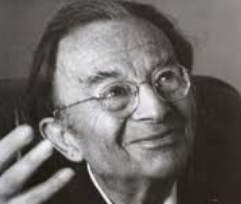
The most important misunderstanding seems to me to lie in a confusion between the human necessities which I consider part of human nature, and the human necessities as they appear as drives, needs, passions, etc., in any given historical period. This division is not very different from Marx's concept of "human nature in general", to be distinguished from "human nature as modified in each historical period". The same distinction exists in Marx when he distinguishes between "constant" or "fixed" drives and "relative" drives. The constant drives "exist under all circumstances and ... can be changed by social conditions only as far as form and direction are concerned". The relative drives "owe their origin only to a certain type of social organization".
3 months 3 weeks ago
Don't waste yourself in rejection, nor bark against the bad, but chant the beauty of the good.
▼
Source
source
Success
4 months 3 weeks ago
To the contemporary, Christ can only say: I will offer myself as a sacrifice for the sins of the world and for yours also. Is this easier to believe now than when he has done it, has offered himself? Or is the comfort greater because of his saying that he will do it than it is because of his having done it? There is no greater love than this, that someone lays down his life for another, but when is it easier to believe, and when is the comfort greater: when the loving one says he will do it, or when he has done it?
Just now
However, what is really required to defend 'the West' against the sudden rise of these barbaric and elemental forces is the strengthening, to an extent perhaps still unknown to Western man, of a heroic vision of life. Apart from the military-technical apparatus the world of the 'Westerners' has at its disposal only a limp and shapeless substance - and the cult of the skin, the myth of 'safety' and of 'war on war', and the ideal of the long, comfortable guaranteed, 'democratic' existence, which is preferred to the ideal of the fulfilment which can be grasped only on the frontiers between life and death in the meeting of the essence of living with the extreme of danger.
▼
Source
source
p. 152
1 month 5 days ago
Principles of Earth Democracy, #10: Earth Democracy connects people in circles of care, cooperation, and compassion instead of dividing them through competition and conflict, fear and hatred. In the face of a world of greed, inequality, and overconsumption, Earth Democracy globalizes compassion, justice, and sustainability.
▼
Source
source
(p. 11)
2 months 1 week ago
Whoever is versed in the jargon does not have to say what he thinks, does not even have to think it properly. The jargon takes over this task.
▼
Source
source
p. 9
1 month 3 weeks ago
Today's terrorism is not the product of a traditional history of anarchism, nihilism, or fanaticism. It is instead the contemporary partner of globalization.
▼
Source
source
The Spirit of Terrorism (2003) "The Violence of the Global"
CivilSimian.com created by AxiomaticPanic, CivilSimian, Kalokagathia