

3 months 2 weeks ago
Friends are not primarily absorbed in each other. It is when we are doing things together that friendship springs up - painting, sailing ships, praying, philosophizing, fighting shoulder to shoulder. Friends look in the same direction. Lovers look at each other - that is, in opposite directions. To transfer bodily all that belongs to one relationship into the other is blundering.

3 months 2 weeks ago
Reading the Socratic dialogues one has the feeling: what a frightful waste of time! What's the point of these arguments that prove nothing and clarify nothing?
▼
Source
source
p. 14e
2 months 6 days ago
Being, in whose name Heidegger's philosophy increasingly concentrates itself, is for him-as a pure self-presentation to passive consciousness-just as immediate, just as independent of the mediations of the subject as the facts and the sensory data are for the positivists. In both philosophical movements thinking becomes a necessary evil and is broadly discredited. Thinking loses its element of independence. The autonomy of reason vanishes: the part of reason that exceeds the subordinate reflection upon and adjustment to pre-given data. With it, however, goes the conception of freedom and, potentially, the self-determination of human society.
▼
Source
source
p. 9

3 months 4 weeks ago
You must acquire the best knowledge first, and without delay; it is the height of madness to learn what you will later have to unlearn.
▼
Source
source
Letter to Christian Northoff (1497), as translated in Collected Works of Erasmus (1974), p. 114
2 months ago
Good taste is either that which agrees with my taste or that which subjects itself to the rule of reason. From this we can see how useful it is to employ reason in seeking out the laws of taste.
▼
Source
source
E 69
4 months 2 weeks ago
Since those who rule in the city do so because they own a lot, I suppose they're unwilling to enact laws to prevent young people who've had no discipline from spending and wasting their wealth, so that by making loans to them, secured by the young people's property, and then calling those loans in, they themselves become even richer and more honored.

2 months 2 weeks ago
To dream of an enterprise of demolition that would spare none of the traces of the original Big Bang.

3 weeks 6 days ago
Before Christianity suicide was not in any way troubling. Our lives were our own, and when we tired of them we were at liberty to end them. One might think that as Christianity has declined, this freedom would be reclaimed. Instead secular creeds have sprung up, in which each person's life belongs to everyone else. To hand back the gift of life because it does not please is still condemned as a kind of blasphemy, though the offended deity is now humanity instead of God.
▼
Source
source
Sweet Morality (p. 231-2)
3 months 2 weeks ago
When I lay these questions before God I get no answer. But a rather special sort of 'No answer.' It is not the locked door. It is more like a silent, certainly not uncompassionate, gaze. As though He shook His head not in refusal but waiving the question. Like, 'Peace, child; you don't understand.'

2 months 1 week ago
Go thy way; and as thou hast believed, so be it done unto thee.
▼
Source
source
8:13 (KJV) Said to the officer.
1 month 4 days ago
Simplicity and nonviolence are the basis of an economy of wellbeing, and such an economy must be localised.
3 months 3 weeks ago
What strikes one here above all is the crudely empirical conception of profit derived from the outlook of the ordinary capitalist, which wholly contradicts the better esoteric understanding of Adam Smith.
▼
Source
source
Vol. II, Ch. X, p. 202.
2 months 2 weeks ago
Only those moments count when the desire to remain by yourself is so powerful that you'd prefer to blow your brains out than to exchange a word with someone.

3 months 4 weeks ago
Aristotle, a mere bond-servant to his logic, thereby rendering it contentious and well nigh useless.
▼
Source
source
Rerum Novarum
1 month 2 weeks ago
It is sometimes expedient to forget who we are.
▼
Source
source
Maxim 233

3 months 2 days ago
Hope is the only good that is common to all men; those who have nothing else possess hope still.
▼
Source
source
A Dictionary of Thoughts (1908) by Tryon Edwards, p. 234
2 months 5 days ago
There is something between the gross specialised values of the mere practical man, and the thin specialised values of the mere scholar. Both types have missed something; and if you add together the two sets of values, you do not obtain the missing elements.
▼
Source
source
Ch. 13: "Requisites for Social Progress", p. 279
2 months 3 days ago
Anarchism is the only philosophy which brings to man the consciousness of himself; which maintains that God, the State, and society are non-existent, that their promises are null and void, since they can be fulfilled only through man's subordination.
3 months 3 weeks ago
Something that is merely negative creates nothing.
▼
Source
source
Notebook VI, The Chapter on Capital, p. 532.
3 months 3 weeks ago
And the cost of a thing it will be remembered as the amount of life it requires to be exchanged for it.
▼
Source
source
After December 6, 1845
1 month 2 weeks ago
Some teachers of mankind - as Plato... the first Christians, the orthodox Muslims, and the Buddhists - have gone so far as to repudiate art. ...[They consider it] so highly dangerous in its power to infect people against their wills, that mankind will lose far less by banishing all art than by tolerating each and every art. ...such people were wrong in repudiating all art, for they denied that which cannot be denied - one of the indispensable means of communication, without which mankind could not exist. ...Now there is only fear, lest we should be deprived of any pleasures art can afford, so any type of art is patronized. And I think the last error is much grosser than the first and that its consequences are far more harmful.
3 months 3 weeks ago
The only purpose for which power can be rightfully exercised over any member of a civilized community, against his will, is to prevent harm to others. His own good, either physical or moral, is not a sufficient warrant.
▼
Source
source
Ch. 1: Introductory
2 months 3 days ago
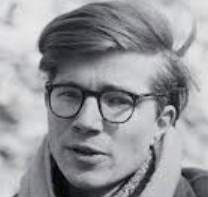
In the mid nineteenth century, the typical murderer was a drunken illiterate; a hundred years later the typical murderer regards himself as a thinking man.
▼
Source
source
Introductory Essay, p. xiv
1 day ago
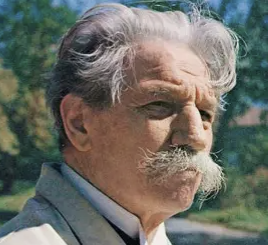
The only originality I claim is that for me this truth goes hand in hand with the intellectual certainty that the human spirit is capable of creating in our time a new mentality, an ethical mentality. Inspired by this certainty, I too proclaim this truth in the hope that my testimony may help to prevent its rejection as an admirable sentiment but a practical impossibility. Many a truth has lain unnoticed for a long time, ignored simply because no one perceived its potential for becoming reality.

3 months 2 weeks ago
I... believe in the rationalist tradition of a commonwealth of learning, and in the urgent need to preserve this tradition.
2 months 3 weeks ago
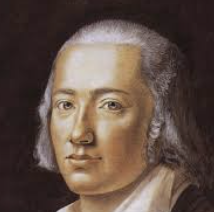
Being at one is god-like and good, but human, too human, the mania Which insists there is only the One, one country, one truth, and one way.
▼
Source
source
"The Root of All Evil" as translated by Michael Hamburger

1 month 3 weeks ago
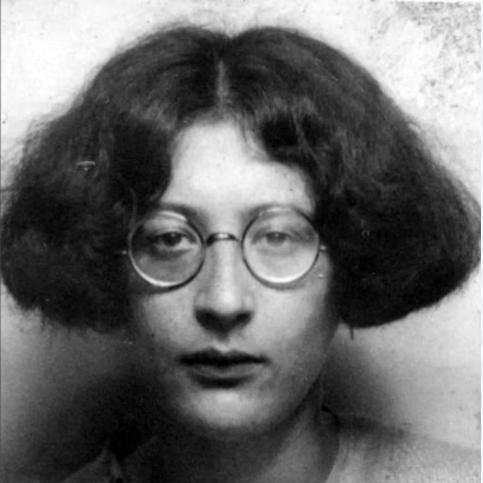
Nonviolence is an ideal that cannot always be fully honored in the practice. To the degree that those who practice nonviolent resistance put their body in the way of an external power, they make physical contact, presenting a force against force in the process. Nonviolence does not imply the absence of force or of aggression. It is, as it were, an ethical stylization of embodiment, replete with gestures and modes of non-action, ways of becoming an obstacle, of using the solidity of the body and its proprioceptive object field to block or derail a further exercise of violence.
▼
Source
source
p. 22
2 months 6 days ago
The aim is to replace economic oligarchies by the State, which has a will-to-power of its own and is quite as little concerned with the public good; and a will-to-power, moreover, which is not economic but military and therefore much more dangerous to any good folk who have a taste for staying alive. And on the bourgeois side what on earth is the sense of objecting to State control in economic affairs if one accepts private monopolies which have all the economic and technical disadvantages of State monopolies and possibly some others as well?
▼
Source
source
p. 230
2 months 2 weeks ago
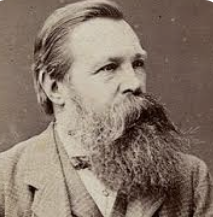
The Austrian Germans and Magyars will be set free and wreak a bloody revenge on the Slav barbarians. The general war which will then break out will smash this Slav Sonderbund and wipe out all these petty hidebound nations, down to their very names. The next world war will result in the disappearance from the face of the earth not only of reactionary classes and dynasties, but also of entire reactionary peoples. And that, too, is a step forward.
▼
Source
source
The Magyar Struggle in Neue Rheinische Zeitung (13 January 1849) Referring to the Serb uprising of 1848-49
2 months 1 week ago
All men cannot receive this saying, save they to whom it is given. For there are some eunuchs, which were so born from their mother's womb: and there are some eunuchs, which were made eunuchs of men: and there be eunuchs, which have made themselves eunuchs for the kingdom of heaven's sake. He that is able to receive it, let him receive it.
▼
Source
source
19:11-12 (KJV)
3 months 2 weeks ago
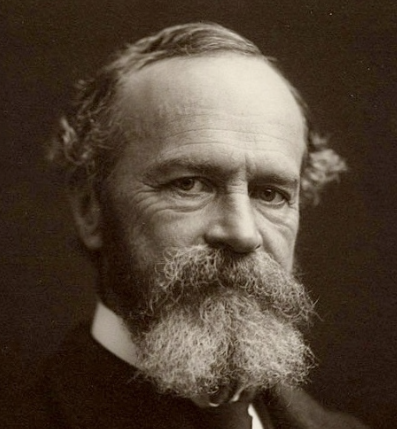
There is but one unconditional commandment, which is that we should seek incessantly, with fear and trembling, so to vote and to act as to bring about the very largest total universe of good which we can see. Abstract rules indeed can help; but they help the less in proportion as our intuitions are more piercing, and our vocation is the stronger for the moral life. For every real dilemma is in literal strictness a unique situation; and the exact combination of ideals realized and ideals disappointed which each decision creates is always a universe without a precedent, and for which no adequate previous rule exists.
▼
Source
source
"The Moral Philosopher and the Moral Life", International Journal of Ethics, April 1891
1 month 1 week ago
No doubt a tumult caused by local and temporary irritation ought to be suppressed with promptitude and vigour. Such disturbances, for example, as those which Lord George Gordon raised in 1780, should be instantly put down with the strong hand. But woe to the Government which cannot distinguish between a nation and a mob! Woe to the Government which thinks that a great, a steady, a long continued movement of the public mind is to be stopped like a street riot! This error has been twice fatal to the great House of Bourbon. God be praised, our rulers have been wiser. The golden opportunity which, if once suffered to escape, might never have been retrieved, has been seized. Nothing, I firmly believe, can now prevent the passing of this noble law, this second Bill of Rights.
▼
Source
source
Speech in the House of Commons on the Reform Bill (5 July 1831), quoted in Speeches of the Right Honourable T. B. Macaulay, M.P. (1854), pp. 34-35
2 months 3 days ago
The free expression of the hopes and aspirations of a people is the greatest and only safety in a sane society.
4 months 3 weeks ago
That body is heavier than another which, in an equal bulk, moves downward quicker.
3 months 2 weeks ago
The hell to be endured hereafter, of which theology tells, is no worse than the hell we make for ourselves in this world by habitually fashioning our characters in the wrong way.
▼
Source
source
Ch. 4
3 months 2 weeks ago
If I have exhausted the justifications, I have reached bedrock and my spade is turned. Then I am inclined to say: "This is simply what I do."
▼
Source
source
§ 217
2 months 2 weeks ago
Time is heavy sometimes; imagine how heavy eternity must be.
2 months 1 week ago
I hope, reader, that some time while our tragedy is still playing, in some interval between acts, we shall meet again. And we shall recognize one another. And forgive me if I have troubled you more than was needful and inevitable, more than I intended to do when I took up my pen proposing to distract you from your distractions. And may God deny you peace, but give you glory!
3 months 1 week ago
It is no more evident that democratic institutions are to be measured by the sort of person they create than that they are to be measured against divine commands. ... Even if the typical character types of liberal democracies are bland, calculating, petty, and unheroic, the prevalence of such people may be a reasonable price to pay for political freedom.

2 weeks 1 day ago
There is a left wing version of this longing for community... because in a liberal society we never move as quickly as we should towards full equality, and therefore there are many marginalized groups who feel that the liberal society is... hypocritical, that it's promising an equality of recognition, and of rights, but it is not delivering... and therefore the very concept of liberal universalism is challenged in favor of a definition of rights that is tied to the specific groups.
▼
Source
source
18:44
1 month 3 weeks ago
Boredom is like a pitiless zooming in on the epidermis of time. Every instant is dilated and magnified like the pores of the face.
▼
Source
source
Chapter 3
3 months 3 weeks ago
The possession and the exercise of political, and among others of electoral, rights, is one of the chief instruments both of moral and of intellectual training for the popular mind; and all governments must be regarded as extremely imperfect, until every one who is required to obey the laws, has a voice, or the prospect of a voice, in their enactment and administration.
▼
Source
source
Thoughts on Parliamentary Reform (1859), p. 22

3 months 3 weeks ago
What a noble privilege is it of human reason to attain the knowledge of the supreme Being; and, from the visible works of nature, be enabled to infer so sublime a principle as its supreme Creator? But turn the reverse of the medal. Survey most nations and most ages. Examine the religious principles, which have, in fact, prevailed in the world. You will scarcely be persuaded, that they are any thing but sick men's dreams: Or perhaps will regard them more as the playsome whimsies of monkies in human shape, than the serious, positive, dogmatical asseverations of a being, who dignifies himself with the name of rational.
▼
Source
source
Part XV - General corollary

3 months 2 weeks ago
A good symbol is the best argument and is a missionary to persuade thousands.
▼
Source
source
Poetry and Imagination
3 months 2 weeks ago
All the thoughts of a turtle are turtle.
▼
Source
source
1855
3 months 2 weeks ago
A writer who takes political, social or literary positions must act only with the means that are his. These means are the written words.
▼
Source
source
Refusing the Nobel Prize, New York Times

3 months 2 weeks ago
He who is subjected to a field of visibility, and who knows it, assumes responsibility for the constraints of power; he makes them play spontaneously upon himself; he inscribes in himself the power relation in which he simultaneously plays both roles; he becomes the principle of his own subjection.
▼
Source
source
Part Three, Panopticism
2 months 2 weeks ago
Tragic paradox of freedom: the mediocre men who alone make its exercise possible cannot guarantee its duration.
4 months 3 weeks ago
People are scarcely aware that it is a slavery they are creating; they forget this in their zeal to make people free by overthrowing dominions. They are scarcely aware that it is slavery; how could it be possible to be a slave in relation to equals?

CivilSimian.com created by AxiomaticPanic, CivilSimian, Kalokagathia