

4 months 4 days ago
Yet God hath not only granted these faculties, by which we may bear every event without being depressed or broken by it, but like a good prince and a true father, hath placed their exercise above restraint, compulsion, or hindrance, and wholly within our own control.
▼
Source
source
Book I, ch. 6, 40.
1 month 1 week ago
A writer who says that there are no truths, or that all truth is 'merely relative,' is asking you not to believe him. So don't.
▼
Source
source
"The Nature of Philosophy" (p. 6)



3 months 3 weeks ago
Every other knowledge is harmful to him who does not have knowledge of goodness.
▼
Source
source
Ch. 25

4 days ago
All vices sink into our whole being, if we do not crush them before they gain a footing; and in like manner these sad, pitiable, and discordant feelings end by feeding upon their own bitterness, until the unhappy mind takes a sort of morbid delight in grief... In like manner, wounds heal easily when the blood is fresh upon them: they can then be cleared out and brought to the surface, and admit of being probed by the finger: when disease has turned them into malignant ulcers, their cure is more difficult.
3 months 2 weeks ago
The emotions I feel are no more meant to be shown in their unadulterated state than the inner organs by which we live.
▼
Source
source
pp. 31-32

2 months 2 weeks ago
I don't understand how people can believe in God, even when I myself think of him everyday.
4 months 4 days ago
Show that you know this only, how you may never either fail to get what you desire or fall into what you avoid.
▼
Source
source
Book II, ch. 1, 37
2 months 3 weeks ago
The New Englander is attached to his township because it is strong and independent; he has an interest in it because he shares in its management; he loves it because he has no reason to complain of his lot; he invests his ambition and his future in it; in the restricted sphere within his scope, he learns to rule society; he gets to know those formalities without which freedom can advance only through revolutions, and becoming imbued with their spirit, develops a taste for order, understands the harmony of powers, and in the end accumulates clear, practical ideas about the nature of his duties and the extent of his rights.
▼
Source
source
Chapter V.

3 months 3 weeks ago
The world would be a happier place than it is if acquisitiveness were always stronger than rivalry. But in fact, a great many men will cheerfully face impoverishment if they can thereby secure complete ruin for their rivals. Hence the present level of taxation. Vanity is a motive of immense potency. Anyone who has much to do with children knows how they are constantly performing some antic, and saying "Look at me." "Look at me" is one of the most fundamental desires of the human heart. It can take innumerable forms, from buffoonery to the pursuit of posthumous fame.

4 months 2 weeks ago
The division between human and robot is perhaps not as significant as that between intelligence and nonintelligence.
2 weeks ago
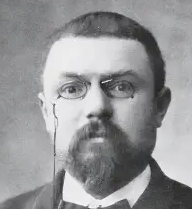
There is no science apart from the general. It may even be said that the very object of the exact sciences is to spare us these direct verifications.
▼
Source
source
Ch. I. (1905) Tr. George Bruce Halstead

2 weeks 1 day ago
Culture is a much better predictor of populist sentiment than economics. ...The average Trump voter in 2016 had a higher per capita income than the average Hillary Clinton voter, and if you look at the people in the January 6th riot, the vast majority... were comfortable middle class people with good jobs... There is a core... white working class base to Trumpism, but... a lot of the people that are aligned with that movement are there for cultural reasons. They really don't like the kind of identity politics that's being... put forward by the progressive left... A lot of Hispanic voters, for example, don't like socialism, and they don't like the fact that the Democrats are using the word socialism as if it's a perfectly normal set of economic choices.
▼
Source
source
51:36:00
3 months 3 weeks ago
Cock-sure certainty is the source of much that is worst in our present world, and it is something of which the contemplation of history ought to cure us, not only or chiefly because there were wise men in the past, but because so much that was thought wisdom turned out to be folly - which suggests that much of our own supposed wisdom is no better. I do not mean to maintain that we should lapse into a lazy scepticism. We should hold our beliefs, and hold them strongly. Nothing great is achieved without passion, but underneath the passion there should always be that large impersonal survey which sets limits to actions that our passions inspire.
▼
Source
source
History as an Art (1954), p. 9
2 months 6 days ago
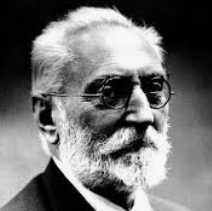
The truth is sum, ergo cogito - I am, therefore I think, although not everything that is thinks. Is not consciousness of thinking above all consciousness of being? Is pure thought possible, without consciousness of self, without personality? Can there exist pure knowledge without feeling, without that species of materiality which feelings lends to it? Do we not perhaps feel thought, and do we not feel ourselves in the act of knowing and willing? Could not the man in the stove [Descartes] have said: "I feel, therefore I am"? or "I will, therefore I am"? And to feel oneself, is it not perhaps to feel oneself imperishable?
3 months 3 weeks ago
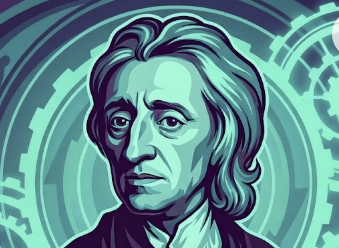
There is no virtue they should be excited to, nor fault they should be kept from, which I do not think they may be convinced of; but it must be by such reasons as their age and understandings are capable of, and those propos'd always in very few and plain words.
▼
Source
source
Sec. 81
4 months 1 week ago
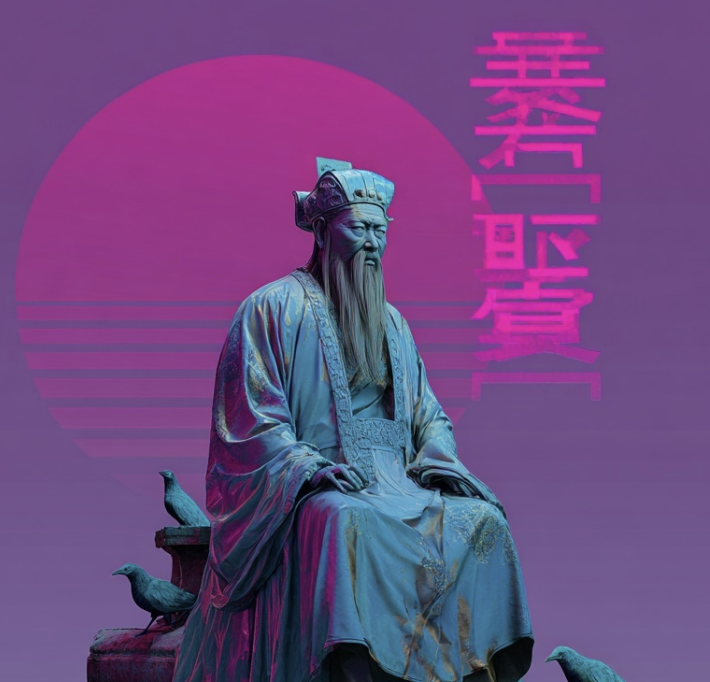
What Heaven has conferred is called The Nature; an accordance with this nature is called The Path of duty; the regulation of this path is called Instruction. The path may not be left for an instant. If it could be left, it would not be the path. On this account, the superior man does not wait till he sees things, to be cautious, nor till he hears things, to be apprehensive.

2 months 1 week ago
Blessed art thou, Simon Barjona: for flesh and blood hath not revealed it unto thee, but my Father which is in heaven. And I say also unto thee, That thou art Peter, and upon this rock I will build my church; and the gates of hell shall not prevail against it. And I will give unto thee the keys of the kingdom of heaven: and whatsoever thou shalt bind on earth shall be bound in heaven: and whatsoever thou shalt loose on earth shall be loosed in heaven.
▼
Source
source
16:17-19 (KJV)
2 months 1 week ago
Being is continuous becoming.
▼
Source
source
P. 136
2 months 2 weeks ago
No psychic value can disappear without being replaced by another of equivalent intensity.
▼
Source
source
p. 209
3 months 3 weeks ago
Let us give Nature a chance; she knows her business better than we do.
▼
Source
source
Ch. 13
1 month 3 days ago
I have had to suffer the violence and brutality that comes with rising fundamentalism, and I've asked myself how a society that is the cradle of peace, the land of Gandhi and Buddha, could be reduced to one of the most volatile societies in the world.
3 months 3 weeks ago
Let us cultivate our garden.
3 months 3 weeks ago
Money is human happiness in the abstract: he, then, who is no longer capable of enjoying human happiness in the concrete devotes his heart entirely to money.
▼
Source
source
Vol. 2, Ch. 26, § 320
2 months 1 week ago
Sleep on now, and take your rest: behold, the hour is at hand, and the Son of man is betrayed into the hands of sinners. Rise, let us be going: behold, he is at hand that doth betray me.
▼
Source
source
26:45-46 (KJV)
4 months 1 week ago
They are such fools that they seem to expect that, though the Republic is lost, their fish-ponds will be safe.
▼
Source
source
Letters to Atticus, Book I, 18.
1 month 3 weeks ago
Dying is nothing. You have to know how to disappear. Dying comes down to a biological chance and that is of no consequence. Disappearing is of a far higher order of necessity. You must not leave it to biology to decide when you will disappear. To disappear is to pass into an enigmatic state which is neither life nor death. Some animals know how to do this, as do savages, who withdraw while still alive, from the sight of their own people.

3 months 2 weeks ago
I do not overlook the fact that there are irrationalists who love mankind, and that not all forms of irrationalism engender criminality. But I hold that he who teaches that not reason but love should rule opens up the way for those who rule by hate. (Socrates, I believe, saw something of this when he suggested that mistrust or hatred of argument is related to mistrust or hatred of man).
▼
Source
source
Vol. 2, Ch. 24 "Oracular Philosophy and the Revolt against Reason"
2 months 2 weeks ago
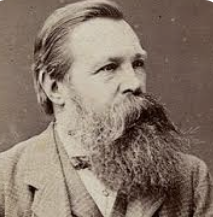
So long as it is not possible to produce so much that there is enough for all, with more left over for expanding the social capital and extending the forces of production - so long as this is not possible, there must always be a ruling class directing the use of society's productive forces, and a poor, oppressed class. How these classes are constituted depends on the stage of development.
2 months 3 days ago
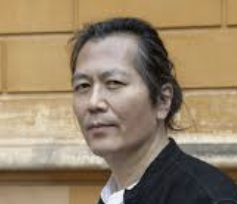
Haikus allow the whole world to appear within things.
3 months 1 week ago
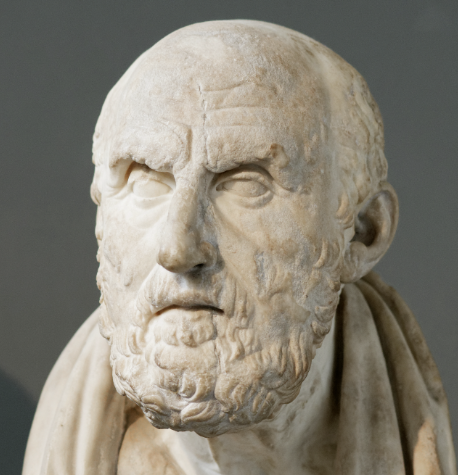
If I knew that it was fated for me to be sick, I would even wish for it; for the foot also, if it had intelligence, would volunteer to get muddy.
▼
Source
source
As quoted by Epictetus, Discourses, ii. 6. 10.
2 months 2 weeks ago
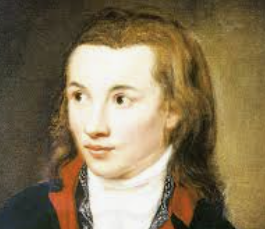
Poets and priests were one in the beginning, and they only separated in later times. But the real poet is always a priest, just as the real priest always remains a poet.
▼
Source
source
Fragment No. 71

3 months 2 weeks ago
There are two equal and opposite errors into which our race can fall about the devils. One is to disbelieve in their existence. The other is to believe, and to feel an excessive and unhealthy interest in them. They themselves are equally pleased by both errors and hail a materialist or a magician with the same delight.
▼
Source
source
Preface
2 months 1 week ago
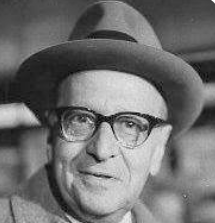
The complexity of the connection between the world of perception and the world of physics does not preclude that such a connection can be shown to exist at any time.
▼
Source
source
p. 133.
3 months 2 weeks ago
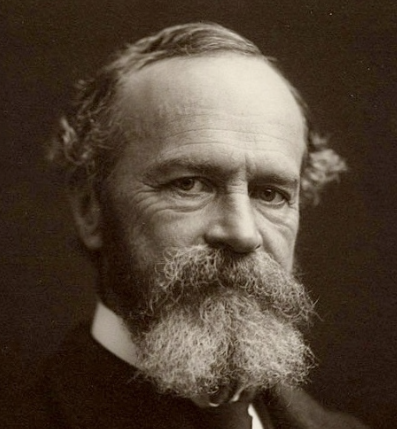
As a rule we disbelieve all the facts and theories for which we have no use.
▼
Source
source
"The Will to Believe" p. 10

3 months 2 weeks ago
Nature magically suits the man to his fortunes, by making these the fruit of his character.
▼
Source
source
Fate
3 months 2 weeks ago
Man cannot be free if he does not know that he is subject to necessity, because his freedom is always won in his never wholly successful attempts to liberate himself from necessity.
▼
Source
source
The Human Condition (1958), part 3, chapter 16
3 months 2 weeks ago
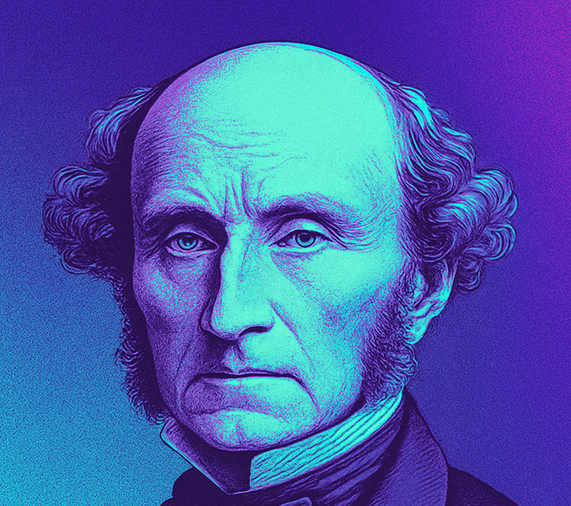
No one can be a great thinker who does not recognise, that as a thinker it is his first duty to follow his intellect to whatever conclusions it may lead...Not that it is solely, or chiefly, to form great thinkers, that freedom of thinking is required. On the contrary, it is as much and even more indispensable to enable average human beings to attain the mental stature which they are capable of.
▼
Source
source
Ch. II: Of the Liberty of Thought and Discussion

2 months 5 days ago
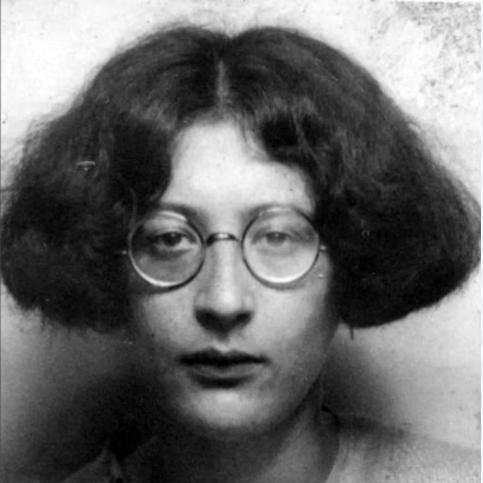
There is nothing that comes closer to true humility than the intelligence. It is impossible to feel pride in one's intelligence at the moment when one really and truly exercises it.
▼
Source
source
As quoted in the Introduction (by Siân Miles) p. 35
1 month 4 weeks ago
Nothing can contribute more to peace of soul than the lack of any opinion whatever.
▼
Source
source
E 11
3 months 3 weeks ago
It is asserted that beasts have no rights; the illusion is harboured that our conduct, so far as they are concerned, has no moral significance, or, as it is put in the language of these codes, that "there are no duties to be fulfilled towards animals." Such a view is one of revolting coarseness, a barbarism of the West, whose source is Judaism. In philosophy, however, it rests on the assumption, despite all evidence to the contrary, of the radical difference between man and beast,-a doctrine which, as is well known, was proclaimed with more trenchant emphasis by Descartes than by any one else: it was indeed the necessary consequence of his mistakes.
▼
Source
source
Part III, Ch. VIII, 7, p. 218

1 month 1 week ago
Whenever you say anything good about East Germany, immediately somebody jumps up and says, "My God, you're a Stalinist..." I'm not defending everything about it, of course. But I laboured on the chapter that talks about the east. I fact-checked it; I had somebody else fact-check it. I knew that I was going to get a lot of flak for that. But in the beginning, East Germany did a better job. They just did.
▼
Source
source
From an interview with Alex Clark, as cited in "Nazism, slavery, empire: can countries learn from national evil?", The Guardian
2 months 2 weeks ago
Death poses a problem which replaces all the others. What is deadly to philosophy, to the naive belief in the hierarchy of perplexities.
1 month 3 weeks ago
Our entire linear and accumulative culture collapses if we cannot stockpile the past in plain view. "
▼
Source
source
The Precession of Simulacra," p. 10
3 months 2 weeks ago
The sky is the daily bread of the eyes.
▼
Source
source
May 25, 1843
3 months 3 weeks ago
The best life is the one in which the creative impulses play the largest part and the possessive impulses the smallest.
2 months 3 weeks ago
Africans are always vicious... mostly inclined to lasciviousness, vengeance, theft and lies.
▼
Source
source
As quoted in David Johnson, 'Representing the Cape "Hottentots"
3 months 2 weeks ago
Freedom is only necessity understood.
▼
Source
source
The Dilemma of Determinism, 1884
CivilSimian.com created by AxiomaticPanic, CivilSimian, Kalokagathia