


2 months 6 days ago
The only profound thinkers are the ones who do not suffer from a sense of the ridiculous.
1 month 3 weeks ago
The ideas of Freud were popularized by people who only imperfectly understood them, who were incapable of the great effort required to grasp them in their relationship to larger truths, and who therefore assigned to them a prominence out of all proportion to their true importance.
▼
Source
source
Ch. 28, June 3, 1943.
3 months 4 weeks ago
All teems with symbol; the wise man is the man who in any one thing can read another.
2 months 1 week ago
The seat of the soul is where the inner world and the outer world meet. Where they overlap, it is in every point of the overlap.

3 months 1 week ago
I went to Salt Lake City and the Mormons tried to convert me, but when I found they forbade tea and tobacco I thought it was no religion for me.
▼
Source
source
Letter to C. P. Sanger, 23 December, 1929

3 months 1 week ago
He [God] lends us a little of His reasoning powers and that is how we think: He puts a little of His love into us and that is how we love one another. When you teach a child writing, you hold its hand while it forms the letters: that is, it forms the letters because you are forming them. We love and reason because God loves and reasons and holds our hand while we do it.
▼
Source
source
Book II, Chapter 4, "The Perfect Penitent"

3 months 1 week ago
In regard to man's final end, all the higher religions are in complete agreement. The purpose of human life is the discovery of Truth, the unitive knowledge of the Godhead. The degree to which this unitive knowledge is achieved here on earth determines the degree to which it will be enjoyed in the posthumous state. Contemplation of truth is the end, action the means.
2 months ago
All journeys have secret destinations of which the traveler is unaware.
▼
Source
source
The Legend of the Baal-Shem (1955),1995 edition, p. 36

1 month 3 weeks ago
And why be scandalized by the infallibility of a man, of the Pope? What difference does it make whether it be a book that is infallible - the Bible, or a society of men - the Church, or a single man? Does it make any essential change in the rational difficulty? And since the infallibility of a book or of a society of men is not more rational than that of a single man, this supreme offense to the eyes of reason has to be postulated.
2 months 2 days ago
The mind celebrates a little triumph whenever it can formulate a truth, however unwelcome to the flesh, or discover an actual force, however unfavourable to given interests.
▼
Source
source
Ch. IV.: Music

3 months 3 weeks ago
Anything done against faith or conscience is sinful.
▼
Source
source
Commentary on Romans, cap 14, I 3

4 months 1 week ago
Then we may begin by assuming that there are three classes of men—lovers of wisdom, lovers of honor, lovers of gain?

3 months 1 week ago
Men and boys are learning all kinds of trades but how to make men of themselves. They learn to make houses; but they are not so well housed, they are not so contented in their houses, as the woodchucks in their holes. What is the use of a house if you haven't got a tolerable planet to put it on? - If you cannot tolerate the planet that it is on? Grade the ground first. If a man believes and expects great things of himself, it makes no odds where you put him, or what you show him ... he will be surrounded by grandeur. He is in the condition of a healthy and hungry man, who says to himself, - How sweet this crust is!
▼
Source
source
Letter to Harrison Blake (20 May 1860); published in Familiar Letters, 1865
3 months 1 week ago
Choose your parents wisely.
▼
Source
source
On the recipe for longevity; Collected Papers of Bertrand Russell, Vol. 29, 2012
1 month 1 week ago
Do not take part in the council, unless you are called.
▼
Source
source
Maxim 310

1 day ago
Whoso belongs only to his own age, and reverences only its gilt Popinjays or smoot-smeared Mumbojumbos, must needs die with it.
1 month 2 days ago
All human accomplishment has the same origin, identically. Imagination is a force of nature. Is this not enough to make a person full of ecstasy? Imagination, imagination, imagination. It converts to actual. It sustains, it alters, it redeems!
▼
Source
source
Henderson the Rain King (1959) [Viking/Penguin, 1984, ISBN 0-140-07269-1], ch. XVIII, p. 271
2 months 5 days ago
The way in which the vast mass of the poor are treated by modern society is truly scandalous. They are herded into great cities where they breathe a fouler air than in the countryside which they have left.

4 months 1 week ago
The objective of all human arrangements is through distracting one's thoughts to cease to be aware of life.

2 months 2 weeks ago
Égalité is an expression of envy. It means, in the real heart of every Republican, " No one shall be better off than I am;" and while this is preferred to good government, good government is impossible.
▼
Source
source
Conversation with Nassau William Senior, 22 May 1850 Nassau, p. 94

4 months 1 week ago
Anything could be found in figures if the search were long enough and hard enough and if the proper pieces of information were ignored or overlooked.
3 months 1 week ago
It's not the experience that happens to you: it's what you do with the experience that happens to you.
▼
Source
source
Attributed to Russell in Slaby's Sixty Ways to Make Stress Work for You, 1987
1 day ago
Henry of Essex's religion was the Inner Light or Moral Conscience of his own soul; such as is vouchsafed still to all souls of men;-which Inner Light shone here 'through such intellectual and other media' as there were; producing 'Phantasms,' Kircherean Visual-Spectra, according to circumstances! It is so with all men. The clearer my Inner Light may shine, through the less turbid media; the fewer Phantasms it may produce,-the gladder surely shall I be, and not the sorrier! Hast thou reflected, O serious reader, Advanced- Liberal or other, that the one end, essence, use of all religion past, present and to come, was this only: To keep that same Moral Conscience or Inner Light of ours alive and shining.
1 month 3 weeks ago
Promising, committment, and fidelity, for instance, are genuinely temporal practices.
1 day ago
We are no longer instinctively driven to apprehend, and lay to heart, what is Good and Lovely, but rather to inquire, as onlookers, how it is produced, whence it comes, whither it goes. Our favourite Philosophers have no love and no hatred; they stand among us not to do, nor to create anything, but as a sort of Logic mills, to grind out the true causes and effects of all that is done and created.
2 days ago
Who is the happiest of men? He who values the merits of others, And in their pleasure takes joy, even as though 'twere his own. Not in the morning alone, not only at mid-day he charmeth; Even at setting, the sun is still the same glorious planet.
▼
Source
source
Distichs in The Poems of Goethe (1853) as translated in the original metres by Edgar Alfred Bowring
2 months 1 week ago
Ah! why do women condescend to receive a degree of attention and respect from strangers different from that reciprocation of civility which the dictates of humanity and the politeness of civilization authorize between man and man? And why do they not discover, when, "in the noon of beauty's power", that they are treated like queens only to be deluded by hollow respect. Confined, then, in cages like the feathered race, they have nothing to do but to plume themselves, and stalk with mock majesty from perch to perch.
▼
Source
source
Ch. 4

3 months 1 week ago
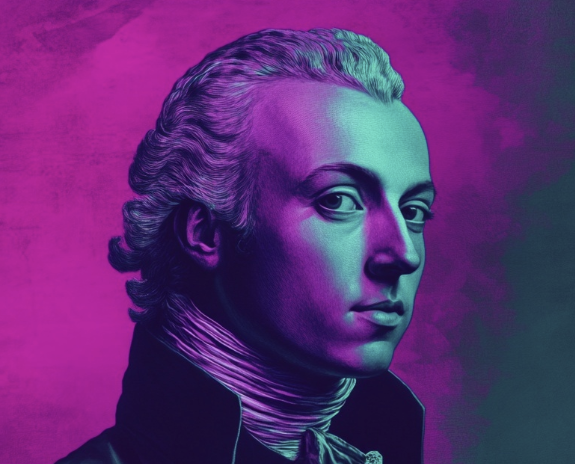
Whatever concept one may hold, from a metaphysical point of view, concerning the freedom of the will, certainly its appearances, which are human actions, like every other natural event are determined by universal laws. However obscure their causes, history, which is concerned with narrating these appearances, permits us to hope that if we attend to the play of freedom of the human will in the large, we may be able to discern a regular movement in it, and that what seems complex and chaotic in the single individual may be seen from the standpoint of the human race as a whole to be a steady and progressive though slow evolution of its original endowment.
▼
Source
source
Introduction

2 months 3 weeks ago
It is told that those who first brought out the irrationals from concealment into the open perished in shipwreck, to a man. For the unutterable and the formless must needs be concealed. And those who uncovered and touched this image of life were instantaneously destroyed and shall remain forever exposed to the play of the eternal waves.
▼
Source
source
As quoted by Tobias Dantzig, Number: The Language of Science (1930) also see Proclus, scholium to Book X of Euclid's Elements, vol. V.
2 months 1 day ago
Art expresses, it does not state; it is concerned with existences in their perceived qualities, not with conceptions symbolized in terms.
▼
Source
source
p. 139
3 months 1 week ago
It would be worth the while to look closely into the eye which has been open and seeing at such hours, and in such solitudes, its dull, yellowish, greenish eye. Methinks my own soul must be a bright invisible green.
3 months 1 week ago
I regard [religion] as a disease born of fear and as a source of untold misery to the human race.
2 months 6 days ago
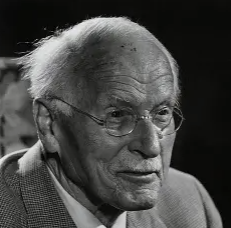
The unconscious is not just evil by nature, it is also the source of the highest good: not only dark but also light, not only bestial, semihuman, and demonic but superhuman, spiritual, and, in the classical sense of the word, "divine."
▼
Source
source
The Practice of Psychotherapy, p. 364

2 months 2 days ago
Are not five sparrows sold for two farthings, and not one of them is forgotten before God? But even the very hairs of your head are all numbered. Fear not therefore: ye are of more value than many sparrows.
▼
Source
source
12:6-7
1 month 3 weeks ago
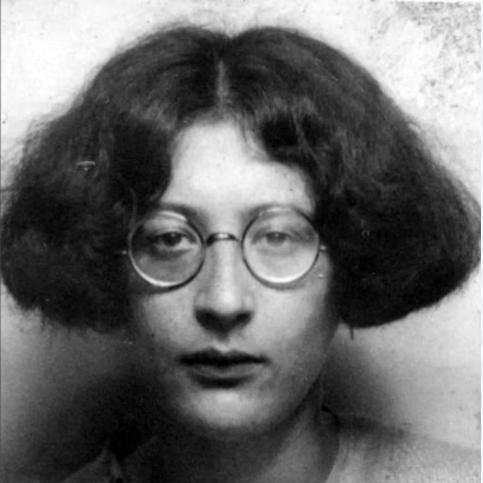
The combination of these two facts - the longing in the depth of the heart for absolute good, and the power, though only latent, of directing attention and love to a reality beyond the world and of receiving good from it - constitutes a link which attaches every man without exception to that other reality. Whoever recognizes that reality recognizes also that link. Because of it, he holds every human being without any exception as something sacred to which he is bound to show respect. This is the only possible motive for universal respect towards all human beings. Whatever formulation of belief or disbelief a man may choose to make, if his heart inclines him to feel this respect, then he in fact also recognizes a reality other than this world's reality. Whoever in fact does not feel this respect is alien to that other reality also.
2 months 1 week ago
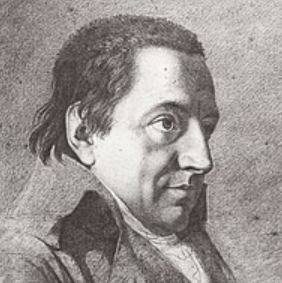
The original thinking force of the universe progresses and develops itself in all possible determinations of which it is capable, just as the other original natural forces progress and assume all possible configurations. I am a particular determination of the formative force, like the plant; a particular determination of the peculiar motive force, like the animal; and in addition to this a determination of the thinking force: and the union of these three basic forces into one force, into one harmonious development, is the distinguishing characteristic of my species.
▼
Source
source
P. Preuss, trans. (1987), p. 12

1 month 1 week ago
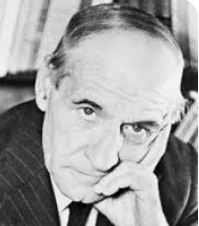
When an individual passes from one period of life to another a time comes when he cannot go on in senseless activity and excitement as before, but has to understand that although he has out-grown what before used to direct him, this does not mean that he must live without any reasonable guidance, but rather that he must formulate for himself an understanding of life corresponding to his age, and having elucidated it must be guided by it. And in the same way a similar time must come in the growth and development of humanity.
▼
Source
source
VI
2 months ago
Hatred is a feeling which leads to the extinction of values.
▼
Source
source
Cited in the Oxford Dictionary of Quotations by Subject, ed. Susan Ratcliffe (2010), p. 223
1 day ago
It was a rude gross error, that of counting the Great Man a god. Yet let us say that it is at all times difficult to know what he is, or how to account of him and receive him!
1 day ago
For being a man worth any thousand men, the response your Knox, your Cromwell gets, is an argument for two centuries whether he was a man at all. God's greatest gift to this Earth is sneeringly flung away.
4 months 1 week ago
It's my belief that the Universe possesses, in its essence, fractal properties of a very complex sort and that the pursuit of science shares those properties. It follows that any part of the Universe that remains un-understood, and any part of scientific investigation that remains unresolved, however small that might be in comparison to what is understood and resolved, contains within it all the complexity of the original. Therefore, we'll never finish. No matter how far we go, the road ahead will be as long as it was at the start, and that's the secret of the Universe.
3 months 1 week ago
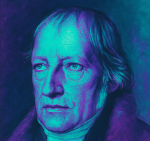
The History of the world is none other than the progress of the consciousness of Freedom; a progress whose development according to the necessity of its nature, it is our business to investigate.
▼
Source
source
Part III. Philosophic History; § 21, as translated by John Sibree; p. 19, (1900 edition) Variant translated by Robert S. Hartman, in Reason In History, A General Introduction to the Philosophy of History (1953) , 3/1/2007
3 months 1 week ago
Brutes are merely brutal; men and women are capable of being devils and lunatics. They are no less capable of being fully human-even, occasionally, of being a bit more than fully human, of being saints, heroes and geniuses.
▼
Source
source
Introduction to You Are Not The Target by Laura Archera Huxley, 1963

2 months 1 week ago
How it could come to pass I do not know, but I remember it clearly. The dream embraced thousands of years and left in me only a sense of the whole. I only know that I was the cause of their sin and downfall. Like a vile trichina, like a germ of the plague infecting whole kingdoms, so I contaminated all this earth, so happy and sinless before my coming. They learnt to lie, grew fond of lying, and discovered the charm of falsehood.
3 months 3 weeks ago
Woman, compared to other creatures, is the image of God, for she bears dominion over them. But compared unto man, she may not be called the image of God, for she bears not rule and lordship over man, but ought to obey him. The woman shall be subject to man as unto Christ. For woman, has not her example from the body and from the flesh, that so she shall be subject to man, as the flesh is unto the Spirit, because that the flesh in the weakness and mortality of this life lusts and strives against the Spirit, and therefore would not the Holy Ghost give example of subjection to the woman of any such thing.
▼
Source
source
As quoted by John Knox The First Blast to Awaken Women Degenerate (1558)

3 months 1 week ago
If the ability to tell right from wrong should turn out to have anything to do with the ability to think, then we must be able to "demand" its exercise from every sane person, no matter how erudite or ignorant, intelligent or stupid, he may happen to be. Kant-in this respect almost alone among the philosophers-was much bothered by the common opinion that philosophy is only for the few, precisely because of its moral implications.
▼
Source
source
p. 13

1 month 3 weeks ago
Is the child to be considered as an individuality, or as an object to be moulded according to the whims and fancies of those about it? This seems to me to be the most important question to be answered by parents and educators. And whether the child is to grow from within, whether all that craves expression will be permitted to come forth toward the light of day; or whether it is to be kneaded like dough through external forces, depends upon the proper answer to this vital question.

3 months 1 week ago
Those only are happy (I thought) who have their minds fixed on some object other than their own happiness; on the happiness of others, on the improvement of mankind, even on some art or pursuit, followed not as a means, but as itself an ideal end. Aiming thus at something else, they find happiness by the way.
▼
Source
source
(p. 142)
CivilSimian.com created by AxiomaticPanic, CivilSimian, Kalokagathia