

4 months 2 weeks ago
The single harmony produced by all the heavenly bodies singing and dancing together springs from one source and ends by achieving one purpose, and has rightly bestowed the name not of "disordered" but of "ordered universe" upon the whole.

3 months 3 weeks ago
God might grant us riches, honours, life, and even health, to our own hurt; for every thing that is pleasing to us is not always good for us. If he sends us death, or an increase of sickness, instead of a cure, Vvrga tua et baculus, tuus ipsa me consolata sunt. "Thy rod and thy staff have comforted me," he does it by the rule of his providence, which better and more certainly discerns what is proper for us than we can do; and we ought to take it in good part, as coming from a wise and most friendly hand.
▼
Source
source
Ch. 12
Just now
Every social occurrence as such, consists of an interaction between individuals. In other words, each individual is at the same time an active and a passive agent in a transaction. In case of superiority and inferiority, however, the relation assumes the appearance of a one-sided operation ; the one party appears to exert, while the other seems merely to receive an influence.
▼
Source
source
p. 169


3 months 2 weeks ago
Gentlemen, there is a sublime and friendly Destiny by which the human race is guided, - the race never dying, the individual never spared, - to results affecting masses and ages. Men are narrow and selfish, but the Genius or Destiny is not narrow, but beneficent. It is not discovered in their calculated and voluntary activity, but in what befalls, with or without their design. Only what is inevitable interests us, and it turns out that love and good are inevitable, and in the course of things. That Genius has infused itself into nature. It indicates itself by a small excess of good, a small balance in brute facts always favorable to the side of reason.

1 week 3 days ago
If you are in a strait, a very good indication as to choice-perhaps the best you could get-is a book you have a great curiosity about. You are then in the readiest and best of all possible conditions to improve by that book.

3 months 3 weeks ago
Here then we may learn the fallacy of the remark... that any particular state is weak, though fertile, populous, and well cultivated, merely because it wants money. It appears that the want of money can never injure any state within itself: For men and commodities are the real strength of any community. It is the simple manner of living which here hurts the public, by confining the gold and silver to few hands, and preventing its universal diffusion and circulation. On the contrary, industry and refinements of all kinds incorporate it with the whole state, however small its quantity may be: They digest it into every vein, so to speak; and make it enter into every transaction and contract.
▼
Source
source
Of Money (1752) as quoted in David Hume: Writings on Economics (1955, 1970) ed., Eugene Rotwein, p. 45.

3 months 2 weeks ago
I once received a letter from an eminent logician, Mrs. Christine Ladd Franklin, saying that she was a solipsist, and was surprised that there were no others. Coming from a logician, this surprise surprised me.
▼
Source
source
Human Knowledge: Its Scope and Limits (1948), Part III, chapter II, "Solipsism", p. 196

2 months 2 weeks ago
The blindness of those who think it absurd to suppose that complex organic forms may have arisen by successive modifications out of simple ones becomes astonishing when we remember that complex organic forms are daily being thus produced. A tree differs from a seed immeasurably in every respect... Yet is the one changed in the course of a few years into the other: changed so gradually, that at no moment can it be said - Now the seed ceases to be, and the tree exists.
3 months 3 weeks ago
False and doubtful positions, relied upon as unquestionable maxims, keep those who build on them in the dark from truth. Such are usually the prejudices imbibed from education, party, reverence, fashion, interest, et cetera.
▼
Source
source
Book IV, Ch. 7
2 months 2 weeks ago
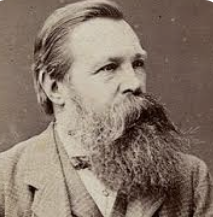
History has proved us, and all who thought like us, wrong. It has made it clear that the state of economic development on the Continent at that time was not, by a long way, ripe for the removal of capitalist production.
▼
Source
source
Introduction (1895) to Marx's The Class Struggles in France
3 months 1 week ago
Neither our distance from a preventable evil nor the number of other people who, in respect to that evil, are in the same situation as we are, lessens our obligation to mitigate or prevent that evil.

2 months 2 days ago
The principle of brotherhood expounded by the agitator of Nazareth preserved the germ of life, of truth and justice, so long as it was the beacon light of the few. The moment the majority seized upon it, that great principle became a shibboleth and harbinger of blood and fire, spreading suffering and disaster. The attack on the omnipotence of Rome was like a sunrise amid the darkness of the night, only so long as it was made by the colossal figures of a Huss, a Calvin, or a Luther. Yet when the mass joined in the procession against the Catholic monster, it was no less cruel, no less bloodthirsty than its enemy. Woe to the heretics, to the minority, who would not bow to its dicta. After infinite zeal, endurance, and sacrifice, the human mind is at last free from the religious phantom; the minority has gone on in pursuit of new conquests, and the majority is lagging behind, handicapped by truth grown false with age.
2 months 2 weeks ago
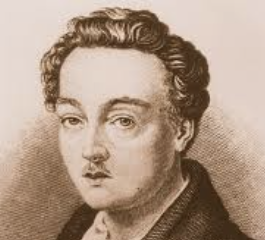
The revolutionary government is the despotism of liberty against tyranny.
▼
Source
source
Act I.

3 months 3 weeks ago
He thinks like a philosopher, but governs like a king.
▼
Source
source
Of Frederick the Great XII

3 months 2 weeks ago
He [the devil] always sends errors into the world in pairs-pairs of opposites. And he always encourages us to spend a lot of time thinking which is the worse. You see why, of course? He relies on your extra dislike of the one error to draw you gradually into the opposite one. But do not let us be fooled. We have to keep our eyes on the goal and go straight through between both errors. We have no other concern than that with either of them.
▼
Source
source
Book IV, chapter 6, "Two Notes"

3 months 2 weeks ago
It is wrong to think that belief in freedom always leads to victory; we must always be prepared for it to lead to defeat. If we choose freedom, then we must be prepared to perish along with it. Poland fought for freedom as no other country did. The Czech nation was prepared to fight for its freedom in 1938; it was not lack of courage that sealed its fate. The Hungarian Revolution of 1956 - the work of young people with nothing to lose but their chains - triumphed and then ended in failure. ... Democracy and freedom do not guarantee the millennium. No, we do not choose political freedom because it promises us this or that. We choose it because it makes possible the only dignified form of human coexistence, the only form in which we can be fully responsible for ourselves. Whether we realize its possibilities depends on all kinds of things - and above all on ourselves.

3 months 2 weeks ago
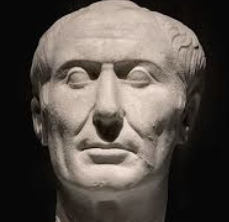
The only purpose for which power can be rightfully exercised over any member of a civilized community, against his will, is to prevent harm to others. His own good, either physical or moral, is not a sufficient warrant.
▼
Source
source
Ch. 1: Introductory
1 month 2 weeks ago
He dies twice who perishes by his own hand.
▼
Source
source
Maxim 97

3 months 3 weeks ago
A free man thinks of death least of all things; and his wisdom is a meditation not of death but of life.
▼
Source
source
Part IV, Prop. LXVII
Just now
Only when an ideal of peace is born in the minds of the peoples will the institutions set up to maintain this peace effectively fulfill the function expected of them.
2 months 3 weeks ago
Thus the social position of women is in this respect very similar to that of philosophers and of the working classes. And we now see why these three elements should be united. It is their combined action which constitutes the moral or modifying force of society.
▼
Source
source
p. 235

3 months 2 weeks ago
The perception of beauty is a moral test.
▼
Source
source
June 21, 1852

3 months 2 weeks ago
You could attach prices to thoughts. Some cost a lot, some a little. And how does one pay for thoughts? The answer, I think, is: with courage.
▼
Source
source
p. 52e
1 month 3 weeks ago
We favor hypotheses for their simplicity and explanatory power, much as the architect of the world might have done in choosing which possibility to create.
▼
Source
source
Chapter 15, Inductive Logic, p. 142.

3 months 2 weeks ago
I will now confess my own utopia. I devoutly believe in the reign of peace and in the gradual advent of some sort of socialistic equilibrium. The fatalistic view of the war function is to me nonsense, for I know that war-making is due to definite motives and subject to prudential checks and reasonable criticisms, just like any other form of enterprise. And when whole nations are the armies, and the science of destruction vies in intellectual refinement with the science of production, I see that war becomes absurd and impossible from its own monstrosity. Extravagant ambitions will have to be replaced by reasonable claims, and nations must make common cause against them.
3 months 2 weeks ago
The disciple must break the glass, or better the mirror, the reflection, his infinite speculation on the master. And start to speak.
▼
Source
source
Cogito and The History of Madness, p.37 (Routledge classics edition)
3 months 2 weeks ago
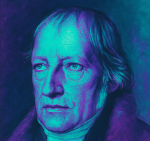
The first remark we have to make, and which - though already presented more than once - cannot be too often repeated when the occasion seems to call for it, - is that what we call principle, aim, destiny, or the nature and idea of Spirit, is something merely general and abstract. Principle - Plan of Existence - Law - is a hidden, undeveloped essence, which as such - however true in itself - is not completely real.
2 months 1 week ago
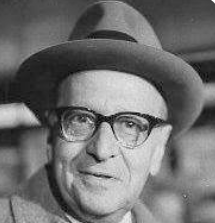
Plato and his objectivistic successors ... preserved the awareness of differences that pragmatism has been invented to deny-the difference between thinking in the laboratory and in philosophy, and consequently the difference between the destination of mankind and its present course.
▼
Source
source
p. 53.

2 months 5 days ago
Although people seem to be unaware of it today, the development of the faculty of attention forms the real object and almost the sole interest of studies.

2 months 6 days ago
To say that everything is idea or that everything is spirit, is the same as saying that everything is matter or that everything is energy, for if everything is idea or spirit, just as my consciousness is, it is not plain why the diamond should not endure for ever, if my consciousness, because it is idea or spirit, endures forever.

3 months 3 weeks ago
Many of these were not prisoners of war, and redeemed from savage conquerors, as some plead; and they who were such prisoners, the English, who promote the war for that very end, are the guilty authors of their being so; and if they were redeemed, as is alleged, they would owe nothing to the redeemer but what he paid for them.

1 month 2 weeks ago
We now live in a technologically prepared environment that blankets the earth itself. The humanly contrived environment of electric information and power has begun to take precedence over the old environment of "nature." Nature, as it were, begins to be the content of our technology.
▼
Source
source
p. 276
3 months 2 weeks ago
We are always getting ready to live, but never living.
▼
Source
source
April 12, 1834
1 week 3 days ago
We shall either learn to know a Hero, a true Governor and Captain, somewhat better, when we see him; or else go on to be forever governed by the Unheroic;-had we ballot-boxes clattering at every street-corner, there were no remedy in these.
3 months 1 week ago
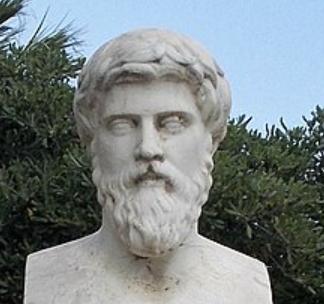
To one commending an orator for his skill in amplifying petty matters, Agesilaus said, "I do not think that shoemaker a good workman that makes a great shoe for a little foot."
▼
Source
source
Of Agesilaus the Great

2 months 1 week ago
It is the most advanced industrial society which feels most directly threatened by the rebellion, because it is here that the social necessity of repression and alienation, of servitude and heteronomy is most transparently unnecessary, and unproductive in terms of human progress. Therefore the cruelty and violence mobilized in the struggle against the threat, therefore the monotonous regularity with which the people are made familiar with, and accustomed to inhuman attitudes and behavior-to wholesale killing as patriotic act.
2 months 1 week ago
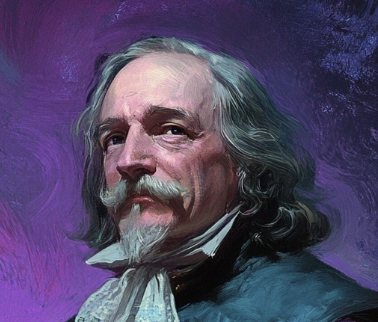
I know not how the world will receive it, nor how it may reflect on those that shall seem to favor it. For in a way beset with those that contend, on one side for too great Liberty, and on the other side for too much Authority, 'tis hard to passe between the points of both unwounded.
▼
Source
source
The Epistle Dedicatory, Paris, April 15-25, 1651
1 week 3 days ago
Close thy Byron; open thy Goethe.
▼
Source
source
Bk. I, ch. 9.

1 month 2 weeks ago
Science may fall back on its stupid excuse that science works for science, and that when it has been developed by the scientists it will become accessible to the people also; but art, if it be art, should be accessible to all, and particularly to those for whom it is produced. And the position of our art strikingly arraigns the producers of art for not wishing, not knowing how, and being unable, to serve the people.
2 months 1 day ago
Only the person who has faith in himself is able to be faithful to others.
▼
Source
source
Ch. 4

3 months 4 weeks ago
This world, the whole of the planet called earth, is the common country of all who live and breathe upon it.
3 months 2 weeks ago
But how can the characters in a play guess the plot? We are not the playwright, we are not the producer, we are not even the audience. We are on the stage. To play well the scenes in which we are "on" concerns us much more than to guess about the scenes that follow it.

2 months 3 weeks ago
"The will of the nation" is one of those expressions which have been most profusely abused by the wily and the despotic of every age.
▼
Source
source
Chapter IV.

4 months 2 weeks ago
What a human being believes, however, no matter with what ardor, is not necessarily objective truth.
3 months 3 weeks ago
During such calm sunshine of the mind, these spectres of false divinity never make their appearance.
▼
Source
source
Part XIV - Bad influence of popular religions on morality
3 months 2 weeks ago
Perhaps I am more than usually jealous with respect to my freedom. I feel that my connection with and obligation to society are still very slight and transient. Those slight labors which afford me a livelihood, and by which it is allowed that I am to some extent serviceable to my contemporaries, are as yet commonly a pleasure to me, and I am not often reminded that they are a necessity. So far I am successful. But I foresee, that, if my wants should be much increased, the labor required to supply them would become a drudgery. If I should sell both my forenoons and afternoons to society, as most appear to do, I am sure, that, for me, there would be nothing left worth living for. I trust that I shall never thus sell my birthright for a mess of pottage.
▼
Source
source
p. 486
4 months 5 days ago
So the Church too, like Mary, enjoys perpetual virginity and uncorrupted fecundity.
▼
Source
source
195:2
1 week 3 days ago
History is the essence of innumerable biographies.
▼
Source
source
On History.
CivilSimian.com created by AxiomaticPanic, CivilSimian, Kalokagathia