
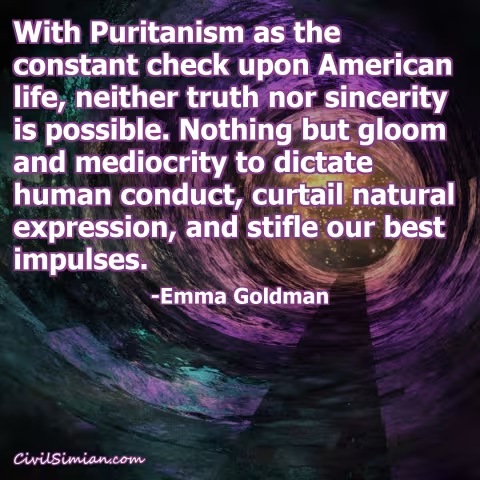
Some things never change...
Emma Goldman (1869–1940)
Emma Goldman believed freedom was meaningless if it did not extend to thought, speech, love, and the body itself.



It is fashionable to wax apocalyptic about the threat to humanity posed by the AIDS virus, "mad cow" disease, and many others, but I think a case can be made that faith is one of the world's great evils, comparable to the smallpox virus but harder to eradicate.

Surely if a single cell may, when subjected to certain influences, become a man in the space of twenty years; there is nothing absurd in the hypothesis that under certain other influences, a cell may, in the course of millions of years, give origin to the human race.

It would be better to have no laws at all than to have them in such profusion as we do.
A Pharisee is someone who is virtuous out of obedience to the Great Beast.
You rejoice in having made a convert to Atheism. I think there is something unnatural in a zeal of proselytism in an Atheist. I do not believe in an intellectual God, a God made after the image of man. In the vulgar acceptation of the word, therefore, I think a man is right who does not believe in God, but I am also persuaded that a man is wrong who is without religion.
The infinite... happens to subsist in a way contrary to what is asserted by others: for the infinite is not that beyond which there is nothing, but it is that of which there is always something beyond. ...But that pertaining to which there is nothing beyond is perfect and whole. ...that of which nothing is absent pertaining to the parts ...the whole is that pertaining to which there is nothing beyond. But that pertaining to which something external is absent, that is not all ...But nothing is perfect which has not an end; and the end is a bound. On this account... Parmenides spoke better than Melissus: for the latter says that the infinite is a whole; but the former, that the whole is finite, and equally balanced from the middle: for to conjoin the infinite with the universe and the whole, is not to connect line with line.
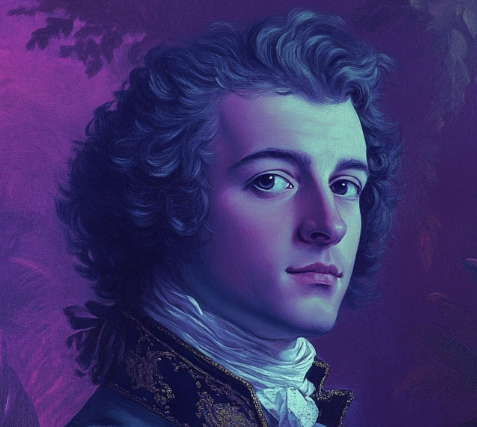
An honest man nearly always thinks justly.
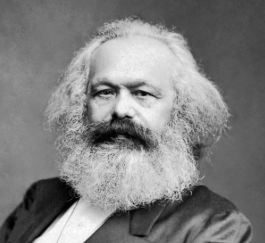
Capital is dead labor, that vampire-like, only lives by sucking living labor, and lives the more, the more labor it sucks.

And now once again I asked myself the question: do I love her? And once more I could not answer, that is to say, again, for the hundredth time, I answered that I hated her.

Faced with information overload, we have no alternative but pattern-recognition.

So today... red and blue voters rely on a completely different set of facts. ...Polls ...suggest that a substantial... majority of Republican voters believe that the Democrats... stole the election, and that Joe Biden is not the legitimate president... When you don't have a common factual basis, you... reinforce the kinds of filter bubbles that people have started to move into.

The order of nature cannot be justified by the mere observation of nature. For there is nothing in the present fact which inherently refers either to the past or to the future.... It illustrates the anti-rationalism of the scientific public that, when Hume did appear, it was only the religious implications of his philosophy which attracted attention. This was because the clergy were in principle rationalists, whereas the men of science were content with a simple faith in the order of nature.
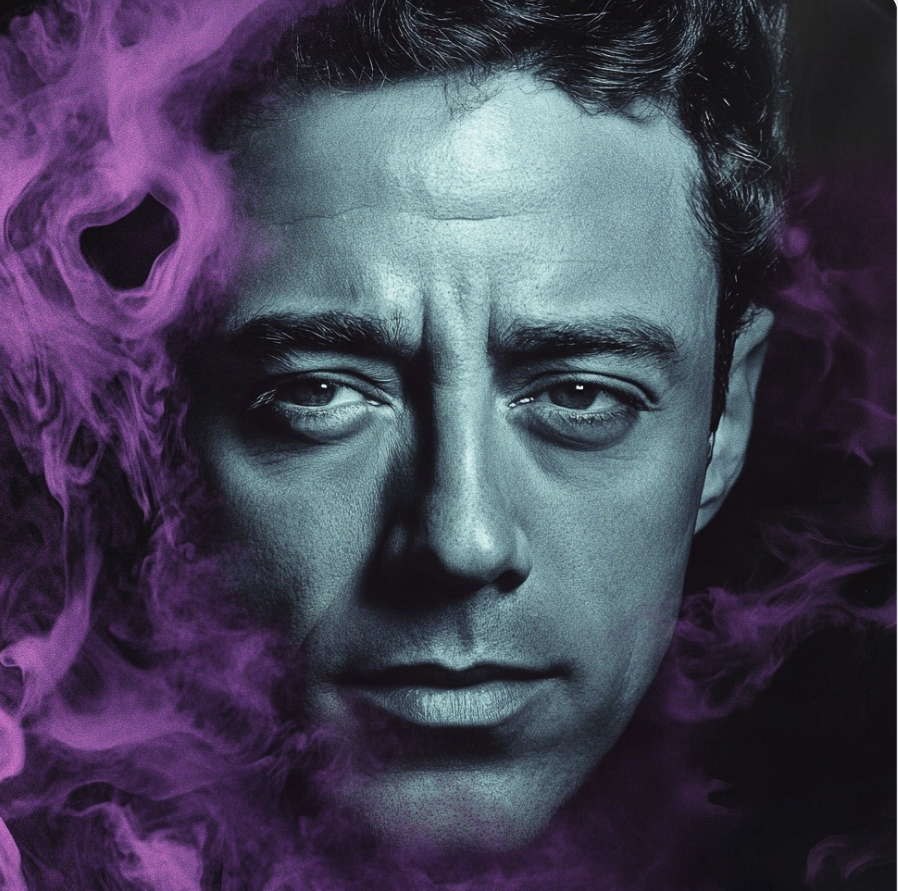
Of all the schools of patience and lucidity, creation is the most effective. It is also the staggering evidence of man's sole dignity: the dogged revolt against his condition, perseverance in an effort considered sterile. It calls for a daily effort, self-mastery, a precise estimate of the limits of truth, measure, and strength. It constitutes an ascesis. All that "for nothing," in order to repeat and mark time. But perhaps the great work of art has less importance in itself than in the ordeal it demands of a man and the opportunity it provides him of overcoming his phantoms and approaching a little closer to his naked reality.
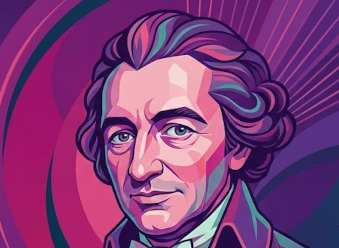
With what consistency, or decency they complain so loudly of attempts to enslave them, while they hold so many hundred thousands in slavery; and annually enslave many thousands more, without any pretence of authority, or claim upon them?

The most perfect philosophy of the natural kind only staves off our ignorance a little longer: as perhaps the most perfect philosophy of the moral or metaphysical kind serves only to discover larger portions of it. Thus the observation of human blindness and weakness is the result of all philosophy, and meets us at every turn, in spite of our endeavours to elude or avoid it.
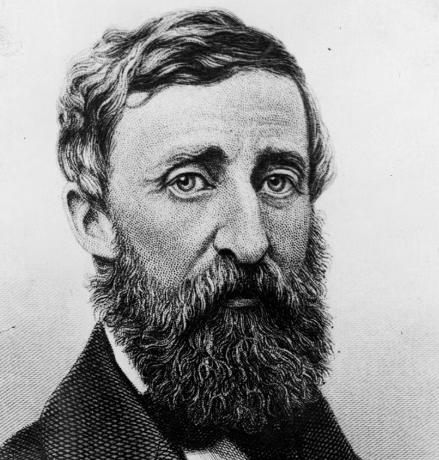
In the Catholic Church, especially, they go into chancery, make a clean confession, give up all, and think to start again. Thus men will lie on their backs, talking about the fall of man, and never make an effort to get up.
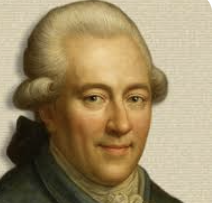
We accumulate our opinions at an age when our understanding is at its weakest.

It is the highest impertinence and presumption, therefore, in kings and ministers, to pretend to watch over the economy of private people, and to restrain their expence, either by sumptuary laws, or by prohibiting the importation of foreign luxuries. They are themselves always, and without any exception, the greatest spendthrifts in the society. Let them look well after their own expence, and they may safely trust private people with theirs. If their own extravagance does not ruin the state, that of their subjects never will.
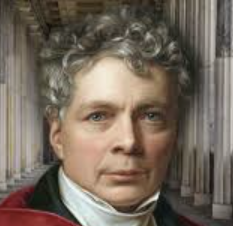
If there is to be any philosophy at all, this contradiction must be resolved - and the solution of this problem, or answer to the question: how can we think both of Presentations as conforming to objects, and objects as conforming to presentations? is, not the first, but the highest task of transcendental philosophy.
The behaviour of individuals is the tool with which the organisation achieves its targets.
Romantic poetry ... recognizes as its first commandment that the will of the poet can tolerate no law above itself.
To be old is a glorious thing when one has not unlearned what it means to begin, this old man had perhaps first learned it thoroughly in old age.
The pleasures of the imagination are as it were only drawings and models which are played with by poor people who cannot afford the real thing.
Let us not flutter too high, but remain by the manger and the swaddling clothes of Christ, in whom dwelleth all the fulness of the Godhead bodily.
Even before the bomb, one did not breathe too easily in this tortured world. Now we are given a new source of anguish; it has all the promise of being our greatest anguish ever. There can be no doubt that humanity is being offered its last chance. Perhaps this is an occasion for the newspapers to print a special edition. More likely, it should be cause for a certain amount of reflection and a great deal of silence.

Reality and history, however, are not dialectical, and no idealist rhetorical gymnastics can make them conform to the dialect.
I have always been of the opinion that infamy earned by doing what is right is not infamy at all, but glory.
It is a sign of sovereignty to risk one's life, that is, to turn life into a game.
I am sure, zeal or love for truth can never permit falsehood to be used in the defence of it.
Familiarity breeds contempt.

Jacobinism is the revolt of the enterprising talents of a country against its property.

Cease therefore to be dismayed by the mere novelty and so to reject reason from your mind with loathing: weigh the questions rather with keen judgment and if they seem to you to be true, surrender, or if the thing is false, gird yourself to the encounter.
For man seeketh in society comfort, use, and protection: and they be three wisdoms of divers natures, which do often sever: wisdom of the behaviour, wisdom of business, and wisdom of state.
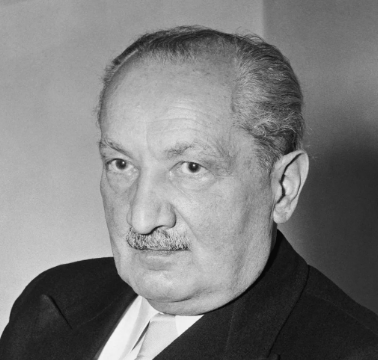
Do the essences of proposition and of the truth determine themselves from out of the essence of the thing, or does the essence of the thing determine itself from out of the essence of the proposition? The question is posed as an either/or. However does this either/or itself suffice? Are the essence of the thing and the essence of the proposition only built as mirror images because both of them together determine themselves from out of the same but deeper lying root? However, what and where can be this common ground for the essence of the thing and of the proposition and of their origin? The unconditioned (Unbedingt)? We stated at the beginning that what conditions the essense of the thing in its thingness can no longer itself be thing and conditioned, it must be an unconditioned (Un-bedingtes).
There is no method of reasoning more common, and yet none more blameable, than in philosophical debates to endeavour to refute any hypothesis by a pretext of its dangerous consequences to religion and morality. When any opinion leads us into absurdities, 'tis certainly false; but 'tis not certain an opinion is false, because 'tis of dangerous consequence.
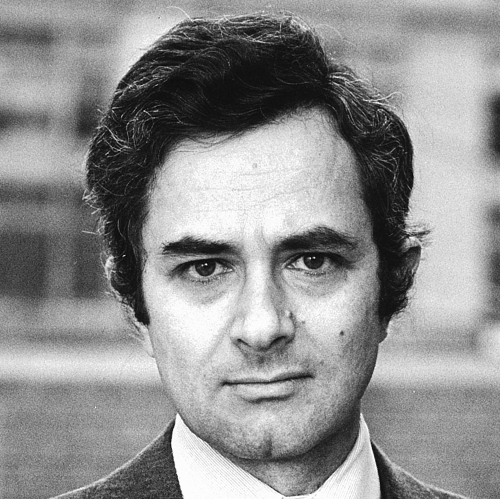
I should not really object to dying if it were not followed by death.
Art is the final cunning of the human soul which would rather do anything than face the gods.
I will follow the good side right to the fire, but not into it if I can help it.
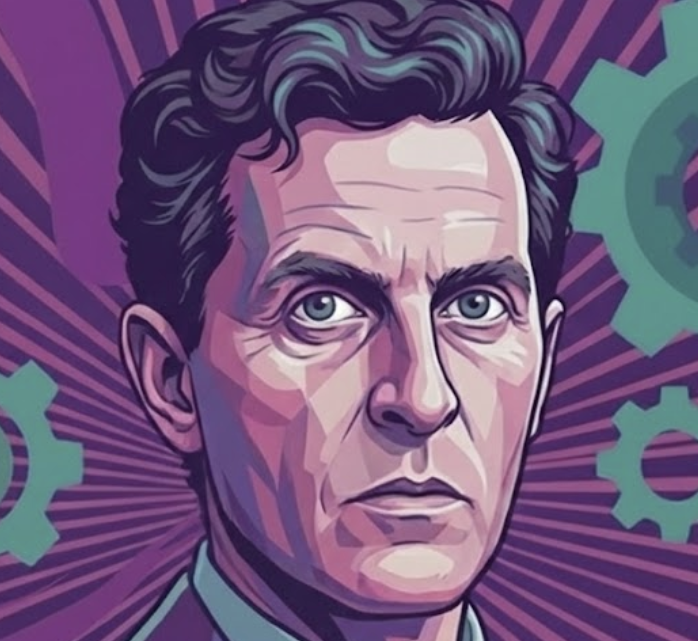
Freud's fanciful pseudo-explanations (precisely because they are brilliant) perform a disservice. (Now any ass has these pictures available to use in "explaining" symptoms of an illness).
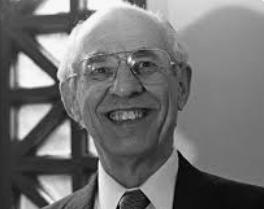
It was Rudolf Carnap's dream for the last three decades of his life to show that science proceeds by a formal syntactic method; today no one to my knowledge holds out any hope for that project.
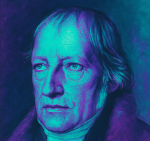
Aims, principles, &c., have a place in our thoughts, in our subjective design only; but not yet in the sphere of reality. That which exists for itself only, is a possibility, a potentiality; but has not yet emerged into Existence. A second element must be introduced in order to produce actuality - viz. actuation, realization; and whose motive power is the Will - the activity of man in the widest sense.
The Age of Writing has passed. We must invent a new metaphor, restructure our thoughts and feelings.
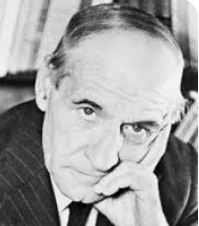
The nineteenth century, utilitarian throughout, set up a utilitarian interpretation of the phenomenon of life which has come down to us and may still be considered as the commonplace of everyday thinking. ... An innate blindness seems to have closed the eyes of this epoch to all but those facts which show life as a phenomenon of utility.
Eros and depression are opposites.
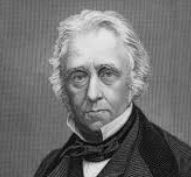
I believe that the progress of experimental science, the free intercourse of nation with nation, the unrestricted influx of commodities from countries where they are cheap, and the unrestricted efflux of labour towards countries where it is dear, will soon produce, nay, I believe that they are beginning to produce, a great and most blessed social revolution.
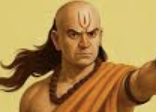
Whoever imposes severe punishment becomes repulsive to the people; while he who awards mild punishment becomes contemptible. But whoever imposes punishment as deserved becomes respectable. For punishment when awarded with due consideration, makes the people devoted to righteousness and to works productive of wealth and enjoyment; while punishment, when ill-awarded under the influence of greed and anger or owing to ignorance, excites fury even among hermits and ascetics dwelling in forests, not to speak of householders.
Any fool can make a ruleAnd every fool will mind it.
And what is it in us that is mellowed by civilization? All it does, I'd say, is to develop in man a capacity to feel a greater variety of sensations. And nothing, absolutely nothing else. And through this development, man will yet learn how to enjoy bloodshed. Why, it has already happened....Civilization has made man, if not always more bloodthirsty, at least more viciously, more horribly bloodthirsty.

A mystic bond of brotherhood makes all men one.
CivilSimian.com created by AxiomaticPanic, CivilSimian, Kalokagathia