


1 month 1 week ago
Ads represent the main channel of intellectual and artistic effort in the modern world.
▼
Source
source
Commonweal, Vol. 58 (1953), p. 557

3 months 1 week ago
It is for the sake of order that I seduced Clytemnestra, for the sake of order that I killed my king. I wanted for order to rule and that it rule through me. I have lived without desire, without love, without hope: I made order. Oh! terrible and divine passion!
▼
Source
source
Aegistheus, Act 2

4 months 1 week ago
For man to become successful, for man to establish himself as the ruler of the planet, it was necessary for him to use his brain as something more than a device to make the daily routine of getting food and evading enemies a little more efficient. Man had to learn to control his environment.

3 months 2 days ago
Good breeding in cattle depends on physical health, but in men on a well-formed character.
▼
Source
source
Freeman (1948), p. 151

3 months 2 weeks ago
Even from their infancy we frame them to the sports of love: their instruction, behavior, attire, grace, learning and all their words azimuth only at love, respects only affection. Their nurses and their keepers imprint no other thing in them.

3 months 1 week ago
If a person is stupid, we excuse him by saying that he cannot help it; but if we attempted to excuse in precisely the same way the person who is bad, we should be laughed at.
▼
Source
source
E. Payne, trans., vol. 2, p. 230

4 months 1 week ago
Art is the activity that exalts and denies simultaneously. "No artist tolerates reality," says Nietzsche.

4 months 2 weeks ago
Socialism itself can hope to exist only for brief periods here and there, and then only through the exercise of the extremest terrorism. For this reason it is secretly preparing itself for rule through fear and is driving the word 'justice' into the heads of the half-educated masses like a nail so as to rob them of their reason... and to create in them a good conscience for the evil game they are to play.
2 days ago
Philosophy is a hypothetical interpretation of the unknown (as in metaphysics), or of the inexactly known (as in ethics or political philosophy); it is the front trench in the siege of truth.
1 month 2 weeks ago
It was Rudolf Carnap's dream for the last three decades of his life to show that science proceeds by a formal syntactic method; today no one to my knowledge holds out any hope for that project.
▼
Source
source
Hilary Putnam, in: James Conant, Urszula M. Zeglen (2012) Hilary Putnam: Pragmatism and Realism. p. 14

2 months 1 week ago
The ideal of Morality has no more dangerous rival than the ideal of highest Strength, of most powerful life; which also has been named (very falsely as it was there meant) the ideal of poetic greatness. It is the maximum of the savage; and has, in these times, gained, precisely among the greatest weaklings, very many proselytes. By this ideal, man becomes a Beast-Spirit, a Mixture; whose brutal wit has, for weaklings, a brutal power of attraction.
2 days ago
Great organizers, as much as inevitable slaves, tend to stoic moods: it is difficult to be either master or servant if one is sensitive.

3 months 1 week ago
Every great study is not only an end in itself, but also a means of creating and sustaining a lofty habit of mind.
▼
Source
source
Ch. 4: The Study of Mathematics
3 months 1 week ago
Listen to me: a family man is never a real family man. An assassin is never entirely assassin. They play a role, you understand. While a dead man, he is really dead. To be or not to be, right?
▼
Source
source
Hugo, Act 4, sc. 6

2 months 1 week ago
...the relatively unconscious man driven by his natural impulses because, imprisoned in his familiar world, he clings to the commonplace, the obvious, the probable, the collectively valid, using for his motto: 'Thinking is difficult. Therefore, let the herd pronounce judgement.'
▼
Source
source
Frequently misquoted as "Thinking is difficult, that's why most people judge" and close variants. Flying Saucers: A Modern Myth of Things Seen in the Sky. (1959), C.G. Jung, R.F.C. Hull (translator) (Princeton Press, 1979, ISBN 9780691018225
1 month 4 weeks ago
Surprisingly, Berdyaev was able to write, lecture and publish for five years after the October Revolution of 1917. He was once detained and interviewed by the fearsome head of the Cheka, Felix Dzerzhinsky. Although he was released, the Bolsheviks gradually realized that Berdyaev was unassimilable to their cause and gave him a choice, along with a group of other intellectuals, of exile or execution. Reluctantly, Berdyaev chose exile to Berlin. He was never again to return to Russia.
▼
Source
source
Richard Schain, in In Love with Eternity : Philosophical Essays and Fragments (2005), Ch. 7 : Nikolai Alexandrovich Berdyaev - A Champion of the Spirit, p. 44
1 month 5 days ago
The culture of a civilization is the art and literature through which it rises to consciousness of itself and defines its vision of the world.
▼
Source
source
"What is Culture?" (p. 2)

3 days ago
Democracy is, by the nature of it, a self-canceling business; and it gives in the long run a net result of zero.
▼
Source
source
Ch. 6, Laissez-Faire.

3 months 2 weeks ago
This adoration, too, was not the same as the worship of God. In my opinion they did not yet recognize him as God, but they acted in keeping with the custom mentioned in Scripture, according to which Kings and important people were worshiped; this did not mean more than falling down before them at their feet and honoring them.
▼
Source
source
Sermon on The Gospel for the Festival of the Epiphany, 1522. Luther's Works, American Ed., Hans J. Hillerbrand, Helmut T. Lehmann eds., Philadelphia, Concordia Publishing House/Fortress Press, 1974, ISBN 0800603524 (Sermons II), vol. 52:198
3 months 3 weeks ago
Who is not tempted by attractive and wide-awake children to join their sports, and crawl on all fours with them, and talk baby talk with them?
▼
Source
source
Book II, ch. 24, 18
6 days ago
One need only open the eyes to see that the conquests of industry which have enriched so many practical men would never have seen the light, if these practical men alone had existed and if they had not been preceded by unselfish devotees who died poor, who never thought of utility, and yet had a guide far other than caprice.As Mach says, these devotees have spared their successors the trouble of thinking.
▼
Source
source
Author's Essay Prefatory to the Translation: "The Choice of Facts," p.4
3 months 1 week ago
Kant [...] stated that he had "found it necessary to deny knowledge [...] to make room for faith," but all he had "denied" was knowledge of things that are unknowable, and he had not made room for faith but for thought.
▼
Source
source
p. 63

3 months 1 week ago
One of the ideas I had discussed in The Poverty of Historicism was the influence of a prediction upon the event predicted. I had called this the "Oedipus effect", because the oracle played a most important role in the sequence of events which led to the fulfilment of its prophecy. ... For a time I thought that the existence of the Oedipus effect distinguished the social from the natural sciences. But in biology, too-even in molecular biology-expectations often play a role in bringing about what has been expected.
▼
Source
source
Page 29

1 week ago
The final thing... the question of the nation, and the role of the nation in liberalism...There would seem to be a tension between liberalism's belief that all human beings enjoy... the same basic set of human rights, and the fact that we are divided up into nation states, in which the authority to enforce those rights is territorially limited. ...This contradiction can be bridged because... there is a liberal form of national identity which is not only possible, but... necessary if a liberal society is going to succeed.
▼
Source
source
23:22

2 months 1 week ago
To have failed in everything, always, out of a love of discouragement.

3 months 2 weeks ago
In our reasonings concerning matter of fact, there are all imaginable degrees of assurance, from the highest certainty to the lowest species of moral evidence. A wise man, therefore, proportions his belief to the evidence.
▼
Source
source
Section X: Of Miracles; Part I. 87

2 months 3 days ago
No human acquisition is stable. Even what appears to us most completely won and consolidated can disappear in a few generations. This thing we call "civilization" - all these physical and moral comforts, all these conveniences, all these shelters, all these virtues and disciplines which have become habit now, on which we count, and which in effect constitute a repertory or system of securities which man made for himself like a raft in the initial shipwreck which living always is - all these securities are insecure securities which in the twinkling of an eye, at the least carelessness, escape from man's hands and vanish like phantoms.
▼
Source
source
p. 25
1 month 2 weeks ago
Quite apart from assiduous efforts to restrict the use of violence as means rather than an end, the actualization of violence as a means can inadvertently become its own end, producing new violence, producing violence anew, reiterating the license, and licensing further violence. Violence does not exhaust itself in the realization of a just end; rather, it renews itself in directions that exceed both deliberate intention and instrumental schemes. In other words, by acting as if the use of violence can be a means to achieve a nonviolent end, one imagines that the practice of violence does not in the act posit violence as its own end. The technē is undermined by the praxis, and the use of violence only makes the world into a more violent place, by bringing more violence into the world.
▼
Source
source
p. 20
3 months 1 week ago
There is no logical impossibility in the hypothesis that the world sprang into being five minutes ago, exactly as it then was, with a population that "remembered" a wholly unreal past. There is no logically necessary connection between events at different times; therefore nothing that is happening now or will happen in the future can disprove the hypothesis that the world began five minutes ago.
▼
Source
source
The Analysis of Mind (1921), Lecture IX: Memory, p. 159
1 week ago
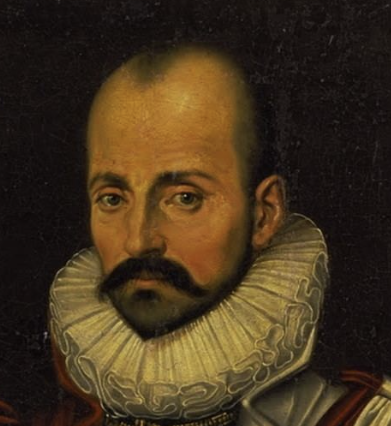
Men accept servility in order to acquire wealth; as if they could acquire anything of their own when they cannot even assert that they belong to themselves.
▼
Source
source
Part 3

3 weeks ago
Human intuitions are systematically biased. Evolutionary psychology explains how our moral intuitions and the rationalisations they spawn have been shaped by millennia of natural selection to maximise the inclusive fitness of our genes, not to track the welfare of other sentient beings impartially conceived. Many human cultures have found nothing intuitively wrong with aggressive warfare, slavery, wife-beating, infanticide or female genital mutilation. Ultimately, folk morality is a doomed enterprise as hopeless as folk physics. A mature posthuman ethics, I'd argue, must be committed to the well-being of all sentient life; and mature posthuman technology offers the means to deliver that commitment.
▼
Source
source
"Post-Darwinian Ethics?", H+ Magazine, May 2009

3 months 1 week ago
People are deeply imbedded in philosophical, i.e., grammatical confusions. And to free them presupposes pulling them out of the immensely manifold connections they are caught up in.
▼
Source
source
Ch. 9 : Philosophy, p. 185

1 month 3 weeks ago
In fact, the real problem with the thesis of A Genealogy of Morals is that the noble and the aristocrat are just as likely to be stupid as the plebeian. I had noted in my teens that major writers are usually those who have had to struggle against the odds -- to "pull their cart out of the mud," as I put it -- while writers who have had an easy start in life are usually second rate -- or at least, not quite first-rate. Dickens, Balzac, Dostoevsky, Shaw, H. G. Wells, are examples of the first kind; in the twentieth century, John Galsworthy, Graham Greene, Evelyn Waugh, and Samuel Beckett are examples of the second kind. They are far from being mediocre writers; yet they tend to be tinged with a certain pessimism that arises from never having achieved a certain resistance against problems.
▼
Source
source
p. 188
1 month 1 week ago
Invention is the mother of all necessities.

1 month 3 weeks ago
It is true that parents today are learning to enhance the physical qualities of their children. But their minds and characters they cannot mould. The antiquated system of education and our perverse social influences unfortunately do that. In view of the numerous misfit and marred children these institutions have created, I am quite content not to have contributed any of my own.
3 months 1 week ago
Language is a part of our organism and no less complicated than it.
▼
Source
source
Journal entry (14 May 1915), p. 48
3 weeks ago
[I]n the wake of the growth of the animal-rights movement, there has recently arisen a hitherto unfelt need to demonise and demean our non-human victims - and those who try to help them - now that our previously well-nigh unquestioned right to kill and exploit them is being challenged. Bloodsports enthusiasts, for instance, currently spend a lot of time cataloguing the alleged depredations of our victims on the environment. Recreational animal-killers go to extraordinarily lengths to avoid admitting that they themselves enjoy hunting and killing other creatures for fun. But then until a few years ago such rationalisations seemed scarcely called for. Selfish DNA had honed our intuitions so that the most agonising bloodshed seemed simply "natural". "The Post-Darwinian Transition", The Animal Rights Library, 1996

3 months 1 week ago
Political Economy regards the proletarian ... like a horse, he must receive enough to enable him to work. It does not consider him, during the time when he is not working, as a human being. It leaves this to criminal law, doctors, religion, statistical tables, politics, and the beadle. ... (1) What is the meaning, in the development of mankind, of this reduction of the greater part of mankind to abstract labor? (2) What mistakes are made by the piecemeal reformers, who either want to raise wages and thereby improve the situation of the working class, or - like Proudhon - see equality of wages as the goal of social revolution?.
▼
Source
source
First Manuscript - Wages of Labour, p. 6.

3 months 4 weeks ago
Since love grows within you, so beauty grows. For love is the beauty of the soul.

1 month 3 weeks ago
Do we write books so that they shall merely be read? Don't we also write them for employment in the household? For one that is read from start to finish, thousands are leafed through, other thousands lie motionless, others are jammed against mouseholes, thrown at rats, others are stood on, sat on, drummed on, have gingerbread baked on them or are used to light pipes.
▼
Source
source
E 65
1 month 3 weeks ago
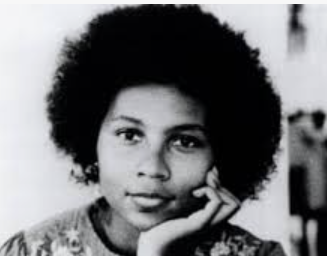
The crisis facing men is not the crisis of masculinity, it is the crisis of patriarchal masculinity. Until we make this distinction clear, men will continue to fear that any critique of patriarchy represents a threat.
▼
Source
source
The Will To Change: Men, Masculinity, and Love
4 months 1 week ago
At this point of his effort man stands face to face with the irrational. He feels within him his longing for happiness and for reason. The absurd is born of this confrontation between the human need and the unreasonable silence of the world. This must not be forgotten. This must be clung to because the whole consequence of a life can depend on it. The irrational, the human nostalgia, and the absurd that is born of their encounter, these are the three characters in the drama that must necessarily end with all the logic of which an existence is capable.
2 months 4 weeks ago
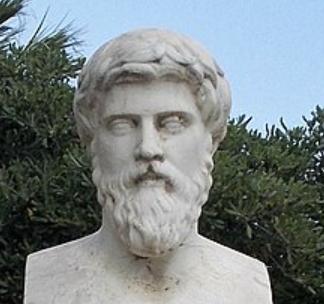
Rest gives relish to labour.
▼
Source
source
Of the Training of Children, 9 (Tr. Babbitt)

2 months 2 weeks ago
A constellation of the most pedantic, obstinate ignorance and presumption, mixed with a kind of rustic incivility, which would try the patience of Job.
▼
Source
source
Declaration about the scholars of England, particularly those of Oxford
3 months 2 weeks ago
They who have compared our lives to a dream were, perhaps, more in the right than they were aware of. When we dream, the soul lives, works, and exercises all its faculties, neither more nor less than when awake; but more largely and obscurely, yet not so much, neither, that the difference should be as great as betwixt night and the meridian brightness of the sun, but as betwixt night and shade; there she sleeps, here she slumbers; but, whether more or less, 'tis still dark, and Cimmerian darkness. We wake sleeping, and sleep waking.
▼
Source
source
tr. Cotton, rev. W. Carew Hazlitt, 1877

3 months 1 week ago
I hate the world and almost all the people in it. I hate the Labour Congress and the journalists who send men to be slaughtered, and the fathers who feel a smug pride when their sons are killed, and even the pacifists who keep saying human nature is essentially good, in spite of all the daily proofs to the contrary. I hate the planet and the human race - I am ashamed to belong to such a species.
▼
Source
source
Letter to Colette, December 28, 1916
3 months 1 week ago
A great deal of capital, which appears to-day in the United States without any certificate of birth, was yesterday, in England, the capitalised blood of children.
▼
Source
source
Vol. I, Ch. 31, pg. 829.
2 months 4 days ago
Give an inch, he'll take an ell.
▼
Source
source
Liberty and Necessity (no. 111)
1 week 2 days ago
Ideals are imaginative understanding of that which is desirable in that which is possible.
▼
Source
source
Ch. XII: "The Business of the Great Society", §9, p. 259
CivilSimian.com created by AxiomaticPanic, CivilSimian, Kalokagathia