


3 months 1 week ago
The idea that the poor should have leisure has always been shocking to the rich.
▼
Source
source
Ch. 1: In Praise of Idleness

4 months 1 week ago
Where any answer is possible, all answers are meaningless.
2 months 1 week ago
The best thing about the sciences is their philosophical ingredient, like life for an organic body. If one dephilosophizes the sciences, what remains left? Earth, air, and water.
▼
Source
source
Fragment No. 62

3 months 1 week ago
Our condition is like that of the poor wolves: if one of the flock wound himself, or so much as limp, the rest eat him up incontinently. That serene Power interposes the check upon the caprices and officiousness of our wills.

3 months 2 days ago
One who is serious all day will never have a good time, while one who is frivolous all day will never establish a household.
▼
Source
source
Maxim no. 25.

3 months 1 week ago
The difficulty in philosophy is to say no more than we know.
▼
Source
source
p. 45
1 month 4 weeks ago
Creatures inveterately wrong in their inductions have a pathetic but praiseworthy tendency to die before reproducing their kind.
▼
Source
source
"Natural Kinds", in Ontological Relativity and Other Essays (1969), p. 126
4 weeks ago
Missionaries, whether of philosophy or of religion, rarely make rapid way, unless their preachings fall in with the prepossessions of the multitude of shallow thinkers, or can be made to serve as a stalking-horse for the promotion of the practical aims of the still larger multitude, who do not profess to think much, but are quite certain they want a great deal.

3 months 2 weeks ago
It is not titles that make men illustrious, but men who make titles illustrious.
▼
Source
source
Book 3, Ch. 38

1 month 1 week ago
The coverage is the war. If there were no coverage, there'd be no war. Yes, the newsmen and the mediamen around the world are actually the fighters, not the soldiers anymore.

3 months 1 week ago
I am responsible for everything ... except for my very responsibility, for I am not the foundation of my being. Therefore everything takes place as if I were compelled to be responsible. I am abandoned in the world ... in the sense that I find myself suddenly alone and without help, engaged in a world for which I bear the whole responsibility without being able, whatever I do, to tear myself away from this responsibility for an instant.
▼
Source
source
Part 4, Chapter 1, III

1 month 4 weeks ago
School children and students who love God should never say: "For my part I like mathematics"; "I like French"; "I like Greek." They should learn to like all these subjects, because all of them develop that faculty of attention which, directed toward God, is the very substance of prayer.
3 months 2 days ago
When Alexander the Great addressed him with greetings, and asked if he wanted anything, Diogenes replied "Yes, stand a little out of my sunshine."
▼
Source
source
From Plutarch, Alexander, 14. Cf. Diogenes Laërtius, vi. 38, Cicero, Tusculan Disputations, v. 32
2 months 2 days ago
The world is nothing but 'world-as-meaning.'
▼
Source
source
p. xi

1 month 3 weeks ago
The custom of procuring abortions has reached such appalling proportions in America as to be beyond belief... So great is the misery of the working classes that seventeen abortions are committed in every one hundred pregnancies.
▼
Source
source
Mother Earth
3 weeks ago
Cinema is an old whore, like circus and variety, who knows how to give many kinds of pleasure. Besides, you can't teach old fleas new dogs.
▼
Source
source
As quoted in in The Atlantic

1 month 4 weeks ago
It has been said a thousand times and in a thousand books that ancestor-worship is for the most part the source of primitive religions, and it may be strictly said that what most distinguishes man from the other animals is that, in one form or another, he guards his dead and does not give them over to the neglect of teeming mother earth; he is an animal that guards its dead.
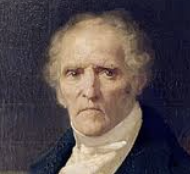
1 week 1 day ago
There is no idea more novel, more surprising, than that of associating three hundred families of different degrees of fortune, knowledge and capacity.
▼
Source
source
The Theory of Social Organization. Harmonian Man: Selected Writings of Charles Fourier, p. 5.

2 weeks 5 days ago
Echoing the Christian faith in free will, humanists hold that human beings are - or may someday become - free to choose their lives. They forget that the self that does the choosing has not itself been chosen.
▼
Source
source
Beyond the Last Thought: Freud's cigars and the long way round to Nirvana (p. 86)
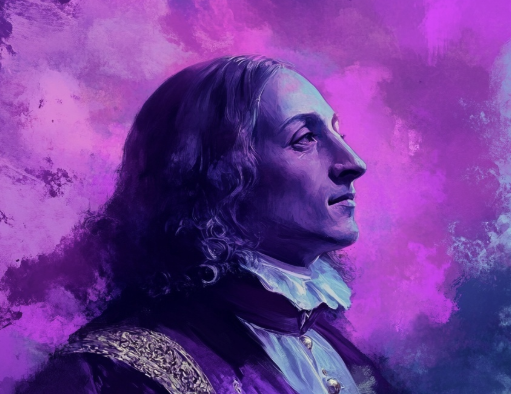
3 months 3 weeks ago
Nothing is more common than good things: the point in question is only to discriminate them; and it is certain that they are all natural and within our reach and even known to all mankind.
2 months 4 days ago
Matters of religion should never be matters of controversy. We neither argue with a lover about his taste, nor condemn him, if we are just, for knowing so human a passion.
▼
Source
source
Ch. VI
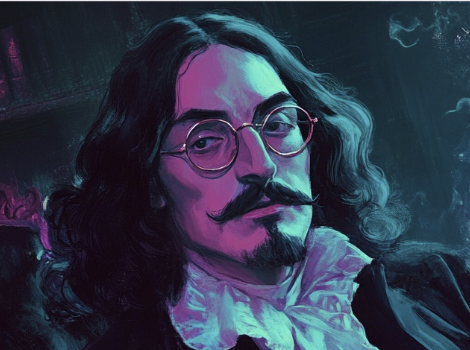
3 months 2 weeks ago
The entire method consists in the order and arrangement of the things to which the mind's eye must turn so that we can discover some truth.
▼
Source
source
Rules for the Direction of the Mind: X.379 As quoted in Clarke, Desmond M. (2006). Descartes : a Biography. Cambridge Press. p. 67. ISBN 978-0-521-82301-2.
3 months 1 week ago
At the age of five years to enter a spinning-cotton or other factory, and from that time forth to sit there daily, first ten, then twelve, and ultimately fourteen hours, performing the same mechanical labour, is to purchase dearly the satisfaction of drawing breath. But this is the fate of millions, and that of millions more is analogous to it.
▼
Source
source
Vol II: "On the Vanity and Suffering of Life", as translated by R. B. Haldane, and J. Kemp in The World as Will and Idea (1886), p. 389

1 month 1 week ago
Everything comes in time to him who knows how to wait.
▼
Source
source
Bk. X, ch. 16
2 months 1 week ago
Life is a disease of the spirit; a working incited by Passion. Rest is peculiar to the spirit.
2 months 1 week ago
The weapon of the Republic is terror, and virtue is its strength.
▼
Source
source
Act I.
2 months 3 days ago
The surrealist thinks he has outstripped the whole of literary history when he has written (here a word that there is no need to write) where others have written "jasmines, swans and fauns." But what he has really done has been simply to bring to light another form of rhetoric which hitherto lay hidden in the latrines.
▼
Source
source
Chapter XI: The Self-Satisfied Age
3 months 1 week ago
Change alone is eternal, perpetual, immortal.
▼
Source
source
Unverified attribution noted in Respectfully Quoted: A Dictionary of Quotations (1993), ed. Suzy Platt, Library of Congress, p. 39;
3 months 1 week ago
The presence of a thought is like the presence of a lover.
3 months 3 weeks ago
All who say the same things do not possess them in the same manner; and hence the incomparable author of the Art of Conversation pauses with so much care to make it understood that we must not judge of the capacity of a man by the excellence of a happy remark that we heard him make. ...let us penetrate, says he, the mind from which it proceeds... it will oftenest be seen that he will be made to disavow it on the spot, and will be drawn very far from this better thought in which he does not believe, to plunge himself into another, quite base and ridiculous.
▼
Source
source
Montaigne, Essais, liv. III, chap. viii.-Faugère

2 months 1 week ago
The real, the unique misfortune: to see the light of day. A disaster which dates back to aggressiveness, to the seed of expansion and rage within origins, to the tendency to the worst which first shook them up.
3 months 1 week ago
A creative economy is the fuel of magnificence.
▼
Source
source
Aristocracy
1 month 4 weeks ago
Just as eunuchs will never know aesthetics as applied to the selection of beautiful women, so neither will pure rationalists ever know ethics, nor will they ever succeed in defining happiness, for happiness is a thing that is lived and felt, not a thing that is reasoned or defined.
1 month 1 week ago
They pass peaceful lives who ignore mine and thine.
▼
Source
source
Maxim 790
2 months 4 weeks ago
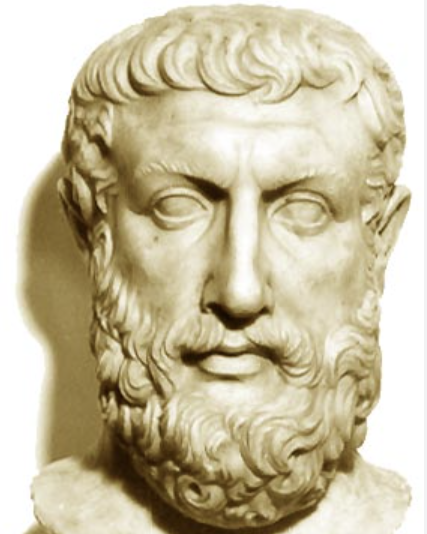
For it is the same thing that can be thought and that can be.
▼
Source
source
Frag. B 3, quoted by Plotinus, Enneads V, i.8
2 weeks 1 day ago
From each as they choose, to each as they are chosen.
▼
Source
source
Ch. 7 : Distributive Justice, Section I, Patterning, p. 160
3 months 1 week ago
Machines are worshipped because they are beautiful and valued because they confer power; they are hated because they are hideous and loathed because they impose slavery.
▼
Source
source
Ch. 6: Machines and the Emotions
2 months 1 week ago
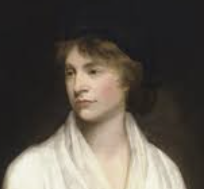
Situation seems to be the mould in which men's characters are formed.
▼
Source
source
Letter 23
2 months 3 days ago
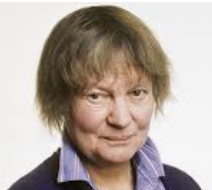
Happiness is a matter of one's most ordinary everyday mode of consciousness being busy and lively and unconcerned with self. To be damned is for one's ordinary everyday mode of consciousness to be unremitting agonising preoccupation with self.
▼
Source
source
The Nice and the Good (1968), ch. 22.

3 months 1 week ago
While we are reading these sentences, this fair modern world seems only a reprint of the Laws of Menu with the gloss of Culluca. Tried by a New England eye, or the mere practical wisdom of modern times, they are the oracles of a race already in its dotage, but held up to the sky, which is the only impartial and incorruptible ordeal, they are of a piece with its depth and serenity, and I am assured that they will have a place and significance as long as there is a sky to test them by.

3 months 2 weeks ago
Observe, observe perpetually.

2 months 1 week ago
That higher and "complete" man is begotten by the "unknown" father and born from Wisdom, and it is he who, in the figure of the puer aeternus-"vultu mutabilis albus et ater"-represents our totality, which transcends consciousness. It was this boy into whom Faust had to change, abandoning his inflated onesidedness which saw the devil only outside. Christ's "Except ye become as little children" is a prefiguration of this, for in them the opposites lie close together; but what is meant is the boy who is born from the maturity of the adult man, and not the unconscious child we would like to remain.
▼
Source
source
Answer to Job, R. Hull, trans. (1984), pp. 157-158

1 month 3 weeks ago
There is a physical, not moral, impossibility of supplying the wants of the intellect in the state of civilisation at which we have arrived. The stimulus, the training, the time, are all three wanting to us; or, in other words, the means and inducements are not there. Look at the poor lives we lead. It is a wonder that we are so good as we are, not that we are so bad. In looking round we are struck with the power of the organisations we see, not with their want of power. Now and then, it is true, we are conscious that there is an inferior organisation, but, in general, just the contrary.

2 months 1 week ago
A great revolution is on the point of being accomplished. It is a revolution not in human affairs, but in man himself.
▼
Source
source
p. 2
3 months 1 week ago
It is a great art to saunter.
▼
Source
source
April 26, 1841

2 months 1 week ago
If they drive God from the earth, we shall shelter Him underground.

2 months 4 days ago
He that is not on my side is against me, and he that does not gather with me scatters.
▼
Source
source
12:30, New World Translation
2 months 4 days ago
Verily I say unto you, That a rich man shall hardly enter into the kingdom of heaven. And again I say unto you, It is easier for a camel to go through the eye of a needle, than for a rich man to enter into the kingdom of God.
▼
Source
source
19:23-24 (KJV)

3 months 2 weeks ago
I shall need only myself to be happy.
▼
Source
source
As quoted in The prophetic voice, 1758-1778 by Lester G. Crocke, p. 148.
CivilSimian.com created by AxiomaticPanic, CivilSimian, Kalokagathia