

2 months 3 weeks ago
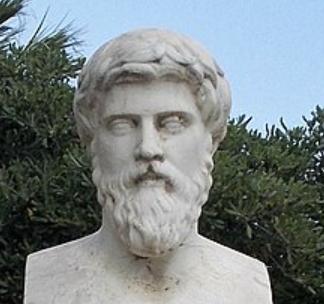
Valour, however unfortunate, commands great respect even from enemies: but the Romans despise cowardice, even though it be prosperous.
▼
Source
source
Aemilius Paulus 26 (Tr. Stewart and Long)
3 weeks 3 days ago
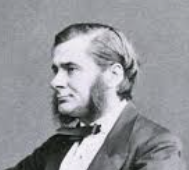
All truth, in the long run, is only common sense clarified.
▼
Source
source
"On the Study of Biology"
1 month 4 days ago
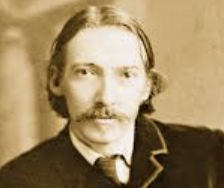
Them that die will be the lucky ones!
▼
Source
source
Ch. 20, Silver's Embassy.

3 months 1 week ago
I resolved from the beginning of my quest that I would not be misled by sentiment and desire into beliefs for which there was no good evidence.
▼
Source
source
Fact and Fiction (1961), Part I, Ch. 6: "The Pursuit of Truth", p. 37

2 months 2 weeks ago
Animals and plants are living effects of Nature; this Nature ... is none other than God in things... Diverse living things represent diverse divinities and diverse powers, which, besides the absolute being they possess, obtain the being communicated to all things according to their capacity and measure. Whence all of God is in all things (although not totally, but in some more abundantly and in others less) ... Think thus, of the sun in the crocus, in the narcissus, in the heliotrope, in the rooster, in the lion.... To the extent that one communicates with Nature, so one ascends to Divinity through Nature.
▼
Source
source
As translated by Arthur Imerti

2 months 4 weeks ago
There are two forms of knowledge, one genuine, one obscure. To the obscure belong all of the following: sight, hearing, smell, taste, feeling. The other form is the genuine, and is quite distinct from this. [And then distinguishing the genuine from the obscure, he continues:] Whenever the obscure [way of knowing] has reached the minimum sensibile of hearing, smell, taste, and touch, and when the investigation must be carried farther into that which is still finer, then arises the genuine way of knowing, which has a finer organ of thought.

3 months 2 weeks ago
As we divided natural philosophy in general into the inquiry of causes, and productions of effects: so that part which concerneth the inquiry of causes we do subdivide according to the received and sound division of causes. The one part, which is physic, inquireth and handleth the material and efficient causes; and the other, which is metaphysic, handleth the formal and final causes.
▼
Source
source
Book VII, 3

3 months 1 week ago
Love is something more stern and splendid than mere kindness.

2 months 1 week ago
The fact disclosed by a survey of the past that majorities have usually been wrong, must not blind us to the complementary fact that majorities have usually not been entirely wrong.
▼
Source
source
Pt. I, The Unknowable; Ch. I, Religion and Science

2 months 1 week ago
It is easy to see that, even in the freedom of early youth, an American girl never quite loses control of herself; she enjoys all permitted pleasures without losing her head about any of them, and her reason never lets the reins go, though it may often seem to let them flap.
▼
Source
source
Book Three, Chapter IX.

2 months 2 weeks ago
None but a Craftsman can judge of a craft.
1 month 3 weeks ago
The smartphone seems to be a playground, but it is a digital panopticon.

3 months 1 week ago
But there is a devil of a difference between barbarians who are fit by nature to be used for anything, and civilized people who apply them selves to everything.
▼
Source
source
Introduction, p. 25.

4 months 5 days ago
Can one be a saint without God?, that's the problem, in fact the only problem, I'm up against today.
2 weeks 4 days ago
A global transition to a cruelty-free vegan diet won't just help non-human animals. The transition will also help malnourished humans who could benefit from the grain currently fed to factory-farmed animals. For factory-farming is not just cruel; it's energy-inefficient. Let's take just one example. Over the past few decades, millions of Ethiopians have died of "food shortages" while Ethiopia grew grain to sell to the West to feed cattle. Western meat-eating habits prop up the price of grain so that poor people in the developing world can't afford to buy it. In consequence, they starve by the millions.In my work, I explore futuristic, hi-tech solutions to the problem of suffering. But anybody who seriously wants to reduce human and non-human suffering alike should adopt a cruelty-free vegan lifestyle today.
▼
Source
source
"A World Without Suffering?", Instituto Humanitas Unisinos, Jan. 2011

1 month 1 week ago
The assertion that art may be good art and at the same time incomprehensible to a great number of people is extremely unjust, and its consequences are ruinous to art itself...it is the same as saying some kind of food is good but most people can't eat it.
3 months 1 week ago
Consciousness, then, does not appear to itself chopped up in bits ... A 'river' or a 'stream' are the metaphors by which it is most naturally described. In talking of it hereafter, let us call it the stream of thought, of consciousness, or of subjective life.
▼
Source
source
Ch. 9

3 months 4 days ago
It is clear that the causal nexus is not a nexus at all.
▼
Source
source
Journal entry (12 October 1916), p. 84e

3 months 3 weeks ago
I am not my soul.
▼
Source
source
Super I ad Corinthios, 15.2

3 months 1 week ago
He wanted to assume his entire condition, to carry the world on his shoulders and to become, in defiance of all, what all have made of him.
▼
Source
source
p. 384
2 months 1 week ago
Power acquired by violence is only a usurpation, and lasts only as long as the force of him who commands prevails over that of those who obey.
▼
Source
source
Article on Political Authority, Vol. 1

3 months 1 week ago
The universe is composed of matter, and, as a system, is sustained by motion. Motion is not a property of matter, and without this motion the solar system could not exist. Were motion a property of matter, that undiscovered and undiscoverable thing, called perpetual motion, would establish itself. It is because motion is not a property of matter, that perpetual motion is an impossibility in the hand of every being, but that of the Creator of motion. When the pretenders to Atheism can produce perpetual motion, and not till then, they may expect to be credited.
▼
Source
source
A Discourse, &c. &c.
2 months 4 days ago
To ignore the true God is in fact only half an evil; atheism is worth more than the piety bestowed on mythical gods.
▼
Source
source
A Religion for Adults

2 months 1 day ago
Follow me, and I will make you fishers of men.
▼
Source
source
4:19 (KJV) Said to Peter and Andrew
2 months 6 days ago
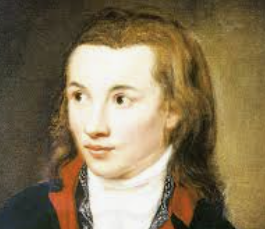
Surely this voice meant our Teacher; for it is he that can collect the indications which lie scattered on all sides. A singular light kindles in his looks, when at length the high Rune lies before us, and he watches in our eyes whether the star has yet risen upon us, which is to make the Figure visible and intelligible.
2 months 2 weeks ago
The Divine light is always in man, presenting itself to the senses and to the comprehension, but man rejects it.
▼
Source
source
As quoted in Life and Teachings of Giordano Bruno : Philosopher, Martyr, Mystic 1548 - 1600 (1913) by Coulson Turnbull
3 months 3 weeks ago
The reason, however, why the philosopher may be likened to the poet is this: both are concerned with the marvellous.
▼
Source
source
Commentary on the Metaphysics (c. 1270-1272), 1, 3; quoted in Josef Pieper, Leisure, the Basis of Culture (New York, 1952), p. 88
3 months 3 days ago
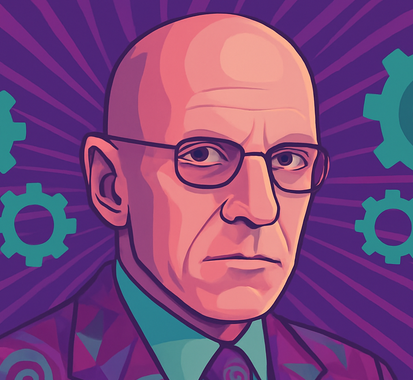
There has been an inversion in the hierarchy of the two principles of antiquity, "Take care of yourself" and "Know yourself." In Greco-Roman culture, knowledge of oneself appeared as the consequence of the care of the self. In the modern world, knowledge of oneself constitutes the fundamental principle.
▼
Source
source
"Technologies of the Self," Ethics, Subjectivity and Truth (1994), p. 228

3 months 2 weeks ago
Like rowers, who advance backward.
▼
Source
source
Book III, Ch. 1. Of Profit and Honesty
2 months 1 week ago
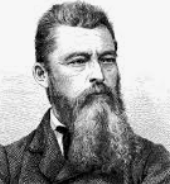
Though I myself am an atheist, I openly profess religion in the sense just mentioned, that is, a nature religion. I hate the idealism that wrenches man out of nature; I am not ashamed of my dependency on nature; I openly confess that the workings of nature affect not only my surface, my skin, my body, but also my core, my innermost being, that the air I breathe in bright weather has a salutary effect not only on my lungs but also on my mind, that the light of the sun illumines not only my eyes but also my spirit and my heart. And I do not, like a Christian, believe that such dependency is contrary to my true being or hope to be delivered from it. I know further that I am a finite moral being, that I shall one day cease to be. But I find this very natural and am therefore perfectly reconciled to the thought.
▼
Source
source
Lecture V, R. Manheim, trans. (1967), pp. 35-36
1 month 4 weeks ago
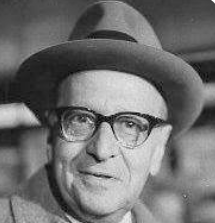
Thought must be judged by something that is not thought, by its effect on production or its impact on social conduct, as art today is being ultimately gauged in every detail by something that is not art, be it box-office or propaganda value.
▼
Source
source
describing the pragmatist view, p. 51.

2 months 5 days ago
I don't need any support, advice, or compassion, because even if I am the most ruinous man, I still feel so powerful, so strong and fierce. For I am the only one that lives without hope.
3 weeks 3 days ago
Only two suppositions seem to be open to us - Either each species of crocodile has been specially created, or it has arisen out of some pre-existing form by the operation of natural causes. Choose your hypothesis; I have chosen mine. I can find no warranty for believing in the distinct creation of a score of successive species of crocodiles in the course of countless ages of time.
3 months 2 weeks ago
The laws of conscience, which we pretend to be derived from nature, proceed from custom.
▼
Source
source
Ch. 22. Of Custom, tr. Cotton, rev. W. Hazlitt, 1842
2 months 5 days ago
There is only this swarm of dying creatures stricken with longevity, all the more hateful in that they are so good at organizing their agony. p. 120, first American edition
▼
Source
source
1970
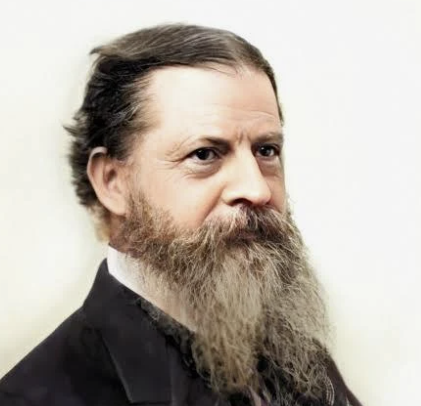
2 months 5 days ago
A pair of statements may be taken conjunctively or disjunctively; for example, "It lightens and it thunders," is conjunctive, "It lightens or it thunders" is disjunctive. Each such individual act of connecting a pair of statements is a new monad for the mathematician.
▼
Source
source
p. 268
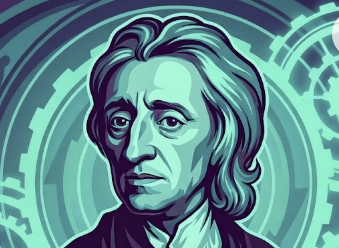
3 months 1 week ago
The scene should be gently open'd, and his entrance made step by step, and the dangers pointed out that attend him from several degrees, tempers, designs, and clubs of men. He should be prepared to be shocked by some, and caress'd by others; warned who are like to oppose, who to mislead, who to undermine him, and who to serve him. He should be instructed how to know and distinguish them; where he should let them see, and when dissemble the knowledge of them and their aims and workings.
▼
Source
source
Sec. 94

Just now
The spoken Word, the written Poem, is said to be an epitome of the man; how much more the done Work. Whatsoever of morality and of intelligence; what of patience, perseverance, faithfulness, of method, insight, ingenuity, energy; in a word, whatsoever of Strength the man had in him will lie written in the Work he does. To work: why, it is to try himself against Nature, and her everlasting unerring Laws; these will tell a true verdict as to the man.

3 months 1 week ago
In every province, the chief occupations, in order of importance, are lovemaking, malicious gossip, and talking nonsense.

3 months 1 week ago
Our conviction that the world is meaningless is due in part to the fact (discussed in a later paragraph) that the philosophy of meaningless lends itself very effectively to furthering the ends of political and erotic passion; in part to a genuine intellectual error - the error of identifying the world of science, a world from which all meaning has deliberately been excluded, with ultimate reality.
▼
Source
source
Ch. 14, p. 309 [2012 reprint]
3 months 1 week ago
Existence precedes and rules essence.
▼
Source
source
Part 4, chapter 1
1 month 4 days ago
The cruelest lies are often told in silence. A man may have sat in a room for hours and not opened his teeth, and yet come out of that room a disloyal friend or a vile calumniator. And how many loves have perished because, from pride, or spite, or diffidence, or that unmanly shame which withholds a man from daring to betray emotion, a lover, at the critical point of the relation, has but hung his head and held his tongue?
▼
Source
source
Truth of Intercourse.
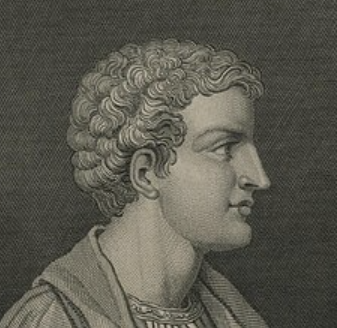
2 months 4 weeks ago
Ah, Postumus! they fleet away, our years, nor piety one hour can win from wrinkles and decay, and Death's indomitable power.
▼
Source
source
Book II, ode xiv, line 1 (trans. John Conington)
3 months 1 week ago
The external embodiment of an act is composed of many parts, and may be regarded as capable of being divided into an infinite number of particulars. An act may be looked on as in the first instance coming into contact with only one of these particulars. But the truth of the particular is the universal. A definite act is not confined in its content to one isolated point of the varied external world, but is universal, including these varied relations within itself. The purpose, which is the product of thought and embraces not the particular only but also the universal side, is intention.
▼
Source
source
Georg Wilhelm Friedrich Hegel, Philosophy of Right translated by SW Dyde Queen's University Canada 1896 p. 114-115
2 months 5 days ago
I have never taken myself for a being. A non-citizen, a marginal type, a nothing who exists only by the excess, by the superabundance of his nothingness.
2 months 6 days ago
The poem of the understanding is philosophy.
▼
Source
source
"Logological Fragments," Philosophical Writings, M. Stolijar, trans. (Albany: 1997) #24
3 months 1 week ago
To understand the actual world as it is, not as we should wish it to be, is the beginning of wisdom.
2 months 2 weeks ago
Water is the first principle of everything.
▼
Source
source
As quoted in Aristotle, Metaphysics, 983b
2 months 2 weeks ago
Holding fast to these things, you will know the worlds of gods and mortals which permeates and governs everything. And you will know, as is right, nature similar in all respects, so that you will neither entertain unreasonable hopes nor be neglectful of anything.
▼
Source
source
As quoted in Divine Harmony: The Life and Teachings of Pythagoras by John Strohmeier and Peter Westbrook.

3 months 4 weeks ago
To rank the effort above the prize may be called love.
CivilSimian.com created by AxiomaticPanic, CivilSimian, Kalokagathia