

4 months 4 days ago
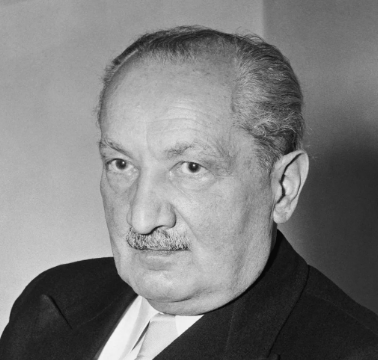
The most thought provoking thing in our thought provoking time is that we are still not thinking.
▼
Source
source
What is Called Thinking? (1951-1952), as translated by Fred D. Wieck and J. Glenn Gray

1 month 2 days ago
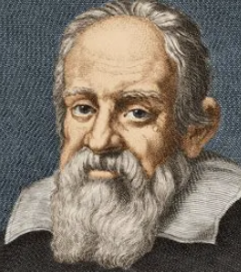
We seek not what God could have done but what He has done.... God could have caused birds to fly with bones of solid gold, with veins full of quicksilver, with flesh heavier than lead and very small and heavy wings, so as to better show His power ... but He wanted to make their bones, flesh and feathers very light ... to teach us that He likes simplicity and ease.
▼
Source
source
Notes in a copy of Jean-Baptiste Morin's "Famous and ancient problems of the earth's motion or rest, yet to be solved" (published 1631).
1 month 3 weeks ago
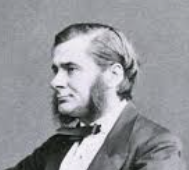
Let us have "sweet girl graduates" by all means. They will be none the less sweet for a little wisdom; and the "golden hair" will not curl less gracefully outside the head by reason of there being brains within.
▼
Source
source
Emancipation - Black and White
3 months ago
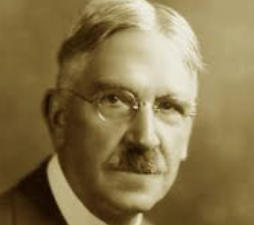
The artist in realizing his own individuality reveals potentialities hitherto unrealized. The revelation is the inspiration of other individuals to make the potentialities real, for it is not sheer revolt against things as they are which stirs human endeavor to its depth, but vision of what might be and is not. Subordination of the artists to any special cause no matter how worthy does violence not only to the artist but to the living source of a new and better future.
2 weeks 5 days ago
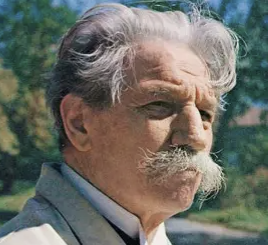
Not less strong than the will to truth must be the will to sincerity. Only an age, which can show the courage of sincerity, can possess truth, which works as a spiritual force within it.
2 months 1 week ago
If every strategy today is that of mental terror and of deterrence tied to the suspension and the eternal simulation of catastrophe, then the only means of mitigating this scenario would be to make the catastrophe arrive, to produce or to reproduce a real catastrophe. To which Nature is at times given: in its inspired moments, it is God who through his cataclysms unknots the equilibrium of terror in which humans are imprisoned. Closer to us, this is what terrorism is occupied with as well: making real, palpable violence surface in opposition to the invisible violence of security. Besides, therein lies terrorism's ambiguity.
▼
Source
source
"The China Syndrome," p. 58

4 months 1 week ago
The country that is more developed industrially only shows, to the less developed, the image of its own future.
▼
Source
source
Author's prefaces to the First Edition.

3 months 4 days ago
I'd rather offer my life as a sacrifice than be necessary to anything.

3 months 4 weeks ago
No power and no treasure can outweigh the extension of our knowledge.
▼
Source
source
Durant (1939), Ch. XVI, §II, p. 354; citing J. Owen, Evenings with the Skeptics, London, 1881, vol. 1, p. 149.

4 months 4 days ago
Don't get involved in partial problems, but always take flight to where there is a free view over the whole single great problem.

4 weeks 1 day ago
Had there not been a natural goodness and indestructible force in my father, I see not how be could have bodied himself forth from these mean impediments. I suppose good precepts were not wanting. There was the Bible to read. Old John Orr, the schoolmaster, used from time to time to lodge with them; be was religious and enthusiastic (though in practice irregular with drink). In my grandfather, also, there seems to have been a certain geniality; for instance, he and a neighbor, Thomas Hogg, read "Anson's Voyages;" also tho "Arabian Nights," for which latter my father, armed with zealous conviction, scrupled not to censure them openly. By one means and another, at an early age he had acquired principles, lights that not only flickered, but shone steadily to guide his way.
2 months 6 days ago
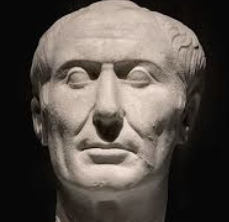
Too much straightforwardness is foolish against a shameless person.
▼
Source
source
Maxim 123
5 months 6 days ago
Earth governments in moments of stress are not famous for being reasonable.

5 days ago
Live as on a mountain. ...Let men see, let them know a real man who lives according to nature. If they cannot endure him, let them kill him. For that is better than to live thus.
▼
Source
source
X, 15

4 months 1 week ago
I remember the very place in Hyde Park where, in my fourteenth year, on the eve of leaving my father's house for a long absence, he told me that I should find, as I got acquainted with new people, that I had been taught many things which youths of my age did not commonly know; and that many persons would be disposed to talk to me of this, and to compliment me upon it. What other things he said on this topic I remember very imperfectly; but he wound up by saying, that whatever I knew more than others, could not be ascribed to any merit in me, but to the very unusual advantage which had fallen to my lot.
▼
Source
source
(p. 34)

4 months 2 weeks ago
The world is but a perpetual see-saw.
4 months 1 week ago
Mark what 'tis his mind aims at in the question, and not what words he expresses it in: and when you have informed and satisfied him in that, you shall see how his thoughts will enlarge themselves, and how by fit answers he may be led on farther than perhaps you could have imagine. For knowledge is grateful to the understanding, as light to the eyes.
▼
Source
source
Sec. 118
2 months 2 weeks ago
The physicist who states a law of nature with the aid of a mathematical formula is abstracting a real feature of a real material world, even if he has to speak of numbers, vectors, tensors, state-functions, or whatever to make the abstraction.
▼
Source
source
"What is Mathematical Truth?"
1 month 1 day ago
And now the sagacious reader, who is capable of reading into these lines what does not stand written in them, but is nevertheless implied, will be able to form some conception of the serious feelings with which I then set foot in Emmendingen.
▼
Source
source
Autobiography: Truth and Poetry Book xviii. London 1884 p. 115 books.google.de

3 months 1 week ago
Strange incongruities must ever perplex those, who confound the unhappiness of civil dissensions with the crime of treason.
4 weeks ago
It might have been supposed that the building of 30,000 miles of railways would have brought a measure of prosperity to India. But these railways were built not for India but for England; not for the benefit of the Hindu, but for the purposes of the British army and British trade... The railroads are entirely in European hands, and the Government refuse to appoint even one Hindu to the Railway Board. The railways lose money year after year, and are helped by the Government out of the revenues of the people. All the loses are borne by the people, all the gains are gathered by the trader.
6 days ago
The dyad gets its name from passing through or asunder; for the dyad is the first to have separated itself from the monad, whence also it is called "daring." For when the monad manifests unification, the dyad steals in and manifests separation.
▼
Source
source
On the Dyad

4 months 1 week ago
It is normal to hate what we fear, and it happens frequently, though not always, that we fear what we hate. I think it may be taken as the rule among primitive men, that they both fear and hate whatever is unfamiliar. They have their own herd, originally a very small one. And within one herd, all are friends, unless there is some special ground of enmity. Other herds are potential or actual enemies; a single member of one of them who strays by accident will be killed. An alien herd as a whole will be avoided or fought according to circumstances. It is this primitive mechanism which still controls our instinctive reaction to foreign nations. The completely untravelled person will view all foreigners as the savage regards a member of another herd. But the man who has travelled, or who has studied international politics, will have discovered that, if his herd is to prosper, it must, to some degree, become amalgamated with other herds.

4 months 1 week ago
A man fits out a ship at a great expense and sends it to the West Indies with a crew of men and boys, and after six months or a year, it comes back with a load of pine-apples; now, if no more gets accomplished than the speculator commonly aims at, if it simply turns out what is called a successful venture, I am less interested in this expedition than in some child's first excursions a-huckleberrying, in which it is introduced into a new world, experiences a new development, though it brings home only a gill of berries in its basket.

2 months 1 week ago
The most important person is the one you are with in this moment.
▼
Source
source
p. 206
4 months 1 week ago
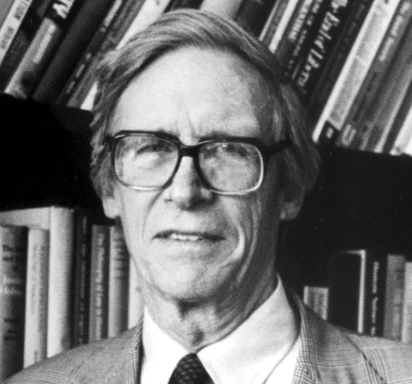
The intolerant can be viewed as free-riders, as persons who seek the advantages of just institutions while not doing their share to uphold them.
▼
Source
source
Chapter VI, Section 59, pg. 388

3 weeks 2 days ago
I cannot help believing that Mucius was all the more lucky because he manipulated the flames as calmly as if he were holding out his hand to the manipulator. He had wiped out all his previous mistakes; he finished the war unarmed and maimed; and with that stump of a hand he conquered two kings.
3 months 1 week ago
Patriotism is an ephemeral motive that scarcely ever outlasts the particular threat to society that aroused it.

4 months 2 weeks ago
The true Gospel has it that we are justified by faith alone, without the deeds of the Law.
▼
Source
source
Chapter 2

4 months 1 week ago
The doctrine of the Second Coming teaches us that we do not and cannot know when the world drama will end. The curtain may be rung down at any moment: say, before you have finished reading this paragraph.
4 weeks 1 day ago
He who takes not counsel of the Unseen and Silent, from him will never come real visibility and speech.
▼
Source
source
Bk. III, ch. 11.
3 months 3 weeks ago
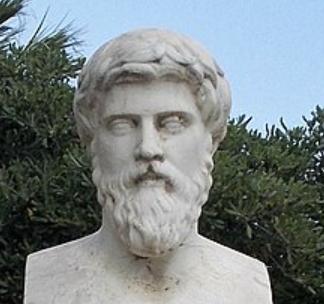
After the battle in Pharsalia, when Pompey was fled, one Nonius said they had seven eagles left still, and advised to try what they would do. "Your advice," said Cicero, "were good if we were to fight jackdaws."
▼
Source
source
Cicero

2 months 3 weeks ago
The vitality of the ordinary members of society is dependent on its Outsiders.
▼
Source
source
Chapter Three, The Romantic Outsider
3 months 1 week ago
Nor is prescription of government formed upon blind unmeaning prejudices-for man is a most unwise, and a most wise, being. The individual is foolish. The multitude, for the moment, is foolish, when they act without deliberation; but the species is wise, and when time is given to it, as a species it almost always acts right.
▼
Source
source
Speech in the House of Commons against William Pitt's motion for parliamentary reform (7 May 1782)

4 months 1 week ago
A thing is important if anyone think it important.
▼
Source
source
Ch. 28, Note 35
3 months 4 weeks ago
A life without a holiday is like a long journey without an inn to rest at.

3 months 1 day ago
Wherefore by their fruits ye shall know them.
▼
Source
source
Matthew 7:20 (KJV)

3 months 1 week ago
I have seen the truth; I have seen and I know that people can be beautiful and happy without losing the power of living on earth. I will not and cannot believe that evil is the normal condition of mankind. And it is just this faith of mine that they laugh at. But how can I help believing it? I have seen the truth - it is not as though I had invented it with my mind, I have seen it, seen it, and the living image of it has filled my soul for ever. I have seen it in such full perfection that I cannot believe that it is impossible for people to have it.
3 months 1 day ago
I thank thee, O Father, Lord of heaven and earth, because thou hast hid these things from the wise and prudent, and hast revealed them unto babes. Even so, Father: for so it seemed good in thy sight. All things are delivered unto me of my Father: and no man knoweth the Son, but the Father; neither knoweth any man the Father, save the Son, and he to whomsoever the Son will reveal him. Come unto me, all ye that labour and are heavy laden, and I will give you rest. Take my yoke upon you, and learn of me; for I am meek and lowly in heart: and ye shall find rest unto your souls. For my yoke is easy, and my burden is light.
▼
Source
source
11:25-30 (KJV)
3 months 4 weeks ago
Coition is a slight attack of apoplexy. For man gushes forth from man, and is separated by being torn apart with a kind of blow.
▼
Source
source
Freeman (1948), p. 150
5 months 6 days ago
By 1204, the only place where the entire body of Greek learning existed, still intact, was Constantinople. As a result of the crusaders' conquest, however, Constantinople was ruthlessly pillaged and destroyed and almost all the great treasures of ancient Greek learning were lost forever. It is because of that sack, for instance, that we have only seven plays left out of the better than one hundred written by Sophocles. The tragedy of 1204 can never be undone and for all of time, only bits and pieces of the marvelous Greek world can be known to us.
4 months 1 week ago
A book can never be anything more than the impression of its author's thoughts [Ein Buch kann nie mehr seyn, als der Abdruck der Gedanken des Verfassers]. The value of these thoughts lies either in the matter about which he has thought, or in the form in which he develops his matter - that is to say, what he has thought about it.
1 month 4 days ago
There was very little that prevented the vandalism of 1793 from suddenly producing a second revolution as marvelous as the first was horrible. The whole human race was approaching its release; the civilized, barbarian, and savage order would have disappeared forever if the Convention, which trampled down all prejudices, had not bowed down before the only one that had to be destroyed, the institution of marriage.
▼
Source
source
Charles Fourier: The Visionary and His World, J. Beecher (1986), p. 304-5
2 months 1 week ago
Generally speaking, espionage offers each spy an opportunity to go crazy in a way he finds irresistible.

4 months 1 week ago
I do not understand! I understand nothing! I cannot understand nor do I want to understand! I want to believe! To Believe!
▼
Source
source
Act 1
3 months 1 week ago
You talk of Paine with more respect than he deserves: He is utterly incapable of comprehending his subject. He has not even a moderate portion of learning of any kind. He has learnd the instrumental part of literature, a style, and a method of disposing his ideas, without having ever made a previous preparation of Study or thinking-for the use of it. ... [Paine] possesses nothing more than what a man whose audacity makes him careless of logical consequences, and his total want of honour and morality makes indifferent as to political consequences, may very easily write. They indeed who seriously write upon a principle of levelling ought to be answerd by the Magistrate-and not by the Speculatist.
▼
Source
source
Letter to William Cusac Smith (22 July 1791), quoted in Alfred Cobban and Robert A. Smith (eds.), The Correspondence of Edmund Burke, Volume VI: July 1789-December 1791 (1967), pp. 303-304
5 months 1 week ago
Tolerance and apathy are the last virtues of a dying society.
3 months 1 week ago
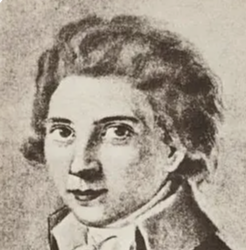
Where there is politics or economics, there is no morality.
▼
Source
source
"Selected Ideas (1799-1800)", Dialogue on Poetry and Literary Aphorisms, Ernst Behler and Roman Struc, trans. (1968) #101
CivilSimian.com created by AxiomaticPanic, CivilSimian, Kalokagathia