


1 month 3 weeks ago
Faith makes us live by showing us that life, although it is dependent upon reason, has its well spring and source of power elsewhere, in something supernatural and miraculous. Cournot the mathematician, a man of singularly well-balanced and scientifically equipped mind has said that it is this tendency towards the supernatural and miraculous that gives life, and that when it is lacking, all the speculations of reason lead to nothing but affliction of the spirit. ...And in truth we wish to live.

2 months 4 weeks ago
It is better to correct your own faults than those of another.
1 month 1 week ago
So-called "realist" photography does not capture the "what is." Instead, it is preoccupied with what should not be, like the reality of suffering for example.

4 months 5 days ago
Those who need myths are indeed poor. Here the gods serve as beds or resting places as the day races across the sky.
1 month 3 weeks ago
Any physical object which by its influence deteriorates its environment, commits suicide.
▼
Source
source
Ch. 6: "The Nineteenth Century", p. 155

3 months 4 weeks ago
The happiness which belongs to man, is that state in which he enjoys as many of the good things, and suffers as few of the evils incident to human nature as possible; passing his days in a smooth course of permanent tranquility. A wise man, though deprived of sight or hearing, may experience happiness in the enjoyment of the good things which yet remain; and when suffering torture, or laboring under some painful disease, can mitigate the anguish by patience, and can enjoy, in his afflictions, the consciousness of his own constancy.
3 months 1 week ago
If a given science accidentally reached its goal, this would by no means stop the workers in the field, who would be driven past their goal by the sheer momentum of the illusion of unlimited progress.
▼
Source
source
p. 55
3 months 3 weeks ago
We should never take pleasure in causing pain to others, even to those who have wronged us, but rather strive to do good to all.
2 months 2 weeks ago
Do not ask who started it.
▼
Source
source
Finish it A Dictionary of Thoughts (1908) by Tryon Edwards, p. 234

3 months 1 week ago
From the comparison of theism and idolatry, we may form some other observations, which will also confirm the vulgar observation that the corruption of the best things gives rise to the worst.
▼
Source
source
Part X - With regard to courage or abasement

3 months 4 weeks ago
Virtue (or the man of virtue) is not left to stand alone. He who practices it will have neighbors.
2 months 5 days ago
One of the most difficult tasks men can perform, however much others may despise it, is the invention of good games and it cannot be done by men out of touch with their instinctive selves.
▼
Source
source
Jung and the Story of Our Time, Laurens van der Post

3 months 1 week ago
My argument against God was that the universe seemed so cruel and unjust. But how had I got this idea of just and unjust? A man does not call a line crooked unless he has some idea of a straight line. What was I comparing this universe with when I called it unjust?
▼
Source
source
Book II, Chapter 1, "The Rival Conceptions of God"

2 months 1 week ago
I have been baptised and educated in the Church of England; and have seen no cause to abandon that communion. ... I think that Church harmonises with our civil constitution, with the frame and fashion of our Society, and with the general Temper of the people. I think it is better calculated, all circumstances considered, for keeping peace amongst the different sects, and of affording to them a reasonable protection, than any other System. Being something in a middle, it is better disposed to moderate.
▼
Source
source
Letter to an unknown correspondent (26 January 1791), quoted in Alfred Cobban and Robert A. Smith (eds.), The Correspondence of Edmund Burke, Volume VI: July 1789-December 1791 (1967), p. 215
2 months 1 day ago
The truth is cruel, but it can be loved, and it makes free those who have loved it.
▼
Source
source
p. 107

4 months 6 days ago
Economics is on the side of humanity now.

2 weeks 1 day ago
Not everything in religion is precious or deserving of reverence. There is an inheritance of anthropocentrism, the ugly fantasy that the Earth exists to serve humans, which most secular humanists share. There is the claim of religious authorities, also made by atheist regimes, to decide how people can express their sexuality, control their fertility and end their lives, which should be rejected categorically. Nobody should be allowed to curtail freedom in these ways, and no religion has the right to break the peace.
Just now
Never has there been one possessed of complete sincerity who did not move others. Never has there been one who had not sincerity who was able to move others.
▼
Source
source
Discipline and Character, no. 55
2 months 1 day ago
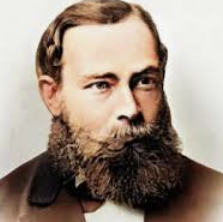
Is it always permissible to speak of the extension of a concept, of a class? And if not, how do we recognize the exceptional cases? Can we always infer from the extension of one concept's coinciding with that of a second, that every object which falls under the first concept also falls under the second?
▼
Source
source
Vol. 2, p. 127. Replying to Bertrand Russell's letter about Russell's Paradox; quoted in The Stanford Encyclopedia of Philosophy

3 months 1 week ago
A totally unmystical world would be a world totally blind and insane.
▼
Source
source
Grey Eminence, 1940

3 months 1 week ago
His business is here, it is here that he is despised and vilified, it is here that he must carry out his undertaking.
▼
Source
source
p. 67

4 months 6 days ago
It is impossible that evils should be done away with, for there must always be something opposed to the good; and they must inevitably hover about mortal nature and this earth. Therefore we ought to try to escape from earth to the dwelling of the gods as quickly as we can; and to escape is to become like God, so far as this is possible, God is in no wise and in no manner unrighteous, but utterly and perfectly righteous, and there is nothing so like him as that one of us who in turn becomes most nearly perfect in righteousness.
2 months 1 week ago
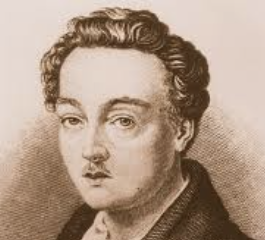
The death clock is ticking slowly in our breast, and each drop of blood measures its time, and our life is a lingering fever.
▼
Source
source
Act II.

3 months 1 week ago
To desire you to read my book over and mark all the corrections you would wish me to make...would oblige me greatly: I know how much I shall be benefitted and I shall at the same time preserve the pretious right of private judgement for the sake of which our forefathers kicked out the Pope and the Pretender. I believe you to be much more infalliable than the Pope, but as I am a Protestant my conscience makes me scruple to submit to any unscriptural authority.
▼
Source
source
Letter to William Strahan (4 April 1760), quoted in Adam Smith, The Correspondence of Adam Smith, eds. E. C. Mossner and I. S. Ross (1987), pp. 67-68

3 months 1 week ago
A commodity appears, at first sight, a very trivial thing, and easily understood.Its analysis shows that it is, in reality, a very queer thing, abounding in metaphysical subtleties and theological niceties.
▼
Source
source
Vol. I, Ch. 1, Section 4, pg. 81.

3 months 4 days ago
Your questions refer to words; so I have to talk about words. You say: The point isn't the word, but its meaning, and you think of the meaning as a thing of the same kind as the word, though also different from the word. Here the word, there the meaning.
▼
Source
source
§ 120

1 month 3 weeks ago
To desire friendship is a great fault. Friendship should be a gratuitous joy like those afforded by art or life. We must refuse it so that we may be worthy to receive it; it is of the order of grace.
▼
Source
source
p. 274
2 months 1 week ago
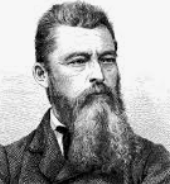
Speculative philosophy as the realisation of God is the positing of God, and at the same time his cancellation or negation; theism and at the same time atheism: for God - in the sense of theology - is God only as long as he is taken to be a being distinguished from and independent of the being of man as well as of nature. The theism that as the positing of God is simultaneously his negation or, conversely, as the negation of God equally his affirmation, is pantheism. Theological theism - that is, theism properly speaking - is nothing other than imaginary pantheism which itself is nothing other than real and true theism.
▼
Source
source
Part I, Section 14
3 months 3 days ago
The only knowledge that can truly orient action is knowledge that frees itself from mere human interests and is based in Ideas-in other words knowledge that has taken a theoretical attitude.
▼
Source
source
p. 301

2 months 5 days ago
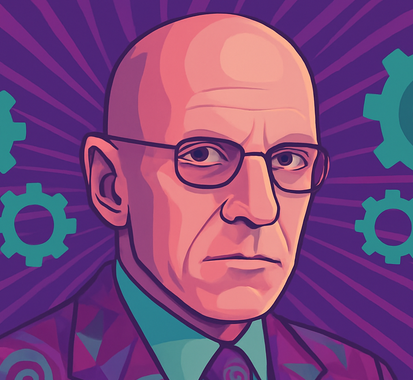
"What's wrong - what's the matter with you?" Nothing, nothing's the matter, I've merely taken a leap outside my fate, and now I don't know where to turn, what to run for...
3 months 3 days ago
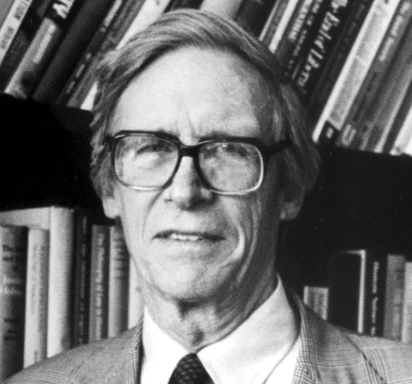
I don't feel that it is necessary to know exactly what I am. The main interest in life and work is to become someone else that you were not in the beginning. If you knew when you began a book what you would say at the end, do you think that you would have the courage to write it? What is true for writing and for a love relationship is true also for life. The game is worthwhile insofar as we don't know what will be the end. My field is the history of thought. Man is a thinking being.
▼
Source
source
Truth, Power, Self : An Interview with Michel Foucault
3 months 1 week ago
This is a long book, not only in pages.
▼
Source
source
Preface, pg. viii
1 month 2 weeks ago
Cultivate that kind of knowledge which enables us to discover for ourselves in case of need that which others have to read or be told of.
▼
Source
source
D 89
3 months 4 weeks ago
The way of the superior man may be compared to what takes place in traveling, when to go to a distance we must first traverse the space that is near, and in ascending a height, when we must begin from the lower ground.
3 months 1 week ago
In doing Good, I lose myself in Being, I abandon my particularity, I become a universal subject.
▼
Source
source
p. 77
Just now
Tsze-Kung asked Confucius, saying, "Master, are you a sage?" Confucius answered him: "A sage is what I cannot rise to. I learn without satiety, and teach without being tired." Tsze-Kung said: "You learn without satiety: that shows your wisdom. You teach without being tired: that shows your benevolence. Benevolent and wise:- Master, you are a sage."
▼
Source
source
"Humility", no. 139
4 months 1 week ago
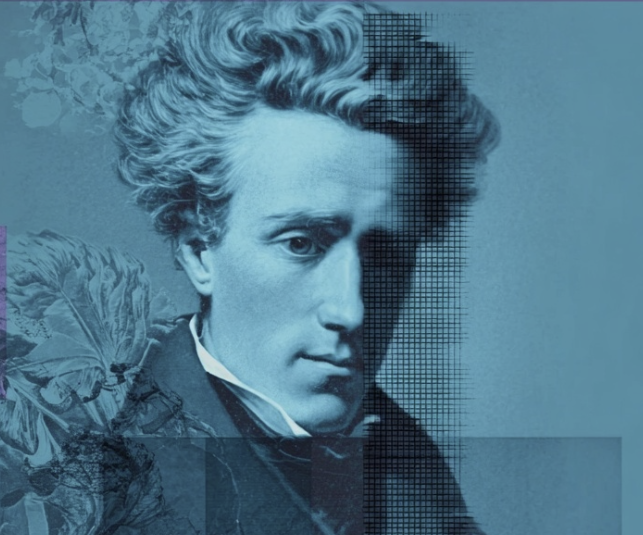
I have never worked as hard as now. I go for a brief walk in the morning. Then I come home and sit in my room without interruption until about three o'clock. My eyes can barely see. Then with my walking stick in hand I sneak off to the restaurant, but am so weak that I believe that if somebody were to call out my name, I would keel over and die. Then I go home and begin again. In my indolence during the past months I had pumped up a veritable shower bath, and now I have pulled the string and the ideas are cascading down upon me: healthy, happy, merry, gay, blessed children born with ease and yet all of them with the birthmark of my personality.

2 months 2 weeks ago
The created World is but a small Parenthesis in Eternity.
▼
Source
source
Part III, Section XXIX


2 months 1 week ago
The most formidable of all the ills that threaten the future of the Union arises from the presence of a black population upon its territory; and in contemplating the cause of the present embarrassments, or the future dangers of the United States, the observer is invariably led to this as a primary fact.
▼
Source
source
Chapter XVIII.

3 months 1 week ago
The average man's opinions are much less foolish than they would be if he thought for himself: in science, at least, his respect for authority is on the whole beneficial.
▼
Source
source
On Education, Especially in Early Childhood (1926), Ch. 2: The Aims of Education, p. 63
4 months 5 days ago
The essential is to cease being free and to obey, in repentance, a greater rogue than oneself. When we are all guilty, that will be democracy.
1 month 3 weeks ago
Consciousness (conscientia) is participated knowledge, is co-feeling, and co-feeling is com-passion. Love personalizes all that it loves. Only by personalizing it can we fall in love with an idea. And when love is so great and so vital, so strong and so overflowing, that it loves everything, then it personalizes everything and discovers that the total All, that the Universe, is also a person possessing a Consciousness, a Consciousness which in its turn suffers, pities, and loves, and therefore is consciousness. And this Consciousness of the Universe, which a love, personalizing all that it loves, discovers, is what we call God.
1 month 6 days ago
Let your life be pleasing to the multitude, and it can not be so to yourself.
▼
Source
source
Maxim 1075
1 month 2 weeks ago
One cannot be deeply responsive to the world without being saddened very often.
▼
Source
source
ABC TV
3 months 1 week ago
To talk about religion except in terms of human psychology is an irrelevance.
▼
Source
source
"One and Many," p. 3
4 months 6 days ago
People don't stop things they enjoy doing just because they reach a certain age. They don't stop playing tennis just because they turn 40, they don't stop with sex just because they turn 40; they keep it up as long as they can if they enjoy it, and learning will be the same thing.
2 months 5 days ago
Everything exists; nothing exists. Either formula affords a like serenity. The man of anxiety, to his misfortune, remains between them, trembling and perplexed, forever at the mercy of a nuance, incapable of gaining a foothold in the security of being or in the absence of being.
3 months 1 week ago
There is something in human history like retribution; and it is a rule of historical retribution that its instrument be forged not by the offended, but by the offender himself. The first blow dealt to the French monarchy proceeded from the nobility, not from the peasants. The Indian revolt does not commence with the ryots, tortured, dishonoured and stripped naked by the British, but with the sepoys, clad, fed and petted, fatted and pampered by them.
▼
Source
source
In an article written for the New York Daily Tribune, September 16, 1857
2 months 1 week ago
An event has happened, upon which it is difficult to speak, and impossible to be silent.
▼
Source
source
Speech on the sixth article of charge in the impeachment of Warren Hastings (5 May 1789), quoted in The Works of the Right Honourable Edmund Burke, Volume the Tenth (1899), p. 306
CivilSimian.com created by AxiomaticPanic, CivilSimian, Kalokagathia