


3 months 1 week ago
I think if I had met him [Lenin] without knowing who he was, I should not have guessed that he was a great man; he struck me as too opinionated and narrowly orthodox. His strength comes, I imagine, from his honesty, courage, and unwavering faith-religious faith in the Marxian gospel, which takes the place of the Christian martyr's hopes of Paradise, except that it is less egotistical... I went to Russia a Communist; but contact with those who have no doubts has intensified a thousandfold my own doubts, not as to Communism in itself, but as to the wisdom of holding a creed so firmly that for its sake men are willing to inflict widespread misery.
▼
Source
source
Part I, Ch. 3: Lenin, Trotsky and Gorky
3 weeks 3 days ago
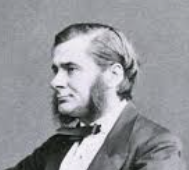
Lamarck, sagacious as many of his views were, mingled them with so much that was crude and even absurd, as to neutralize the benefit which his originality might have effected had he been a more sober and cautious thinker…
▼
Source
source
Ch.2, p. 125

2 months 1 week ago
In the interval between his campaigns Agricola was employed in the great labours of peace. He knew that the general must be perfected by the legislator; and that the conquest is neither permanent nor honourable, which is only an introduction to tyranny... In short, he subdued the Britons by civilizing them; and made them exchange a savage liberty for a polite and easy subjection. His conduct is the most perfect model for those employed in the unhappy, but sometimes necessary, task of subduing a rude and free people.
▼
Source
source
An Essay towards an Abridgment of English History (1757-c. 1763)

2 months 2 weeks ago
The Universe is one, infinite, immobile. The absolute potential is one, the act is one, the form or soul is one, the material or body is one, the thing is one, the being in one, one is the maximum and the best... It is not generated, because there is no other being it could desire or hope for, since it comprises all being. It does not grow corrupt. because there is nothing else into which it could change, given that it is itself all things. It cannot diminish or grow, since it is infinite.
▼
Source
source
As translated by Paul Harrison

2 months 1 day ago
Heaven and earth shall pass away, but my words shall not pass away.
▼
Source
source
Mark 13:31, KJV
3 months 1 week ago
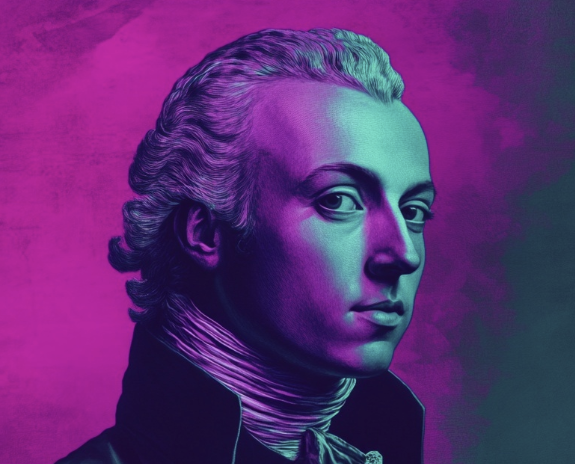
There will always be some people who think for themselves, even among the self-appointed guardians of the great mass who, after having thrown off the yoke of immaturity themselves, will spread about them the spirit of a reasonable estimate of their own value and of the need for every man to think for himself.
3 weeks 3 days ago
If the brutes have consciousness and no souls, then it is clear that, in them, consciousness is a direct function of material changes; while, if they possess immaterial subjects of consciousness, or souls, then, as consciousness is brought into existence only as the consequence of molecular motion of the brain, it follows that it is an indirect product of material changes. The soul stands related to the body as the bell of a clock to the works, and consciousness answers to the sound which the bell gives out when it is struck.
2 months 1 week ago
Freedom and not servitude is the cure of anarchy; as religion, and not atheism, is the true remedy for superstition.
4 months 6 days ago
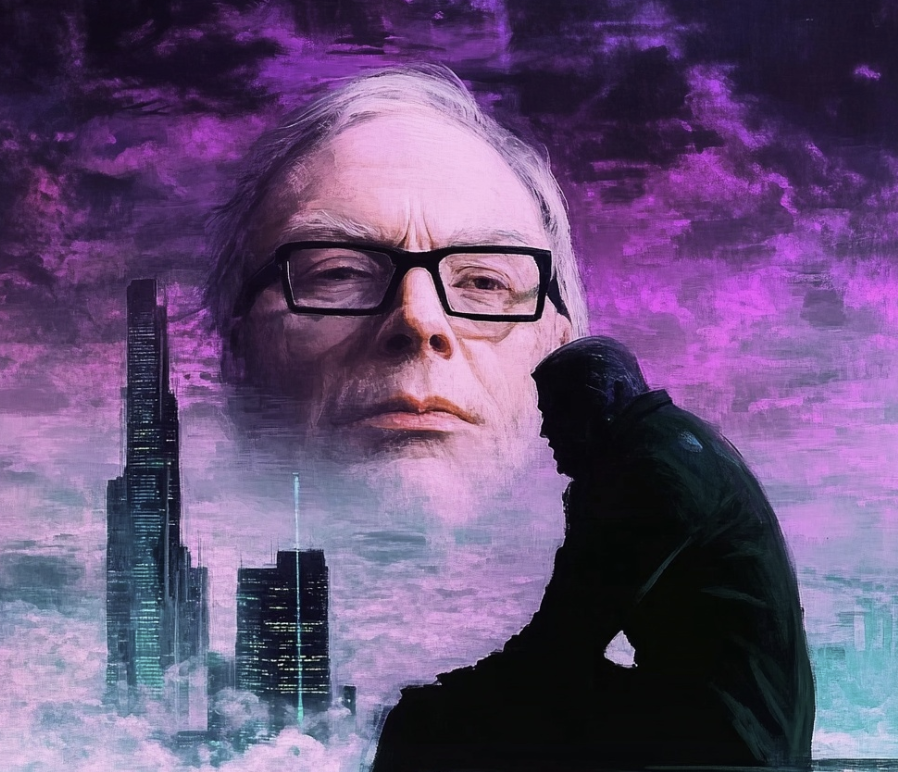
It is surely better to be wronged than to do wrong.

1 month 6 days ago
If we sit and talk in a dark room, words suddenly acquire new meanings and different textures...and on the radio. Given only the sound of a play, we have to fill in all of the senses, not just the sight of the action. So much do-it-yourself, or completion and "closure" of action, develops a kind of independent isolation in the young that makes them remote and inaccessible.
▼
Source
source
(p. 264)

4 months 1 week ago
There must have been many who had a relationship to Jesus similar to that of Barabbas (his name was Jesus Barrabas). The Danish "Barrabas" is about the same as "N.N." [Mr. X or John Doe], filius patris, his father's son. - It is too bad, however, that we do not know anything more about Barrabas; it seems to me that in many ways he could have become a counterpart to the Wandering Jew. The rest of his life must have taken a singular turn. God knows whether or not he became a Christian. - It would be a poetic motif to have him, gripped by Christ's divine power, step forward and witness for him.

3 months 4 days ago
Does man think because he has found that thinking pays? Does he bring his children up because he has found it pays?
▼
Source
source
§ 467
1 month 3 weeks ago
Atheism ... in its philosophic aspect refuses allegiance not merely to a definite concept of God, but it refuses all servitude to the God idea, and opposes the theistic principle as such. Gods in their individual function are not half as pernicious as the principle of theism which represents the belief in a supernatural, or even omnipotent, power to rule the earth and man upon it. It is the absolutism of theism, its pernicious influence upon humanity, its paralyzing effect upon thought and action, which Atheism is fighting with all its power.
1 month 1 week ago
What froze me was the fact that I had absolutely no reason to move in any direction. What had made me move through so many dead and pointless years was curiosity. Now even that flickered out.
3 months 3 weeks ago
To the rational being only the irrational is unendurable, but the rational is endurable.
▼
Source
source
Variant translation: To a reasonable creature, that alone is insupportable which is unreasonable; but everything reasonable may be supported. Book I, ch. 2,1.
2 months ago
Those who have ever valued liberty for its own sake believed that to be free to choose, and not to be chosen for, is an inalienable ingredient in what makes human beings human.

3 months 1 week ago
That the sun will not rise to-morrow is no less intelligible a proposition, and implies no contradiction, than the affirmation, that it will rise.
▼
Source
source
§ 4.8
3 months 2 weeks ago
Let great authors have their due, as time, which is the author of authors, be not deprived of his due, which is, further and further to discover truth.
▼
Source
source
Book I, iv, 10
2 days ago
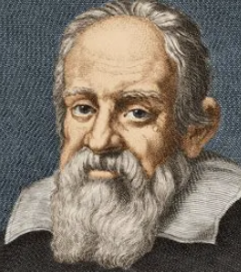
My purpose is to set forth a very new science dealing with a very ancient subject. There is, in nature, perhaps nothing older than motion, concerning which the books written by philosophers are neither few nor small; nevertheless I have discovered by experiment some properties of it which are worth knowing and which have not hitherto been either observed or demonstrated. Some superficial observations have been made, as, for instance, that the free motion [naturalem motum] of a heavy falling body is continuously accelerated; but to just what extent this acceleration occurs has not yet been announced; for so far as I know, no one has yet pointed out that the distances traversed, during equal intervals of time, by a body falling from rest, stand to one another in the same ratio as the odd numbers beginning with unity.
▼
Source
source
Author, Third Day. Change of Position
2 months 1 week ago
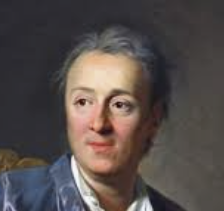
Man was born to live with his fellow human beings. Separate him, isolate him, his character will go bad, a thousand ridiculous affects will invade his heart, extravagant thoughts will germinate in his brain, like thorns in an uncultivated land.
▼
Source
source
The character Suzanne Simon, in La Religieuse [The Nun]
1 month 1 week ago
Well, what does "good" mean anyway...? As Wittgenstein suggested, "good," like "game," has a family of meanings. Prominent among them is this one: "meets the criteria or standards of assessment or evaluation."
▼
Source
source
P. 152.

3 months 2 weeks ago
I bequeath my soul to God (...). My body to be buried obscurely. For my name and memory, I leave it to men's charitable speeches, and to foreign nations, and the next age.
▼
Source
source
His Will, 1626
3 months 4 days ago
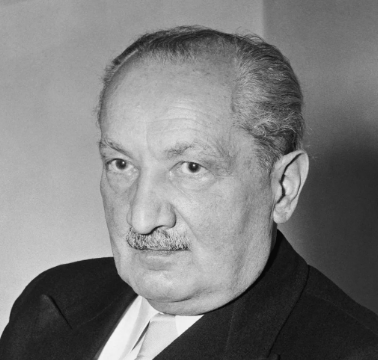
It is said that "being" is the most universal and the emptiest concept. As such it resists every attempt at definition. Nor does this most universal and thus indefinable concept need any definition. Everybody uses it constantly and also already understands what is meant by it.
▼
Source
source
Introduction: The Exposition of the Question of the Meaning of Being (Stambaugh translation)
1 month 3 weeks ago
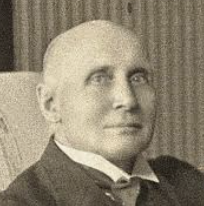
The study of mathematics is apt to commence in disappointment... We are told that by its aid the stars are weighed and the billions of molecules in a drop of water are counted. Yet, like the ghost of Hamlet's father, this great science eludes the efforts of our mental weapons to grasp it.
▼
Source
source
ch. 1.
1 month 1 week ago
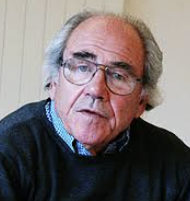
The close-up of a face is as obscene as a sexual organ seen from up close. It is a sexual organ. The promiscuity of the detail, the zoom-in, takes on a sexual value.
▼
Source
source
(p. 43)
3 months 1 week ago
Physics is mathematical not because we know so much about the physical world, but because we know so little: it is only its mathematical properties that we can discover.
▼
Source
source
An Outline of Philosophy Ch.15 The Nature of our Knowledge of Physics, 1927
3 months 2 weeks ago
There are and can be only two ways of searching into and discovering truth. The one flies from the senses and particulars to the most general axioms, and from these principles, the truth of which it takes for settled and immovable, proceeds to judgment and to the discovery of middle axioms. And this way is now in fashion. The other derives axioms from the senses and particulars, rising by a gradual and unbroken ascent, so that it arrives at the most general axioms last of all. This is the true way, but as yet untried.
▼
Source
source
Aphorism 19
1 month 1 week ago
The general nature of the speech act fallacy can be stated as follows, using "good" as our example. Calling something good is characteristically praising or commending or recommending it, etc. But it is a fallacy to infer from this that the meaning of "good" is explained by saying it is used to perform the act of commendation.
▼
Source
source
P. 139.
1 day ago
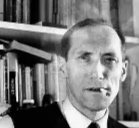
While the positivists were proclaiming the end "once and for all" of unverifiable metaphysical systems and speculative philosophy in general, new doctrines in flagrant contradiction to those ideals have sprung up one after the other. Positivists see no more in this development than evidence of human stupidity, not any reflection on themselves.
▼
Source
source
Chapter Eight, Logical Empiricism, p. 198

1 month 3 weeks ago
It is not only in literature that fiction generates immorality. It does it also in life itself. For the substance of our life is almost exclusively composed of fiction. We fictionalize our future, and, unless we are heroically devoted to truth, we fictionalize our past, refashioning it to our taste. We do not study other people; we invent what they are thinking, saying, and doing. Reality provides us with some raw material, just as novelists often take a theme from a news item, but we envelop it in a fog in which, as in all fiction, values are reversed, so that evil is attractive and good is tedious.
▼
Source
source
"Morality and literature," pp. 161-162

3 months 2 weeks ago
I have turned my entire attention to Greek. The first thing I shall do, as soon as the money arrives, is to buy some Greek authors; after that, I shall buy clothes.
▼
Source
source
Letter to Jacob Batt (12 April 1500); Collected Works of Erasmus Vol 1 (1974)
3 months 3 weeks ago
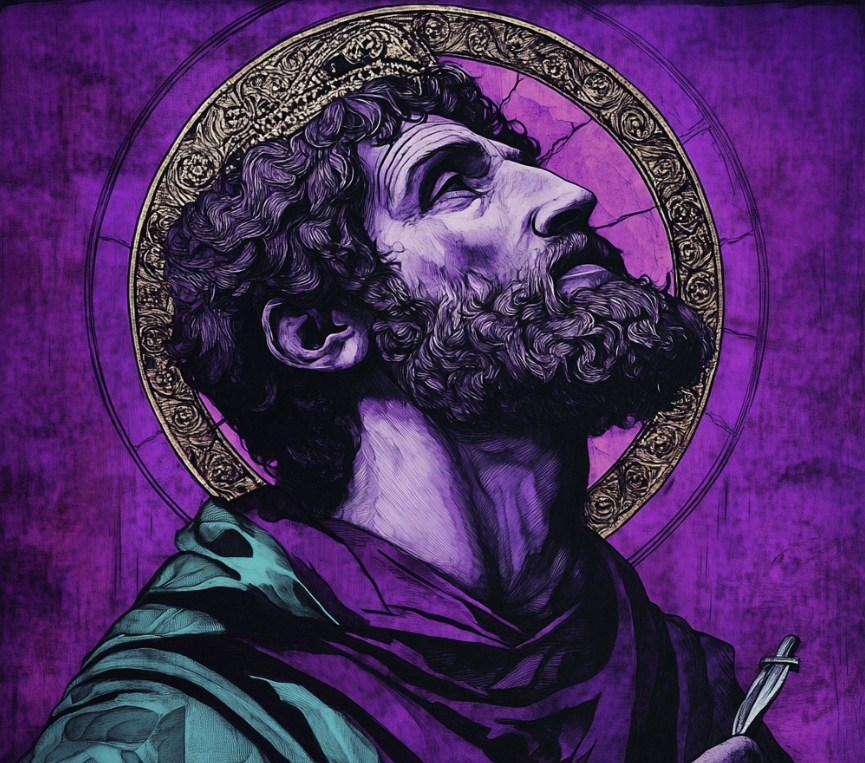
"For I am holy." When I hear these words I recognize the voice of the Saviour. But shall I take away my own? Certainly when He speaks thus He speaks in inseparable union with His body. But can I say, "I am holy"? If I mean a holiness that I have not received, I should be proud and a liar; but if I mean a holiness that I have received - as it is written: "Be ye holy because I the Lord your God am holy" (Lev. 19:2) - then let the body of Christ say these words. And let this one man, who cries from the ends of the earth, say with his Head and united with his Head: "I am holy." … That is not foolish pride, but an expression of gratitude. If you were to say that you are holy of yourselves, that would be pride; but if, as one of Christ's faithful and as a member of Christ, you say that you are not holy, you are ungrateful.
▼
Source
source
p.428
2 months 1 day ago
Judge not, that ye be not judged. For with what judgment ye judge, ye shall be judged: and with what measure ye mete, it shall be measured to you again.
▼
Source
source
(Matthew 7:1-2) (KJV)
2 months 6 days ago
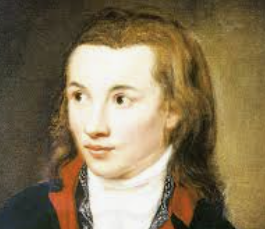
Before abstraction everything is one, but one like chaos; after abstraction everything is united again, but this union is a free binding of autonomous, self-determined beings. Out of a mob a society has developed, chaos has been transformed into a manifold world.
▼
Source
source
Fragment No. 95
1 month 2 weeks ago
To be content with life - or to live merrily, rather - all that is required is that we bestow on all things only a fleeting, superficial glance; the more thoughtful we become the more earnest we grow.
▼
Source
source
K 29

3 months 1 week ago
All the thoughts of a turtle are turtle.
▼
Source
source
1855
2 months 1 week ago
We are always on stage, even when we are stabbed in earnest at the end.
▼
Source
source
Act II.
3 months 4 days ago
"What is a thing?" is historical, because every report of the past, that is of the preliminaries to the question about the thing, is concerned with something static. This kind of historical reporting is an explicit shutting down of history, whereas it is, after all, a happening. We question historically if we ask what is still happening even if it seems to be past. We ask what is still happening and whether we remain equal to this happening so that it can really develop.
▼
Source
source
p. 43

3 months 4 weeks ago
A happy and eternal being has no trouble himself and brings no trouble upon any other being; hence he is exempt from movements of anger and partiality, for every such movement implies weakness.
3 months 3 days ago
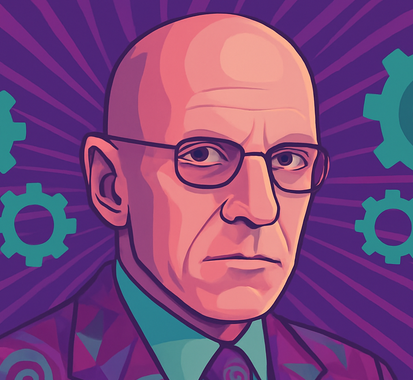
The guillotine takes life almost without touching the body, just as prison deprives of liberty or a fine reduces wealth. It is intended to apply the law not so to a real body capable of feeling pain as to a juridical subject, the possessor, among other rights, of the right to exist it had to have the abstraction of the law itself.
▼
Source
source
pp. 13, Chapter One The Body of the Condemned

3 months 1 week ago
Jehovah, Allah, the Trinity, Jesus, Buddha, are names for a great variety of human virtues, human mystical experiences, human remorses, human compensatory fantasies, human terrors, human cruelties. If all men were alike, all the world would worship the same God.
▼
Source
source
"One and Many," p. 3

3 months 1 week ago
Our moral virtues benefit mainly other people; intellectual virtues, on the other hand, benefit primarily ourselves; therefore the former make us universally popular, the latter unpopular.
2 months 1 day ago
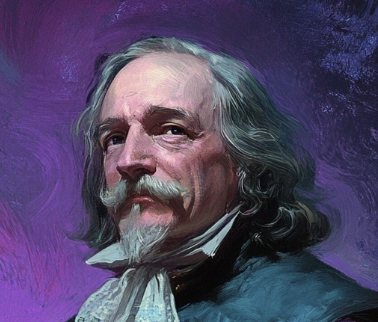
Fact be vertuous, or vicious, as Fortune pleaseth.
▼
Source
source
The Second Part, Chapter 27, p. 153
1 month 1 week ago
The real is not only what can be reproduced, but that which is already reproduced, the hyper-real.
▼
Source
source
Simulations (1983), New York: Semiotext, p. 146
2 months 1 week ago
The weapon of the Republic is terror, and virtue is its strength.
▼
Source
source
Act I.
1 month 4 weeks ago
When we rise out of [the night] into the new life and there begin to receive the signs, what can we know of that which - of him who gives them to us? Only what we experience from time to time from the signs themselves. If we name the speaker of this speech God, then it is always the God of a moment, a moment God.
▼
Source
source
Between Man and Man (1965), p. 15
3 months 2 weeks ago
For we have in Latin only a few small streams and muddy puddles, while they have pure springs and rivers flowing in gold. I see that it is utter madness even to touch with the little finger that branch of theology that deals chiefly with the divine mysteries, unless one is also provided with the equipment of Greek.
▼
Source
source
As quoted in Martin Luther: The Man Who Rediscovered God and Changed the World (2017) by By Eric Metaxas, p. 85
CivilSimian.com created by AxiomaticPanic, CivilSimian, Kalokagathia