


3 months 3 weeks ago
The importation of gold and silver is not the principal, much less the sole benefit which a nation derives from its foreign trade.
▼
Source
source
Chapter I, p. 479.


2 months 2 weeks ago
Through a wise and salutary neglect [of the colonies], a generous nature has been suffered to take her own way to perfection; when I reflect upon these effects, when I see how profitable they have been to us, I feel all the pride of power sink and all presumption in the wisdom of human contrivances melt and die away within me. My vigour relents. I pardon something to the spirit of liberty.

1 month 2 weeks ago
Poetry and the arts can't exist in America. Mere exposure to the arts does nothing for a mentality which is incorrigibly dialectical. The vital tensions and nutritive action of ideogram remain inaccessible to this state of mind.
▼
Source
source
Letter to Ezra Pound
4 months 2 weeks ago
Liars ... when they speak the truth they are not believed.
1 month 2 weeks ago
Acoustic space is totally discontinuous, like touch. It is a sphere without centers or margins.

3 months 2 weeks ago
The only non-Christians who seemed to me really to know anything were the Romantics; and a good many of them were dangerously tinged with something like religion, even at times with Christianity. The upshot of it all could nearly be expressed in a perversion of Roland's great line in the Chanson: 'Christians are wrong, but all the rest are bores.'

3 months 2 weeks ago
All the higher, more penetrating ideals are revolutionary. They present themselves far less in the guise of effects of past experience than in that of probable causes of future experience.
▼
Source
source
"The Moral Philosopher and the Moral Life" in address to the Yale Philosophical Club, published in the International Journal of Ethics, April 1891

3 months 2 weeks ago
The belief in a political Utopia is especially dangerous. This is possibly connected with the fact that the search for a better world, like the investigation of our environment, is (if I am correct) one of the oldest and most important of all the instincts.
1 week 5 days ago
We have not a direct intuition of simultaneity, nor of the equality of two durations. If we think we have this intuition, this is an illusion. We replace it by the aid of certain rules which we apply almost always without taking count of them....We ...choose these rules, not because they are true, but because they are the most convenient, and we may recapitulate them as follows: "The simultaneity of two events, or the order of their succession, the equality of two durations, are to be so defined that the enunciation of the natural laws may be as simple as possible. In other words, all these rules, all these definitions, are only the fruit of an unconscious opportunism."
3 months 2 weeks ago
The most thought provoking thing in our thought provoking time is that we are still not thinking.
▼
Source
source
What is Called Thinking? (1951-1952), as translated by Fred D. Wieck and J. Glenn Gray

2 months 2 weeks ago
Life is too full of death for death to be able to add anything to it.

3 months 2 weeks ago
Brutes are merely brutal; men and women are capable of being devils and lunatics. They are no less capable of being fully human-even, occasionally, of being a bit more than fully human, of being saints, heroes and geniuses.
▼
Source
source
Introduction to You Are Not The Target by Laura Archera Huxley, 1963

3 months 2 weeks ago
The first who was king was a fortunate soldier: Who serves his country well has no need of ancestors.
▼
Source
source
Mérope, act I, scene III (1743). Borrowed from Lefranc de Pompignan's "Didon"
2 months 1 week ago
The same, without such opinion, DESPAIRE.
▼
Source
source
The First Part, Chapter 6, p. 25

3 months 3 weeks ago
In the state of nature, wrong-doing is impossible ; or, if anyone does wrong, it is to himself, not to another. For no one by the law of nature is bound to please another, unless he chooses, nor to hold anything to be good or evil, but what he himself, according to his own temperament, pronounces to be so ; and, to speak generally, nothing is forbidden by the law of nature, except what is beyond everyone's power.
▼
Source
source
Ch. 2, Of Natural Right

1 month 2 weeks ago
4 ways: Agnosticism, Relativism, Amorality, Morality.
1) I don't know. 2) Everybody is different. 3) Do whatever you can. 4) Do what you should.
1 month 2 weeks ago
An atheist is just somebody who feels about Yahweh the way any decent Christian feels about Thor or Baal or the golden calf. As has been said before, we are all atheists about most of the gods that humanity has ever believed in. Some of us just go one god further.
▼
Source
source
Richard Dawkins on militant atheism,

2 months 1 day ago
Emptiness simply prevents what is individual from insisting on itself.
1 month 1 week ago
A great deal of intelligence can be invested in ignorance when the need for illusion is deep. To Jerusalem and Back: A Personal Account (1976), p. 127 Compare: It's a point so blindingly obvious that only an extraordinarily clever and sophisticated person could fail to grasp it.
▼
Source
source
John Bercow, 2016.

3 months 2 weeks ago
Nor knowest thou what argument Thy life to thy neighbor's creed has lent: All are needed by each one, Nothing is fair or good alone.
▼
Source
source
Each and All, st. 1
2 months 2 weeks ago
When we have no further desire to show ourselves, we take refuge in music, the Providence of the abulic.
2 months 2 weeks ago
Primitive superstition lies just below the surface of even the most tough-minded individuals, and it is precisely those who most fight against it who are the first to succumb to its suggestive effects.
▼
Source
source
p. 25
1 month 1 week ago
You never have to change anything you got up in the middle of the night to write.
▼
Source
source
As quoted in The #1 New York Times Bestseller (1992) by John Bear, p. 93

4 months 2 weeks ago
You have already grasped that Sisyphus is the absurd hero. He is, as much through his passions as through his torture. His scorn of the gods, his hatred of death, and his passion for life won him that unspeakable penalty in which the whole being is exerted toward accomplishing nothing. This is the price that must be paid for the passions of this earth. Nothing is told us about Sisyphus in the underworld. Myths are made for the imagination to breathe life into them.

2 months 1 day ago
I realize the malady of the oppressed and disinherited masses only too well, but I refuse to prescribe the usual ridiculous palliatives which allow the patient neither to die nor to recover. One cannot be too extreme in dealing with social ills; besides, the extreme thing is generally the true thing. My lack of faith in the majority is dictated by my faith in the potentialities of the individual. Only when the latter becomes free to choose his associates for a common purpose, can we hope for order and harmony out of this world of chaos and inequality.
1 week 5 days ago
Now what is science? ...it is before all a classification, a manner of bringing together facts which appearances separate, though they are bound together by some natural and hidden kinship. Science, in other words, is a system of relations. ...it is in relations alone that objectivity must be sought. ...it is relations alone which can be regarded as objective.External objects... are really objects and not fleeting and fugitive appearances, because they are not only groups of sensations, but groups cemented by a constant bond. It is this bond, and this bond alone, which is the object in itself, and this bond is a relation.
3 days ago
My idea of heaven is, eating pâté de foie gras to the sound of trumpets.
▼
Source
source
View ascribed by Smith to his friend Henry Luttrell; reported in Hesketh Pearson, The Smith of Smiths (London: Hamish Hamilton, 1934), p. 236
2 months 1 week ago
The 'public' is a phantom, the phantom of an opinion supposed to exist in a vast number of persons who have no effective interrelation and though the opinion is not effectively present in the units. Such an opinion is spoken of as 'public opinion,' a fiction which is appealed to by individuals and by groups as supporting their special views. It is impalpable, illusory, transient; "'tis here, 'tis there, 'tis gone"; a nullity which can nevertheless for a moment endow the multitude with power to uplift or destroy.

4 months 4 days ago
Will is to grace as the horse is to the rider.

3 months 2 weeks ago
It goes without saying that the normal durability of fixed capital is calculated on the supposition that all the conditions under which it can perform its functions normally during that time are fulfilled, just as we assume, in placing a mans life at 30 years on the average,that he will wash himself.
▼
Source
source
Volume II, Ch. VIII, p. 176-177.

3 months 2 weeks ago
The instinctive foundation of the intellectual life is curiosity, which is found among animals in its elementary forms. Intelligence demands an alert curiosity, but it must be of a certain kind. The sort that leads village neighbours to try to peer through curtains after dark has no very high value. The widespread interest in gossip is inspired, not by a love of knowledge but by malice: no one gossips about other people's secret virtues, but only about their secret vices. Accordingly most gossip is untrue, but care is taken not to verify it. Our neighbour's sins, like the consolations of religion, are so agreeable that we do not stop to scrutinise the evidence closely.
▼
Source
source
On Education, Especially in Early Childhood (1926), Ch. 2: The Aims of Education, p. 50
2 months 1 day ago
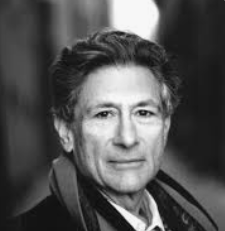
The Orient that appears in Orientalism, then, is a system of representations framed by a whole set of forces that brought the Orient into Western learning, Western consciousness, and later, Western empire. ... The Orient is the stage on which the whole East is confined. On this stage will appear the figures whose role it is to represent the larger whole from which they emanate. The Orient then seems to be, not an unlimited extension beyond the familiar European world, but rather a closed field, a theatrical stage affixed to Europe.

4 months 2 weeks ago
The same man who could not find it in his conscience to curb his curiosity into the nuclear studies that might someday kill half of Earth would risk his life to save that of an unimportant fellow man.
2 months 2 weeks ago
Having always lived in fear of being surprised by the worst, I have tried in every circumstance to get a head start, flinging myself into misfortune long before it occurred.
1 month 1 day ago
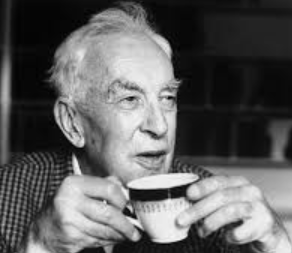
We have been Godlike in our planned breeding of our domesticated plants and animals, but we have been rabbitlike in our unplanned breeding of ourselves.
▼
Source
source
Man and Hunger: The Perspectives of History, entered into the Congressional Record by Senator Ernest Gruening

1 month 2 days ago
What could be a better indication of man's continued dependence on nature than the fact that today's so-called post-industrial societies satisfy most of their food needs through imports from so-called underdeveloped countries?
▼
Source
source
Staying Alive: Women, Ecology, and Development
3 months 2 weeks ago
The more rational statement is that we feel sorry because we cry, angry because we strike, afraid because we tremble, and not that we cry, strike, or tremble, because we are sorry, angry, or fearful, as the case may be. Without the bodily states following on the perception, the latter would be purely cognitive in form, pale, colorless, destitute of emotional warmth.
▼
Source
source
Ch. 25
3 months 2 weeks ago
Can a society in which thought and technique are scientific persist for a long period, as, for example, ancient Egypt persisted, or does it necessarily contain within itself forces which must bring either decay or explosion? "Can a Scientific Community Be Stable?,"
▼
Source
source
Lecture, Royal Society of Medicine, London, 11/29/1949
3 months 3 weeks ago
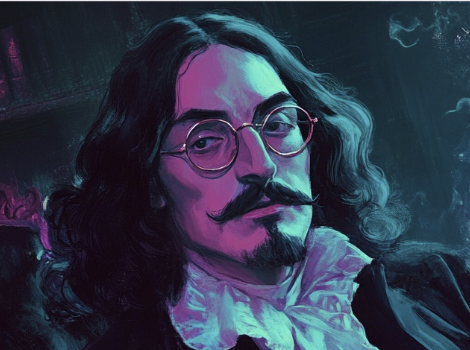
No doubt you know that Galileo had been convicted not long ago by the Inquisition, and that his opinion on the movement of the Earth had been condemned as heresy. Now I will tell you that all things I explain in my treatise, among which is also that same opinion about the movement of the Earth, all depend on one another, and are based upon certain evident truths. Nevertheless, I will not for the world stand up against the authority of the Church. ...I have the desire to live in peace and to continue on the road on which I have started.
▼
Source
source
Letter to Marin Mersenne (end of Feb., 1634) as quoted by Amir Aczel, Pendulum: Leon Foucault and the Triumph of Science

3 months 3 weeks ago
He who is not sure of his memory, should not undertake the trade of lying.
▼
Source
source
Book I, Ch. 9
3 months 3 weeks ago
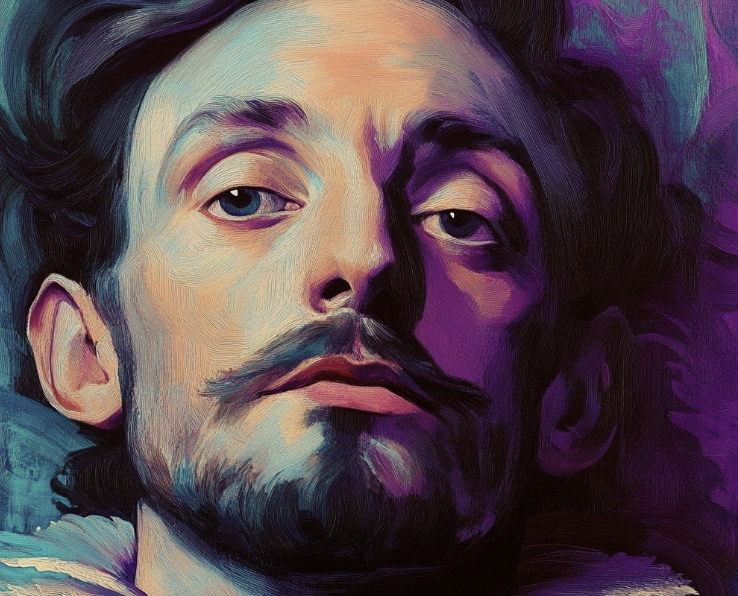
The human understanding is unquiet; it cannot stop or rest, and still presses onward, but in vain. Therefore it is that we cannot conceive of any end or limit to the world, but always as of necessity it occurs to us that there is something beyond... But he is no less an unskilled and shallow philosopher who seeks causes of that which is most general, than he who in things subordinate and subaltern omits to do so.
▼
Source
source
Aphorism 48
3 months 2 weeks ago
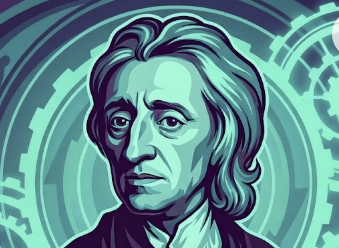
Truly, if the preservation of all mankind, as much as in him lies, were every one's persuasion, as indeed it is every one's duty, and the true principle to regulate our religion, politicks and morality by, the world would be much quieter, and better natur'd than it is.
▼
Source
source
Sec. 116
2 months 2 weeks ago
Just as Marx used to say about the French Marxists of the late 'seventies: All I know is that I am not a Marxist.
▼
Source
source
Letter to Conrad Schmidt
2 months 3 weeks ago
This is a work that cannot be completed except by a society of men of letters and skilled workmen, each working separately on his own part, but all bound together solely by their zeal for the best interests of the human race and a feeling of mutual good will.
▼
Source
source
Article on Encyclopedia, as translated in The Many Faces of Philosophy : Reflections from Plato to Arendt (2001), "Diderot", p. 237
2 months 1 week ago
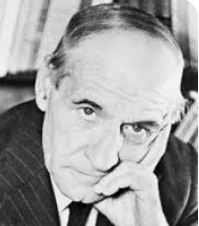
Life cannot wait until the sciences may have explained the universe scientifically. We cannot put off living until we are ready. The most salient characteristic of life is its coerciveness: it is always urgent, "here and now" without any possible postponement. Life is fired at us point-blank. And culture, which is but its interpretation, cannot wait any more than can life itself.
▼
Source
source
Mission of the University [Misión de la Universidad (PDF)] (1930; translation © 1944, first published 1946), p. 73 [p. 15 in Spanish PDF], translated by Howard Lee Nostrand. ISBN 978-1-56000-560-5
CivilSimian.com created by AxiomaticPanic, CivilSimian, Kalokagathia