


3 months 1 week ago
The African [slave] trade was, in his opinion, an absolute robbery. It therefore could not be a doubt with the House, whether it was proper to abolish it.
▼
Source
source
Speech in the House of Commons (12 May 1789), quoted in The Parliamentary History of England, From the Earliest Period to the Year 1803, Vol. XXVIII (1816), column 96

3 months 2 days ago
A human being possessed by a belief and not eager to pass it on to others is a phenomenon alien to the earth, where our mania for salvation makes life unbreathable.

4 months 1 week ago
Thus it may be said that not only the soul, the mirror of an indestructible universe, is indestructible, but also the animal itself, though its mechanism may often perish in part and take off or put on an organic slough.
▼
Source
source
La monadologie (77). Sometimes paraphrased as: The soul is the mirror of an indestructible universe.
4 months 1 week ago
In early youth, as we contemplate our coming life, we are like children in a theatre before the curtain is raised, sitting there in high spirits and eagerly waiting for the play to begin. It is a blessing that we do not know what is really going to happen. Could we foresee it, there are times when children might seem like innocent prisoners, condemned, not to death, but to life, and as yet all unconscious of what their sentence means.
▼
Source
source
"On the Sufferings of the World"
2 months 4 weeks ago
The source of every Crime, is some defect of the Understanding; or some error in Reasoning, or some sudden force of the Passions. Defect in the Understanding, is Ignorance; in Reasoning, Erroneous Opinion.
▼
Source
source
The Second Part, Chapter 27, p. 152

5 months 1 week ago
The immediacy of falling in love recognizes but one immediacy that is ebenburtig (of equal standing), and this is a religious immediacy; falling in love is too virginal to recognize any confidant other than God. But the religious is a new immediacy, has reflection in between-otherwise, paganism would actually be religious and Christianity not. That the religious is a new immediacy every person easily understands who is satisfied with following the honest path of ordinary common sense. And although I imagine I have but few readers, I confess nevertheless that I do imagine my readers to be among these, since I am far from wanting to instruct the admired ones, who make systematic discoveries a la Niels Klim, who have left their good skin in order to put on the “real appearance.
1 week ago
While experiencing happiness, we have difficulty in being conscious of it. Only when the happiness is past and we look back on it we do suddenly realize - sometimes with astonishment - how happy we had been.
▼
Source
source
Ch. 6
4 weeks 1 day ago
America, you have it better than our continent, the old one.
▼
Source
source
Wendts Musen-Almanach
3 weeks 6 days ago
Somehow, the practice of astronomy, physics, chemistry or biology normally fails to evoke the controversies over fundamentals that today seem endemic among, say, psychologists or sociologists. Attempting to discover the source of that difference led me to recognize the role in scientific research of what I have since called "paradigms." These I take to be universally recognized scientific achievements that for a time provide model problems and solutions for a community of practitioners.
▼
Source
source
p. xiii
3 months 3 weeks ago
Being about to pitch his camp in a likely place, and hearing there was no hay to be had for the cattle, "What a life," said he, "is ours, since we must live according to the convenience of asses!"
▼
Source
source
37 Philip

2 months 4 weeks ago
Then are the children free. Notwithstanding, lest we should offend them, go thou to the sea, and cast an hook, and take up the fish that first cometh up; and when thou hast opened his mouth, thou shalt find a piece of money: that take, and give unto them for me and thee.
▼
Source
source
17:26-27 (KJV)

4 months 6 days ago
In fact of course, this 'productive' worker cares as much about the crappy shit he has to make as does the capitalist himself who employs him, and who also couldn't give a damn for the junk.
▼
Source
source
Notebook II, The Chapter on Capital, p. 193.

3 weeks ago
Remember, however, before all else, to strip things of all that disturbs and confuses, and to see what each is at bottom; you will then comprehend that they contain nothing fearful except the actual fear.
▼
Source
source
Line 12


4 months ago
All these present struggles revolve around the question: Who are we? They are a refusal of these abstractions, of economic and ideological state violence, which ignore who we are individually, and also a refusal of a scientific or administrative inquisition which determines who one is.
▼
Source
source
p. 781

4 months 1 week ago
He thought human life a poor thing at best, after the freshness of youth and of unsatisfied curiosity had gone by. This was a topic on which he did not often speak, especially, it may be supposed, in the presence of young persons: but when he did, it was with an air of settled and profound conviction. He would sometimes say, that if life were made what it might be, by good government and good education, it would be worth having: but he never spoke with anything like enthusiasm even of that possibility.
▼
Source
source
(p. 48)
2 weeks 3 days ago
As a rule there are in everyone all sorts of good ideas, ready like tinder. But much of this tinder catches fire, or catches it successfully, only when it meets some flame or spark from outside, i.e. from some other person. Often, too, our own light goes out, and is rekindled by some experience we go through with a fellow-man. Thus we have each of us cause to think with deep gratitude of those who have lighted the flames within us.

4 months 2 weeks ago
Only charity admitteth no excess. For so we see, aspiring to be like God in power, the angels transgressed and fell.
▼
Source
source
Book II, xxii

3 weeks 6 days ago
A great man shows his greatness by the way he treats little men.

2 months 4 days ago
Faced with information overload, we have no alternative but pattern-recognition.
▼
Source
source
(p. 132)
5 months 1 week ago
A person might fairly doubt also what in the world they mean by the absolute - this that or the other, since, as they would themselves allow, the account of the humanity is one and the same in the absolute man, and in any individual man: for so far as the individual and the absolute man are both man, they will not differ at all: and if so, then the essential good and any particular good will not differ, in so far as both are good. Nor will it do to say that the eternity of the absolute good makes it to be more good; for a white thing which has lasted white ever so long, is no whiter than that which only lasts for a day.
2 months 4 weeks ago
The sun will be darkened, and the moon will not give its light; the stars will fall from the sky, and the heavenly bodies will be shaken. They will see the Son of Man coming on the clouds of the sky, with power and great glory... I tell you the truth, this generation will certainly not pass away until all these things have happened.
▼
Source
source
24:29-34 (NIV)

4 months 1 week ago
The best is the enemy of the good.
3 weeks ago
Manners are the shadows of virtues; the momentary display of those qualities which our fellow creatures love, and respect.
▼
Source
source
Sermon XII, Sermons
1 month 1 week ago
Our main conclusions about the state are that a minimal state, limited, to the narrow functions of protection against force, theft, fraud, enforcement of contracts, and so on, is justified, but any more extensive state will violate persons' rights not to be forced to do certain things, and is unjustified; and that the minimal state is inspiring as well as right.
▼
Source
source
Preface, p. ix
4 months 3 weeks ago
God judged it better to bring good out of evil than to suffer no evil to exist.
▼
Source
source
Enchiridion (c. 420 ), Ch. 27
5 months 1 week ago
In cases of this sort, let us say adultery, rightness and wrongness do not depend on committing it with the right woman at the right time and in the right manner, but the mere fact of committing such action at all is to do wrong.
3 months 1 week ago
The march of the human mind is slow.

2 months 3 weeks ago
Is there not therefore rational necessity, but vital anguish that impels us to believe in God. And to believe in God - I must reiterate it yet again - is, before all and above all, to feel a hunger for God, a hunger for divinity, to be sensible to his lack and absence, to wish that God may exist. And it is the wish to save the human finality of the Universe. For one might even come to resign oneself to being absorbed by God, if it be that our consciousness is based upon Consciousness, if consciousness is the end of the Universe.
4 months 3 weeks ago
The dominion of bad men is hurtful chiefly to themselves who rule, for they destroy their own souls by greater license in wickedness; while those who are put under them in service are not hurt except by their own iniquity. For to the just all the evils imposed on them by unjust rulers are not the punishment of crime, but the test of virtue. Therefore the good man, although he is a slave, is free; but the bad man, even if he reigns, is a slave, and that not of one man, but, what is far more grievous, of as many masters as he has vices; of which vices when the divine Scripture treats, it says, For of whom any man is overcome, to the same he is also the bond-slave.
▼
Source
source
IV, 3 Variant translation: The good man, though a slave, is free; the wicked, though he reigns, is a slave, and not the slave of a single man, but — what is worse — the slave of as many masters as he has vices.

2 months 2 weeks ago
The terrible struggle of the thinking man and woman against political, social and moral conventions owes its origin to the family, where the child is ever compelled to battle against the internal and external use of force. The categorical imperatives: You shall! you must! this is right! that is wrong! this is true! that is false! shower like a violent rain upon the unsophisticated head of the young being and impress upon its sensibilities that it has to bow before the long established and hard notions of thoughts and emotions.
3 months 4 days ago
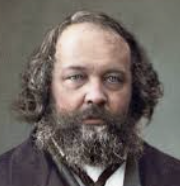
It is the peculiarity of privilege and of every privileged position to kill the intellect and heart of man. The privileged man, whether he be privileged politically or economically, is a man depraved in intellect and heart.
▼
Source
source
As quoted in "Socialism" article of Encyclopaedia Britannica, 9th edition (1887), edited by Thomas Spencer Baynes with assistance of William Robertson Smith, Vol. 22, p. 216, Charles Scribner's Sons
4 months 2 weeks ago
Credulity in arts and opinions is likewise of two kinds viz., when men give too much belief to arts themselves, or to certain authors in any art. The sciences that sway the imagination more than the reason are principally three viz., astrology, natural magic, and alchemy. Alchemy may be compared to the man who told his sons that he had left them gold, buried somewhere in his vineyard; while they by digging found no gold, but by turning up the mould about the roots of the vines procured a plentiful vintage. So the search and endeavours to make gold have brought many useful inventions to light.
▼
Source
source
De Augmentis Scientiarum (1623) as quoted by Edward Thorpe, History of Chemistry, Vol. 1, p. 43.

3 months 2 days ago
Unless man have a natural bent in accordance with nature's, he has no chance of understanding nature at all.
▼
Source
source
IV
2 months 4 weeks ago
Then he said to them, "Watch out! Be on your guard against all kinds of greed; a man's life does not consist in the abundance of his possessions." And he told them this parable: "The ground of a certain rich man produced a good crop. He thought to himself, 'What shall I do? I have no place to store my crops.' "Then he said, 'This is what I'll do. I will tear down my barns and build bigger ones, and there I will store all my grain and my goods. And I'll say to myself, "You have plenty of good things laid up for many years. Take life easy; eat, drink and be merry." ' "But God said to him, 'You fool! This very night your life will be demanded from you. Then who will get what you have prepared for yourself?' "This is how it will be with anyone who stores up things for himself but is not rich toward God."
▼
Source
source
12:15-21 (NIV)
4 months 3 weeks ago
Lifetime is a child at play, moving pieces in a game.
3 weeks ago
Socrates is reported to have replied, when a certain person complained of having received no benefit from his travels: "It serves you right! You travelled in your own company!"
3 days ago
And virtue they will curse, speaking harsh words.
▼
Source
source
XI, 32
1 week ago
Never acknowledge the limitations of man. Smash all boundaries! Deny whatever your eyes see. Die every moment, but say: "Death does not exist."

2 months 6 days ago
What is now happening to the people of the East as of the West is like what happens to every individual when he passes from childhood to adolescence and from youth to manhood. He loses what had hitherto guided his life and lives without direction, not having found a new standard suitable to his age, and so he invents all sorts of occupations, cares, distractions, and stupefactions to divert his attention from the misery and senselessness of his life. Such a condition may last a long time.
▼
Source
source
VI

4 months 6 days ago
And suddenly I had an inkling of what it must feel like to be mad.

4 months 1 week ago
But the chief design of this paper is not to disprove it, which many have sufficiently done; but to entreat Americans to consider.
2 months 6 days ago
Some teachers of mankind - as Plato... the first Christians, the orthodox Muslims, and the Buddhists - have gone so far as to repudiate art. ...[They consider it] so highly dangerous in its power to infect people against their wills, that mankind will lose far less by banishing all art than by tolerating each and every art. ...such people were wrong in repudiating all art, for they denied that which cannot be denied - one of the indispensable means of communication, without which mankind could not exist. ...Now there is only fear, lest we should be deprived of any pleasures art can afford, so any type of art is patronized. And I think the last error is much grosser than the first and that its consequences are far more harmful.

6 days ago
All eyes are opened, or opening, to the rights of man. The general spread of the light of science has already laid open to every view the palpable truth, that the mass of mankind has not been born with saddles on their backs, nor a favored few booted and spurred, ready to ride them legitimately, by the grace of God. These are grounds of hope for others. For ourselves, let the annual return of this day forever refresh our recollections of these rights, and an undiminished devotion to them.
▼
Source
source
Letter to Roger C. Weightman, declining to attend July 4th ceremonies in Washington D.C. celebrating the 50th anniversary of Independence, because of his health. This was Jefferson's last letter.
4 months 1 week ago
Let the punishments of criminals be useful. A hanged man is good for nothing; a man condemned to public works still serves the country, and is a living lesson.
▼
Source
source
"Civil and Ecclesiastical Laws," Dictionnaire philosophique (1785-1789)

4 months 5 days ago
We will freedom for freedom's sake, in and through particular circumstances. And in thus willing freedom, we discover that it depends entirely upon the freedom of others and that the freedom of others depends upon our own. Obviously, freedom as the definition of a man does not depend upon others, but as soon as there is a commitment, I am obliged to will the liberty of others at the same time as my own. I cannot make liberty my aim unless I make that of others equally my aim.
▼
Source
source
p. 52
3 months 2 days ago
Second, by this and other means we are driven to perceive, what is quite evident in itself, that instantaneous feelings flow together in a continuum of feeling, which has in a modified degree the peculiar vivacity of feeling and has gained generality. And in reference to such general ideas, or continua of feeling, the difficulties about resemblance and suggestion and reference to the external, cease to have any force.

4 months 1 week ago
The only thing that will redeem mankind is co-operation, and the first step towards co-operation lies in the hearts of individuals.
▼
Source
source
p. 212
3 months 3 days ago
The case of mere titles is so absurd that it would deserve to be treated only with ridicule were t not for the serious mischief they impose on mankind. The feudal system was a ferocious monster, devouring, where it came, all that the friend of humanity regards with attachment and love. The system of titles appears under a different form. The monster is at length destroyed, and they who followed in his train, and fattened upon the carcasses of those he slew, have stuffed his skin, and, b exhibiting it, hope still to terrify mankind into patient and pusillanimity.
▼
Source
source
Book V, Chapter 13
5 months 4 days ago
What a human being believes, however, no matter with what ardor, is not necessarily objective truth.
CivilSimian.com created by AxiomaticPanic, CivilSimian, Kalokagathia