


3 months 3 days ago
... people only count their misfortunes; their good luck they take no account of. But if they were to take everything into account, as they should, they'd find that they had their fair share of it.
▼
Source
source
Part 2, Chapter 6 (tr. ?)

4 months 4 days ago
They show as little Reason as Conscience who put the matter by with saying - "Men, in some cases, are lawfully made Slaves, and why may not these?" So men, in some cases, are lawfully put to death, deprived of their goods, without their consent; may any man, therefore, be treated so, without any conviction of desert? Nor is this plea mended by adding-"They are set forth to us as slaves, and we buy them without farther inquiry, let the sellers see to it." Such men may as well join with a known band of robbers, buy their ill-got goods, and help on the trade; ignorance is no more pleadable in one case than the other; the sellers plainly own how they obtain them. But none can lawfully buy without evidence that they are not concurring with Men-Stealers; and as the true owner has a right to reclaim his goods that were stolen, and sold; so the slave, who is proper owner of his freedom, has a right to reclaim it, however often sold.
2 weeks 4 days ago
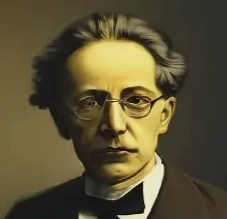
If one awakens in men the idea of freedom then the free men will incessantly go on to free themselves; if on the contrary, one only educates them, then they will at all times accommodate themselves to circumstance in the most highly educated and elegant manner and degenerate into subservient cringing souls.
▼
Source
source
p. 23
2 months 3 weeks ago
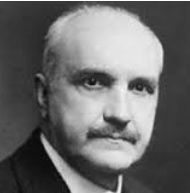
Progress, far from consisting in change, depends on retentiveness. When change is absolute there remains no being to improve and no direction is set for possible improvement: and when experience is not retained, as among savages, infancy is perpetual. Those who cannot remember the past are condemned to repeat it. This famous statement has produced many paraphrases and variants: Those who cannot learn from history are doomed to repeat it. Those who do not remember their past are condemned to repeat their mistakes. Those who do not read history are doomed to repeat it. Those who fail to learn from the mistakes of their predecessors are destined to repeat them. Those who do not know history's mistakes are doomed to repeat them.
▼
Source
source
There is a similar quote by Edmund Burke (in Revolution in France) that often leads to misattribution: "People will not look forward to posterity, who never look backward to their ancestors."

3 months 3 weeks ago
As we speak cruel time is fleeing. Seize the day, believing as little as possible in the morrow.
▼
Source
source
Book I, ode xi, line 7
4 months 1 day ago
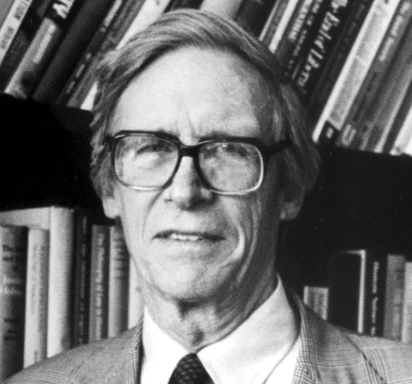
The fault of the utilitarian doctrine is that it mistakes impersonality for impartiality.
▼
Source
source
Chapter III, Section 30, pg. 190

2 months 2 weeks ago
The fundamental tenet of Steiner's teaching is that if we take the trouble to recognize the independent existence of the inner worlds of thought, and keep the mind turned in that direction, we shall soon become increasingly conscious of their reality. We are not, as Sartre believed, stranded in the universe of matter like a whale on a beach. That inner world is our natural home. Moreover, once we grasp this truth, we can also recognize that we ourselves possess an "essential ego," a "true self," a fundamental identity that goes far beyond our usual feeble sense of being "me."
▼
Source
source
p. 26

3 months 1 week ago
I look upon you as a gem of the old rock. Dedication
4 months 4 days ago
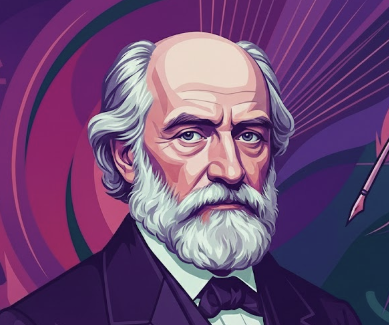
Life is a task to be done. It is a fine thing to say defunctus est; it means that the man has done his task.
▼
Source
source
"On the Sufferings of the World"
2 months 3 weeks ago
O world, thou choosest not the better part! It is not wisdom to be only wise, And on the inward vision close the eyes, But it is wisdom to believe the heart. Columbus found a world, and had no chart, Save one that faith deciphered in the skies; To trust the soul's invincible surmise Was all his science and his only art.
▼
Source
source
O World, Thou Choosest Not

4 months 6 days ago
Whenever the legislature attempts to regulate the differences between masters and their workmen, its counsellors are always the masters. When the regulation, therefore, is in favor of the workmen, it is always just and equitable; but it is sometimes otherwise when in favor of the masters.
▼
Source
source
Chapter x, Part II, p. 168.

4 months 2 days ago
In regard to propaganda the early advocates of universal literacy and a free press envisaged only two possibilities: the propaganda might be true, or it might be false. They did not foresee what in fact has happened, above all in our Western capitalist democracies-the development of a vast mass communications industry, concerned in the main neither with the true nor the false, but with the unreal, the more or less totally irrelevant. In a word, they failed to take into account man's almost infinite appetite for distraction.
▼
Source
source
Chapter 4 (pp. 35-36)
4 months 2 days ago
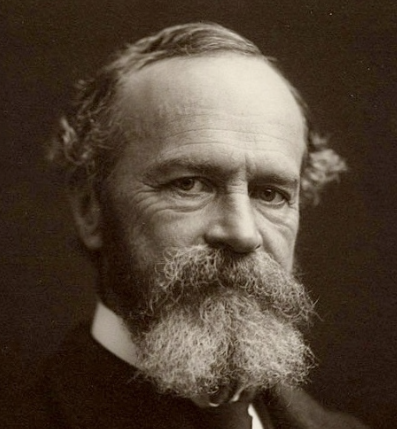
Now in all of us, however constituted, but to a degree the greater in proportion as we are intense and sensitive and subject to diversified temptations, and to the greatest possible degree if we are decidedly psychopathic, does the normal evolution of character chiefly consist in the straightening out and unifying of the inner self. The higher and the lower feelings, the useful and the erring impulses, begin by being a comparative chaos within us - they must end by forming a stable system of functions in right subordination. Unhappiness is apt to characterize the period of order-making and struggle.
▼
Source
source
Lecture VIII, "The Divided Self, and the Process of its Unification"

2 days ago
Murdering the people upon whom he also obtruded them, thus paying off former crimes committed against the liberties of one people, with crimes which he urges them to commit against the lives of another. In every stage of these repressions, we have petitioned for redress in the most humble terms, our repreated petitions have been answered only by repreated injury.
▼
Source
source
Article No. 20
3 months ago
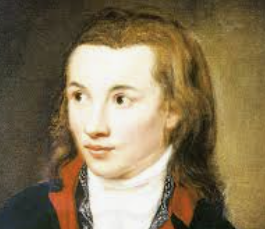
I shall in no time forget that moment. We felt as if we had had in our souls a clear passing glimpse into this wondrous World.
2 months 3 weeks ago
Diogenes, in his mud-covered sandals, tramps over the carpets of Aristippus. The cynic pullulated at every corner, and in the highest places. This cynic did nothing but saboter the civilisation of the time. He was the nihilist of Hellenism. He created nothing, he made nothing. His role was to undo - or rather to attempt to undo, for he did not succeed in his purpose. The cynic, a parasite of civilisation, lives by denying it, for the very reason that he is convinced that it will not fail. What would become of the cynic among a savage people where everyone, naturally and quite seriously, fulfils what the cynic farcically considers to be his personal role?
▼
Source
source
Chapter XI: The Self-Satisfied Age

3 months 3 days ago
Men who undertake considerable things, even in a regular way, ought to give us ground to presume ability.



1 week 6 days ago
I am now even more persuaded of the urgent need to study why Socrates was accused. The dislike of philosophy is perennial, and the seeds of the condemnation of Socrates are present at all times, not in the bosoms of pleasure-seekers, who don't give a damn, but in those of high-minded and idealistic persons who do not want to submit their aspirations to examination.
▼
Source
source
Western Civ, p. 19.
4 months 2 days ago
The gods we stand by are the gods we need and can use, the gods whose demands on us are reinforcements of our demands on ourselves and on one another. What I then propose to do is, briefly stated, to test saintliness by common sense, to use human standards to help us decide how far the religious life commends itself as an ideal kind of human activity . ... It is but the elimination of the humanly unfit, and the survival of the humanly fittest, applied to religious beliefs; and if we look at history candidly and without prejudice, we have to admit that no religion has ever in the long run established or proved itself in any other way. Religions have approved themselves; they have ministered to sundry vital needs which they found reigning. When they violated other needs too strongly, or when other faiths came which served the same needs better, the first religions were supplanted.
▼
Source
source
Lectures XIV and XV, "The Value of Saintliness"

3 months 1 week ago
Impenetrable in their dissimulation, cruel in their vengeance, tenacious in their purposes, unscrupulous as to their methods, animated by profound and hidden hatred for the tyranny of man - it is as though there exists among them an ever-present conspiracy toward domination, a sort of alliance like that subsisting among the priests of every country.
▼
Source
source
"On Women" (1772), as translated in Selected Writings (1966) edited by Lester G. Crocker

4 months 1 week ago
There is little less trouble in governing a private family than a whole kingdom.
▼
Source
source
Book I, Ch. 39

2 months 2 weeks ago
All of this that is happening to me, and happening to others about me, is it reality or is it fiction? May not all of it perhaps be a dream of God, or of whomever it may be, which will vanish as soon as He wakes? And therefore when we pray to Him, and cause canticles and hymns to rise to Him, is it not that we may lull Him to sleep, rocking the cradle of His dreams? Is not the whole liturgy, of all religions, only a way perhaps of soothing God in His dreams, so that He shall not wake and cease to dream us?
▼
Source
source
Niebla [Mist]
4 weeks ago
Society attacks early, when the individual is helpless.
▼
Source
source
Walden Two (1948), p. 95

3 months 3 weeks ago
We're at such a low point in the American empire. Its spiritual decay and its immoral decadence are so profound that we have to begin on the foundational level of a spiritual awakening and a moral reckoning. Organized greed. Institutionalized hatred. Routinized indifference to the lives of poor and working people of all colors. We've got to get beyond an analysis of the predatory capitalist processes that have saturated every nook and cranny of the culture. We've got to get beyond the ways in which the political system has been colonized by corporate wealth and by monied elite. We've got to get beyond that sense of impotence of the citizenry. These are all the signs of an empire in decline. The only thing that we have to add is military overreach, and we see that as well. Speaking to Chris Hedges about his decision to run for president in 2024.
▼
Source
source
Chris Hedges: Dr. Cornel West Announces He Is Running for President. Scheerpost. June 5, 2023
2 days ago
And for the support of this Declaration, with a firm reliance on the protection of divine Providence, we mutually pledge to each other our Lives, our Fortunes and our sacred Honor.
4 months 4 days ago
Suicide may also be regarded as an experiment - a question which man puts to Nature, trying to force her to answer. The question is this: What change will death produce in a man's existence and in his insight into the nature of things? It is a clumsy experiment to make; for it involves the destruction of the very consciousness which puts the question and awaits the answer.
▼
Source
source
Vol. 2, Ch. 13, § 160

2 months 2 weeks ago
Action is the pointer which shows the balance. We must not touch the pointer but the weight.
▼
Source
source
p. 97
4 months 1 week ago
We must not attach knowledge to the mind, we have to incorporate it there.
▼
Source
source
Ch. 25
2 weeks 4 days ago
Whoever will be free must make himself free. Freedom is no fairy gift to fall into a man's lap. What is freedom? To have the will to be responsible for one's self.
▼
Source
source
Attributed in Forbes Vol 38 Iss. 2 (1936) p. 18, and in Lifetime Speaker's Encyclopedia (1962) by Jacob Morton Braude, p. 275
4 months 2 days ago
Maybe this world is another planet's Hell.
▼
Source
source
As quoted in Peter's Quotations: Ideas for Our Time (1979) by Laurence J. Peter, p. 239 Point Counter Point (New York: The Modern Library, 1928), Chapter XVII, p. 263

3 months 2 weeks ago
Rest satisfied with doing well, and leave others to talk of you as they please.
▼
Source
source
As quoted in The World's Laconics: Or, The Best Thoughts of the Best Authors (1853) by Everard Berkeley Variant: Rest satisfied with doing well, and leave others to talk of you as they will.

3 weeks 2 days ago
Alas! such is the miseducation of these days, it is only among those that are called the uneducated classes - those educated by experience - that you can look for a Man. Even among these, such a sight is growing daily rarer. My father, in several respects, has not, that I can think of, left his fellow. Perhaps among Scottish peasants what Samuel Johnson was among English authors. I have a sacred pride in my peasant father, and would not exchange him, even now, for any king known to me. Gold and the guinea stamp - the Man and the clothes of the man. Let me thank God for that greatest of blessings, and strive to live worthily of it.
3 months 3 weeks ago
That is what is meant, I think by the allegation that it is good simply to be alive, even if one is undergoing terrible experiences. The situation is roughly this: There are elements which, if added to one's experience, make life better; there are other elements which, if added to one's experience, make life worse. But what remains when these are set aside is not merely neutral: it is emphatically positive. Therefore life is worth living even when the bad elements of experience are plentiful, and the good ones too meager to outweigh the bad ones on their own. The additional positive weight is supplied by experience itself, rather than by any of its contents.
▼
Source
source
"Death", p. 2. This passage not present in the 1970 version (Nous, IV, no. 1), but present in the 1979 version.

2 weeks 3 days ago
A thatched roof once covered free men; under marble and gold dwells slavery.
5 months ago
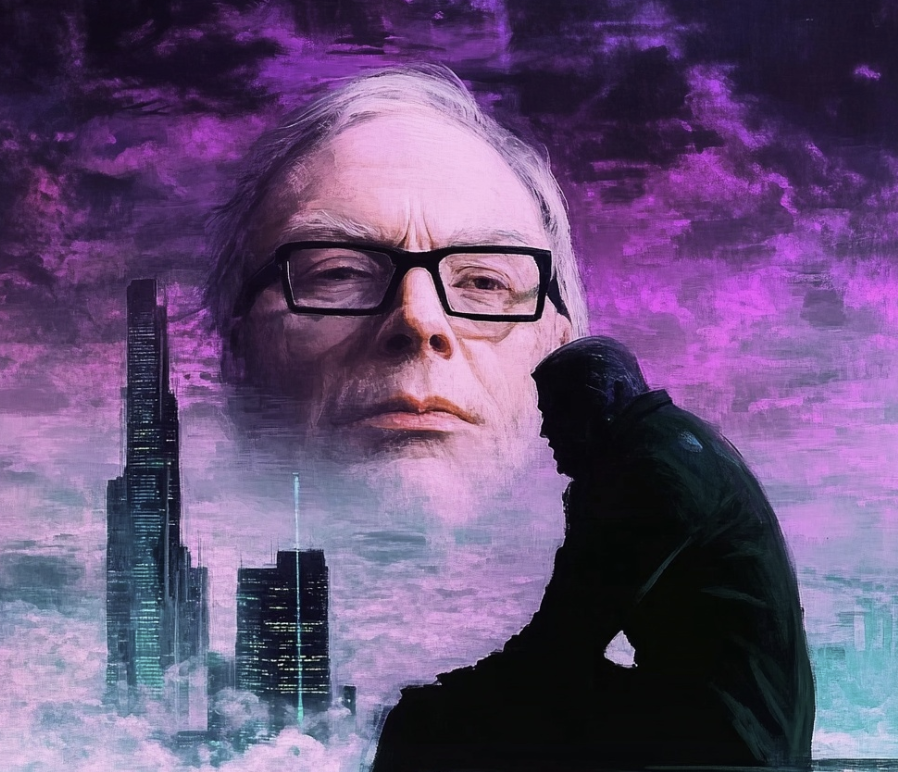
Korell is that frequent phenomenon in history: the republic whose ruler has every attribute of the absolute monarch but the name. It therefore enjoyed the usual despotism unrestrained even by those two moderating influences in the legitimate monarchies: regal, honor and court etiquette.
3 days ago
I am a mariner of Odysseus with heart of fire but with mind ruthless and clear.
▼
Source
source
Toda Raba

4 months 2 days ago
For there's no rood has not a star above it; The cordial quality of pear or plum Ascends as gladly in a single tree, As in broad orchards resonant with bees; And every atom poises for itself, And for the whole.
▼
Source
source
Musketaquid, st. 5
4 months 2 days ago
A good symbol is the best argument and is a missionary to persuade thousands.
▼
Source
source
Poetry and Imagination

2 months 2 weeks ago
Without narration, life is purely additive.

4 months 1 day ago
The open society is one in which men have learned to be to some extent critical of taboos, and to base decisions on the authority of their own intelligence.
▼
Source
source
Vol. 1, Endnotes to the Chapters : Notes to the Introduction.

4 months 1 day ago
I will not be modest. Humble, as much as you like, but not modest. Modesty is the virtue of the lukewarm.
▼
Source
source
Act 4, sc. 5

5 months 5 days ago
We obtain the concept, as we do the form, by overlooking what is individual and actual; whereas nature is acquainted with no forms and no concepts, and likewise with no species, but only with an X which remains inaccessible and undefinable for us.
2 months 5 days ago
The general nature of the speech act fallacy can be stated as follows, using "good" as our example. Calling something good is characteristically praising or commending or recommending it, etc. But it is a fallacy to infer from this that the meaning of "good" is explained by saying it is used to perform the act of commendation.
▼
Source
source
P. 139.


2 months ago
World War III is a guerrilla information war with no division between military and civilian participation.
▼
Source
source
(p.66)
2 months 2 weeks ago
The history of the Romanovs is an Elizabethan tragedy that lasts for three centuries. Its keynote is cruelty, a barbaric, pointless kind of cruelty that has always been common in the East, but that came to Europe only recently, in the time of Hitler.
▼
Source
source
pp. 61-62
4 months 1 week ago
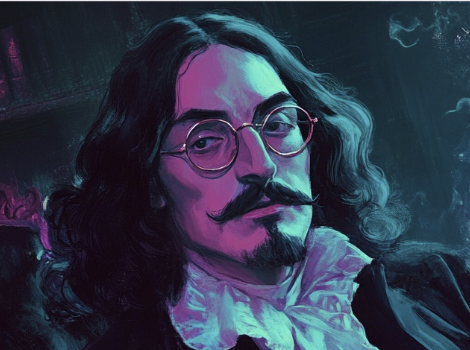
No doubt you know that Galileo had been convicted not long ago by the Inquisition, and that his opinion on the movement of the Earth had been condemned as heresy. Now I will tell you that all things I explain in my treatise, among which is also that same opinion about the movement of the Earth, all depend on one another, and are based upon certain evident truths. Nevertheless, I will not for the world stand up against the authority of the Church. ...I have the desire to live in peace and to continue on the road on which I have started.
▼
Source
source
Letter to Marin Mersenne (end of Feb., 1634) as quoted by Amir Aczel, Pendulum: Leon Foucault and the Triumph of Science
1 week 4 days ago
Human life can be lived like a poem.
▼
Source
source
p. 32
CivilSimian.com created by AxiomaticPanic, CivilSimian, Kalokagathia