


3 months 1 week ago
The infinity of All ever bringing forth anew, and even as infinite space is around us, so is infinite potentiality, capacity, reception, malleability, matter.
▼
Source
source
I 1 as translated in Giordano Bruno : His Life and Thought with annotated translation of his work On the Infinite Universe and Worlds (1950) by Dorothea Waley Singer
2 months 2 weeks ago
Elements of empirical language are manipulated in their rigidity, as if they were elements of a true and revealed language. The empirical usability of the sacred ceremonial words makes both the speaker and listener believe in their corporeal presence.
▼
Source
source
p. 7

1 month 1 week ago
The irony of scientific progress is that in solving human problems it creates problems that are not humanly soluble. Science has given humans a kind of power over the natural world achieved by no other animal. It has not given humans the ability to remodel the planet according to their wishes. The Earth is not a clock that can be wound up and stopped at will. A living system, the planet will surely rebalance itself. It will do so, however, without any regard for humans.
▼
Source
source
Sweet Morality (p. 212)

5 months ago
I recognize the necessity of animal experiments with my mind but not with my heart.

3 weeks 2 days ago
Properly speaking, the Land belongs to these two: To the Almighty God; and to all His Children of Men that have ever worked well on it, or that shall ever work well on it. No generation of men can or could, with never such solemnity and effort, sell Land on any other principle: it is not the property of any generation, we say, but that of all the past generations that have worked on it, and of all the future ones that shall work on it.

3 months ago
It would be an endless task to trace the variety of meannesses, cares, and sorrows, into which women are plunged by the prevailing opinion that they were created rather to feel than reason, and that all the power they obtain, must be obtained by their charms and weakness.
▼
Source
source
Ch. 4
2 months 3 weeks ago
Nietzsche, driven by the absolute demand of his existential truthfulness, could not abide the bourgeois world, even when its representative had human nobility.

5 months ago
It is impossible that evils should be done away with, for there must always be something opposed to the good; and they must inevitably hover about mortal nature and this earth. Therefore we ought to try to escape from earth to the dwelling of the gods as quickly as we can; and to escape is to become like God, so far as this is possible, God is in no wise and in no manner unrighteous, but utterly and perfectly righteous, and there is nothing so like him as that one of us who in turn becomes most nearly perfect in righteousness.

4 months 3 weeks ago
Men all say, "We are wise"; but being driven forward and taken in a net, a trap, or a pitfall, they know not how to escape. Men all say, "We are wise"; but happening to choose the course of the Mean, they are not able to keep it for a round month.

4 months 4 weeks ago
Knowing that certain nights whose sweetness lingers will keep returning to the earth and sea after we are gone, yes, this helps us to die.
3 months 4 weeks ago
Agriculture is now a motorized food industry, the same thing in its essence as the production of corpses in the gas chambers and the extermination camps, the same thing as blockades and the reduction of countries to famine, the same thing as the manufacture of hydrogen bombs.
▼
Source
source
Four Lectures on Technology
3 months 4 weeks ago
What is peddled about nowadays as philosophy, especially that of N.S. [National Socialism], but has nothing to do with the inner truth and greatness of that movement [namely the encounter between global technology and modern humanity] is nothing but fishing in that troubled sea of values and totalities.
▼
Source
source
Introduction to Metaphysics (1953) - a publication of lectures of 1935.
3 weeks 4 days ago
While the positivists were proclaiming the end "once and for all" of unverifiable metaphysical systems and speculative philosophy in general, new doctrines in flagrant contradiction to those ideals have sprung up one after the other. Positivists see no more in this development than evidence of human stupidity, not any reflection on themselves.
▼
Source
source
Chapter Eight, Logical Empiricism, p. 198

2 months 2 weeks ago
Law is the continuous manifestation of God's presence - not reason for believing him absent. Great confusion arises from our using the same word law in two totally distinct senses ... as the cause and the effect. It is said that to "explain away" everything by law is to enable us to do without God. But law is no explanation of anything; law is simply a generalization, a category of facts. Law is neither a cause, nor a reason, nor a power, nor a coercive force. It is nothing but a general formula, a statistical table. Law brings us continually back to God instead of carrying us away from him.
▼
Source
source
Suggestions for Thought : Selections and Commentaries (1994), edited by Michael D. Calabria and Janet A. MacRae, p. 41

4 months 4 days ago
Go into the London Stock Exchange - a more respectable place than many a court - and you will see representatives from all nations gathered together for the utility of men. Here Jew, Mohammedan and Christian deal with each other as though they were all of the same faith, and only apply the word infidel to people who go bankrupt. Here the Presbyterian trusts the Anabaptist and the Anglican accepts a promise from the Quaker.
▼
Source
source
Letters on England, letter 6, "On the Presbyterians" as quoted in Trust and Tolerance, Richard H. Dees, Routledge, London and New York, (2004) p. 92, published first in English in 1733.
1 week 6 days ago
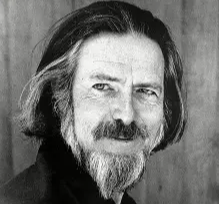
For several years I have referred to this, hitherto, rare and inaccessible work as the I-told-you-so-book, because it has often been implied that I have invented my explanations of Buddhism out of thin air, thus falsifying its authentic teachings... Yet, despite the occultist flavor of its title, The Secret Oral Teachings in the Tibetan Buddhist Sects is the most direct, no-nonsense, and down-to-earth explanation of Mahayana Buddhism which has thus far been written.
▼
Source
source
Watts' Foreward to The Secret Oral Teachings in the Tibetan Buddhist Sects (1964)], by Alexandra David Neel

4 months 1 week ago
The thing I fear most is fear.
▼
Source
source
Ch. 18. That Men are not to judge of our Happiness till after Death (tr. Donald M. Frame)
3 months 1 week ago
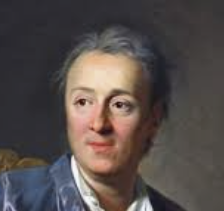
The most dangerous madmen are those created by religion, and ... people whose aim is to disrupt society always know how to make good use of them on occasion.

Just now
Genius does not seem to derive any great support from syllogisms. Its carriage is free; its manner has a touch of inspiration. We see it come, but we never see it walk.
▼
Source
source
Tenth Dialogue
4 months 1 week ago
Fame and tranquility can never be bedfellows.
▼
Source
source
Book I, Ch. 39

2 months 2 weeks ago
Thinking is more erotic than calculating.
2 weeks 4 days ago
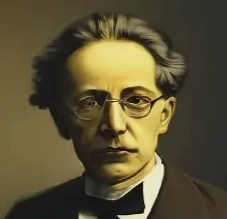
Egoism, as Stirner uses it, is not opposed to love nor to thought; it is no enemy of the sweet life of love, nor of devotion and sacrifice; it is no enemy of intimate warmth, but it is also no enemy of critique, nor of socialism, nor, in short, of any actual interest. It doesn't exclude any interest.
1 month 1 week ago
To affirm that humans thrive in many different ways is not to deny that there are universal human values. Nor is it to reject the claim that there should be universal human rights. It is to deny that universal values can only be fully realized in a universal regime. Human rights can be respected in a variety of regimes, liberal and otherwise. Universal human rights are not an ideal constitution for a single regime throughout the world, but a set of minimum standards for peaceful coexistence among regimes that will always remain different.
▼
Source
source
Two Faces of Liberalism (New Press, 2000, ISBN 0-745-62259-3. 168 pages), ch. 1: Liberal Toleration (p. 21)
3 months 1 week ago
It is manifest that every soul has a certain continuity with the soul of the Universe, so that it must be understood to exist and to be included not only there where it liveth and feeleth, but it is also by its essence and substance diffused throughout immensity. The power of each soul is itself somehow present afar in the Universe. It is not mixed, yet is there in some presence.

2 months 3 weeks ago
Jesus answered: "Believe me, Barnabas that I cannot weep as much as I ought. For if men had not called me God, I should have seen God here as he will be seen in paradise, and should have been safe not to fear the day of judgment. But God knows that I am innocent, because never have I harboured thought to be held more than a poor slave. No, I tell you that if I had not been called God I should have been carried into paradise when I shall depart from the world, whereas now I shall not go thither until the judgment. Now you see if I have cause to weep."
▼
Source
source
Ch. 112

2 months 5 days ago
The assertion fallacy ... is the fallacy of confusing the conditions for the performance of the speech act of assertion with the analysis of the meaning of particular words occurring in certain assertions.
▼
Source
source
P. 141.
3 months 2 days ago
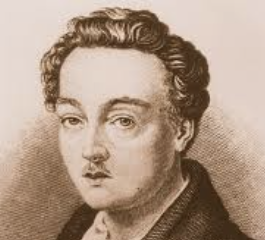
We have not made the Revolution, the Revolution has made us.
▼
Source
source
Act II.
1 week 4 days ago
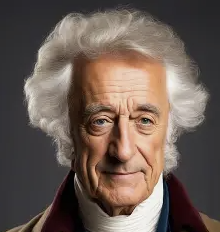
Self-respect is the cornerstone of all virtue.
▼
Source
source
As quoted in A Toolbox for Humanity : More Than 9000 Years of Thought (2004) by Lloyd Albert Johnson, p. 147

2 months 2 days ago
Condemn me if you choose - I do that myself, - but condemn me, and not the path which I am following, and which I point out to those who ask me where, in my opinion, the path is.
▼
Source
source
"Letter to N.N.," quoted by Havelock Ellis in "The New Spirit" (1892) p. 226
4 months 3 days ago
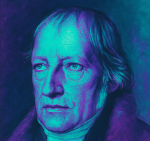
What the history of Philosophy shows us is a succession of noble minds, a gallery of heroes of thought, who, by the power of reason, have penetrated into the being of things, of nature and of spirit, into the Being of God, and have won for us by their labours the highest treasure, the treasure of reasoned knowledge.
▼
Source
source
Introduction p. 1 Lectures on the history of philosophy, Translated from German by E. S. Haldane in Three Volumes (1892-96) full text
3 months 3 weeks ago
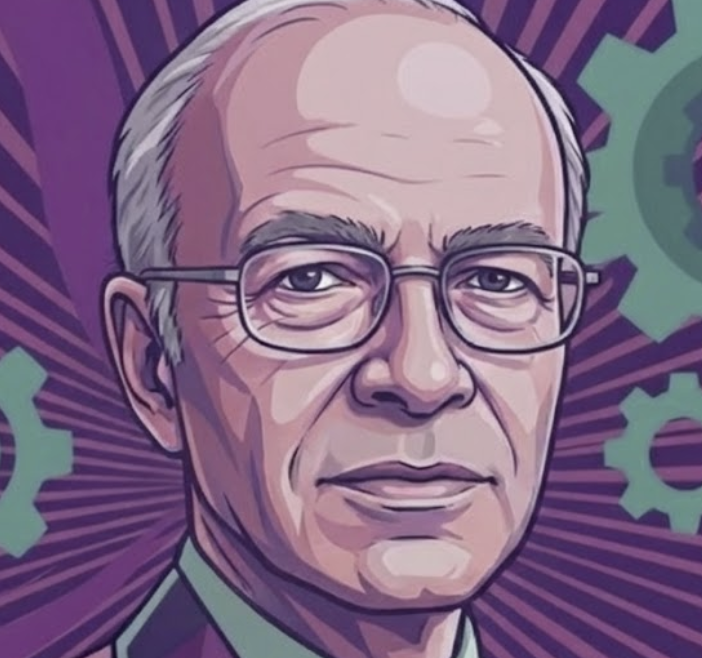
Speciesism-the word is not an attractive one, but I can think of no better term-is a prejudice or attitude of bias in favor of the interests of members of one's own species and against those of members of other species.
▼
Source
source
Ch. 1: All Animals Are Equal
3 months 4 weeks ago
If beings are grasped as will to power, the "should" which is supposed to hang suspended over them, against which they might be measured, becomes superfluous. If life itself is will to power, it is itself the ground, principium, of valuation. Then a "should" does not determine being. Being determines a "should." "When we talk of values we are speaking under the inspiration or optics of life: life itself compels us to set up values; life itself values through us whenever we posit values."
▼
Source
source
(VIII, 89) p. 32



3 months 3 weeks ago
Fools learn wisdom through misfortune.
4 months 5 days ago
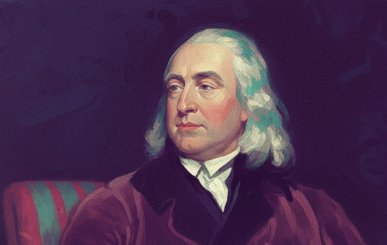
In looking over the catalogue of human actions (says a partizan of this principle) in order to determine which of them are to be marked with the seal of disapprobation, you need but to take counsel of your own feelings: whatever you find in yourself a propensity to condemn, is wrong for that very reason. For the same reason it is also meet for punishment: in what proportion it is adverse to utility, or whether it be adverse to utility at all, is a matter that makes no difference. In that same proportion also is it meet for punishment: if you hate much, punish much: if you hate little, punish little: punish as you hate. If you hate not at all, punish not at all: the fine feelings of the soul are not to be overborne and tyrannized by the harsh and rugged dictates of political utility.
▼
Source
source
Ch. 2: Of Principles Adverse to That of Utility

4 months 2 days ago
We boil at different degrees.
▼
Source
source
Eloquence
5 months ago
I do see one large and grievous kind of ignorance, separate from the rest, and as weighty as all the other parts put together. Thinking that one knows a thing when one does not know it. Through this, I believe, all the mistakes of the mind are caused in all of us.

3 months ago
Fate and temperament are the names of a concept.
▼
Source
source
As quoted in Demian (1972) by Hermann Hesse, trans. W.J. Strachan

4 months 3 days ago
I do wish I believed in the life eternal, for it makes me quite miserable to think man is merely a kind of machine endowed, unhappily for himself, with consciousness.
▼
Source
source
Greek Exercises (1888); at the age of fifteen, Russell used to write down his reflections in this book, for fear that his people should find out what he was thinking.
3 months 3 weeks ago
No differeance without alterity, no alterity without singularity, no singularity without here-now.
▼
Source
source
Injunctions of Marx, p,31

3 weeks 6 days ago
Therefore tolerance of diversity, of people that don't believe the same thing that you do, has always been at the core of this pragmatic project to enable diverse populations to live with one another.
▼
Source
source
9:00
3 days ago
This book is not a biography; it is the confession of every man who struggles. In publishing it I have fulfilled my duty, the duty of a person who struggled much, was embittered in his life,

2 months 3 weeks ago
The characteristic of the hour is that the commonplace mind, knowing itself to be commonplace, has the assurance to proclaim the rights of the commonplace and to impose them wherever it will. As they say in the United States: "to be different is to be indecent." The mass crushes beneath it everything that is different, everything that is excellent, individual, qualified and select. Anybody who is not like everybody, who does not think like everybody, runs the risk of being eliminated. And it is clear, of course, that this "everybody" is not "everybody." "Everybody" was normally the complex unity of the mass and the divergent, specialised minorities. Nowadays, "everybody" is the mass alone.
▼
Source
source
Chap.I: The Coming Of The Masses

4 months 4 days ago
Of all the ways whereby children are to be instructed, and their manners formed, the plainest, easiest, and most efficacious, is, to set before their eyes the examples of those things you would have them do, or avoid; which, when they are pointed out to them, in the practice of persons within their knowledge, with some reflections on their beauty and unbecomingness, are of more force to draw or deter their imitation, than any discourses which can be made to them.
▼
Source
source
Sec. 82

2 weeks 3 days ago
The one is ready even to sacrifice itself for the good of others, the other to plunge into peril provided it drags others with it.

4 months 4 days ago
A man of intellect is like an artist who gives a concert without any help from anyone else, playing on a single instrument - a piano, say, which is a little orchestra in itself. Such a man is a little world in himself; and the effect produced by various instruments together, he produces single-handed, in the unity of his own consciousness. Like the piano, he has no place in a symphony; he is a soloist and performs by himself - in solitude, it may be; or if in the company with other instruments, only as principal; or for setting the tone, as in singing.
2 months 3 weeks ago
No man is bound by the words themselves, either to kill himselfe, or any other man.
▼
Source
source
The Second Part, Chapter 21, p. 112
4 months 3 days ago
Thus mathematics may be defined as the subject in which we never know what we are talking about, nor whether what we are saying is true.
▼
Source
source
Ch. 5: Mathematics and the Metaphysicians

3 months 2 days ago
No nation which has sunk into this state of dependence can raise itself out of it by the means which have usually been adopted hitherto. Since resistance was useless to it when it was still in possession of all its powers, what can such resistance avail now that it has been deprived of the greater part of them?
▼
Source
source
Introduction p. 9-10
2 weeks 4 days ago
What matters the party to me? I shall find enough anyhow who unite with me without swearing allegiance to my flag.
▼
Source
source
Dover 2005, p. 236
CivilSimian.com created by AxiomaticPanic, CivilSimian, Kalokagathia