


1 month 2 weeks ago
There is no connection between the elements in an electric world, which is equivalent to being surrounded by the human unconscious.
▼
Source
source
(p. 260)
2 weeks 2 days ago
The man who says that the world is a machine has really advanced no further than to say that he is so well satisfied with the analogy that he is through with searching any further.
▼
Source
source
Ch. VI: "The Drama of Destiny", §5, p. 130.

3 months 1 week ago
Fame and wealth without wisdom are unsafe possessions.
1 month 2 weeks ago
I have just discovered that without her father's consent this sweet, trusting, gullible six-year-old is being sent, for weekly instruction, to a Roman Catholic nun. What chance has she?
3 months 2 weeks ago
The only knowledge that can truly orient action is knowledge that frees itself from mere human interests and is based in Ideas-in other words knowledge that has taken a theoretical attitude.
▼
Source
source
p. 301

1 week 3 days ago
In all European countries, especially in England, one class of Captains and commanders of men, recognizable as the beginning of a new real and not imaginary "Aristocracy," has already in some measure developed itself: the Captains of Industry;-happily the class who above all, or at least first of all, are wanted in this time. In the doing of material work, we have already men among us that can command bodies of men. And surely, on the other hand, there is no lack of men needing to be commanded: the sad class of brother-men whom we had to describe as "Hodge's emancipated horses," reduced to roving famine,-this too has in all countries developed itself; and, in fatal geometrical progression, is ever more developing itself, with a rapidity which alarms every one. On this ground, if not on all manner of other grounds, it may be truly said, the "Organization of Labor" (not organizable by the mad methods tried hitherto) is the universal vital Problem of the world.
4 months 5 days ago
And these were the dishes wherein to me, hunger-starven for thee, they served up the sun and the moon.
▼
Source
source
III, 6
Just now
Revolutionary syndicalism keeps alive the desire to strike in the masses and only prospers when important strikes, accompanied by violence, take place.
▼
Source
source
p. 39
4 months 4 days ago
When you close your doors, and make darkness within, remember never to say that you are alone, for you are not alone; nay, God is within, and your genius is within. And what need have they of light to see what you are doing?
▼
Source
source
Book I, ch. 14, 13, 14.
1 week 4 days ago
If you let people follow their feelings, they will be able to do good. This is what is meant by saying that human nature is good.
▼
Source
source
Book 6, pt. 1, v. 6

2 months 2 weeks ago
We define only out of despair, we must have a formula... to give a facade to the void.
2 months 1 week ago
Everything ideal has a natural basis and everything natural an ideal development.
3 months 1 week ago
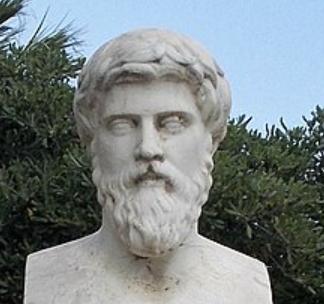
As Athenodorus was taking his leave of Cæsar, "Remember," said he, "Cæsar, whenever you are angry, to say or do nothing before you have repeated the four-and-twenty letters to yourself."
▼
Source
source
Cæsar Augustus
1 month 1 week ago
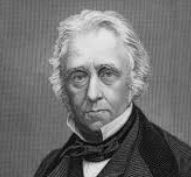
If it is the moral right we are to look at, I say, that on every principle of moral obligation, I hold that the Jew has a right to political power.
▼
Source
source
Speech in the House of Commons (5 April 1830) in favour of Robert Grant's Jewish Disabilities Bill

1 month 2 weeks ago
The universal hypocrisy has so entered into the flesh and blood of all classes of our modern society, it has reached such a pitch that nothing in that way can rouse indignation. Hypocrisy in the Greek means "acting," and acting-playing a part-is always possible. Chapter XII, Conclusion-Repent Ye, for the Kingdom of Heaven is at Hand Variant Translation: Hypocrisy with good reason means the same as acting, and anybody can pretend - act a part.
2 months 5 days ago
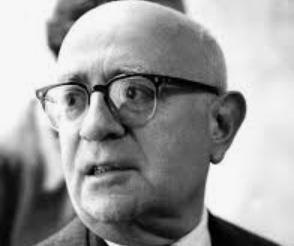
The more reified the world becomes, the thicker the veil cast upon nature, the more the thinking weaving that veil in its turn claims ideologically to be nature, primordial experience.
▼
Source
source
p. 7
4 months 2 weeks ago
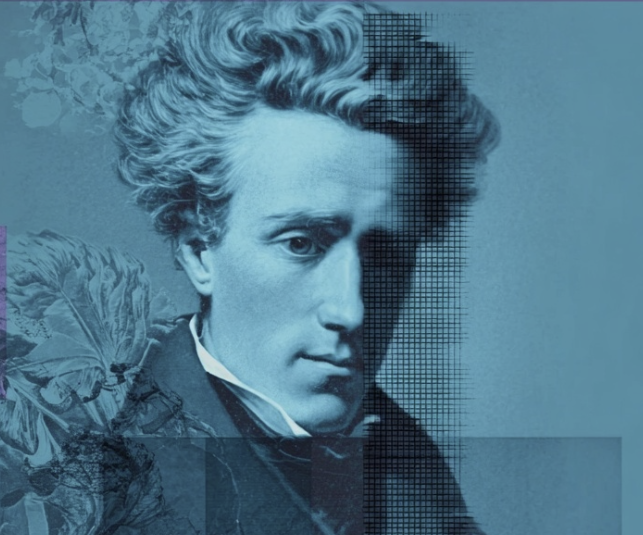
I have needed God every day to defend myself against the abundance of thoughts.

4 days ago
He who receives a benefit with gratitude, repays the first installment of it.
▼
Source
source
De Beneficiis (On Benefits): Book 2, cap. 22, line 1.
1 month 2 weeks ago
Logic is figure without a ground.
▼
Source
source
(p. 241)
2 months 1 week ago
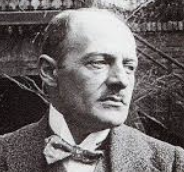
All the seemingly positive valuations and judgments of ressentiment are hidden devaluations and negations.
▼
Source
source
L. Coser, trans. (1973), p. 67
1 month 4 weeks ago
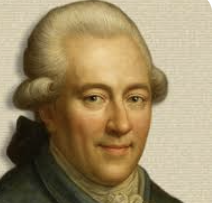
I have remarked very clearly that I am often of one opinion when I am lying down and of another when I am standing up.
▼
Source
source
F 73
1 month 2 weeks ago
Art is a human activity consisting in this, that one consciously, by means of certain external symbols, conveys to others the feelings one has experienced, whereby people so infected by these feelings, also experience them.

2 months 3 weeks ago
In America, more than anywhere else in the world, care has been taken constantly to trace clearly distinct spheres of action for the two sexes, and both are required to keep in step, but along paths that are never the same.
▼
Source
source
Book Three, Chapter XII.
1 week 3 days ago
But leaving this, let us remark one thing which is very plain: That whatever be the uses and duties, real or supposed, of a Secretary in Parliament, his faculty to accomplish these is a point entirely unconnected with his ability to get elected into Parliament, and has no relation or proportion to it, and no concern with it whatever.

2 months 1 week ago
Therefore every scribe which is instructed unto the kingdom of heaven is like unto a man that is an householder, which bringeth forth out of his treasure things new and old.
▼
Source
source
13:52 (KJV)

3 months 2 weeks ago
No man treats a motorcar as foolishly as he treats another human being. When the car will not go, he does not attribute its annoying behaviour to sin; he does not say, "You are a wicked motorcar, and I shall not give you any more petrol until you go." He attempts to find out what is wrong and to set it right. An analogous way of treating human beings is, however, considered to be contrary to the truths of our holy religion.
▼
Source
source
"The Doctrine of Free Will"
2 months 3 weeks ago
The people reign over the American political world as God rules over the universe. It is the cause and the end of all things; everything rises out of it and is absorbed back into it.
▼
Source
source
Chapter IV, Part I.

3 months 3 weeks ago
Remorse sleeps during a prosperous period but wakes up in adversity.
▼
Source
source
Variant translations: Remorse sleeps during prosperity but awakes bitter consciousness during adversity. Remorse goes to sleep during a prosperous period and wakes up in adversity.

3 months 2 weeks ago
It's not too much to say that every indication of Design in the Kosmos is evidence against the Omnipotence of the Designer. For what is meant by Design? Contrivance: the adaptation of means to an end. But the necessity for contrivance - the need of employing means - is a consequence of the limitation of power. Who would have recourse to means if to attain his end his mere word was sufficient? The very idea of means implies that the means have an efficacy which the direct action of the being who employs them has not. ...
3 months 2 weeks ago
Democracy is the process by which people choose the man who'll get the blame.
▼
Source
source
Attributed to Russell in Geary's Guide to the World's Great Aphorists (2007), p. 346

3 months 2 weeks ago
I have no faith in precision: ...simplicity and clarity are values in themselves, but not... [of] precision or exactness...

3 months 3 weeks ago
Tis certainly a kind of indignity to philosophy, whose sovereign authority ought every where to be acknowledg'd, to oblige her on every occasion to make apologies for her conclusions, and justify herself to every particular art and science, which may be offended at her.
▼
Source
source
Part 4, Section 5
2 months 2 weeks ago
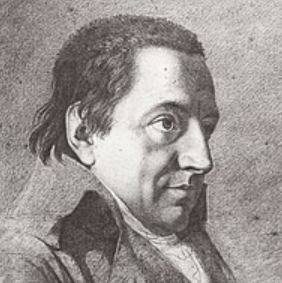
As Being and Life are one and the same, so are Death and Nothingness one and the same. But there is no real Death and no real Nothing ness, as we have already said. There is, however, an Apparent Life, and this is the mixture of life and death, of being and nothingness.
▼
Source
source
P. 4
1 month 2 weeks ago
Art is a human activity having for its purpose the transmission to others of the highest and best feelings to which men have risen.
▼
Source
source
Ch. 8
3 months 1 week ago
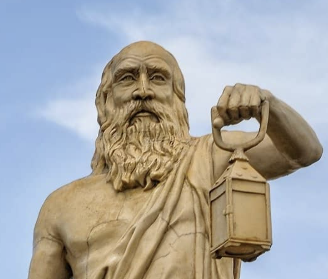
Asked where he came from, he said, "I am a citizen of the world."
▼
Source
source
Diogenes Laërtius, vi. 63

3 months 2 weeks ago
God cannot give us a happiness and peace apart from Himself, because it is not there. There is no such thing.
▼
Source
source
Book II, Chapter 3, "The Shocking Alternative"

3 months 2 weeks ago
That man is the richest whose pleasures are the cheapest.
▼
Source
source
March 11, 1856

4 months 4 days ago
We are all sprung from a heavenly seed.
▼
Source
source
Book II, line 991 (tr. Munro)
2 months 2 days ago
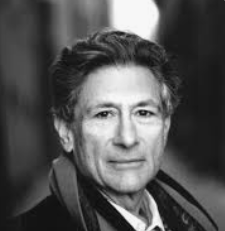
I retain my faith in the humanist tradition, that it's possible to deal with discrepant experiences truthfully without resolving into simple things like only women should write about women, only Chicanos should write about Chicanos, only Latinos should write about Latinos... I think that's the most damaging crime, and misapprehension of what I'm saying. That's why they debate all these things and they trace them back to me and people say 'you did that!' Absolutely not. I'm talking from a universalistic, if you like cosmopolitan point of view to which I adhere and which is the only way the world makes sense to me. I don't believe in the politics of identity, although in many ways paradoxically I seem to be the father of identity politics, but it's a thing I totally disbelieve in because I realise the damage that identities have done.
▼
Source
source
Interview with Michaël Zeeman for Leven en Werken
3 months 3 weeks ago
Our island is this earth; and the most striking object we behold is the sun. As soon as we pass beyond our immediate surroundings, one or both of these must meet our eye. Thus the philosophy of most savage races is mainly directed to imaginary divisions of the earth or to the divinity of the sun.

2 months 1 week ago
Man is a thinking being. His reason enables him to recognize his own potentialities and those of his world. He is thus not at the mercy of the facts that surround him, but is capable of subjecting them to a higher standard, that of reason.
▼
Source
source
P. 6
2 months 2 weeks ago
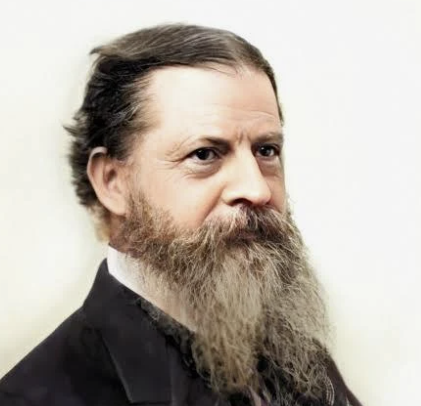
Fourth, this supreme law, which is celestial and living harmony, does not so much as demand that the special ideas shall surrender their peculiar arbitrariness and caprice entirely; for that would be self-destructive. It only requires that they influence and be influenced by one another.
3 months 3 weeks ago
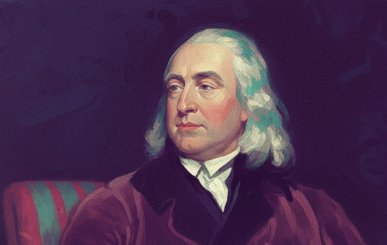
Prose is when all the lines except the last go on to the end. Poetry is when some of them fall short of it.
▼
Source
source
As quoted in Life of John Stuart Mill (1954) by M. St.J. Packe, Bk. I, Ch. II

2 months 2 days ago
When I was in my teens, I invented a term to describe them. I call it 'holiday consciousness' . . . because I often experienced this sense of optimism and wide-awakeness when setting out on a journey or a holiday. It was always the feeling that the world is self-evidently complex and beautiful, and that life is so obviously good that man's boredom and defeat is an absurdity . . . And then I used to ask: Why do men forget this so easily? And the answer seemed obvious: because the human will is so flabby and weak. Instead of being self-controlled, self-driven creatures, most men are little more than leaves on a stream, they drift along hoping for the best. I once wrote that men are like grandfather clocks driven by watchsprings.
▼
Source
source
p. 75

3 months 2 weeks ago
It is the good children, Madame, who make the most terrible revolutionaries. They say nothing, they do not hide under the table, they eat only one sweet at a time, but later on, they make Society pay dearly for it!
▼
Source
source
Jessica, Act 3, sc. 1
4 days ago
What madness this is, to punish oneself because one is unfortunate, and not to lessen, but to increase one's ills! You ought to display, in this matter also, that decent behaviour and modesty which has characterised all your life: for there is such a thing as self-restraint in grief also.

3 months 3 weeks ago
The plague of man is boasting of his knowledge.
▼
Source
source
Ch. 12 (tr. ?)
3 months 2 weeks ago
A man, an adult, is precisely what [Aeneas] is: Achilles had been little more than a passionate boy.
▼
Source
source
A Preface to Paradise Lost (1942), Chapter 6: "Virgil and the Subject of Secondary Epic"

3 months 3 weeks ago
Being of opinion that the doctrine and history of so extraordinary a sect as the Quakers were very well deserving the curiosity of every thinking man, I resolved to make myself acquainted with them, and for that purpose made a visit to one of the most eminent of that sect in England, who, after having been in trade for thirty years, had the wisdom to prescribe limits to his fortune, and to his desires, and withdrew to a small but pleasant retirement in the country, not many miles from London. Here it was that I made him my visit. His house was small, but neatly built, and with no other ornaments but those of decency and convenience.
3 months 2 weeks ago
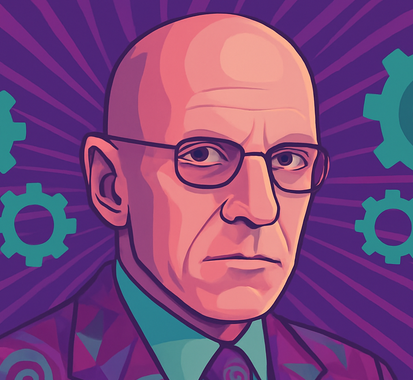
Exercise is the technique by which one imposes on the body tasks that are both repetitive and different, but always graduated. By bending behavior towards a terminal state, exercise makes possible a perpetual characterization of the individual...It thus assures, in the form of continuity and constraint, a growth, an observation, a qualification.
CivilSimian.com created by AxiomaticPanic, CivilSimian, Kalokagathia