

2 months 3 weeks ago
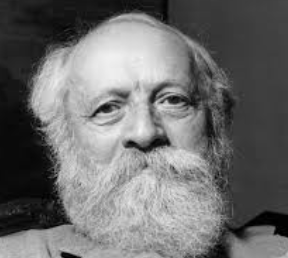
Before his death, Rabbi Zusya said, "In the coming world, they will not ask me: 'Why were you not Moses?' They will ask me: 'Why were you not Zusya?'"
▼
Source
source
Tales of the Hasidim (1947), 1991 Ebook edition, p.251, as quoted in Jewish Currents.

2 months 2 weeks ago
Dadaism and surrealism ... represented the intoxication of total license, the intoxication in which the mind wallows when it has made a clean sweep of value and surrendered to the immediate. The good is the pole towards which the human spirit is necessarily oriented, not only in action but in every effort, including the effort of pure intelligence. The surrealists have set up non-oriented thought as a model; they have chosen the total absence of value as their supreme value. Men have always been intoxicated by license, which is why, throughout history, towns have been sacked. But there has not always been a literary equivalent for the sacking of towns. Surrealism is such an equivalent.
▼
Source
source
"The responsibility of writers," p. 167
4 months 3 weeks ago
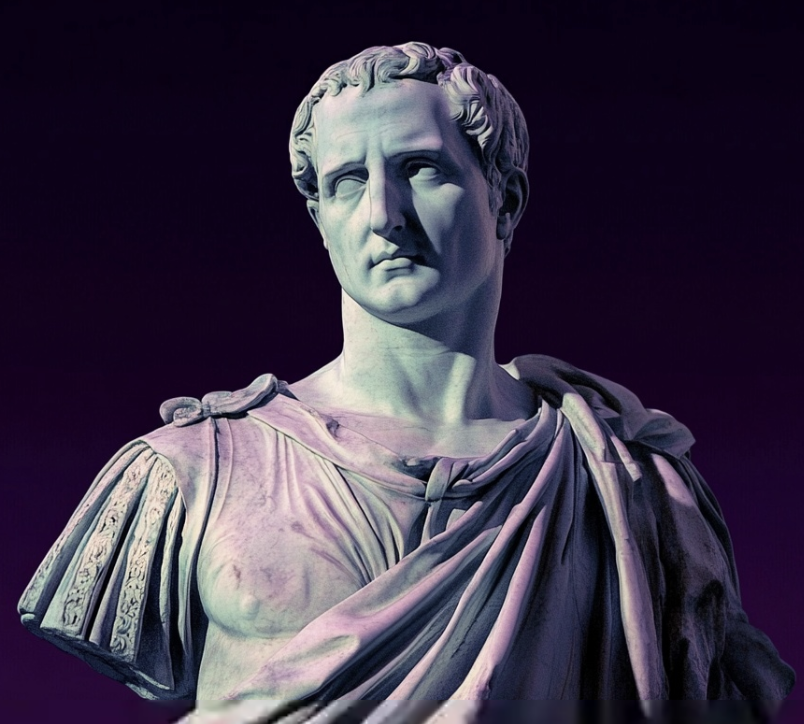
We know, that of all living beings man is the best formed, and, as the gods belong to this number, they must have a human form. ... I do not mean to say that the gods have body and blood in them; but I say that they seem as if they had bodies with blood in them. . . , Epicurus, for whom hidden things were as tangible as if he had touched them with his finger, teaches us that gods are not generally visible, but that they are intelligible; that they are not bodies having a certain solidity . . . but that we can recognize them by their passing images; that as there are atoms enough in the infinite space to produce such images, these are produced before us . . . and make us realize what are these happy, immortal beings.
▼
Source
source
Book I, Section 18

1 day ago
Nothing can come out of nothing, any more than a thing can go back to nothing.
▼
Source
source
IV, 4

5 months 2 days ago
Socrates: I think the most likely view is, that these ideas exist in nature as patterns, and the other things resemble them and are imitations of them; their participation in ideas is assimilation to them, that and nothing else.Parmenides: It is impossible that anything be like the idea, or the idea like anything; for if they are alike, some further idea, in addition to the first, will always appear, and if that is like anything, still another, and a new idea will always be arising, if the idea is like that which partakes of it.
4 weeks ago
If all the parts of the universe are interchained in a certain measure, any one phenomenon will not be the effect of a single cause, but the resultant of causes infinitely numerous; it is, one often says, the consequence of the state of the universe the moment before.
4 months 6 days ago
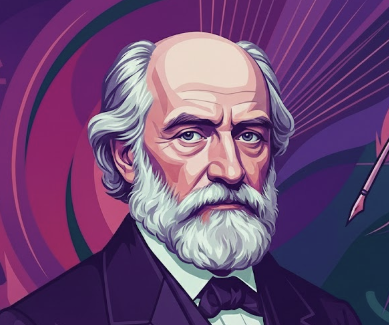
From the fundamental nature of the Philistine, it follows that, in regard to others, as he has no intellectual but only physical needs, he will seek those who are capable of satisfying the latter not the former. And so of all the demands he makes of others the very smallest will be that of any outstanding intellectual abilities. On the contrary, when he comes across these they will excite his antipathy and even hatred. For here he has a hateful feeling of inferiority and also a dull secret envy which he most carefully attempts to conceal even from himself; but in this way it grows sometimes into a feeling of secret rage and rancour. Therefore it will never occur to him to assess his own esteem and respect in accordance with such qualities, but they will remain exclusively reserved for rank and wealth, power and influence, as being in his eyes the only real advantages to excel in which is also his desire.
▼
Source
source
E. Payne, trans. (1974) Vol. 1, pp. 344-345

4 months 4 days ago
Take the happiest man, the one most envied by the world, and in nine cases out of ten his inmost consciousness is one of failure. Either his ideals in the line of his achievements are pitched far higher than the achievements themselves, or else he has secret ideals of which the world knows nothing, and in regard to which he inwardly knows himself to be found wanting.
▼
Source
source
Lectures VI and VII, "The Sick Soul"
2 months 6 days ago
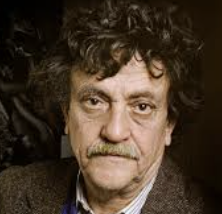
1. Find a subject you care about.2. Do not ramble, though.3. Keep it simple.4. Have the guts to cut.5. Sound like yourself.6. Say what you mean to say.7. Pity the readers.
▼
Source
source
As quoted in Science Fictionisms (1995), compiled by William Rotsler

4 months 6 days ago
I die adoring God, loving my friends, not hating my enemies, and detesting superstition.
▼
Source
source
Déclaration de Voltaire, note to his secretary, Jean-Louis Wagnière, 28 February 1778

2 months 3 weeks ago
The wretched consciousness shrinks from it own annihilation, and just as an animal spirit newly severed from the womb of the world, finds itself confronted with the world and knows itself distinct from it, so consciousness must needs desire to possess another life than that of the world itself.
2 weeks 1 day ago
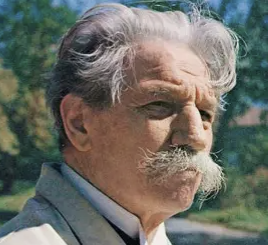
Not one of us knows what effect his life produces, and what he gives to others; that is hidden from us and must remain so, though we are often allowed to see some little fraction of it, so that we may not lose courage.
▼
Source
source
p. 164

4 months 5 days ago
Enthusiasm is supernatural serenity.
▼
Source
source
Pearls of Thought (1881) p. 74

4 months 4 days ago
The measure of a master is his success in bringing all men round to his opinion twenty years later.
▼
Source
source
Culture

4 months 5 days ago
Better red than dead.
▼
Source
source
Bertrand Russell, attributes this phrase to 'West German friends of peace' but adopted this slogan for the Campaign for Nuclear Disarmament he helped found William Safire, Safire's Political Dictionary, (2008) p. 49-50

2 months 4 days ago
To attain this end we must secure a preponderance of virtue over vice and must endeavor to secure that the honest man may, even in this world, receive a lasting reward for his virtue. But in these great endeavors we are gravely hampered by the political institutions of today. What is to be done in these circumstances? To favor revolutions, overthrow everything, repel force by force?... No! We are very far from that. Every violent reform deserves censure, for it quite fails to remedy evil while men remain what they are, and also because wisdom needs no violence.
▼
Source
source
Book V, Ch. 7
2 months 6 days ago
Generally speaking, espionage offers each spy an opportunity to go crazy in a way he finds irresistible.
4 months 3 weeks ago
To those whose talents are above mediocrity, the highest subjects may be announced. To those who are below mediocrity, the highest subjects may not be announced.
4 months 1 week ago
There must be a seed of every good thing in the character of men, otherwise no one can bring it out. Lacking that, analogous motives, honor, etc., are substituted. Parents are in the habit of looking out for the inclinations, for the talents and dexterity, perhaps for the disposition of their children, and not at all for their heart or character.
▼
Source
source
Part III : Selection on Education from Kant's other Writings, Ch. I Pedagogical Fragments, # 13

4 months 3 days ago
We are in hell and I will have my turn!
▼
Source
source
Inès warns Garcin and Estelle not to make love in her presence, Act 1, sc. 5
3 months 3 weeks ago
The sight of both eyes becomes one.
▼
Source
source
fr. 88

4 months 4 days ago
The unitive knowledge of the Divine Ground has, as its necessary condition, self-abnegation and charity. Only by means of self-abnegation and charity can we clear away the evil, folly and ignorance which constitute the thing we call our personality and prevent us from becoming aware of the spark of divinity illuminating the inner man.

5 months 1 day ago
At any street corner the feeling of absurdity can strike any man in the face.
2 months 3 weeks ago
The masses are our masters; and for every one who looks facts in the face his existence has become dependent on them, so that the thought of them must control his doings, his cares, and his duties. Even an articulated mass always tends to become unspiritual and inhuman. It is life without existence, superstitions without faith. It may stamp all flat; it is disinclined to tolerate independence and greatness, but prone to constrain people to become as automatic as ants.
1 day ago
Among the arts of expression one is suited to this purpose, another to that. It is hard to express movement in stone or rest in music. It is harder still to express permanence in speech.
1 month 1 day ago
A free press is not a privilege but an organic necessity in a great society. ...Without criticism and reliable and intelligent reporting, the government cannot govern. For there is no adequate way in which it can keep itself informed about what the people of the country are thinking and doing and wanting.
▼
Source
source
International Press Institute Association, London
2 months ago
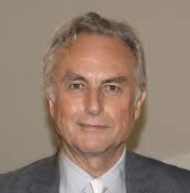
It's been suggested that if the super-naturalists really had the powers they claim, they'd win the lottery every week. I prefer to point out that they could also win a Nobel Prize for discovering fundamental physical forces hitherto unknown to science. Either way, why are they wasting their talents doing party turns on television?By all means let's be open-minded, but not so open-minded that our brains drop out.

3 months ago
The reasons for persisting in Being seem less and less well founded, and our successors will find it easier than we to be rid of such obstinacy.
4 months 4 days ago
Of course I base my characters partly on the people I know-one can't escape it-but fictional characters are oversimplified; they're much less complex than the people one knows.
▼
Source
source
Interview, The Paris Review, 1960
2 months 6 days ago
Literature is idiosyncratic arrangements in horizontal lines in only twenty-six symbols, ten arabic numbers, and about eight punctuation marks.
▼
Source
source
Public conversation with Lee Stringer, in Like Shaking Hands With God
3 months 1 week ago
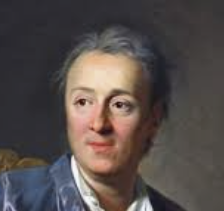
The blood of Jesus Christ can cover a multitude of sins, it seems to me.
4 months 6 days ago
It is difficult, if not impossible, to define the limit of our reasonable desires in respect of possessions.
▼
Source
source
E. Payne, trans. (1974) Vol. 1, p. 346
3 months ago
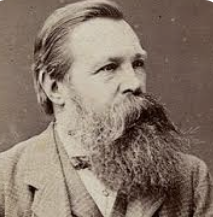
Big industry has brought all the people of the Earth into contact with each other, has merged all local markets into one world market, has spread civilization and progress everywhere and has thus ensured that whatever happens in civilized countries will have repercussions in all other countries. It follows that if the workers in England or France now liberate themselves, this must set off revolution in all other countries - revolutions which, sooner or later, must accomplish the liberation of their respective working class.
Just now
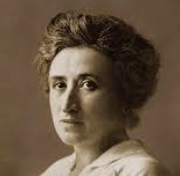
The working class will acquire the sense of the new discipline, the freely assumed self-discipline of the Social Democracy, not as a result of the discipline imposed on it by the capitalist state, but by extirpating, to the last root, its old habits of obedience and servility.
5 months 5 days ago
For legislators make the citizens good by forming habits in them, and this is the wish of every legislator, and those who do not effect it miss their mark, and it is in this that a good constitution differs from a bad one.

1 month 1 week ago
The belief in unity that has fuelled so many utopian dreams is an effort to reconcile the irreconcilable that ends in repression. Berlin suggests we renounce this venerable faith, and learn how to live with intractable conflict.
▼
Source
source
'Isaiah Berlin: The Value of Decency' (p.106-7)
2 months 1 week ago
One may dream of a culture where everyone bursts into laughter when someone says: this is true, this is real.
1 month 2 weeks ago
Whether we take these characters then, or such minor ones as those which are derivable from the proportional length of the spines in the cervical vertebrae, and the like, there is no doubt whatsoever as to the marked difference between Man and the Gorilla; but there is as little, that equally marked differences, of the very same order, obtain between the Gorilla and the lower apes.
▼
Source
source
Ch.2, p. 92

3 months 5 days ago
I considerd a general War against Jacobins and Jacobinism, as the only possible chance of saving Europe, (and England as included in Europe) from a truly frightful revolution. ... It is my Protest against the delusion, by which some have been taught to look upon this Jacobin contest at home as an ordinary party squabble about place or Patronage; and to regard this Jacobin War abroad as a common War about Trade, or Territorial Boundaries, or about a political Balance of power among Rival or jealous States.
▼
Source
source
Letter to the Duke of Portland (29 September 1793), quoted in P. J. Marshall and John A. Woods (eds.)
3 months ago
The law of habit exhibits a striking contrast to all physical laws in the character of its commands. A physical law is absolute. What it requires is an exact relation. Thus, a physical force introduces into a motion a component motion to be combined with the rest by the parallelogram of forces; but the component motion must actually take place exactly as required by the law of force. On the other hand, no exact conformity is required by the mental law. Nay, exact conformity would be in downright conflict with the law ; since it would instantly crystallise thought and prevent all further formation of habit. The law of mind only makes a given feeling more likely to arise. It thus resembles the "non-conservative" forces of physics, such as viscosity and the like, which are due to statistical uniformities in the chance encounters of trillions of molecules.

3 months 1 week ago
Around us knowledge has been extinguished, and recruitment of men of religion and men of law has ceased; that is to say, we have made Muslim society much more miserable, more disordered, more ignorant, and more barbarous than it had been before knowing us.
▼
Source
source
Travail sur l'Algerie, Travels in Algeria p. 185
3 months 2 days ago
Every stage of education begins with childhood. That is why the most educated person on earth so much resembles a child.
▼
Source
source
"Miscellaneous Observations," Philosophical Writings, M. Stolijar, trans. (Albany: 1997) #48
4 months 5 days ago
What a queer work the Bible is. ...Some texts are very funny. Deut. XXIV, 5: "When a man hath taken a new wife, he shall not go out to war, neither shall he be charged with any business: but he shall be free at home one year, and shall cheer up his wife which he hath taken." I should never have guessed "cheer up" was a Biblical expression. Here is another really inspiring text: "Cursed be he that lieth with his mother-in-law. And all the people shall say, Amen." St Paul on marriage: "I say therefore to the unmarried and widows, It is good for them if they abide even as I. But if they cannot contain, let them marry: for it is better to marry than to burn." This has remained the doctrine of the Church to this day. It is clear that the Divine purpose in the text "it is better to marry than to burn" is to make us all feel how very dreadful the torments of Hell must be.
▼
Source
source
Letter to Colette, August 10, 1918
2 months 4 days ago
What is the Jew?...What kind of unique creature is this whom all the rulers of all the nations of the world have disgraced and crushed and expelled and destroyed; persecuted, burned and drowned, and who, despite their anger and their fury, continues to live and to flourish. What is this Jew whom they have never succeeded in enticing with all the enticements in the world, whose oppressors and persecutors only suggested that he deny (and disown) his religion and cast aside the faithfulness of his ancestors?! The Jew - is the symbol of eternity. ... He is the one who for so long had guarded the prophetic message and transmitted it to all mankind. A people such as this can never disappear. The Jew is eternal. He is the embodiment of eternity.
▼
Source
source
Attributed in "The Final Resolution", in Jewish World Periodical (1908), p. 189
2 months 2 weeks ago
There can be no freedom in the large sense of the word, no harmonious development, so long as mercenary and commercial considerations play an important part in the determination of personal conduct.
2 months 3 weeks ago
Jesus said that God was not the God of the dead, but of the living. And the other life is not, in fact, thinkable to us except under the same forms as those of this earthly and transitory life.
1 day ago
Whensoever by some present hard occurrences thou art constrained to be in some sort troubled and vexed, return unto thyself as soon as may be, and be not out of tune longer than thou must needs. For so shalt thou be the better able to keep thy part another time, and to maintain the harmony, if thou dost use thyself to this continually; once out, presently to have recourse unto it, and to begin again.
▼
Source
source
VI, 9

4 months 1 week ago
China is a much richer country than any part of Europe.
▼
Source
source
Chapter XI, Part III, (First Period) p. 221.
3 months ago
Philosophy offers an antidote to melancholy. And many still believe in the depth of philosophy!
1 week 6 days ago
Of all things nothing exists that is not by its substance the offspring of ocean. But why will you have me tell this to the vulgar? Although better to have been shrouded in silence, it nevertheless has been spoken; at all events I declare it, although all men will not readily receive the same.
CivilSimian.com created by AxiomaticPanic, CivilSimian, Kalokagathia