


4 months 1 week ago
I approached the task of destroying images by first tearing them out of the heart through God's Word and making them worthless and despised. This indeed took place before Dr. Karlstadt ever dreamed of destroying images. For when they are no longer in the heart, they can do no harm when seen with the eyes. But Dr. Karlstadt, who pays no attention to matters of the heart, has reversed the order by removing them from sight and leaving them in the heart. For he does not preach faith, nor can he preach it; unfortunately, only now do I see that. Which of these two forms of destroying images is best, I will let each man judge for himself.
▼
Source
source
pp. 84-85

4 months 1 day ago
"Ah, Psyche," I said, "have I made you so little happy as that?"
▼
Source
source
Orual

3 months 3 weeks ago
The usage of the words "public" and "public sphere" betrays a multiplicity of concurrent meanings. Their origins go back to various historical phases and, when applied synchronically to the conditions of a bourgeois society that is industrially advanced and constituted as a social-welfare state, they fuse into a clouded amalgam. Yet the very conditions that make the inherited language seem inappropriate appear to require these words, however confused their employment.
▼
Source
source
p. 1 as cited in: Gandy, M (1997) "Ecology, modernity and the intellectual legacy of the Frankfurt School". In: Light, A and Smith, JM, (eds.) Space, Place and Environmental Ethics. p. 240
4 months 2 weeks ago
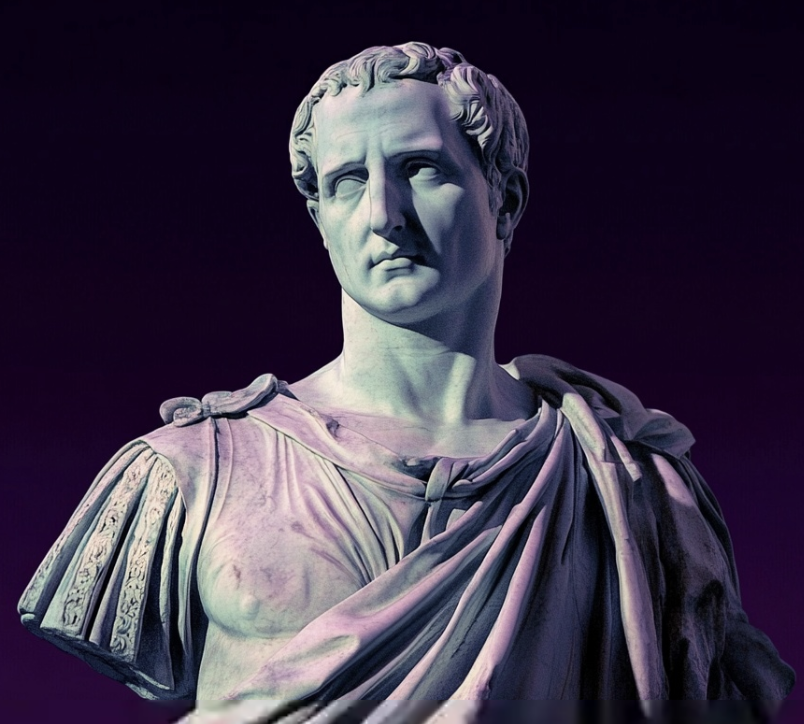
And what can be more divine than the exhalations of the earth, which affect the human soul so as to enable her to predict the future ? And could the hand of time evaporate such a virtue? Do you suppose you are talking of some kind of wine or salted meat ?
▼
Source
source
Book I, Chapter III

2 months 4 weeks ago
Only those moments count when the desire to remain by yourself is so powerful that you'd prefer to blow your brains out than to exchange a word with someone.

3 months 3 weeks ago
Good means not [merely] not to do wrong, but rather not to desire to do wrong.
4 weeks 1 day ago
Many a time I have wanted to stop talking and find out what I really believed.
▼
Source
source
Introduction, p. x

4 months 3 days ago
Of all forms of caution, caution in love is perhaps the most fatal to true happiness.
2 months 4 weeks ago
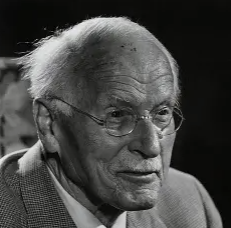
Sometimes I had an overwhelming urge to speak, not about that, but only to hint that there were some curious things about me which no one knew of. I wanted to find out whether other people had undergone similar experiences. I never succeeded in discovering so much as a trace of them in others. As a result, I had the feeling that I was either outlawed or elect, accursed or blessed.
▼
Source
source
p. 41

5 months 3 days ago
There is a contrast of primary significance between Augustine and Pelagius. The former crushes everything in order to rebuild it again. The other addresses himself to man as he is. The first system, therefore, in respect to Christianity, falls into three stages: creation – the fall and a consequent condition of death and impotence; a new creation - whereby man is placed in a position where he can choose; and then, if he chooses - Christianity. The other system addresses itself to man as he is (Christianity fits into the world). From this is seen the significance of the theory of inspiration for the first system; from this also is seen the relationship between the synergistic and the semipelagian conflict. It is the same question, only that the syngeristic struggle has its presupposition in the new creation of the Augustinian system.

1 month 2 days ago
It's quite true that there were billions of years that I didn't exist that I was never bothered about.
Life itself is sitting in a room with a murderer, while eating a nice meal. You're just waiting for the meal to be over...
LIFE is the terrible condition.
3 weeks 1 day ago
When the British came there was, throughout India, a system of communal schools, managed by the village communities. The agents of the East India Company destroyed these village communities, and took steps to replace the schools; even today, after a century of effort to restore them, they stand at only 66% of their number a hundred years ago. Hence, the 93 % illiteracy of India.
▼
Source
source
(source: The Case for India - By Will Durant Simon and Schuster, New York. 1930 p.44).
2 months 1 week ago
My own view is that philosophy at its best has always, in every period, included some philosophers who brilliantly represent the moral face of the subject and some philosophers who brilliantly represent the theoretical face, as well as some geniuses whose insights span and unite both sides of the subject. To renounce either the moral ambitions of philosophy or its theoretical ambitions is not just to kill the subject of philosophy; it is to commit intellectual and spiritual suicide.
▼
Source
source
Science and Philosophy
4 months 2 weeks ago
Materials are indifferent, but the use which we make of them is not a matter of indifference.
▼
Source
source
Book II, ch. 5, 1
3 months 3 weeks ago
No differeance without alterity, no alterity without singularity, no singularity without here-now.
▼
Source
source
Injunctions of Marx, p,31

3 weeks 5 days ago
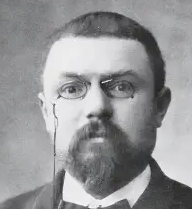
A scientist worthy of the name, above all a mathematician, experiences in his work the same impression as an artist; his pleasure is as great and of the same nature. ...we work not only to obtain the positive results which, according to the profane, constitute our one and only affection, as to experience this esthetic emotion and to convey it to others who are capable of experiencing it.
▼
Source
source
"Notice sur Halphen," Journal de l'École Polytechnique (Paris, 1890), 60ème cahier, p. 143.

3 weeks 6 days ago
The Left's identity politics poses a threat to free speech and to the kind of rational discourse needed to sustain a democracy... The focus on lived experience by identity groups prioritizes the emotional world of the inner self over the rational examination of issues in the outside world and privileges sincerely held opinions over a process of reasoned deliberation that may force one to abandon prior opinions.
▼
Source
source
Against Identity Politics (14 August 2018), Foreign Affairs
2 months 2 weeks ago
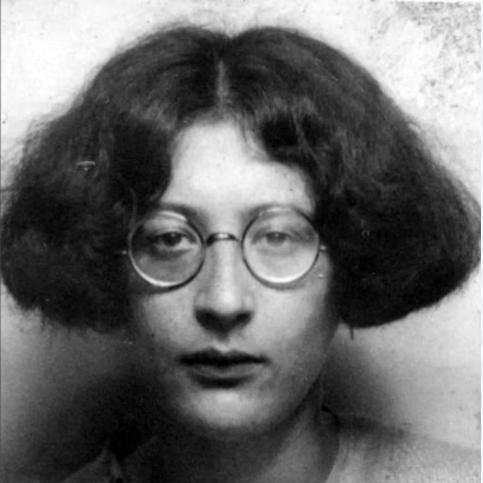
The might which kills outright is an elementary and coarse form of might. How much more varied in its devices; how much more astonishing in its effects is that other which does not kill; or which delays killing.
▼
Source
source
in The Simone Weil Reader, p. 155

2 months 2 weeks ago
Power is more 'spacious' than violence. And violence becomes power if it 'gives itself more time.' Looked at from this perspective, power rests on an excess of space and time.

4 months 1 week ago
Further, it will not be amiss to distinguish the three kinds and, as it were, grades of ambition in mankind. The first is of those who desire to extend their own power in their native country, a vulgar and degenerate kind. The second is of those who labor to extend the power and dominion of their country among men. This certainly has more dignity, though not less covetousness. But if a man endeavor to establish and extend the power and dominion of the human race itself over the universe, his ambition (if ambition it can be called) is without doubt both a more wholesome and a more noble thing than the other two. Now the empire of man over things depends wholly on the arts and sciences. For we cannot command nature except by obeying her.
▼
Source
source
Aphorism 129

4 months 4 days ago
The christian religion is a parody on the worship of the Sun, in which they put a man whom they call Christ, in the place of the Sun, and pay him the same adoration which was originally paid to the Sun.
▼
Source
source
An Essay on the Origin of Free-Masonry (1803-1805); found in manuscript form after Paine's death and thought to have been written for an intended part III of The Age of Reason. It was partially published in 1810 and published in its entirety in 1818.

3 weeks 2 days ago
The more I reflect on it, the more I must admire how completely nature had taught him; how completely he was devoted to his work, to the task of his life, and content to let all pass by unheeded that had not relation to this. It is a singular fact, for example, that though a man of such openness and clearness, he had never, I believe, read three pages of Burns's poems. Not even when all about him became noisy and enthusiastic, I the loudest, on that matter, did he feel it worth while to renew his investigation of it, or once turn his face towards it. The poetry he liked (he did not call it poetry) was truth, and the wisdom of reality. Burns, indeed, could have done nothing for him. As high a greatness hung over his world as over that of Burns - the ever-present greatness of the Infinite itself. Neither was he, like Burns, called to rebel against the world, but to labor patiently at his task there, uniting the possible with the necessary to bring out the real, wherein also lay an ideal.

4 months 2 days ago
I fancy I need more than another to speak (rather than write), with such a formidable tendency to the lapidary style. I build my house of boulders.
▼
Source
source
Letter to Thomas Carlyle, 30 October 1841
4 months 5 days ago
The greatest problem for the human race, to the solution of which Nature drives man, is the achievement of a universal civic society which administers law among men.
▼
Source
source
Fifth Thesis
2 months 2 weeks ago
No tyranny is more cruel than the one practiced in the shadow of the laws and under color of justice - when, so to speak, one proceeds to drown the unfortunate on the very plank by which they had saved themselves.
▼
Source
source
See Chap. XIV of Considérations sur les causes de la grandeur des Romains et de leur décadence. Considerations on the Causes of the Greatness of the Romans and their Decline (1734), p. 89.

2 days ago
I am convinced our own happiness requires that we should continue to mix with the world, and to keep pace with it as it goes; and that every person who retires from free communication with it is severely punished afterwards by the state of mind into which he gets, and which can only be prevented by feeding our sociable principles. I can speak from experience on this subject. From 1793 to 1797 I remained closely at home, saw none but those who came there, and at length became very sensible of the ill effect it had on my own mind, and of its direct and irresistible tendency to render me unfit for society and uneasy when necessarily engaged in it. I felt enough of the effect of withdrawing from the world then to see that it led to an anti-social and misanthropic state of mind, which severely punishes him who gives in to it; and it will be a lesson I never shall forget as to myself.
▼
Source
source
Letter to Maria Jefferson Eppes

2 months 2 weeks ago
The chief impression left by a study of Crowley's life and works is that he wasted an immense amount of time and energy trying to shock everyone he came into contact with, and his dislike of orthodoxy turned him into an unconsciously comic figure, like Don Quixote.
▼
Source
source
pp. 153-154
4 months 2 days ago
The activity of to-day and the assurance of to-morrow.
▼
Source
source
p. 215

3 months 3 days ago
Faith is not in power but in truth.

4 months 3 days ago
Whatever crushes individuality is despotism, by whatever name it may be called, and whether it professes to be enforcing the will of God or the injunctions of men.
▼
Source
source
Ch. III: Of Individuality, As One of the Elements of Well-Being
3 weeks 2 days ago
But deepest of all illusory Appearances, for hiding Wonder, as for many other ends, are your two grand fundamental world-enveloping Appearances, SPACE and TIME. These, as spun and woven for us from before Birth itself, to clothe our celestial ME for dwelling here, and yet to blind it, - lie all-embracing, as the universal canvas, or warp and woof, whereby all minor Illusions, in this Phantasm Existence, weave and paint themselves. In vain, while here on Earth, shall you endeavor to strip them off; you can, at best, but rend them asunder for moments, and look through.
▼
Source
source
Bk. III, ch. 8.
2 months 2 weeks ago
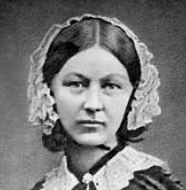
In one sense, I do believe I am "like a man," as Parthe [the writer's sister] says. But how? In having sympathy. ... Women crave for being loved, not for loving. They scream out at you for sympathy all day long, they are incapable of giving any in return, for they cannot remember your affairs long enough to do so. ... They cannot state a fact accurately to another, nor can that other attend to it accurately enough for it to become information. Now is not all this the result of want of sympathy?
▼
Source
source
Letter to Madame Mohl
4 months 3 days ago
If any philosopher had been asked for a definition of infinity, he might have produced some unintelligible rigmarole, but he would certainly not have been able to give a definition that had any meaning at all.
▼
Source
source
Ch. 5: Mathematics and the Metaphysicians
2 months 1 week ago
Even if we consider not words by themselves but rules deciding what words may appropriately be produced in certain contexts - even if we consider, in computer jargon, programs for using words - unless those programs themselves refer to something extra-linguistic there is still no determinate reference that those words possess. This will be a crucial step in the process of reaching the conclusion that the Brain-in-a-Vat Worlders cannot refer to anything external at all (and hence cannot say that they are Brain-in-a-Vat Worlders).
▼
Source
source
Chap. 1 : Brains in a vat
3 weeks 6 days ago
The idea of universal human dignity ultimately comes out of Christianity... the view that all human beings are equal in the sight of God because they have the capacity for moral choice. As Western thought developed in the 17th-18th centuries, this took on a secular form under thinkers like Jean-Jacques Rousseau or Immanuel Kant or Georg Hegel, who argued that human equality is... based on human autonomy.
▼
Source
source
11:12
Just now
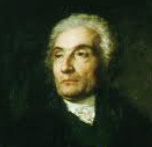
All grandeur, all power, all subordination to authority rests on the executioner: he is the horror and the bond of human association. Remove this incomprehensible agent from the world and at that very moment order gives way to chaos, thrones topple and society disappears.
▼
Source
source
"First Dialogue," p. 20
3 weeks 4 days ago
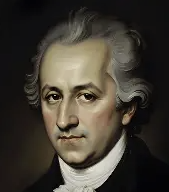
A talent is formed in stillness, a character in the world's torrent.
▼
Source
source
Torquato Tasso, Act I, sc. ii
2 months 4 weeks ago
To claim you are more detached, more alien to everything than anyone, and to be merely a fanatic of indifference!
4 months 1 week ago
Libraries are as the shrine where all the relics of the ancient saints, full of true virtue, and that without delusion or imposture, are preserved and reposed.
4 months 3 days ago
If human nature were unchangeable, as ignorant people still suppose it to be, the situation would indeed be hopeless.
▼
Source
source
Ch. 17: Some Prospects: Cheerful and Otherwise

4 months 1 day ago
... the fight against suffering must be considered a duty, while the right to care for the happiness of others must be considered a privilege confined to the close circle of their friends. ... Pain, suffering, injustice, and their prevention, these are the eternal problems of public morals, the 'agenda' of public policy ...
▼
Source
source
Vol. 2, Ch. 24 "Oracular Philosophy and the Revolt against Reason"
5 months 3 days ago
I do not know, my listener, what your crime, your guilt, your sins are, but surely we are all more or less of the guilt of loving only little. Take comfort, then, in these words just as I take comfort in them.
4 months 3 days ago
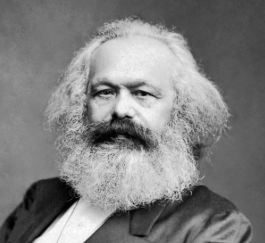
To discover the various use of things is the work of history.
▼
Source
source
Vol. I, Ch. 1, Section 1, pg. 42.
2 months 5 days ago
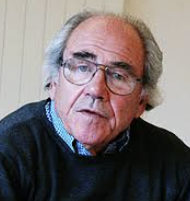
There are only a few images that are not forced to provide meaning, or have to go through the filter of a specific idea.
4 months 2 days ago
Life is not so short but that there is always time enough for courtesy.
▼
Source
source
Social Aims
1 week 4 days ago
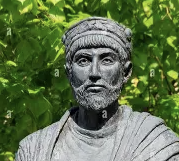
Can anyone be proved innocent, if it be enough to have accused him?
▼
Source
source
Julian, at the trial of Numerius, governor of Gallia Narbonensis, who was accused of embezzlement. Reported in Ammianus, Res gestae, bk. 18, ch. 1, sec. 4

2 months 2 weeks ago
"God is just and punishes us; that is all we need to know; as far as we are concerned the rest is merely curiosity." Such was the conclusion of Lamennais (Essai, etc., partie, chap. vii.), an opinion shared by many others. Calvin also held the same view. But is there anyone content with this? Pure curiosity! - to call this load that well nigh crushes our heart pure curiosity!
CivilSimian.com created by AxiomaticPanic, CivilSimian, Kalokagathia