

3 months 1 week ago
At the point at which the concept of différance, and the chain attached to it, intervenes, all the conceptual oppositions of metaphysics (signifier/signified; sensible/intelligible; writing/speech; passivity/activity; etc.)- to the extent that they ultimately refer to the presence of something present (for example, in the form of the identity of the subject who is present for all his operations, present beneath every accident or event, self-present in its "living speech," in its enunciations, in the present objects and acts of its language, etc.)- become non pertinent. They all amount, at one moment or another, to a subordination of the movement of différance in favor of the presence of a value or a meaning supposedly antecedent to différance, more original than it, exceeding and governing it in the last analysis. This is still the presence of what we called above the "transcendental signified.
▼
Source
source
p. 29
2 months 1 week ago
It would be wrong to suppose that the man of any particular period always looks upon past times as below the level of his own, simply because they are past. It is enough to recall that to the seeming of Jorge Manrique, "Any time gone by was better."... From A.D. 150 on, this impression of a shrinking of vitality, of a falling from position, of decay and loss of pulse shows itself increasingly in the Roman Empire. Had not Horace already sung: "Our fathers, viler than our grandfathers, begot us who are even viler, and we shall bring forth a progeny more degenerate still"?
▼
Source
source
Horace, Odes, III.6] Chap. III: The Height Of The Times
3 months 1 week ago
When he was asked what advantage had accrued to him from philosophy, his answer was, "The ability to hold converse with myself."
▼
Source
source
§ 4
1 week 1 day ago
Out-of-date theories are not in principle unscientific because they have been discarded. That choice, however, makes it difficult to see scientific development as a process of accretion.
3 months 1 week ago
The years as they pass plunder us of one thing after another.
▼
Source
source
Book II, epistle ii, line 55

2 months 1 week ago
It is more blessed to give than to receive.
▼
Source
source
Acts 20:35b

3 months 1 week ago
The circle of day and night is the law of the classical world: the most restricted but most demanding of the necessities of the world, the most inevitable but the simplest of the legislations of nature.This was a law that excluded all dialectics and all reconciliation, consequently laying the foundations for the smooth unity of knowledge as well as the uncompromising division of tragic existence. It reigns on a world without darkness, which knows neither effusiveness nor the gentle charms of lyricism. All is waking or dreams, truth or error, the light of being or the nothingness of shadow.
▼
Source
source
Part Two: 2. The Transcendence of Delirium
2 months 3 weeks ago
Scepticism is the first step towards truth. Variant: A thing is not proved just because no one has ever questioned it. What has never been gone into impartially has never been properly gone into. Hence skepticism is the first step toward truth. It must be applied generally, because it is the touchstone.
▼
Source
source
As quoted in The Anchor Book of French Quotations with English Translations (1963) by Norbert Gutermam

2 months 2 weeks ago
Fear is the antidote to boredom: the remedy must be stronger than the disease.
1 month 3 weeks ago
Sickness is mankind's greatest defect.
▼
Source
source
F 100
2 months 1 week ago
The way in which a society organizes the life of its members ... is one "project" of realization among others. But once the project has become operative in the basic institutions and relations, it tends to become exclusive and to determine the development of the society as a whole.
▼
Source
source
p. xlviii
4 months 2 weeks ago
For the things we have to learn before we can do, we learn by doing.
1 week ago
Man is as young as the risks he takes.
▼
Source
source
Ch. 2 : On Youth
2 months 2 weeks ago
To get up in the morning, wash and then wait for some unforeseen variety of dread or depression. I would give the whole universe and all of Shakespeare for a grain of ataraxy.

2 months 1 day ago
Man should possess an infinite appetite for life. It should be self-evident to him, all the time, that life is superb, glorious, endlessly rich, infinitely desirable. At present, because he is in a midway position between the brute and the truly human, he is always getting bored, depressed, weary of life. He has become so top-heavy with civilisation that he cannot contact the springs of pure vitality. Control of the prefrontal cortex will change all of this. He will cease to cast nostalgic glances towards the womb, for he will realise that death is no escape. Man is a creature of life and the daylight; his destiny lies in total objectivity.
▼
Source
source
pp. 317-318
3 days ago
No one ever saw Cato change, no matter how often the state changed: he kept himself the same in all circumstances-in the praetorship, in defeat, under accusation, in his province, on the platform, in the army, in death.
3 months 2 weeks ago
But you must see that if two things are alike, then it is a further question whether the first is copied from the second, or the second from the first, or both from a third.''What would the third be?''Some have thought that all these loves were copies of our love for the Landlord.'
▼
Source
source
Pilgrim's Regress 59

3 months 2 weeks ago
Consumption is also immediately production, just as in nature the consumption of the elements and chemical substances is the production of the plant.
▼
Source
source
Introduction, p. 10.

1 month 2 weeks ago
Armies are necessary, before all things, for the defense of governments from their own oppressed and enslaved subjects.
▼
Source
source
Chapter VII, Significance of Compulsory Service
2 months 2 weeks ago
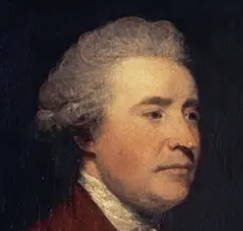
Taxing is an easy business. Any projector can contrive new impositions, any bungler can add to the old.
3 months 2 weeks ago
As usurpation is the exercise of power which another has a right to, so tyranny is the exercise of power beyond right, which nobody can have a right to...
▼
Source
source
Second Treatise of Government, Ch. XVIII, sec. 199
3 months 2 weeks ago
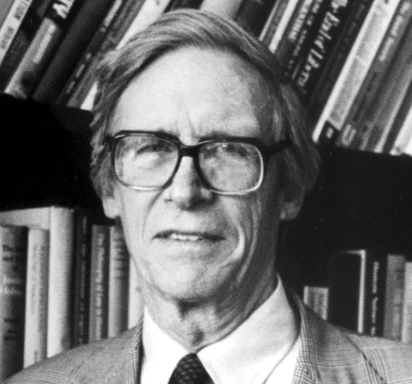
If A were not allowed his better position, B would be even worse off than he is.
▼
Source
source
Chapter II, Section 17, pg. 103

2 months 3 weeks ago
All things are in all.
▼
Source
source
V 9; as translated by Dorothea Waley Singer

3 months 2 weeks ago
In actions of enthusiasm, this drawback appears: but in those lower activities, which have no higher aim than to make us more comfortable and more cowardly, in actions of cunning, actions that steal and lie, actions that divorce the speculative from the practical faculty, and put a ban on reason and sentiment, there is nothing else but drawback and negation.
▼
Source
source
Goethe; or, The Writer
3 months 2 weeks ago
A house may be large or small; as long as the neighboring houses are likewise small, it satisfies all social requirement for a residence. But let there arise next to the little house a palace, and the little house shrinks to a hut. The little house now makes it clear that its inmate has no social position at all to maintain, or but a very insignificant one; and however high it may shoot up in the course of civilization, if the neighboring palace rises in equal or even in greater measure, the occupant of the relatively little house will always find himself more uncomfortable, more dissatisfied, more cramped within his four walls.
▼
Source
source
Wage Labour and Capital (December 1847), in Marx Engels Selected Works, Volume I, p. 163.
3 months 2 weeks ago
Every one knows that there are no real forests in England. The deer in the parks of the great are demurely domestic cattle, fat as London alderman.
▼
Source
source
Vol. I, Ch. 27, pg. 803.
1 month ago
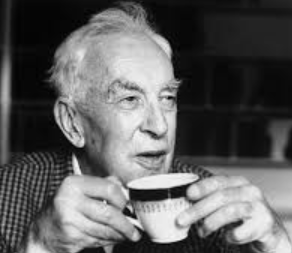
Compared with the life-span of a human being the time-span of a civilization is so vast that a human observer cannot hope to take the measure of its curve unless he is in a position to view it in a distant perspective; and he can only obtain this perspective vis-a-vis some society that is extinct. He can never stand back sufficiently far from the history of the society in which he himself lives and moves and has his being. In other words, to assert of any living society, at any moment in its life, that it is the consummation of human history is to hazard a guess which is intrinsically unsusceptible of immediate verification. When we find that a majority of the members of all societies at all times make this assertion about their own civilizations, it becomes evident that their guesses have really nothing to do with any objective calculation of probabilities but are pure expressions of the egocentric illusion.
▼
Source
source
Vol. 1
4 months 3 days ago
The Apostle says: I make up in my flesh what is lacking to the sufferings of Christ (Col. 1:24). I make up, he tells us, not what is lacking to my sufferings, but what is lacking to the sufferings of Christ; not in Christ flesh, but in mine. not in Christ's flesh, but in mine. Christ is still suffering, not in His own flesh which He took with Him into heaven, but in my flesh, which is still suffering on earth.
▼
Source
source
p.423

2 months 2 weeks ago
I suddenly dreamt that I picked up the revolver and aimed it straight at my heart - my heart, and not my head; and I had determined beforehand to fire at my head, at my right temple. After aiming at my chest I waited a second or two, and suddenly my candle, my table, and the wall in front of me began moving and heaving. I made haste to pull the trigger.
3 months 2 weeks ago
Accumulate, accumulate! That is Moses and the prophets!
▼
Source
source
Vol. I, Ch. 24, Section 3, pg. 652.

3 months 2 weeks ago
The universe is the bible of a true Theophilanthropist. It is there that he reads of God. It is there that the proofs of his existence are to be sought and to be found. As to written or printed books, by whatever name they are called, they are the works of man's hands, and carry no evidence in themselves that God is the author of any of them. It must be in something that man could not make, that we must seek evidence for our belief, and that something is the universe; the true bible; the inimitable word, of God.
▼
Source
source
A Discourse, &c. &c.
3 days ago
"Freedom" awakens your rage against everything that is not you; "egoism" calls you to joy over yourselves, to self-enjoyment.
▼
Source
source
Dover 2005, p. 163
4 months 2 weeks ago
Outside intelligences, exploring the Solar System with true impartiality, would be quite likely to enter the Sun in their records thus: Star X, spectral class G0, 4 planets plus debris.

3 months 1 week ago
The idea that in order to get clear about the meaning of a general term one had to find the common element in all its applications has shackled philosophical investigation; for it has not only led to no result, but also made the philosopher dismiss as irrelevant the concrete cases, which alone could have helped him understand the usage of the general term.
▼
Source
source
p. 19



2 months 5 days ago
Once the needs of hunger are satisfied - and they are soon satisfied - the vanity, the necessity - for it is a necessity - arises of imposing ourselves upon and surviving in others. Man habitually sacrifices his life to his purse, but he sacrifices his purse to his vanity. He boasts even of his weakness and his misfortunes, for want of anything better to boast of, and is like a child who, in order to attract attention, struts about with a bandaged finger.

3 months 3 weeks ago
The greatest improvement in the productive powers of labour, and the greatest part of skill, dexterity, and judgment with which it is any where directed, or applied, seem to have been the effects of the division of labour.
▼
Source
source
Chapter I, p. 7

3 months 2 weeks ago
A rationalist, as I use the word, is a man who attempts to reach decisions by argument and perhaps, in certain cases, by compromise, rather than by violence. He is a man who would rather be unsuccessful in convincing another man by argument than successful in crushing him by force, by intimidation and threats, or even by persuasive propaganda.
3 months 2 weeks ago
Do not allow your dreams of a beautiful world to lure you away from the claims of men who suffer here and now.
▼
Source
source
p. 485
2 months 1 week ago
See ye not all these things? verily I say unto you, There shall not be left here one stone upon another, that shall not be thrown down.
▼
Source
source
24:2 (KJV)

1 week 2 days ago
Not the external and physical alone is now managed by machinery, but the internal and spiritual also. Here too nothing follows its spontaneous course, nothing is left to be accomplished by old natural methods. Everything has its cunningly devised implements, its preestablished apparatus; it is not done by hand, but by machinery.
3 days ago
He who has injured thee was either stronger or weaker than thee. If weaker, spare him; if stronger, spare thyself.
▼
Source
source
De Ira (On Anger); Book III, Chapter V
2 months 2 weeks ago
I did not hate the author of my misfortunes - truth and justice acquit me of that; I rather pitied the hard destiny to which he seemed condemned. But I thought with unspeakable loathing of those errors, in consequence of which every man is fated to be, more or less, the tyrant or the slave. I was astonished at the folly of my species, that they did not rise up as one man, and shake off chains so ignominious, and misery so insupportable. So far as related to myself, I resolved - and this resolution has never been entirety forgotten by me - to hold myself disengaged from this odious scene, and never fill the part either of the oppressor or the sufferer.
1 month 2 weeks ago
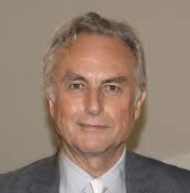
An atheist is just somebody who feels about Yahweh the way any decent Christian feels about Thor or Baal or the golden calf. As has been said before, we are all atheists about most of the gods that humanity has ever believed in. Some of us just go one god further.
▼
Source
source
Richard Dawkins on militant atheism,

3 weeks 6 days ago
It's not that there are no differences between human and non-human animals, any more than there are no differences between black people and white people, freeborn citizens and slaves, men and women, Jews and gentiles, gays or heterosexuals. The question is rather: are they morally relevant differences? This matters because morally catastrophic consequences can ensue when we latch on to a real but morally irrelevant difference between sentient beings.
▼
Source
source
"The Abolitionist Project", Talks given at the FHI (Oxford University) and the Charity International Happiness Conference, 2007
3 months 2 weeks ago
If I made laws for Shakers or a school, I should gazette every Saturday all the words they were wont to use in reporting religious experience, as "spiritual life," "God," "soul," "cross," etc., and if they could not find new ones next week, they might remain silent.
▼
Source
source
June 15, 1844
2 months 2 weeks ago
People must be governed in a manner agreeable to their temper and disposition; and men of free character and spirit must be ruled with, at least, some condescension to this spirit and this character.
▼
Source
source
Observations on a Late Publication on the Present State of the Nation (1769), page 76.
2 months 1 week ago
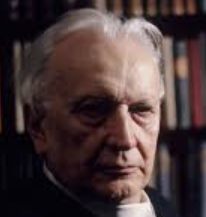
The vicious circle of dread of war which leads the nations to arm themselves for self-protection, with the result that bloated armaments ultimately lead to the war which they were intended to avert, can be broken in either of two conceivable ways. There might arise a unique world power, brought into being by the unification of all those now in possession of weapons, and equipped with the capacity to forbid the lesser and unarmed nations to make war. On the other hand, it may arise by the working of a fate to us still inscrutable which, out of ruin, will disclose a way towards the development of a new human being. To will the discovery of this way would be blind impotence, but those who do not wish to deceive themselves will be prepared for the possibility.
2 months 2 weeks ago
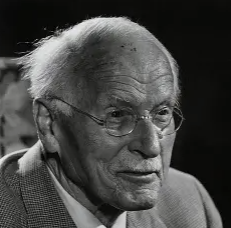
Reason alone does not suffice.
▼
Source
source
p 98

3 months 2 weeks ago
As geological time goes, it is but a moment since the human race began and only the twinkling of an eye since the arts of civilization were first invented. In spite of some alarmists, it is hardly likely that our species will completely exterminate itself. And so long as man continues to exist, we may be pretty sure that, whatever he may suffer for a time, and whatever brightness may be eclipsed, he will emerge sooner or later, perhaps strengthened and reinvigorated by a period of mental sleep. The universe is vast and men are but tiny specks on an insignificant planet. But the more we realize our minuteness and our impotence in the face of cosmic forces, the more astonishing becomes what human beings have achieved.
▼
Source
source
"If We are to Survive this Dark Time", The New York Times Magazine, 9/3/1950
CivilSimian.com created by AxiomaticPanic, CivilSimian, Kalokagathia