

4 months 1 week ago
One must never forget to look at the aim of a matter.
▼
Source
source
Act III, scene xi

3 months 4 weeks ago
Science does not rest upon solid bedrock. The bold structure of its theories arises, as it were, above a swamp. It is like a building erected on piles. The piles are driven down from above into the swamp, but not down to any natural or 'given' base; and if we stop driving the piles deeper, it is not because we have reached firm ground. We simply stop when we are satisfied that the piles are firm enough to carry the structure, at least for the time being.
▼
Source
source
Ch. 5 "The Problem of the Empirical Basis", Section 30: Theory and Experiment, p. 94.

4 months 1 week ago
A theologian is born by living, nay dying and being damned, not by thinking, reading, or speculating.
▼
Source
source
352

5 months 2 days ago
The reasons and purposes for habits are always lies that are added only after some people begin to attack these habits and to ask for reasons and purposes. At this point the conservatives of all ages are thoroughly dishonest: they add lies.

3 months ago
In this choice of inheritance we have given to our frame of polity the image of a relation in blood, binding up the constitution of our country with our dearest domestic ties, adopting our fundamental laws into the bosom of our family affections, keeping inseparable and cherishing with the warmth of all their combined and mutually reflected charities our state, our hearths, our sepulchres, and our altars.

2 months 3 weeks ago
The sin of pride may be a small or a great thing in someone's life, and hurt vanity a passing pinprick or a self-destroying or even murderous obsession. Possibly, more people kill themselves and others out of hurt vanity than out of envy, jealousy, malice or desire for revenge.
▼
Source
source
The Philosopher's Pupil (1983) p. 76.



2 months 3 weeks ago
If we would regain our freedom, we must shake off the burden of sensation, no longer react to the world by our senses, break our bonds. For all sensation is a bond, pleasure as much as pain, joy as much as misery. The only free mind is the one that, pure of all intimacy with beings or objects, plies its own vacuity.

4 months 3 days ago
The whole is a riddle, an aenigma, an inexplicable mystery. Doubt, uncertainty, suspence of judgment appear the only result of our most accurate scrutiny, concerning this subject. But such is the frailty of human reason, and such the irresistible contagion of opinion, that even this deliberate doubt could scarcely be upheld; did we not enlarge our view, and opposing one species of superstition to another, set them a quarrelling; while we ourselves, during their fury and contention, happily make our escape, into the calm, though obscure, regions of philosophy.
▼
Source
source
Part XV - General corollary
3 months 3 weeks ago
The dissimulation of the woven texture can in any case take centuries to undo its web: a web that envelops a web, undoing the web for centuries; reconstituting it too as an organism, indefinitely regenerating its own tissue behind the cutting trace, the decision of each reading. There is always a surprise in store for the anatomy or physiology of any criticism that might think it had mastered the game, surveyed all the threads at once, deluding itself, too, in wanting to look at the text without touching it, without laying a hand on the "object," without risking- which is the only chance of entering into the game, by getting a few fingers caught- the addition of some new thread.
▼
Source
source
Plato's Pharmacy
1 month 3 weeks ago
All human accomplishment has the same origin, identically. Imagination is a force of nature. Is this not enough to make a person full of ecstasy? Imagination, imagination, imagination. It converts to actual. It sustains, it alters, it redeems!
▼
Source
source
Henderson the Rain King (1959) [Viking/Penguin, 1984, ISBN 0-140-07269-1], ch. XVIII, p. 271
3 weeks 5 days ago
You cannot endow even the best machine with initiative; the jolliest steam-roller will not plant flowers.
▼
Source
source
Ch. I: "Routineer and Inventor", p. 30.

2 months 1 week ago
The liturgy of emptiness dispels the capitalist economy of the commodity.

2 weeks ago
Is it for this purpose that we are strong-that we may have light burdens to bear?

3 months ago
Nor is there any embarrassment in the fact that we're ridiculous, isn't it true? For it's actually so, we are ridiculous, light-minded, with bad habits, we're bored, we don't know how to look, how to understand, we're all like that, all, you, and I, and they! Now, you're not offended when I tell you to your face that you're ridiculous? And if so, aren't you material? You know, in my opinion it's sometimes even good to be ridiculous, if not better: we can the sooner forgive each other, the sooner humble ourselves; we can't understand everything at once, we can't start right out with perfection! To achieve perfection, one must first begin by not understanding many things! And if we understand too quickly, we may not understand well. This I tell you, you, who have already been able to understand. .. and not understand ... so much. I'm not afraid for you now.
▼
Source
source
Part 4, Chapter ?

3 weeks ago
The superior man has three things in which he delights, and to be ruler over the kingdom is not one of them. That his father and mother are both alive, and that the condition of his brothers affords no cause for anxiety;-this is one delight. That, when looking up, he has no occasion for shame before Heaven, and, below, he has no occasion to blush before men;-this is a second delight. That he can get from the whole kingdom the most talented individuals, and teach and nourish them;-this is the third delight.
▼
Source
source
7A:20, as translated by James Legge in The Chinese Classics, Vol. II (1861), p. 335
4 months 1 week ago
If you are a preacher of mercy, do not preach an imaginary but the true mercy. If the mercy is true, you must therefore bear the true, not an imaginary sin. God does not save those who are only imaginary sinners. Be a sinner, and let your sins be strong (sin boldly), but let your trust in Christ be stronger, and rejoice in Christ who is the victor over sin, death, and the world. We will commit sins while we are here, for this life is not a place where justice resides. We, however, says Peter (2. Peter 3:13) are looking forward to a new heaven and a new earth where justice will reign.
▼
Source
source
Letter 99, Paragraph 13. Erika Bullmann Flores, Tr. from: Dr. Martin Luther's Saemmtliche SchriftenDr. Johann Georg Walch Ed. (St. Louis: Concordia Publishing House, N.D.), Vol. 15, cols. 2585-2590.

4 months 2 days ago
There must be a seed of every good thing in the character of men, otherwise no one can bring it out. Lacking that, analogous motives, honor, etc., are substituted. Parents are in the habit of looking out for the inclinations, for the talents and dexterity, perhaps for the disposition of their children, and not at all for their heart or character.
▼
Source
source
Part III : Selection on Education from Kant's other Writings, Ch. I Pedagogical Fragments, # 13
2 months 1 week ago
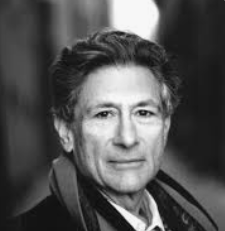
Ideas, cultures, and histories cannot seriously be understood or studied without their force, or more precisely their configurations of power, also being studied.
2 weeks ago
Allow me, excellent Lucilius, to utter a still bolder word: if any goods could be greater than others, I should prefer those which seem harsh to those which are mild and alluring, and should pronounce them greater. For it is more of an accomplishment to break one's way through difficulties than to keep joy within bounds.

4 months 2 weeks ago
It is impossible to live a pleasant life without living wisely and honorably and justly, and it is impossible to live wisely and honorably and justly without living pleasantly. Whenever any one of these is lacking, when, for instance, the man is not able to live wisely, though he lives honorably and justly, it is impossible for him to live a pleasant life.

4 months 1 week ago
It is not without good reason said, that he who has not a good memory should never take upon him the trade of lying.
▼
Source
source
Ch. 9. Of Liars, tr. Cotton, rev. W. Hazlitt, 1842
3 months 2 weeks ago
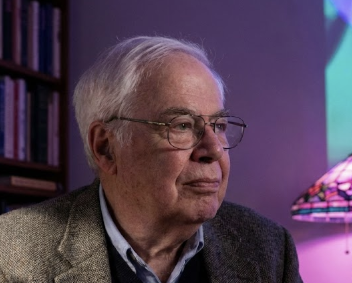
Almost as soon as I began to study philosophy, I was impressed by the way in which philosophical problems appeared, disappeared, or changed shape, as a result of new assumptions or vocabularies.
▼
Source
source
Preface

4 months ago
In the part of this universe that we know there is great injustice, and often the good suffer, and often the wicked prosper, and one hardly knows which of those is the more annoying.
▼
Source
source
"The Argument for the Remedying of Injustice"
1 month 1 week ago
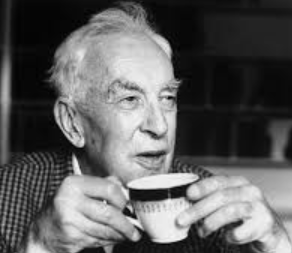
No collection of facts is ever complete, because the Universe is without bounds. And no synthesis or interpretation is ever final, because there are always fresh facts to be found after the first collection has been provisionally arranged.
▼
Source
source
Vol. 1
3 months 2 weeks ago
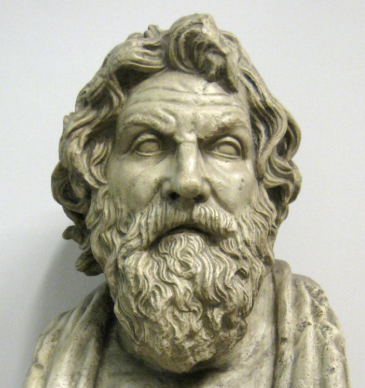
Pay attention to your enemies, for they are the first to discover your mistakes.
▼
Source
source
§ 12
3 months 4 weeks ago
The point, as Marx saw it, is that dreams never come true.
▼
Source
source
"On Violence"

4 months ago
This bird sees the white man come and the Indian withdraw, but it withdraws not. Its untamed voice is still heard above the tinkling of the forge... It remains to remind us of aboriginal nature.
▼
Source
source
March 23, 1856; of the crow
5 months 2 days ago
Every tradition grows ever more venerable — the more remote its origin, the more confused that origin is. The reverence due to it increases from generation to generation. The tradition finally becomes holy and inspires awe.

1 month 3 weeks ago
It really comes down to parsimony, economy of explanation. It is possible that your car engine is driven by psychokinetic energy, but if it looks like a petrol engine, smells like a petrol engine and performs exactly as well as a petrol engine, the sensible working hypothesis is that it is a petrol engine.
1 month 3 weeks ago
The genes are the master programmers, and they are programming for their lives.
▼
Source
source
Ch. 4. The Gene machine
2 months 3 weeks ago
Never unreal, Pain is a challenge to the universal fiction. What luck to be the only sensation granted a content, if not a meaning!

3 months 4 weeks ago
I have often thought that the best way to define a man's character would be to seek out the particular mental or moral attitude in which, when it came upon him, he felt himself most deeply and intensely active and alive. At such moments there is a voice inside which speaks and says: "This is the real me!"
▼
Source
source
To his wife, Alice Gibbons James, 1878
3 weeks 1 day ago
If I work incessantly to the last, nature owes me another form of existence when the present one collapses.
▼
Source
source
Letter to Eckermann
2 months 1 week ago
First, most producers are employees of firms, not owners. Viewed from the vantage point of classical economic theory, they have no reason to maximize the profits of firms, except to the extent that they can be controlled by owners. Moreover, profit-making firms, nonprofit organizations, and bureaucratic organizations all have exactly the same problem of inducing their employees to work toward organizational goals. There is no reason, a priori, why it should be easier (or harder) to produce this motivation in organizations aimed at maximizing profits than in organizations with different goals. If it is true in an organizational economy that organizations motivated by profits will be more efficient than other organizations, additional postulates will have to be introduced to account for it.
▼
Source
source
Simon (1991) "Organizations and Markets:" in: Journal of Economic Perspectives. 5 (2 Spring 1991): p. 28.

5 months ago
It seems to be my destiny to discourse on truth, insofar as I discover it, in such a way that all possible authority is simultaneously demolished. Since I am incompetent and extremely undependable in men's eyes, I speak the truth and thereby place them in the contradiction from which they can be extricated only by appropriating the truth themselves. A man's personality is matured only when he appropriates the truth, whether it is spoken by Balaam's ass or a sniggering wag or an apostle or an angel.

4 months 2 weeks ago
What does love look like? It has the hands to help others. It has the feet to hasten to the poor and needy. It has eyes to see misery and want. It has the ears to hear the sighs and sorrows of men. That is what love looks like.
▼
Source
source
As quoted in Quote, Unquote (1977) by Lloyd Cory, p. 197
3 weeks 2 days ago
Mathematicians do not study objects, but the relations between objects; to them it is a matter of indifference if these objects are replaced by others, provided that the relations do not change. Matter does not engage their attention, they are interested in form alone.
▼
Source
source
Ch. II: Dover abridged edition (1952), p. 20

3 months 4 weeks ago
Mr. Sensible learned only catchwords from them. He could talk like Epicurus of spare diet, but he was a glutton. He had from Montaigne the language of friendship, but no friend.
▼
Source
source
Pilgrim's Regress 176

1 month 3 weeks ago
By phonemic transformation into visual terms, the alphabet became a universal, abstract, static container of meaningless sounds.
4 months 1 day ago
Boundless compassion for all living beings is the surest and most certain guarantee of pure moral conduct, and needs no casuistry. Whoever is filled with it will assuredly injure no one, do harm to no one, encroach on no man's rights; he will rather have regard for every one, forgive every one, help every one as far as he can, and all his actions will bear the stamp of justice and loving-kindness. ... In former times the English plays used to finish with a petition for the King. The old Indian dramas close with these words: "May all living beings be delivered from pain." Tastes differ; but in my opinion there is no more beautiful prayer than this.
▼
Source
source
Part III, Ch. VIII, 4, pp. 213-214 First line often paraphrased as: Compassion is the basis of all morality.
2 months 3 weeks ago
The detour to ideality leads to coinciding with oneself, that is, to certainty, which remains the guide and guarantee of the whole spiritual adventure of being.
▼
Source
source
The Levinas reader by Levinas, Emmanuel p. 89

4 months 1 day ago
This life affords no solid satisfaction, but in the consciousness of having done well, and the hopes of another life.
▼
Source
source
Letter to Anthony Collins (23 August 1704), in The Works of John Locke, Vol. X (London, 1823), p. 298; quoted by William Julius Mickle in Voltain in the Shades (London, 1770), p. 7
2 months 3 weeks ago
The color is of the object and the object in all its qualities is expressed through color. For it is objects that glows- gems and sunlight; and it is objects that are splendid- crowns, robes, sunlight. Except as they express objects, through being the significant color-quality of materials of ordinary experience, colors effect only transient excitations.
▼
Source
source
p. 212

2 months 1 week ago
I must confess that my estimate of Lovecraft would not have pleased his most ardent admirers. The view I expressed in that book was that, while Lovecraft was distinctly a creative genius in his own way, his pessimism should not be taken too seriously; that it was the pessimism of a sick recluse, and had about it an element of rassentiment, a kind of desire to take revenge on the world that rejected him. In short, Lovecraft was a 19th century romantic, born in the wrong time. Most men of genius dislike their own age, but the really great ones impose their own vision on the age. The weak ones turn away into a world of gloomy fantasy.
▼
Source
source
p. 2
1 month 3 weeks ago
The principles of Western liberalism seem no longer to lend themselves to effective action. Deprived of the expressive power, we are awed by it, have a hunger for it, and are afraid of it. Thus we praise the gray dignity of our soft-spoken leaders, but in our hearts we are suckers for passionate outbursts, even when those passionate outbursts are hypocritical and falsely motivated.
▼
Source
source
"Literary Notes on Khrushchev" (1961), p. 36
2 months 1 week ago
The history of the Romanovs is an Elizabethan tragedy that lasts for three centuries. Its keynote is cruelty, a barbaric, pointless kind of cruelty that has always been common in the East, but that came to Europe only recently, in the time of Hitler.
▼
Source
source
pp. 61-62
3 months 4 weeks ago
You could send your soul after the good you had expected, instead of turning it to the good you had got. You could refuse the real good; you could make the real fruit taste insipid by thinking of the other.
CivilSimian.com created by AxiomaticPanic, CivilSimian, Kalokagathia