


4 months 1 day ago
Despotic government supports itself by abject civilization, in which debasement of the human mind, and wretchedness in the mass of the people, are the chief criterions. Such governments consider man merely as an animal; that the exercise of intellectual faculty is not his privilege; that he has nothing to do with the laws but to obey them; and they politically depend more upon breaking the spirit of the people by poverty, than they fear enraging it by desperation.
▼
Source
source
Means by Which the Fund Is to Be Created

4 months ago
Mysticism is, in essence, little more than a certain intensity and depth of feeling in regard to what is believed about the universe.
▼
Source
source
Ch. 1: Mysticism and Logic

4 months 1 week ago
There are and can be only two ways of searching into and discovering truth. The one flies from the senses and particulars to the most general axioms, and from these principles, the truth of which it takes for settled and immovable, proceeds to judgment and to the discovery of middle axioms. And this way is now in fashion. The other derives axioms from the senses and particulars, rising by a gradual and unbroken ascent, so that it arrives at the most general axioms last of all. This is the true way, but as yet untried.
▼
Source
source
Aphorism 19

4 months 1 week ago
In living bodies, how all the various limbs harmonize, and mutually combine, for common defence against injury! What can be more heterogeneous, and unlike, than the body and the soul? and yet with what strong bonds nature has united them, is evident from the pang of separation. As life itself is nothing else but the concordant union of body and soul, so is health the harmonious cooperation of all the parts and functions of the body.

4 months 1 week ago
T is so much to be a king, that he only is so by being so. The strange lustre that surrounds him conceals and shrouds him from us; our sight is there broken and dissipated, being stopped and filled by the prevailing light.
▼
Source
source
Book III, Ch. 7. Of the Inconveniences of Greatness
2 weeks ago
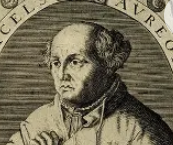
Who else is the enemy of Nature but he who mistakes himself for more intelligent than Nature, though it is the highest school for all of us?

3 months 3 weeks ago
Christianity has functioned for the normative self-understanding of modernity as more than a mere precursor or a catalyst. Egalitarian universalism, from which sprang the ideas of freedom and social solidarity, of an antonomous conduct of life and emancipation, of the individual morality of conscience, human rights, and democracy, is the direct heir to the judaic ethic of justice and the Christian ethic of love. This legacy, substantially unchanged, has been the object of continual critical appropriation and reinterpretation. To this day, there is no alternative to it. And in the light of the current challenges of a postnational constellation, we continue to draw on the substance of this heritage. Everything else is just idle postmodern talk.
▼
Source
source
Habermas (2006) "Conversation about God and the World." Time of transitions. Cambridge: Polity Press, p. 150-151.

3 months 3 weeks ago
The appearance in nineteenth-century psychiatry, jurisprudence, and literature of a whole series of discourses on the species and subspecies of homosexuality, inversion, pederasty, and "psychic hermaphroditism" made possible a strong advance of social controls into this area of "perversity"; but it also made possible the formation of a "reverse" discourse: homosexuality began to speak in its own behalf, to demand that its legitimacy or "naturality" be acknowledged, often in the same vocabulary, using the same categories by which it was medically disqualified.
▼
Source
source
Vol. I, p. 101
2 months 1 week ago
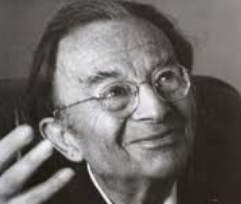
If a person loves only one other person and is indifferent to all others, his love is not love but a symbiotic attachment, or an enlarged egotism.

2 weeks ago
Now a life of honour includes various kinds of conduct; it may include the chest in which Regulus was confined, or the wound of Cato which was torn open by Cato's own hand, or the exile of Rutilius, or the cup of poison which removed Socrates from gaol to heaven.

3 months 4 weeks ago
...the reality of society involves the socialization of certain unrealities.
▼
Source
source
p. 455

3 months ago
In most cases, people, even the most vicious, are much more naive and simple-minded than we assume them to be. And this is true of ourselves too.

3 months 4 weeks ago
The best effect of fine persons is felt after we have left their presence.
▼
Source
source
1839


4 months 1 day ago
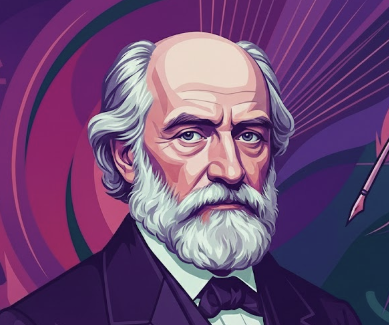
Opinion is like a pendulum and obeys the same law. If it goes past the centre of gravity on one side, it must go a like distance on the other; and it is only after a certain time that it finds the true point at which it can remain at rest.
▼
Source
source
Vol. 2 "Further Psychological Observations" as translated in Essays and Aphorisms (1970), as translated by R. J. Hollingdale
4 months ago
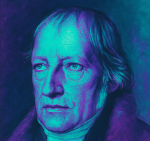
To be independent of public opinion is the first formal condition of achieving anything great or rational whether in life or in science. Great achievement is assured, however, of subsequent recognition and grateful acceptance by public opinion, which in due course will make it one of its own prejudices.
▼
Source
source
Sect. 318, as translated by T. M. Knox,, 1952
2 months 1 week ago
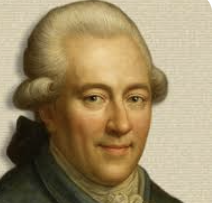
To be content with life - or to live merrily, rather - all that is required is that we bestow on all things only a fleeting, superficial glance; the more thoughtful we become the more earnest we grow.
▼
Source
source
K 29

4 months 3 days ago
In the long-run the workman may be as necessary to his master as his master is to him, but the necessity is not so immediate.
▼
Source
source
Chapter VIII, p. 80.

1 month 4 weeks ago
Armies are necessary, before all things, for the defense of governments from their own oppressed and enslaved subjects.
▼
Source
source
Chapter VII, Significance of Compulsory Service
3 months 4 weeks ago
It is for the sake of order that I seduced Clytemnestra, for the sake of order that I killed my king. I wanted for order to rule and that it rule through me. I have lived without desire, without love, without hope: I made order. Oh! terrible and divine passion!
▼
Source
source
Aegistheus, Act 2
3 months ago
If you want to be respected by others the great thing is to respect yourself. Only by that, only by self-respect will you compel others to respect you.
▼
Source
source
Part III, Chapter 2

4 months 2 weeks ago
No pleasure is in itself evil, but the things which produce certain pleasures entail annoyances many times greater than the pleasures themselves.

2 months 3 weeks ago
A human being possessed by a belief and not eager to pass it on to others is a phenomenon alien to the earth, where our mania for salvation makes life unbreathable.

2 months 2 weeks ago
Faith feels itself secure neither with universal consent, nor with tradition, nor with authority. It seeks support of its enemy, reason.

3 weeks 4 days ago
Every identity, such (third) critics say, even the multitude, must be defined by its remained, those outside of it, call them excluded, the abject, or the subaltern. ... There can certainly be points or nodes outside a network but none are necessarily outside. Its boundaries are indefinite and open. ... None is necessarily excluded but this inclusion is not guaranteed: the expansion of the common is a practical, political manner.
▼
Source
source
226
2 months 4 weeks ago
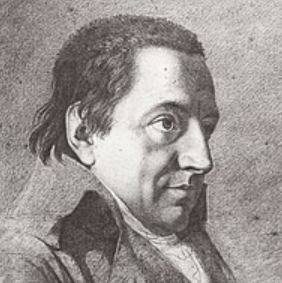
He who must still exhort himself, and be exhorted, to will the good, has as yet no firm and ever-ready will, but wills a will anew every time he needs it. But he who has such a stable will, wills what he wills for ever, and cannot under any circumstances will otherwise than he always wills. For him freedom of the will is destroyed and swallowed up in necessity.
▼
Source
source
General Nature of New Eduction p 21
3 weeks 2 days ago
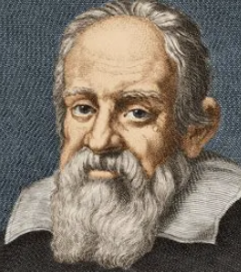
I would say here something that was heard from an ecclesiastic of the most eminent degree [probably Caesar Baronius]: "The intention of the Holy Ghost is to teach us how one goes to heaven, not how heaven goes.
▼
Source
source
Variant translation: I would say here something that was heard from an ecclesiastic of the most eminent degree: "That the intention of the Holy Spirit is to teach us how one goes to heaven, not how the heavens go."

2 weeks 6 days ago
His Religion is not an easy one: with rigorous fasts, lavations, strict complex formulas, prayers five times a day, and abstinence from wine, it did not "succeed by being an easy religion." As if indeed any religion, or cause holding of religion, could succeed by that! It is a calumny on men to say that they are roused to heroic action by ease, hope of pleasure, recompense, - sugar-plums of any kind, in this world or the next! In the meanest mortal there lies something nobler.

4 months 3 days ago
The most perfect philosophy of the natural kind only staves off our ignorance a little longer: as perhaps the most perfect philosophy of the moral or metaphysical kind serves only to discover larger portions of it. Thus the observation of human blindness and weakness is the result of all philosophy, and meets us at every turn, in spite of our endeavours to elude or avoid it.
▼
Source
source
Section 4 : Sceptical Doubts Concerning The Operations of The Understanding
4 months ago
Science, ever since the time of the Arabs, has had two functions: (1) to enable us to know things, and (2) to enable us to do things.
4 months 3 days ago
The virtue of frugality lies in a middle between avarice and profusion, of which the one consists in an excess, the other in a defect of the proper attention to the objects of self-interest.
▼
Source
source
Section II, Chap. I.
2 months 3 weeks ago
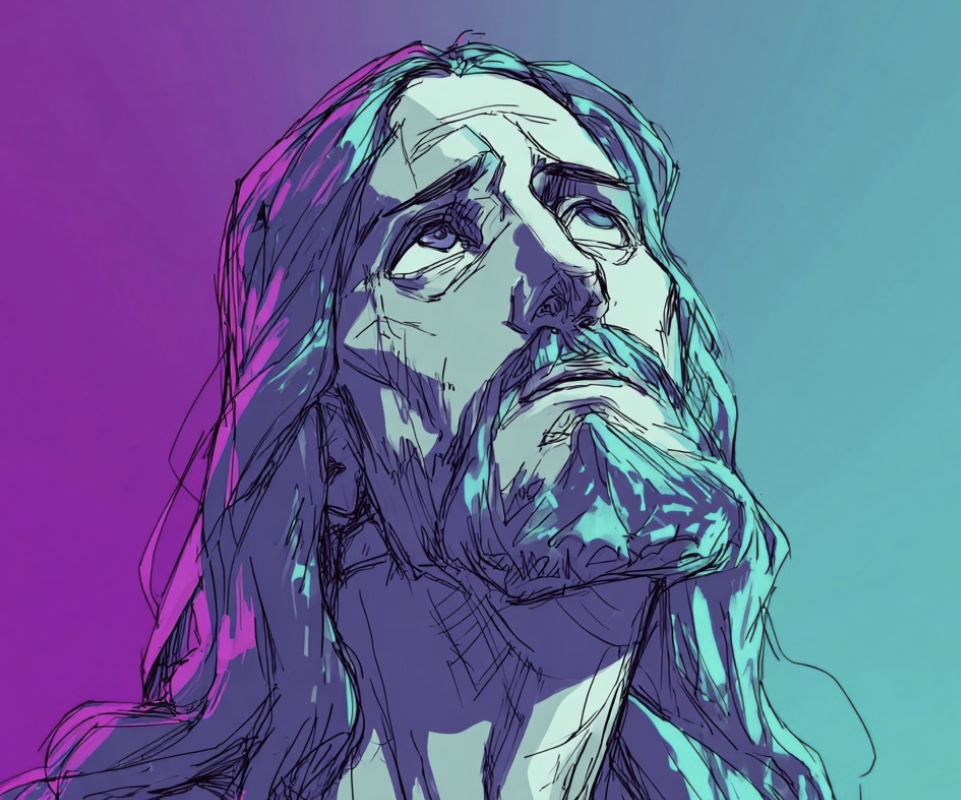
When you make the two into one, you will become children of Adam, and when you say, 'Mountain, move from here!' it will move.

5 months 2 days ago
Thoughts in a poem. The poet presents his thoughts festively, on the carriage of rhythm: usually because they could not walk.
3 months 4 days ago
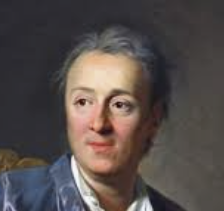
Go further, and require each of them to make a contribution: you will see how many things are still missing, and you will be obliged to get the assistance of a large number of men who belong to different classes, priceless men, but to whom the gates of the academies are nonetheless closed because of their social station. All the members of these learned societies are more than is needed for a single object of human science; all the societies together are not sufficient for a science of man in general.
▼
Source
source
Article on Encyclopedia
2 months 3 weeks ago
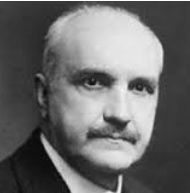
The empiricist thinks he believes only what he sees, but he is much better at believing than at seeing.
▼
Source
source
"Objections to Belief in Substance", p. 201
2 months 3 weeks ago
His power to adore is responsible for all his crimes: a man who loves a god unduly forces other men to love his god, eager to exterminate them if they refuse.

3 months 6 days ago
The one infinite is perfect, in simplicity, of itself, absolutely, nor can aught be greater or better, This is the one Whole, God, universal Nature, occupying all space, of whom naught but infinity can give the perfect image or semblance.
▼
Source
source
II 12 as translated by Dorothea Waley Singer
4 months 1 week ago
A doubtful balance is made between truth and pleasure, and... the knowledge of one and the feeling of the other stir up a combat the success of which is very uncertain, since, in order to judge of it, it would be necessary to know all that passes in the innermost spirit of the man, of which man himself is scarcely ever conscious.

2 months 3 weeks ago
If man has learned to see and know what really is, he will act in accordance with truth, Epistemology is in itself ethics, and ethics is epistemology.
▼
Source
source
p. 125
2 months 4 weeks ago
The fundamental maxim of those who stand at the head of this Age, and therefore the principle of the Age, is this,-to accept nothing as really existing or obligatory, but that which they can understand and clearly comprehend. With regard to this fundamental principle, as we have now declared and adopted it without farther definition or limitation, this third Age is precisely similar to that which is to follow it, the fourth, or age of Reason as Science,-and by virtue of this similarity prepares the way for it. Before the tribunal of Science, too, nothing is accepted but the Conceivable. Only in the application of the principle there is this difference between the two Ages,-that the third, which we shall shortly name that of Empty Freedom, makes its fixed and previously acquired conceptions the measure of existence; while the fourth-that of Science-on the contrary, makes existence the measure, not of its acquired, but of its desiderated beliefs.
▼
Source
source
p. 19

1 month 6 days ago
In Kleist's essay humans are caught between the graceful automatism of the puppet and the conscious freedom of a god. The jerky, stuttering quality of their actions comes from their feeling that they must determine the course of their lives. Other animals live without having to choose their path through life. Whatever uncertainty they may feel sniffing their way through the world is not a permanent condition; once they reach a place of safety, they are at rest. In contrast, human life is spent anxiously deciding how to live.
▼
Source
source
The Faith of Puppets: Leopardi and the Souls of Machines (p.25-6)
3 months 3 weeks ago
If there is a kind of "proof" of the sincerity of the parrhesiastes, it is his courage... Saying something dangerous-different from what the majority believes-is a strong indication that he is a parrhesiastes.
5 months ago
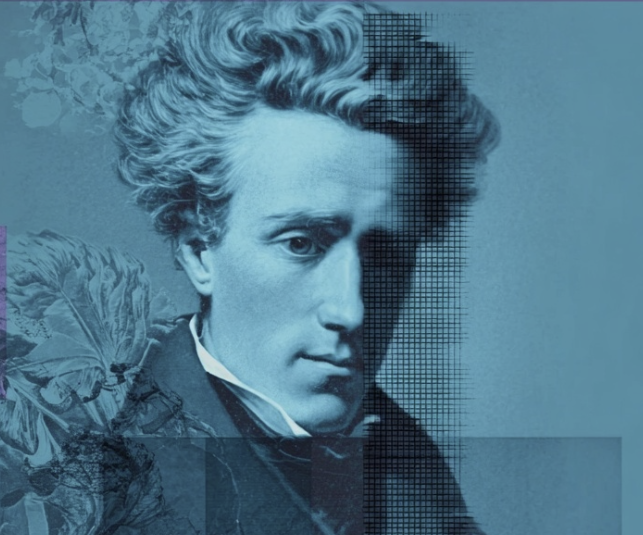
How could one speak properly about love if you were forgotten, you God of love, source of all love in heaven and on earth; you who spared nothing but in love gave everything; you who are love, so that one who loves is what he is only by being in you.

4 months 1 week ago
Throughout your treatment you forget that you said that 'free-will' can do nothing without grace, and you prove that 'free-will' can do all things without grace! Your inferences and analogies "For if man has lost his freedom, and is forced to serve sin, and cannot will good, what conclusion can more justly be drawn concerning him, than that he sins and wills evil necessarily?
▼
Source
source
p. 149

3 months 1 week ago
That which exercises reason is more excellent than that which does not exercise reason; there is nothing more excellent than the universe, therefore the universe exercises reason.
▼
Source
source
As quoted in De Natura Deorum by Cicero, ii. 8.; iii. 9.
1 month 3 weeks ago
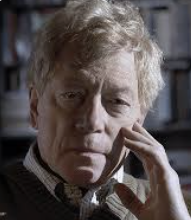
A free society is a community of free beings, bound by the laws of sympathy and by the obligations of family love. It is not a society of people released from all moral constraint-for that is precisely the opposite of a society. Without moral constraint there can be no cooperation, no family commitment, no long-term prospects, no hope of economic, let alone social, order.
▼
Source
source
"The Limits of Liberty," The American Spectator

2 months 2 weeks ago
We find here the final application of the doctrine of objective immortality. Throughout the perishing occasions in the life of each temporal Creature, the inward source of distaste or of refreshment, the judge arising out of the very nature of things, redeemer or goddess of mischief, is the transformation of Itself, everlasting in the Being of God. In this way, the insistent craving is justified - the insistent craving that zest for existence be refreshed by the ever-present, unfading importance of our immediate actions, which perish and yet live for evermore.

3 months 4 weeks ago
Who is going to educate the human race in the principles and practice of conservation?
▼
Source
source
Chapter 12 (p. 112)
2 months 3 weeks ago
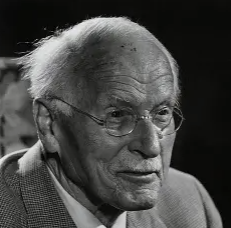
We do not know whether Hitler is going to found a new Islam. (He is already on the way; he is like Mohammed. The emotion in Germany is Islamic; warlike and Islamic. They are all drunk with a wild god.)
▼
Source
source
The Symbolic Life - in The Collected Works: The Symbolic Life. Miscellaneous Writings (1977), p. 281
CivilSimian.com created by AxiomaticPanic, CivilSimian, Kalokagathia