


2 months 4 days ago
What to think of other people? I ask myself this question each time I make a new acquaintance. So strange does it seem to me that we exist, and that we consent to exist.

2 months 1 week ago
Science raises itself above all Ages and all Times, embracing and apprehending the ONE UNCHANGING TIME as the higher source of all Ages and Epochs, and grasping that vast idea in its free, unbounded comprehension.
▼
Source
source
p. 11

2 months 1 week ago
All those instances to be found in history, whether real or fabulous, of a doubtful public spirit, at which morality is perplexed, reason is staggered, and from which affrighted Nature recoils, are their chosen and almost sole examples for the instruction of their youth.
▼
Source
source
No. 1, volume v, p. 286

2 months 4 days ago
Consciousness must essentially cover an interval of time; for if it did not, we could gain no knowledge of time, and not merely no veracious cognition of it, but no conception whatever. We are therefore, forced to say that we are immediately conscious through an infinitesimal interval of time.

2 weeks 3 days ago
It is hard to imagine an experience more horrific than being eaten alive. Most of us would prefer not to imagine what it must feel like. Note that the photographer here had to persuade the park ranger to violate the park rules and put the baby elephant out of his misery.By analogy, suppose it were lawful to visit Third World countries for photoshoots but illegal to "interfere" and help a stricken human baby. Is there a fundamental difference between "ethical" intervention to help humans and "sentimental" pleas to "interfere" and help non-humans? Should we encourage the preservation of life-forms such as the hyena in their current guise? Or do the value judgements underlying the "science" of conservation biology need to be re-examined?
▼
Source
source
"Hyenas Eat Baby Elephant Alive: The Case for Intervention"

2 months 2 weeks ago
Love is a God, who cooperates in securing the safety of the city.
▼
Source
source
As quoted in Deipnosophists by Athenaeus, xiii. 561c.

3 months 3 weeks ago
Justice respects man as living in society, and is the common bond without which no society can subsist.
2 months 3 days ago
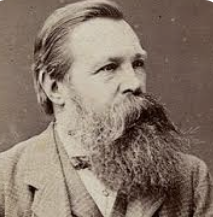
The proletarian works with the instruments of production of another, for the account of this other, in exchange for a part of the product. ... The proletarian liberates himself by abolishing competition, private property, and all class differences.

3 months 1 week ago
Superstition is to religion what astrology is to astronomy, the mad daughter of a wise mother. These daughters have too long dominated the earth.
▼
Source
source
"Whether it is useful to maintain the people in superstition," Treatise on Toleration, 1763

3 months 3 weeks ago
Nothing can be produced from nothing.
▼
Source
source
Book I, lines 156-157 (tr. Munro) Variant translations: Nothing can be created from nothing. Nothing can be created out of nothing.

2 months 1 week ago
He who carries self-regard far enough to keep himself in good health and high spirits, in the first place thereby becomes an immediate source of happiness to those around, and in the second place maintains the ability to increase their happiness by altruistic actions. But one whose bodily vigour and mental health are undermined by self-sacrifice carried too far, in the first place becomes to those around a cause of depression, and in the second place renders himself incapable, or less capable, of actively furthering their welfare. In estimating conduct we must remember that there are those who by their joyousness beget joy in others, and that there are those who by their melancholy cast a gloom on every circle they enter.
▼
Source
source
Ethics (New York:1915), § 72, pp. 193-194
3 months 3 days ago
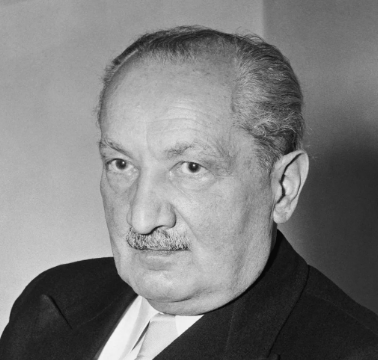
Being is only Being for Dasein.
▼
Source
source
Macquarrie & Robinson translation

3 months 3 days ago
Is it just I who cannot found a school, or can a philosopher never do so?
▼
Source
source
p. 69e
1 month 2 weeks ago
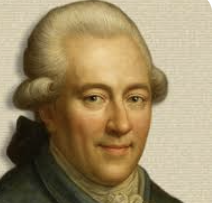
Rational free spirits are the light brigade who go on ahead and reconnoitre the ground which the heavy brigade of the orthodox will eventually occupy.
▼
Source
source
H 36

4 months 1 week ago
I can understand myself in believing, although in addition I can in a relative misunderstanding comprehend the human aspect of this life: but comprehend faith or comprehend Christ, I cannot.

3 months 2 weeks ago
My whole heart and soul are stirred and incensed against the Turks and Mohammed, when I see this intolerable raging of the Devil. Therefore I shall pray and cry to God, nor rest until I know that my cry is heard in heaven.
▼
Source
source
Statement while being confined to residence at Coburg, as quoted in History of the Christian Church, (1910) by Philip Schaff, Vol. VII
3 months 2 weeks ago
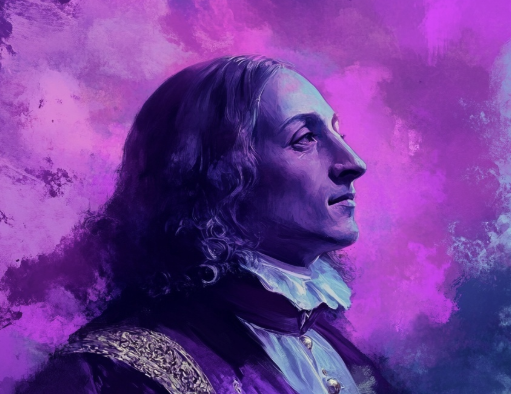
For as old age is that period of life most remote from infancy, who does not see that old age in this universal man ought not to be sought in the times nearest his birth, but in those most remote from it?
▼
Source
source
Preface to the Treatise on Vacuum, c.1651
3 months 1 week ago
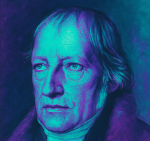
Aims, principles, &c., have a place in our thoughts, in our subjective design only; but not yet in the sphere of reality. That which exists for itself only, is a possibility, a potentiality; but has not yet emerged into Existence. A second element must be introduced in order to produce actuality - viz. actuation, realization; and whose motive power is the Will - the activity of man in the widest sense.
3 months 1 week ago
Quite a heavy weight, a name too quickly famous.
▼
Source
source
La Henriade, chant troisième, l.41, 1722

2 months 1 week ago
In America the majority raises formidable barriers around the liberty of opinion; within these barriers an author may write what he pleases, but woe to him if he goes beyond them.
▼
Source
source
Chapter XV, in a section titled Tryanny of the Majority.

2 months 4 weeks ago
There are two forms of knowledge, one genuine, one obscure. To the obscure belong all of the following: sight, hearing, smell, taste, feeling. The other form is the genuine, and is quite distinct from this. [And then distinguishing the genuine from the obscure, he continues:] Whenever the obscure [way of knowing] has reached the minimum sensibile of hearing, smell, taste, and touch, and when the investigation must be carried farther into that which is still finer, then arises the genuine way of knowing, which has a finer organ of thought.

3 days ago
Therefore tolerance of diversity, of people that don't believe the same thing that you do, has always been at the core of this pragmatic project to enable diverse populations to live with one another.
▼
Source
source
9:00

3 months 1 week ago
We speak not strictly and philosophically when we talk of the combat of passion and of reason. Reason is, and ought only to be the slave of the passions, and can never pretend to any other office than to serve and obey them.
▼
Source
source
Part 3, Section 3

3 months 1 week ago
It is, I think, safe to say that nothing was more alien to the minds of the scientists, who brought about the most radical and most rapid revolutionary process the world has ever seen, than any will to power. Nothing was more remote than any wish to 'conquer space' and to go to the moon. It was indeed their search for 'true reality' that led them to lose confidence in appearances, in the phenomena as they reveal themselves of their own accord to human sense and reason. They were inspired by an extraordinary love of harmony and lawfulness which taught them that they would have to step outside any merely given sequence or series of occurrences if they wanted to discover the overall beauty and order of the whole, that is, the universe.
▼
Source
source
On scientific discovery, in Between Past and Future (1961) as quoted in Ideas in literature: Ten things Hannah Arendt said that are eerily relevant in today's political times

4 months 4 days ago
Metaphysical rebellion is a claim, motivated by the concept of a complete unity, against the suffering of life and death and a protest against the human condition both for its incompleteness, thanks to death, and its wastefulness, thanks to evil.
1 month 5 days ago
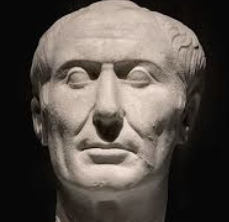
Bitter for a free man is the bondage of debt.
▼
Source
source
Maxim 14 Variant: "Debt is the slavery of the free."
2 months 4 days ago
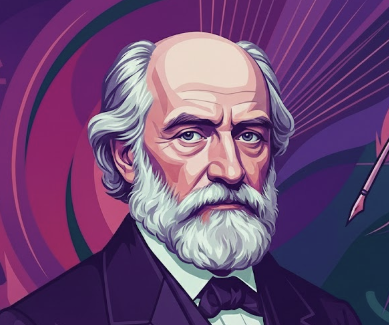
The more you live, the less useful it seems to have lived.
3 months 1 week ago
Christianity taught only what the whole of Asia knew already long before and even better.
▼
Source
source
quoted in Londhe, S. (2008). A tribute to Hinduism: Thoughts and wisdom spanning continents and time about India and her culture. New Delhi: Pragun Publication.
3 months 3 days ago
Tell them I've had a wonderful life.
▼
Source
source
Last words, to his doctor's wife (28 April 1951)-as quoted in Ludwig Wittgenstein : A Memoir (1966) by Norman Malcolm, p. 100
3 months 1 week ago
We, on the contrary, now send to the Brahmans English clergymen and evangelical linen-weavers, in order out of sympathy to put them right, and to point out to them that they are created out of nothing, and that they ought to be grateful and pleased about it. But it is Just the same as if we fired a bullet at a cliff. " In India, our religions wIll never at any time take root; the ancient wisdom of the human race will not be supplanted by the events in Galilee. On the contrary, Indian Wisdom flows back to Europe, and will produce a fundamental change in our knowledge and thought.
▼
Source
source
Schopenhauer, Arthur The world as will and representation. Translated from the German by E. F. J. Payne. New York, Dover Publications [c1969 - Volume I, & 63 p. 356-357. quoted in Londhe, S. (2008).

3 months 1 week ago
As for me, I am mean: that means that I need the suffering of others to exist. A flame. A flame in their hearts. When I am all alone, I am extinguished.
▼
Source
source
Inès, describing her path to Hell, Act 1, sc. 5
4 months 4 days ago
In order to cease being a doubtful case, one has to cease being, that's all.
2 weeks 3 days ago
The irrationality of the "appeal to Nature" is illustrated by a simple thought-experiment. Imagine, fancifully, if starvation, disease, parasitism, disembowelling, asphyxiation and being eaten alive were not endemic to the living world - or such miseries have already been abolished and replaced by an earthly paradise. Would anyone propose there is ethical case for (re)introducing them? Even proposing such a thought-experiment can sound faintly ridiculous.
▼
Source
source
"A Welfare State For Elephants?: A Case Study of Compassionate Stewardship", Relations: Beyond Anthropocentrism, Vol. 3, Iss. 2 (Nov. 2015), p. 162

1 month 3 weeks ago
The great and inspiring aims of the Revolution became so clouded with and obscured by the methods used by the ruling political power that it was hard to distinguish what was temporary means and what final purpose. Psychologically and socially the means necessarily influence and alter the aims. The whole history of man is continuous proof of the maxim that to divest one's methods of ethical concepts means to sink into the depths of utter demoralization. In that lies the real tragedy of the Bolshevik philosophy as applied to the Russian Revolution. May this lesson not be in vain.
2 months 4 days ago
Haven't people learned yet that the time of superficial intellectual games is over, that agony is infinitely more important than syllogism, that a cry of despair is more revealing than the most subtle thought, and that tears always have deeper roots than smiles?
3 weeks 5 days ago
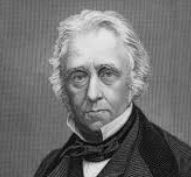
It is surely delightful, Sir, to look forward to that period when a series of liberal and prudent measures shall have delivered islands, so highly favoured by the bounty of Providence, from the curse inflicted on them by the frantic rapacity of man. Then the peasant of the Antilles will no longer crawl in listless and trembling dejection round a plantation from whose fruits he must derive no advantage, and a hut whose door yields him no protection; but, when his cheerful and voluntary labour is performed, he will return with the firm step and erect brow of a British citizen from the field which is his freehold to the cottage which is his castle.
▼
Source
source
Speech to a meeting of the Anti-Slavery Society held in Freemasons' Tavern (25 June 1824), quoted in Report of the Committee of the Society for the Mitigation and Gradual Abolition of Slavery Throughout the British Dominions, Volume I (1824), p. 77
1 month 4 weeks ago
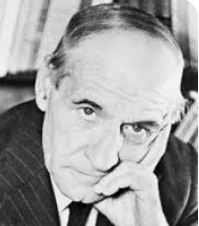
The direction of society has been taken over by a type of man who is not interested in the principles of civilisation. Not of this or that civilisation but - from what we can judge to-day - of any civilisation. ...The type of man dominant to-day is a primitive one, a Naturmensch rising up in the midst of a civilised world.
▼
Source
source
Chap.IX: The Primitive and the Technical
1 month 4 days ago
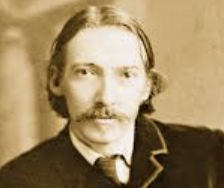
The imagination loves to trifle with what is not.
▼
Source
source
The Sea Fogs

2 months 1 week ago
On its pass through finitude, the being-for-itself of the counter-image expresses itself most potently as ""I-ness", as self-identical individuality. Just as a planet in its orbit no sooner reaches its farthest distance from the center than it returns to its closest proximity, so the point of the farthest distance from God, the I-ness, is also the moment of its return to the Absolute, of the re-absorption into the ideal.
▼
Source
source
P. 30
2 months 1 week ago
The essential trait in the moral consciousness, is the control of some feeling or feelings by some other feeling or feelings.
▼
Source
source
Ch. 7, The Psychological View

3 months 1 week ago
But if the labourers could live on air they could not be bought at any price.
▼
Source
source
Vol. I, Ch. 24, Section 4, pg. 657.
2 months 4 days ago
When you know that every problem is only a false problem, you are dangerously close to salvation.

1 month 3 weeks ago
May we not say, perhaps, that the evil man is annihilated because he wished to be annihilated, or that he did not wish strongly enough to eternalize himself because he was evil? May we say that it is not believing in the other life which causes a man to be good, but rather that being good causes him believe in it? And what is being good and being evil? These states belong to the sphere of ethics, not of religion; or rather, does not the doing good though being evil pertain to ethics, and the being good [forgivable] though doing evil, to religion?
2 months 4 days ago
Boredom is a larval anxiety; depression, a dreamy hatred.
2 months 1 week ago
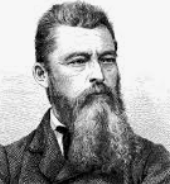
Man has many wishes that he does not really wish to fulfil, and it would be a misunderstanding to suppose the contrary. He wants them to remain wishes, they have value only in his imagination; their fulfilment would be a bitter disappointment to him. Such a desire is the desire for eternal life. If it were fulfilled, man would become thoroughly sick of living eternally, and yearn for death. In reality man wishes merely to avoid a premature, violent or gruesome death. Everything has its measure, says a pagan philosopher; in the end we weary of everything, even of life; a time comes when man desires death. Consequently there is nothing frightening about a normal, natural death, the death of a man who has fulfilled himself and lived out his life.
▼
Source
source
Lecture XXX, Atheism alone a Positive View
2 weeks 3 days ago
Humans already massively intervene in Nature, whether through habitat destruction, captive breeding programs for big cats, "rewilding", etc. So the question is not whether humans should "interfere", but rather what ethical principles should govern our interventions.
▼
Source
source
The Antispeciesist Revolution, Institute for Ethics and Emerging Technologies, 26 Jul. 2013

3 months 1 week ago
This world is but canvas to our imaginations.

1 month 1 week ago
Armies are necessary, before all things, for the defense of governments from their own oppressed and enslaved subjects.
▼
Source
source
Chapter VII, Significance of Compulsory Service



CivilSimian.com created by AxiomaticPanic, CivilSimian, Kalokagathia