


3 months 1 day ago
When an opinion has taken root in a democracy and established itself in the minds of the majority, it afterward persists by itself, needing no effort to maintain it since no one attacks it. Those who at first rejected it as false come in the end to adopt it as accepted, and even those who still at the bottom of their hearts oppose it keep their views to themselves, taking great care to avoid a dangerous and futile contest.
▼
Source
source
Book Three, Chapter XXI.
3 months 1 day ago
Power acquired by violence is only a usurpation, and lasts only as long as the force of him who commands prevails over that of those who obey.
▼
Source
source
Article on Political Authority, Vol. 1

3 months 2 weeks ago
One who is serious all day will never have a good time, while one who is frivolous all day will never establish a household.
▼
Source
source
Maxim no. 25.
2 months 2 weeks ago
What renders man an imaginative and moral being is that in society he gives new aims to his life which could not have existed in solitude: the aims of friendship, religion, science, and art.
▼
Source
source
Ch. V: Democracy

2 months 1 week ago
The 'open' mind of the poet and artist can sense realities beyond the reach of our normal senses. The real problem is that our materialistic assumptions have a number of false premises built into them: it is only when we recognize this that we see there is no sharp dividing line between the everyday world and the invisible world of the clairvoyant.
▼
Source
source
p. 294

3 months 1 week ago
A transition, therefore, is not undeservedly made from sense to consideration, and from this to the nobler energies of intellect. Hence, as the certain knowledge of numbers received its origin among the Phœnicians, on account of merchandise and commerce, so geometry was found out among the Egyptians from the distribution of land. When Thales, therefore, first went into Egypt, he transferred this knowledge from thence into Greece: and he invented many things himself, and communicated to his successors the principles of many. Some of which were, indeed, more universal, but others extended to sensibles.
▼
Source
source
Chap. IV.
3 months 3 weeks ago
An intolerant sect has no right to complain when it is denied an equal liberty. ... A person's right to complain is limited to principles he acknowledges himself.
▼
Source
source
p. 217
4 months 3 weeks ago
One could construe the life of man as a great discourse in which the various people represent different parts of speech (the same might apply to states). How many people are just adjectives, interjections, conjunctions, adverbs? How few are substantives, active verbs, how many are copulas? Human relations are like the irregular verbs in a number of languages where nearly all verbs are irregular.

4 months ago
I have said more than once, that I hold space to be something purely relative, as time; an order of coexistences, as time is an order of successions.
▼
Source
source
Third letter to Samuel Clarke, February 25, 1716
1 week 5 days ago
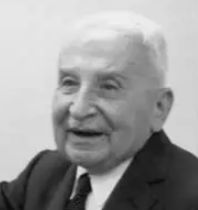
State and government are the social apparatus of violent coercion and repression. Such an apparatus, the police power, is indispensable in order to prevent anti-social individuals and bands from destroying social co-operation. Violent prevention and suppression of anti-social activities benefit the whole of society and each of its members. But violence and oppression are none the less evils and corrupt those in charge of their application. It is necessary to restrict the power of those in office lest they become absolute despots. Society cannot exist without an apparatus of violent coercion. But neither can it exist if the office holders are irresponsible tyrants free to inflict harm upon those they dislike.
4 months 3 weeks ago
We can hope that the ways of peace will attract the Arabic nations, for their territory and opportunities are broad enough for immeasurable advance, if the energies vented in spleen, are turned instead to a modernisation of the technology, a restoration of the soil, and a renovation of the economic, social, and political structure of those great and venerable lands.
2 months 1 week ago
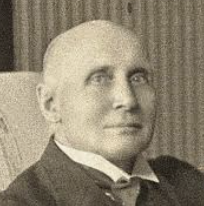
I have always noticed that deeply and truly religious persons are fond of a joke, and I am suspicious of those who aren't.
▼
Source
source
As quoted in Church and Home, Vol. 1 (1964) by United Methodist Church, and Evangelical United Brethren Church, p. 21.

1 month 3 weeks ago
I have lived through much, and now I think I have found what is needed for happiness. A quiet secluded life in the country, with the possibility of being useful to people to whom it is easy to do good, and who are not accustomed to have it done to them; then work which one hopes may be of some use; then rest, nature, books, music, love for one's neighbor -- such is my idea of happiness. And then, on the top of all that, you for a mate, and children perhaps -- what more can the heart of man desire?
▼
Source
source
Part 1, Chapter V
3 months 4 weeks ago
Truth that is naked is the most beautiful, and the simpler its expression the deeper is the impression it makes; this is partly because it gets unobstructed hold of the hearer's mind without his being distracted by secondary thoughts, and partly because he feels that here he is not being corrupted or deceived by the arts of rhetoric, but that the whole effect is got from the thing itself.
4 months 3 weeks ago
It is the duty of the human understanding to understand that there are things which it cannot understand, and what those things are. Human understanding has vulgarly occupied itself with nothing but understanding, but if it would only take the trouble to understand itself at the same time it would simply have to posit the paradox.
2 weeks 5 days ago
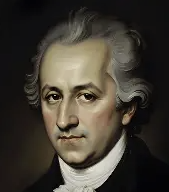
One lives but once in the world.
▼
Source
source
Clavigo, Act I, sc. i
2 months 1 week ago
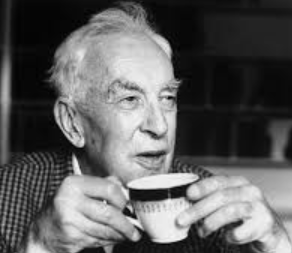
Men can be provincial in time, as well as in place.
▼
Source
source
Preface, p. ix
1 month 1 week ago
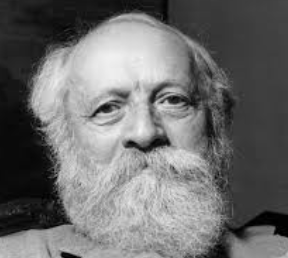
Of the twenty or so civilizations known to modern Western historians, all except our own appear to be dead or moribund, and, when we diagnose each case, in extremis or post mortem, we invariably find that the cause of death has been either War or Class or some combination of the two. To date, these two plagues have been deadly enough, in partnership, to kill off nineteen out of twenty representatives of this recently evolved species of human society; but, up to now, the deadliness of these scourges has had a saving limit.
▼
Source
source
Ch. 2: The Present Point in History
2 months 2 weeks ago
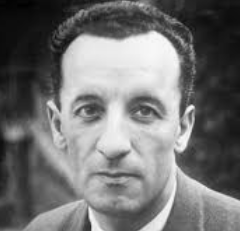
The Thou encounters me by grace - it cannot be found by seeking. But that I speak the basic word to it is a deed of my whole being, is my essential deed.
4 months 3 weeks ago
Without the interplay of human against human, the chief interest in life is gone; most of the intellectual values are gone; most of the reason for living is gone.

2 months 3 weeks ago
We must live, you used to say, as if we were never going to die. - Didn't you know that's how everyone lives, including those obsessed with Death?

3 months 3 weeks ago
Certainly it is correct to say: Conscience is the voice of God.
▼
Source
source
p. 75
2 months 2 weeks ago
The philosopher will ask himself ... if the criticism we are now suggesting is not the philosophy which presses to the limit that criticism of false gods which Christianity has introduced into our history.
▼
Source
source
p. 47
4 months 3 weeks ago
The question is asked in ignorance, by one who does not even know what can have led him to ask it.

3 months 3 weeks ago
I pre-suppose, of course, a reader who is willing to learn something new and therefore to think for himself.
▼
Source
source
Author's prefaces to the First Edition.
2 months 2 weeks ago
The transition from Hegel to Marx is, in all respects, a transition to an essentially different order of truth, no to be interpreted in terms of philosophy. We shall see that all the philosophical concepts of Marxian theory are social and economic categories, whereas Hegel's social and economic categories are all philosophical concepts.
▼
Source
source
P. 258

1 week 4 days ago
For this reason those who are tossed about at sea, who proceed uphill and downhill over toilsome crags and heights, who go on campaigns that bring the greatest danger, are heroes and front-rank fighters; but persons who live in rotten luxury and ease while others toil, are mere turtle-doves safe only because men despise them.
2 months 3 weeks ago
What am I, other than a chance in the infinite probabilities of not having been!

2 months 3 weeks ago
A living language can stand on a higher level of culture in comparison with another, but it can never in itself attain that perfection of development which a dead language quite easily attains. In the latter the connotation of words is fixed, and the possibilities of suitable combinations will also gradually become exhausted. Hence, he who wishes to speak this language must speak it just as it is; but, after he has once learnt to do this, the language speaks itself in his mouth and thinks and imagines for him.
▼
Source
source
Consequences of the Difference p. 85

3 months 3 weeks ago
I would say to the readers of the Scriptures, if they wish for a good book, read the Bhagavad-Gita...translated by Charles Wilkins. It deserves to be read with reverence even by yankees...Besides the Bhagvat-Geeta, our Shakespeare seems sometimes youthfully green...Ex oriente lux may still be the motto of scholars, for the Western world has not yet derived from the East all the light it is destined to derive thence.
▼
Source
source
Quoted in Sushama Londhe, A Tribute to Hinduism (New Delhi: Pragun Publication, 2008) p. 26

2 months 1 week ago
The respect inspired by the link between man and the reality alien to this world can make itself evident to that part of man which belongs to the reality of this world. The reality of this world is necessity. The part of man which is in this world is the part which is in bondage to necessity and subject to the misery of need. The one possibility of indirect expression of respect for the human being is offered by men's needs, the needs of the soul and of the body, in this world.
2 months 1 week ago
When we resist impermanence, the self intensifies.

3 months 3 weeks ago
It is only by risking our persons from one hour to another that we live at all. And often enough our faith beforehand in an uncertified result is the only thing that makes the result come true.
▼
Source
source
"Is Life Worth Living?"
4 months 3 weeks ago
The Autarch maintained his indifferent calm, but a certain lack of certainty was gathering, and he did not like to experience a lack of certainty. He liked nothing which made him aware of limitations. An Autarch should have no limitations, and on Lingane he had none that natural law did not impose.
3 months 3 weeks ago
The South may keep her pine-apples, and we will be content with our strawberries, which are, as it were, pine-apples with "going a-strawberrying" stirred into them, infinitely enhancing their flavor.

3 months 3 weeks ago
The world is nothing, the man is all; in yourself is the law of all nature, and you know not yet how a globule of sap ascends; in yourself slumbers the whole of Reason; it is for you to know all, it is for you to dare all.
▼
Source
source
par. 48
1 month 1 week ago
Life cannot exist without a certain conformity to the surrounding universe - that conformity involves a certain amount of happiness in excess of pain. In short, as we live we are paid for living.

2 months 1 week ago
Apart from the fact there is no normal standard of health, nobody has proved that man is necessarily cheerful by nature. And further, man, by the very fact of being man, of possessing consciousness, is, in comparison with the ass or the crab, a diseased animal. Consciousness is a disease.
2 months 3 weeks ago
To repeat to yourself a thousand times a day: 'Nothing on Earth has any worth,' to keep finding yourself at the same point, to circle stupidly as a top, eternally...
4 months 1 week ago
Once for all, then, a short precept is given thee: Love, and do what thou wilt: whether thou hold thy peace, through love hold thy peace; whether thou cry out, through love cry out; whether thou correct, through love correct; whether thou spare, through love do thou spare: let the root of love be within, of this root can nothing spring but what is good.
▼
Source
source
Tractatus VII, 8 Latin: "dilige et quod vis fac."; falsely often: "ama et fac quod vis." Translation by Professor Joseph Fletcher: Love and then what you will, do.
3 months 2 weeks ago
Philosophy makes progress not by becoming more rigorous but by becoming more imaginative.
▼
Source
source
Introduction to Truth and Progress: Philosophical Papers, Volume 3 (1998).

2 weeks 3 days ago
Every candid eye, I think, will read the Koran far otherwise than so. It is the confused ferment of a great rude human soul; rude, untutored, that cannot even read; but fervent, earnest, struggling vehemently to utter itself in words. With a kind of breathless intensity he strives to utter himself; the thoughts crowd on him pell-mell: for very multitude of things to say, he can get nothing said. The meaning that is in him shapes itself into no form of composition, is stated in no sequence, method, or coherence;-they are not shaped at all, these thoughts of his; flung out unshaped, as they struggle and tumble there, in their chaotic inarticulate state.
3 weeks 1 day ago
Marriage and dependent children are a trap for the people! Morality carefully hides this distressing truth from us because it knows no remedy for the evil. But I , who bring a remedy must not dissimulate the woes from fathers, and I must not dissimulate from society its radical vice of pushing seven-eighths of all families into evil practices through poverty.
1 week 4 days ago
Why then do you occupy me with the words rather than with the works of wisdom? Make me braver, make me calmer, make me the equal of Fortune, make me her superior.
2 months 2 weeks ago
This they do in the service of an imaginary science; and, like the astrologers and soothsayers whom they have succeeded, cast up their eyes to the clouds, and speak in immense, unsubstantiated images and similes, in deeply misleading metaphors and allegories, and make use of hypnotic formulae with little regard for experience, or rational argument, or tests of proven reliability. Thereby they throw dust in their own eyes as well as in ours, obstruct our vision of the real world, and further confuse an already sufficiently bewildered public about the relations of morality to politics, and about the nature and methods of the natural sciences and historical studies alike.

2 months 2 weeks ago
He that is without sin among you, let him first cast a stone at her.
▼
Source
source
8:7 (King James Version)
4 months 2 weeks ago
Opposition brings concord. Out of discord comes the fairest harmony.
2 months 3 weeks ago
The power of thought is the light of knowledge, the power of will is the energy of character, the power of heart is love. Reason, love and power of will are perfections of man.
▼
Source
source
Introduction, Z. Hanfi, trans., in The Fiery Brook (1972), p. 99

CivilSimian.com created by AxiomaticPanic, CivilSimian, Kalokagathia