


3 months 3 weeks ago
Under a government which imprisons any unjustly, the true place for a just man is also a prison... the only house in a slave State in which a free man can abide with honor.

4 months 2 weeks ago
A true friend will partake of the wants and sorrows of his friend, as if they were his own; if he be in want, he will relieve him; if he be in prison, he will visit him; if he be sick, he will come to him; nay-situations may occur, in which he would not scruple to die for him. It cannot then be doubted, that friendship is one of the most useful means of procuring a secure, tranquil, and happy life.
2 months 2 weeks ago
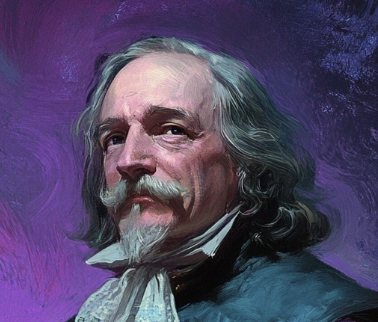
The same, without such opinion, DESPAIRE.
▼
Source
source
The First Part, Chapter 6, p. 25

3 months 3 weeks ago
The best way to drive out the devil, if he will not yield to texts of Scripture, is to jeer and flout him, for he cannot bear scorn.
▼
Source
source
Martin Luther, quoted at the beginning of The Screwtape Letters

3 months 3 weeks ago
In a constantly revolving circle every point is simultaneously a point of departure and a point of return. If we interrupt the rotation, not every point of departure is a point of return.
▼
Source
source
Vol. II, Ch. IV, p. 104.

4 months 5 days ago
The logic now in use serves rather to fix and give stability to the errors which have their foundation in commonly received notions than to help the search for truth. So it does more harm than good.
▼
Source
source
Aphorism 7

2 months 3 weeks ago
The aphorism is cultivated only by those who have known fear in the midst of words, that fear of collapsing with all the words.

3 months 3 weeks ago
History teaches us that war is not inevitable. Once again, it is for us to choose whether we use war or some other method of settling the ordinary and unavoidable conflicts between groups of men.
▼
Source
source
What Are You Going To Do About It? , The case for constructive peace, 1936
3 months 3 weeks ago
Poetry is the mysticism of mankind.
3 months 3 weeks ago
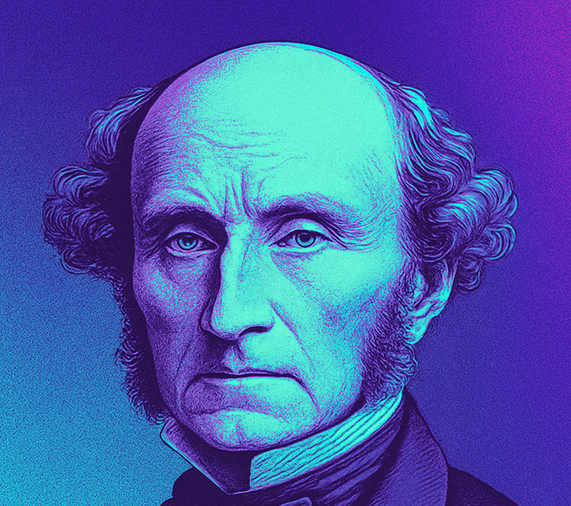
Granted that any practice causes more pain to animals than it gives pleasure to man; is that practice moral or immoral? And if, exactly in proportion as human beings raise their heads out of the slough of selfishness, they do not with one voice answer 'immoral,' let the morality of the principle of utility be for ever condemned.
▼
Source
source
Dr. Whewell on Moral Philosophy (1852), in Dissertations and Discussions: Political, Philosophical, and Historical, vol. 2, London: John W. Parker and son, 1859, p. 485
2 months 1 week ago
The fact of the religious vision, and its history of persistent expansion, is our one ground for optimism. Apart from it, human life is a flash of occasional enjoyments lighting up a mass of pain and misery, a bagatelle of transient experience.
▼
Source
source
Ch. 12: "Religion and Science", p. 268

4 months 3 weeks ago
Of course, I had to own that he was right; I didn't feel much regret for what I'd done. Still, to my mind, he overdid it, and I'd have liked to have a chance of explaining to him, in a quite friendly, almost affectionate way, that I have never been able to really regret anything in all my life. I've always been far too much absorbed in the present moment, or the immediate future, to think back.

4 months 3 weeks ago
Individual science fiction stories may seem as trivial as ever to the blinder critics and philosophers of today — but the core of science fiction, its essence, the concept around which it revolves, has become crucial to our salvation if we are to be saved at all.
4 months 3 weeks ago
I recognize the necessity of animal experiments with my mind but not with my heart.
3 months 3 weeks ago
Not without a slight shudder at the danger, I often perceive how near I had come to admitting into my mind the details of some trivial affair, - the news of the street; and I am astonished to observe how willing men are to lumber their minds with such rubbish, - to permit idle rumors and incidents of the most insignificant kind to intrude on ground which should be sacred to thought. Shall the mind be a public arena, where the affairs of the street and the gossip of the tea-table chiefly are discussed? Or shall it be a quarter of heaven itself, - an hypæthral temple, consecrated to the service of the gods? I find it so difficult to dispose of the few facts which to me are significant, that I hesitate to burden my attention with those which are insignificant, which only a divine mind could illustrate. Such is, for the most part, the news in newspapers and conversation. It is important to preserve the mind's chastity in this respect.
▼
Source
source
pp. 491-2
2 months 2 weeks ago
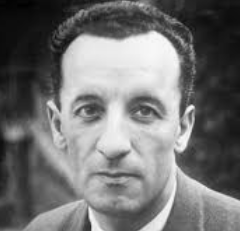
The philosopher will ask himself ... if the criticism we are now suggesting is not the philosophy which presses to the limit that criticism of false gods which Christianity has introduced into our history.
▼
Source
source
p. 47


4 months 4 days ago
When speaking of the spiritual nature or the soul, we are referring to that which is "inner" or "new." When speaking of the bodily nature, or that which is flesh and blood, we are referring to that which is called "sensual," "outward," or "old." Paul writes in 2 Corinthians 4:16: "Even though our outer nature is wasting away, our inner nature is being renewed day by day."
▼
Source
source
p. 51

3 months 3 weeks ago
It's not the experience that happens to you: it's what you do with the experience that happens to you.
▼
Source
source
Attributed to Russell in Slaby's Sixty Ways to Make Stress Work for You, 1987

4 months ago
Monopoly of one kind or another, indeed, seems to be the sole engine of the mercantile system.
▼
Source
source
Chapter VII, Part Third, p. 684.
1 month 2 weeks ago
Yes, I am in favor of censorship, but it has to be conducted by people like me. And that's the difficulty (laughs). I'm in favor of encouraging every possible form of self-restraint and parental control. And I certainly don't think that pornography should be protected under the American Constitution.
▼
Source
source
Interview with Salon.com, 1998

3 months 1 day ago
Obstinacy in a bad cause, is but constancy in a good.
▼
Source
source
Section 25
3 months 3 weeks ago
The chief pleasure of his life in these days was to go down the road and look through the window in the wall in the hope of seeing the beautiful Island. ... the sight of the Island and the sounds became very rare ... and the yearning for the sight ... became so terrible that John thought he would die if he did not have them again soon. ... it came into his head that he might perhaps get the old feeling-for what, he thought, had the Island ever given him but a feeling?-by imagining. He shut his eyes and set his teeth again and made a picture of the Island in his mind.
▼
Source
source
Pilgrim's Regress 12-13
3 months 3 weeks ago
The first thing to realize, if you wish to become a philosopher, is that most people go through life with a whole world of beliefs that have no sort of rational justification, and that one man's world of beliefs is apt to be incompatible with another man's, so that they cannot both be right. People's opinions are mainly designed to make them feel comfortable; truth, for most people is a secondary consideration.
▼
Source
source
"How to Become a Philosopher" (1942), in The Art of Philosophizing, and Other Essays (New York: Philosophical Library, 1968), p. 2

2 months 1 week ago
I began with a strong bias toward skepticism. Besides, to tell the truth, I still find occult phenomena a little preposterous and irrelevant. What do they really matter if you place them against the truly great human achievements - against the creative genius of a Michaelangelo, a Beethoven, an Einstein? In that context they seem almost trivial.
▼
Source
source
p. 120
2 months 1 week ago
The ancient world takes its stand upon the drama of the Universe, the modern world upon the inward drama of the Soul.
▼
Source
source
Ch. 9: "Science and Philosophy", p. 196
4 days ago
I like spring, but it is too young. I like summer, but it is too proud. So I like best of all autumn, because its leaves are a little yellow, its tone mellower, its colours richer, and it is tinged a little with sorrow and a premonition of death. Its golden richness speaks not of the innocence of spring, nor of the power of summer, but of the mellowness and kindly wisdom of approaching age. It knows the limitations of life and is content. From a knowledge of those limitations and its richness of experience emerges a symphony of colours, richer than all, its green speaking of life and strength, its orange speaking of golden content and its purple of resignation and death.
▼
Source
source
Epilogue, p. 328

2 months 3 weeks ago
The revolution must end and the republic must begin. In our constitution, right must take the place of duty, welfare that of virtue, and self-defense that of punishment. Everyone must be able to prevail and to live according to one's own nature.
▼
Source
source
Act I.

4 months ago
If the material world rests upon a similar ideal world, this ideal world must rest upon some other; and so on, without end. It were better, therefore, never to look beyond the present material world. By supposing it to contain the principle of its order within itself, we really assert it to be God; and the sooner we arrive at that Divine Being, so much the better. When you go one step beyond the mundane system, you only excite an inquisitive humour which it is impossible ever to satisfy.
▼
Source
source
Philo to Cleanthes, Part IV

3 months 3 weeks ago
Science does not know its debt to imagination.
▼
Source
source
Poetry and Imagination
2 months 2 weeks ago
Outside the academic establishment, the "far-reaching change in all our habits of thought" is more serious. It serves to coordinate ideas and goals with those exacted by the prevailing system, to enclose them in the system, and to repel those which are irreconcilable with the system. The reign of such a one-dimensional reality does not mean that materialism rules, and that the spiritual, metaphysical, and bohemian occupations are petering out. On the contrary, there is a great deal of "Worship together this week," "Why not try God," Zen, existentialism, and beat ways of life, etc. But such modes of protest and transcendence are no longer contradictory to the status quo and no longer negative. They are rather the ceremonial part of practical behaviorism, its harmless negation, and are quickly digested by the status quo as part of its healthy diet.
▼
Source
source
pp. 13-14
4 days ago
It is not so much what you believe in that matters, as the way in which you believe it and proceed to translate that belief into action.
▼
Source
source
Ch. I : The Awakening, p. 8

1 month 3 weeks ago
I am not a "culture critic" because I am not in any way interested in classifying cultural forms. I am a metaphysician, interested in the life of the forms and their surprising modalities. That is why I have no interest in the academic world.
▼
Source
source
Letters of Marshall McLuhan (1987), p. 413
2 months 2 weeks ago
The metaphysical apologia at least betrayed the injustice of the established order through the incongruence of concept and reality. The impartiality of scientific language deprived what was powerless of the strength to make itself heard and merely provided the existing order with a neutral sign for itself. Such neutrality is more metaphysical than metaphysics.
▼
Source
source
E. Jephcott, trans., p. 17.

4 months 4 days ago
There is no man so good that if he placed all his actions and thoughts under the scrutiny of the laws, he would not deserve hanging ten times in his life.
▼
Source
source
Ch. 9

1 month 3 days ago
Today those who peer into the future want only relief from anxiety. Unable to face the prospect that the cycles of war will continue, they are desperate to find a pattern of improvement in history. It is only natural that believers in reason, lacking any deeper faith and too feeble to tolerate doubt, should turn to the sorcery of numbers. Happily there are some who are ready to assist them. Just as the Elizabethan magus transcribed tables shown to him by angels, the modern scientific scryer deciphers numerical auguries of angels hidden in ourselves.
▼
Source
source
In the Puppet Theatre: Dark mirrors, Hidden Angels and an Algorithmic Prayer-Wheel (p. 99)

4 months 2 weeks ago
The more man meditates upon good thoughts, the better will be his world and the world at large.
1 month 3 weeks ago
The global village is a place of very arduous interfaces and very abrasive situations.

1 month 4 weeks ago
We do not have to love one another to be obligated to build a world in which all lives are sustainable. The right to persist can only be understood as a social right, as the subjective instance of a social and global obligation we bear toward one another.
▼
Source
source
p. 64
2 months 2 weeks ago
Even the most elevated psychological understanding is not a loving understanding.

1 week ago
A good education would be devoted to encouraging and refining the love of the beautiful, but a pathologically misguided moralism instead turns such longing into a sin against the high goal of making everyone feel good, of overcoming nature in the name of equality. ... Love of the beautiful may be the last and finest sacrifice to radical egalitarianism.
▼
Source
source
p. 15.
4 months 3 weeks ago
Those who assert that the mathematical sciences say nothing of the beautiful or the good are in error. For these sciences say and prove a great deal about them; if they do not expressly mention them, but prove attributes which are their results or definitions, it is not true that they tell us nothing about them. The chief forms of beauty are order and symmetry and definiteness, which the mathematical sciences demonstrate in a special degree.

3 months 2 weeks ago
We ought to regard the interests of the state as of far greater moment than all else, in order that they may be administered well; and we ought not to engage in eager rivalry in despite of equity, nor arrogate to ourselves any power contrary to the common welfare. For a state well administered is our greatest safeguard. In this all is summed up: When the state is in a healthy condition all things prosper; when it is corrupt, all things go to ruin.
1 week 5 days ago
The habit of the religious way of thinking has biased our mind so grievously that we are - terrified at ourselves in our nakedness and naturalness; it has degraded us so that we deem ourselves depraved by nature, born devils.
▼
Source
source
Dover 2005, p. 162

4 days ago
Christianity is at the very root of the evil that has corrupted the West. This is the truth, and it admits no doubt.
2 months 3 weeks ago
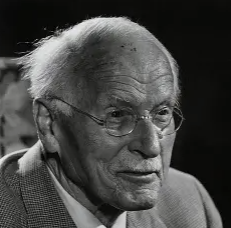
Loneliness does not come from having no people about one, but from being unable to communicate the things that seem important to oneself, or from holding certain views which others find inadmissible.
▼
Source
source
p.356
2 months 3 weeks ago
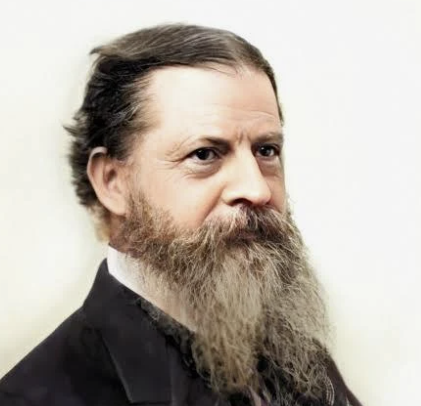
If the sensation that precedes the present by half a second were still immediately before me, then on the same principle, the sensation preceding that would be immediately present, and so on ad infinitum. Now, since there is a time [period], say a year, at the end of which an idea is no longer ipso facto present, it follows that this is true of any finite interval, however short.
1 week ago
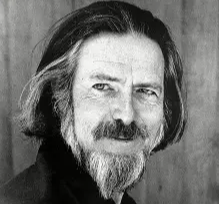
Speaking as of today, I do not consider it intellectually respectable to be a partisan in matters of religion. I see religion as I see such other basic fascinations as art and science, in which there is room for many different approaches, styles, techniques, and opinions. Thus I am not formally a committed member of any creed or sect and hold no particular religious view or doctrine as absolute. I deplore missionary zeal, and consider excessive dedication to and advocacy of any particular religion, as either the best or the only true way, an almost irreligious arrogance. Yet my work and my life are fully concerned with religion, and the mystery of being is my supreme fascination, though, as a shameless mystic, I am more interested in religion as feeling and experience than as conception and theory.
▼
Source
source
p. 61
2 months 3 weeks ago
Every thought derives from a thwarted sensation.
3 months 2 weeks ago
We do not have to make self- sacrifice a necessary element of altruism. We can regard people as altruists because of the kind of interests they have rather than because they are sacrificing their interests.
▼
Source
source
Chapter 9: Altruism and Happiness (p. 103)
CivilSimian.com created by AxiomaticPanic, CivilSimian, Kalokagathia