

4 days ago
Live always in the best company when you read.
▼
Source
source
Vol. I, ch. 10, p. 370

3 months 2 weeks ago
To save the world requires faith and courage: faith in reason, and courage to proclaim what reason shows to be true.

4 days ago
No easy way leads from the earth to heaven..
▼
Source
source
line 437; (Megara).

1 week 3 days ago
The panting breathless haste and vehemence of a man struggling in the thick of battle for life and salvation; this is the mood he is in!
3 months 2 weeks ago
In fact the opposition of instinct and reason is mainly illusory. Instinct, intuition, or insight is what first leads to the beliefs which subsequent reason confirms or confutes; but the confirmation, where it is possible, consists, in the last analysis, of agreement with other beliefs no less instinctive. Reason is a harmonising, controlling force rather than a creative one. Even in the most purely logical realms, it is insight that first arrives at what is new.
▼
Source
source
p. 21
2 months 1 week ago
No human acquisition is stable. Even what appears to us most completely won and consolidated can disappear in a few generations. This thing we call "civilization" - all these physical and moral comforts, all these conveniences, all these shelters, all these virtues and disciplines which have become habit now, on which we count, and which in effect constitute a repertory or system of securities which man made for himself like a raft in the initial shipwreck which living always is - all these securities are insecure securities which in the twinkling of an eye, at the least carelessness, escape from man's hands and vanish like phantoms.
▼
Source
source
p. 25

2 months 3 days ago
Not all women, in fact, very few, have had the good fortune to live and work among women and men actively involved in the feminist movement. Many of us live in circumstances and environments where we must engage in feminist struggle alone, with only occasional support and affirmation.
▼
Source
source
Acknowledgments.

2 months 2 weeks ago
That unwise body, the United Irishmen, have had the folly to represent those Evils as owing to this Country, when in truth its chief guilt is in its total neglect, its utter oblivion, its shameful indifference and its entire ignorance, of Ireland and of every thing that relates to it, and not in any oppressive disposition towards that unknown region.
▼
Source
source
Letter to Thomas Hussey (9 December 1796), quoted in R. B. McDowell (ed.)

3 months 2 weeks ago
We suffer not only from the development of capitalist production, but also from the incompleteness of that development. Alongside the modern evils, we are oppressed by a whole series of inherited evils, arising from the passive survival of archaic and outmoded modes of production, with their accompanying train of anachronistic social and political relations. We suffer not only from the living, but from the dead.
▼
Source
source
Preface to the First Edition, Capital Volume 1, Peinguin Classics edition 1976.
2 months 5 days ago
By reducing any quality to quantity, myth economizes intelligence: it understands reality more cheaply.
▼
Source
source
p. 153

2 months 2 weeks ago
Nor is there any embarrassment in the fact that we're ridiculous, isn't it true? For it's actually so, we are ridiculous, light-minded, with bad habits, we're bored, we don't know how to look, how to understand, we're all like that, all, you, and I, and they! Now, you're not offended when I tell you to your face that you're ridiculous? And if so, aren't you material? You know, in my opinion it's sometimes even good to be ridiculous, if not better: we can the sooner forgive each other, the sooner humble ourselves; we can't understand everything at once, we can't start right out with perfection! To achieve perfection, one must first begin by not understanding many things! And if we understand too quickly, we may not understand well. This I tell you, you, who have already been able to understand. .. and not understand ... so much. I'm not afraid for you now.
▼
Source
source
Part 4, Chapter ?

2 months 2 days ago
These men traveling down to the City in the morning, reading their newspapers or staring at advertisements above the opposite seats, they have no doubt of who they are. Inscribe on the placard in place of the advertisement for corn-plasters, Elliot's lines: We are the hollow men

2 months 3 weeks ago
Who knows whether the best of men be known, or whether there be not more remarkable persons forgot, than any that stand remembered in the known account of time? Without the favour of the everlasting register, the first man had been as unknown as the last, and Methuselah's long life had been his only chronicle.Oblivion is not to be hired. The greater part must be content to be as though they had not been, to be found in the register of God, not in the record of man. Twenty seven names make up the first story before the flood, and the recorded names ever since contain not one living century. The number of the dead long exceedeth all that shall live. The night of time far surpasseth the day, and who knows when was the Æquinox? Every hour adds unto that current arithmetick, which scarce stands one moment.
▼
Source
source
Chapter V
3 months 2 weeks ago
It is, in fact, far easier to act under conditions of tyranny than it is to think.
▼
Source
source
The Human Condition

3 months 2 weeks ago
Absurdity destroys the and of the enumeration by making impossible the in where the things enumerated would be divided up.
▼
Source
source
Preface

3 weeks 5 days ago
If there is anything unique about the human animal it is that it has the ability to grow knowledge at an accelerating rate while being chronically incapable of learning from experience. Science and technology are cumulative, whereas ethics and politics deal with recurring dilemmas. Whatever they are called, torture and slavery are universal evils; but these evils cannot be consigned to the past like redundant theories in science. They return under different names: torture as enhanced interrogation techniques, slavery as human trafficking. Any reduction in universal evils is an advance in civilization. But, unlike scientific knowledge, the restraints of civilized life cannot be stored on a computer disc. They are habits of behaviour, which once broken are hard to mend. Civilization is natural for humans, but so is barbarism.
▼
Source
source
An Old Chaos: Humanism and Flying Saucers (p. 75)

2 months 2 weeks ago
I want to proclaim a truth that would forever exile me from among the living. I know only the conditions but not the words that would allow me to formulate it.

2 months 2 weeks ago
I believe it to be this; that my will, absolutely of itself, and without the intervention of any instrument that might weaken its effect, shall act in a sphere perfectly congenial - reason upon reason, spirit upon spirit; in a sphere to which it does not give the laws of life, of activity, of progress, but which has them in itself, therefore, upon self-active reason. But spontaneous, self-active reason is will. The law of the transcendental world must, therefore, be a Will.
▼
Source
source
Jane Sinnett, trans 1846 p.110

3 months 3 weeks ago
Spinoza says that if a stone which has been projected through the air, had consciousness, it would believe that it was moving of its own free will. I add this only, that the stone would be right. The impulse given it is for the stone what the motive is for me, and what in the case of the stone appears as cohesion, gravitation, rigidity, is in its inner nature the same as that which I recognise in myself as will, and what the stone also, if knowledge were given to it, would recognise as will.
Just now
For us in Russia, communism is a dead dog, while, for many people in the West, it is still a living lion.
▼
Source
source
BBC Radio broadcast, Russian service, as quoted in The Listener

3 months 3 weeks ago
Thus it may be said that not only the soul, the mirror of an indestructible universe, is indestructible, but also the animal itself, though its mechanism may often perish in part and take off or put on an organic slough.
▼
Source
source
La monadologie (77). Sometimes paraphrased as: The soul is the mirror of an indestructible universe.

2 months 1 week ago
Resignation' is a keynote in Comte's writings, deriving directly from assent to invariable social laws. 'True resignation, that is, a disposition to endure necessary evils steadfastly and without any hope of compensation therefore, can result only from a profound feeling for the invariable laws that govern the variety of natural phenomena.
▼
Source
source
P. 345
4 days ago
There stood Mucius, despising the enemy and despising the fire, and watched his hand as it dripped blood over the fire on his enemy's altar, until Porsenna, envying the fame of the hero whose punishment he was advocating, ordered the fire to be removed against the will of the victim.
3 months 3 weeks ago
Every true thinker for himself is so far like a monarch; he is absolute, and recognises nobody above him. His judgments, like the decrees of a monarch, spring from his own sovereign power and proceed directly from himself. He takes as little notice of authority as a monarch does of a command; nothing is valid unless he has himself authorised it. On the other hand, those of vulgar minds, who are swayed by all kinds of current opinions, authorities, and prejudices, are like the people which in silence obey the law and commands.
▼
Source
source
"Thinking for Oneself," H. Dirks, trans.

3 months 3 weeks ago
His capital is continually going from him in one shape, and returning to him in another, and it is only by means of such circulation, or successive exchanges, that it can yield him any profit. Such capitals, therefore, may very properly be called circulating capitals.
▼
Source
source
Chapter I, p. 305.
2 months 2 weeks ago
If I understand at all the true Spirit of the present contest, We are engaged in a Civil War ... I consider the Royalists of France, or, as they are (perhaps more properly) called, the Aristocrates, as of the party which we have taken in this civil war.
▼
Source
source
Letter to Sir Gilbert Elliot (22 September 1793), quoted in P. J. Marshall and John A. Woods (eds.)

2 months 1 week ago
But everyone who hears these sayings of Mine, and does not do them, will be like a foolish man who built his house on the sand: and the rain descended, the floods came, and the winds blew and beat on that house; and it fell. And great was its fall.
▼
Source
source
Matthew 7:24-27 (NKJV) (Also Luke 6:47-49)
3 months 2 weeks ago
I don't like the spirit of socialism - I think freedom is the basis of everything.
▼
Source
source
Letter to Constance Malleson (Colette), September 29, 1916

3 months 3 weeks ago
If nature has been frugal in her gifts and endowments, there is the more need of art to supply her defects. If she has been generous and liberal, know that she still expects industry and application on our part, and revenges herself in proportion to our negligent ingratitude. The richest genius, like the most fertile soil, when uncultivated, shoots up into the rankest weeds; and instead of vines and olives for the pleasure and use of man, produces, to its slothful owner, the most abundant crop of poisons.
▼
Source
source
Part I, Essay 16: The Stoic
3 months 2 weeks ago
Wherever the want of clothing forced them to it, the human race made clothes for thousands of years, without a single man becoming a tailor.
▼
Source
source
Vol. I, Ch. 1, Section 2, pg. 49.
1 month 5 days ago
M. Comte's philosophy, in practice, might be compendiously described as Catholicism minus Christianity.
▼
Source
source
On the Physical Basis of Life

3 months 2 weeks ago
Man Thinking must not be subdued by his instruments.
▼
Source
source
par. 20
2 months 1 week ago
To eat, teeth must meet.
▼
Source
source
The Sacred and Profane Love Machine (1974), p. 66.
2 months 2 weeks ago
Only those are happy who never think or, rather, who only think about life's bare necessities, and to think about such things means not to think at all. True thinking resembles a demon who muddies the spring of life or a sickness which corrupts its roots. To think all the time, to raise questions, to doubt your own destiny, to feel the weariness of living, to be worn out to the point of exhaustion by thoughts and life, to leave behind you, as symbols of your life's drama, a trail of smoke and blood - all this means you are so unhappy that reflection and thinking appear as a curse causing a violent revulsion in you.
5 days ago
In the pedagogical as in certain other spheres freedom is not allowed to erupt, the power of the opposition is not allowed to put a word in edgewise: they want submissiveness. Only a formal and material training is being aimed at and only scholars come out of the menageries of the humanists, only "useful citizens" out of those of the realists, both of whom are indeed nothing but subservient people. Our good background of recalcitrancy [sic] gets strongly suppressed and with it the development of knowledge to free will. The result of school is then philistinism.
▼
Source
source
p. 23

1 month 3 days ago
Just like Chief Seattle talked about being in the web of life, in India we talk about vasudhaiva kutumbkam, which means the earth family. Indian cosmology has never separated the human from the non-human-we are a continuum.
1 week 5 days ago
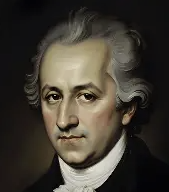
One lives but once in the world.
▼
Source
source
Clavigo, Act I, sc. i
1 week 2 days ago
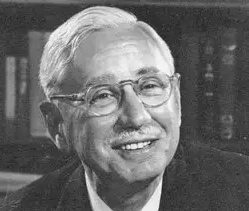
British rule in India is the most sordid and criminal exploitation of one nation by another in all recorded history. I propose to show that England has year by year been bleeding India to the point of death, and that self-government of India by the Hindus could not within any reasonable probability, have worse results than the present form of alien domination.
2 months 1 week ago
Hegel's philosophy revolved about the universality of reason; it was a rational system with its every part (the subjective as well as the objective spheres) integrated into a comprehensive whole. Marx shows that capitalist society first put such a universality into practice.
▼
Source
source
P. 286-287
3 months 3 weeks ago
How many people ruin themselves by laying out money on trinkets of frivolous utility? What pleases these lovers of toys is not so much the utility, as the aptness of the machines which are fitted to promote it. All their pockets are stuffed with little conveniences. They contrive new pockets, unknown in the clothes of other people, in order to carry a greater number. They walk about loaded with a multitude of baubles, in weight and sometimes in value not inferior to an ordinary Jew's-box, some of which may sometimes be of some little use, but all of which might at all times be very well spared, and of which the whole utility is certainly not worth the fatigue of bearing the burden.
▼
Source
source
Chap. I.
1 week 3 days ago
Love is ever the beginning of Knowledge as fire is of light.
▼
Source
source
Essays, Death of Goethe.
3 months 3 weeks ago
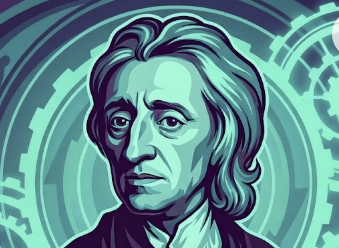
The Indians, whom we call barbarous, observe much more decency and civility in their discourses and conversation, giving one another a fair silent hearing till they have quite done; and then answering them calmly, and without noise or passion. And if it be not so in this civiliz'd part of the world, we must impute it to a neglect in education, which has not yet reform'd this antient piece of barbarity amongst us.
▼
Source
source
Sec. 145

3 months 3 days ago
A transition, therefore, is not undeservedly made from sense to consideration, and from this to the nobler energies of intellect. Hence, as the certain knowledge of numbers received its origin among the Phœnicians, on account of merchandise and commerce, so geometry was found out among the Egyptians from the distribution of land. When Thales, therefore, first went into Egypt, he transferred this knowledge from thence into Greece: and he invented many things himself, and communicated to his successors the principles of many. Some of which were, indeed, more universal, but others extended to sensibles.
▼
Source
source
Chap. IV.
2 months 2 weeks ago
I foresee the day when we shall read nothing but telegrams and prayers.
4 months 2 days ago
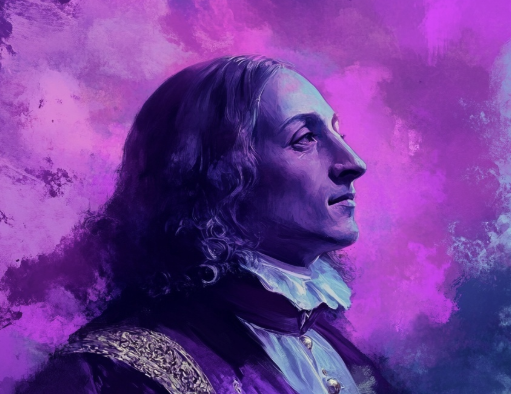
I do not speak here of divine truths... because they are infinitely superior to nature: God alone can place them in the soul... I know that he has desired that they should enter from the heart into the mind, and not from the mind into the heart, to humiliate that proud power of reasoning that pretends to the right to be the judge of the things that the will chooses; and to cure this infirm will which is wholly corrupted by its filthy attachments.

3 months 3 weeks ago
The way of the world is to make laws, but follow custom.

3 months 2 weeks ago
Critics who treat adult as a term of approval, instead of as a merely descriptive term, cannot be adult themselves. To be concerned about being grown up, to admire the grown up because it is grown up, to blush at the suspicion of being childish; these things are the marks of childhood and adolescence. And in childhood and adolescence they are, in moderation, healthy symptoms. Young things ought to want to grow. But to carry on into middle life or even into early manhood this concern about being adult is a mark of really arrested development. When I was ten, I read fairy tales in secret and would have been ashamed if I had been found doing so. Now that I am fifty I read them openly. When I became a man I put away childish things, including the fear of childishness and the desire to be very grown up.
▼
Source
source
"On Three Ways of Writing for Children" (1952) - in Of Other Worlds: Essays and Stories (1967), p. 25
2 months 2 days ago
This is the Outsider's extremity. He does not prefer not to believe; he doesn't like feeling that futility gets the last word in the universe; his human nature would like to find something it can answer to with complete assent. But honesty prevents his accepting a solution that he cannot reason about.
▼
Source
source
Chapter Five, The Pain Threshold

3 months 2 weeks ago
The soldier is applauded who refuses to serve in an unjust war by those who do not refuse to sustain the unjust government which makes the war; is applauded by those whose own act and authority he disregards and sets at naught; as if the state were penitent to that degree that it hired one to scourge it while it sinned, but not to that degree that it left off sinning for a moment.
3 months 3 weeks ago
A man who has no mental needs, because his intellect is of the narrow and normal amount, is, in the strict sense of the word, what is called a philistine.
▼
Source
source
Personality; or, What a Man Is
CivilSimian.com created by AxiomaticPanic, CivilSimian, Kalokagathia